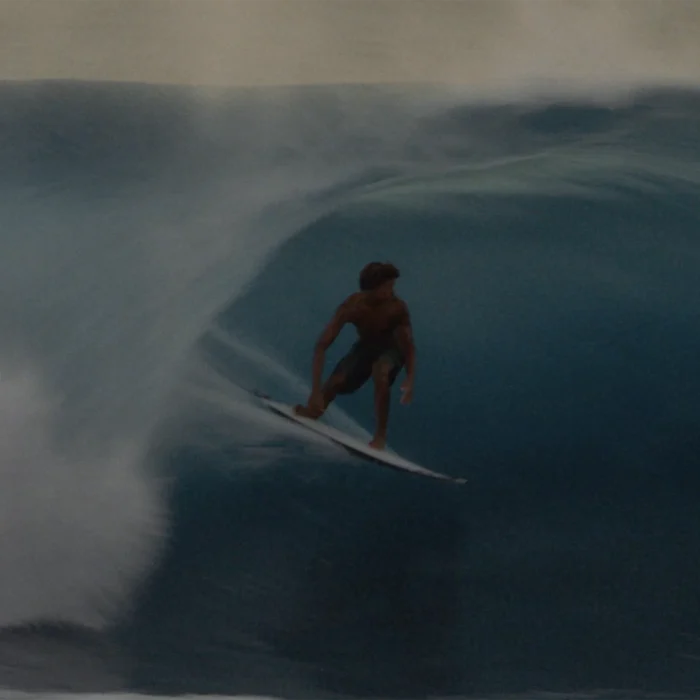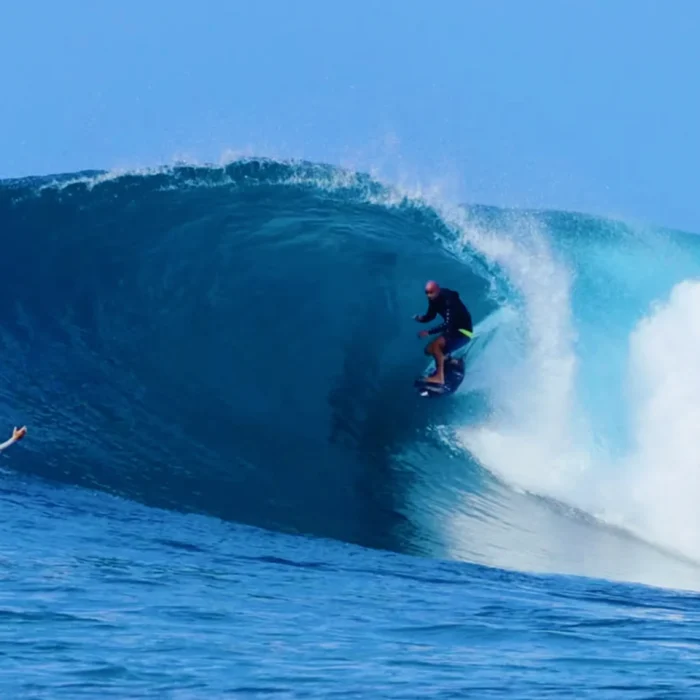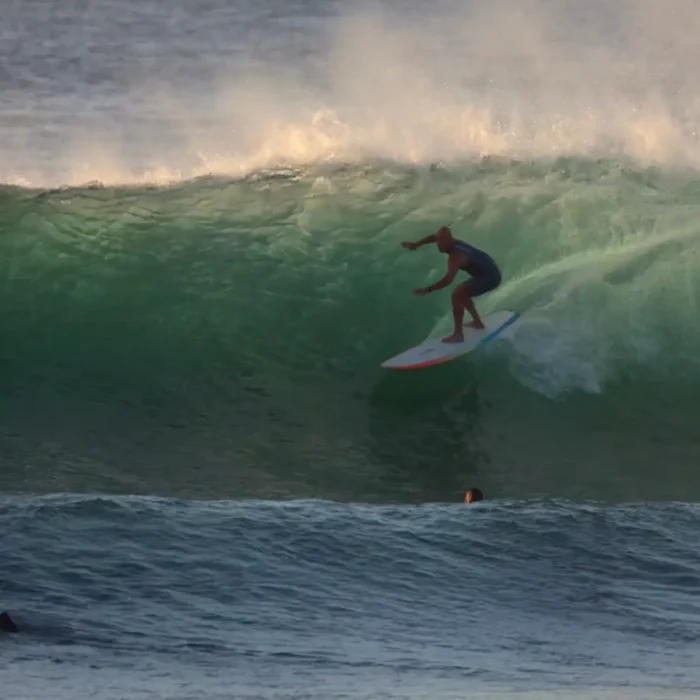
As surfers, we spend hours watching the surf. We wait for the right conditions that enable us to have an always refreshing and sometimes even mind-blowing surf session. But how often do you check your inner conditions?
Do you regularly take a real close look at your mental state, your daily emotions and thoughts? The ocean can help you to check your “inner swell,” to assess the moods of your mind and make the most of them.
Whenever I sit by or in the water, I have the feeling that I’m looking at something more than just a huge field moving fluid. It’s almost like looking straight into my mind. And there are quite a few striking parallels between the ocean and our mind: Both are too complicated to be fully understood. Both have a visible surface and a much larger underground (where a lot of scary stuff can inhabit.) Both are in constant flow, and yet somehow everything seems connected. Both can be stormy today and almost completely calm the next day. And – most importantly – both produce waves: lefts, rights, hollow waves, long peeling waves, waves of happiness, waves of sorrow…
The Ocean as a Model for your Mind: How Waves are Formed
Last October, the first huge swell of the season hit the Portuguese coast. Some big wave surfers risked their lives at Nazaré while I found a near-perfect little reef break on the more sheltered south coast. These waves – just like our emotions – did not emerge out of nowhere.
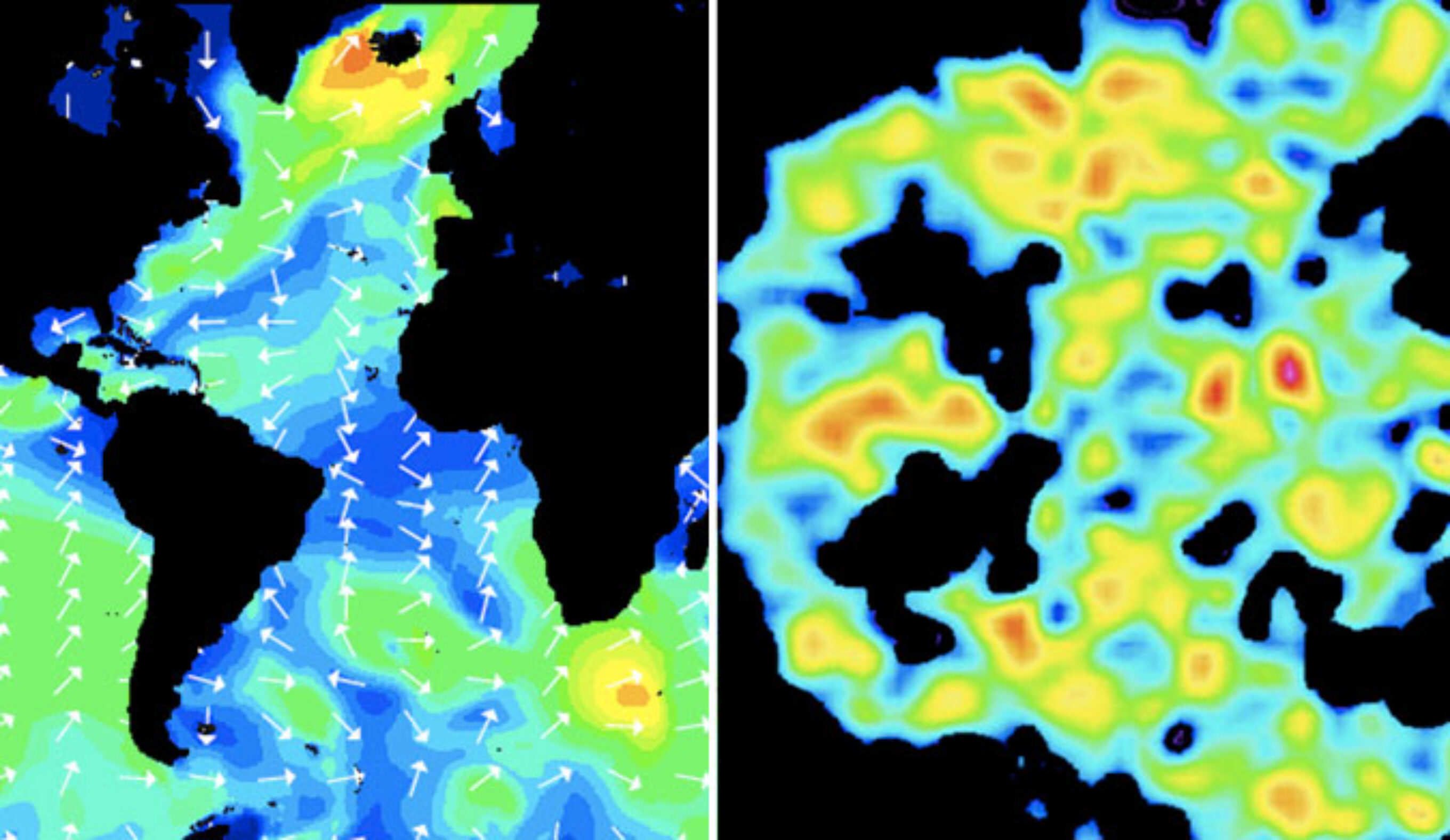
Several days before, a storm evolved near Greenland. A series of variables caused this storm. Very simplified (I apologize to all the oceanographers!) it can be explained as followed:
The sun heated up the North Pole and Equator unevenly, and the heat had to be transferred between the two. Due to the rotation of the earth and the Coriolis Force these air streams created a deep low-pressure zone over the North Atlantic. The system then developed into a rotating mass of surface air that moved from west to east across the surface of the ocean. This huge storm travelled across the North Atlantic implanting much of its energy to the sea’s surface, generating a mixed-up series of waves of all shapes and sizes, which then organized themselves into clean lines of swell moving towards the Portuguese coast. When the swell came into swallow water, it refracted. Because the sea-floor has many different forms, there are a great many ways in which refraction can create waves. Simple, right?
There are so many variables to factor in. Each one interacts with another, and each tiny alteration can have a huge effect on the outcome – a perfect wave or a choppy closeout.
The ocean’s complicated nature is what makes it such a great metaphor for our mind and our emotions. Even oceanographers still don’t fully understand it. I am a psychologist but I don’t fully understand my mind or my emotions. But the sea can help me understand them better. And maybe in the end, I can enjoy a near perfect feeling that emerged from a huge inner storm just like I rode that first nearly perfect wave in October at this sheltered reef down the south coast.
How emotions are formed
Last year I overcame cancer. I was happy to be back to my normal life and wanted to live it to the fullest. I surfed, worked, took long walks along the coast, and did some yoga. It felt really good to take a break from the anxiety and pain of the last months. But underneath the surface some of the anxiety remained: “What if the cancer comes back?” I tried not to look at the inner swell and ignored the thoughts connected to it. But when I looked at the huge waves, in October I realized that inside me a similar energy was pounding around. It became so loud, I could no longer ignore it. I watched it carefully, tried to describe it and then found a sheltered little bay in the back of my mind where I could face it and ride my anxiety to the calmness of the shore.
What created my anxiety? When you take off on a gnarly slab and you suddenly have dry reef in front of you, you actually feel fear twice, through two different mechanisms. The first one analyses the situation imprecisely but fast: Through the thalamus the information from the senses reaches the amygdala. This small part of the limbic system evaluates in a few milliseconds if the stimulus is useful or dangerous for us. The dry reef is a potential danger and therefore the appropriate fear reaction is put into motion: the heart beats faster, the blood pressure rises, you take a deep breath. The reason for all that is so that you are able to react as fast as possible and with a lot of energy. All this is happening before we have even noticed our fear.