
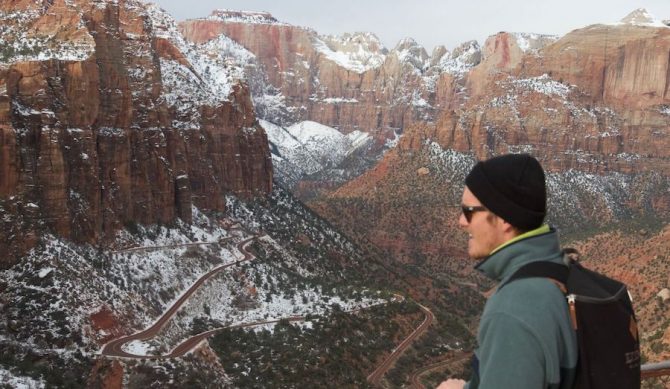
This view changed me. Never will I visit a national park in the American west in summer again. Photo: Marshall

Last August my wife and I spent two days in Yosemite in an experience that can only be described as hell on earth. To give you a sense, one afternoon we ran low on supplies and elected to drive from our campsite to the general store. The drive, no longer than two miles, took us over two hours. Compounded with the wife’s sudden and violent bout with altitude sickness, we left a day earlier than planned soured on the idea of the great outdoors altogether.
More seasoned national park goers would say we went wrong when we reserved a campsite in August in the first place. I admit I’m not a seasoned national park goer. The experience was especially upsetting because, well, Yosemite is goddamn beautiful. And I don’t say that lightly – it’s a place I’ve had a certain draw to since a high school trip for an environmental science class. But logistics got in the way of appreciating that beauty.
In February, though, I had the opportunity to visit two national parks (Bryce Canyon and Zion) in a single trip, and besides having been floored by the beauty of both, I submit to you, the reader, that I will never visit a national park in the American west in the summer for as long as I live. Winter is, by far, the best way to go. Here’s why:

Damn Zion. You pretty. Photo: Heyden
1. Virtually no crowds
Problem numero uno that contributed to the congestion in Yosemite Valley and soured my experience there was the sheer number of people. But consider this. According to numbers collected by the National Park Service, July, Zion National Park’s busiest month, saw just shy of 600,000 visitors compared to just 84,000 in January, the park’s slowest month. Similar trends exist among other parks like Yosemite and Bryce. It’s worth noting that changes in park visitation month to month appear to be more dramatic in places that have more dramatic seasons. Haleakala National Park in Hawaii, for instance, which is more temperate sees a generally steady inflow of visitors each month. Bottom line, if you plan to go to a national park in Southern Utah, for example (highly recommended, see below), go in winter. Otherwise, use NPS visitation statistics to plan when crowds are lightest.
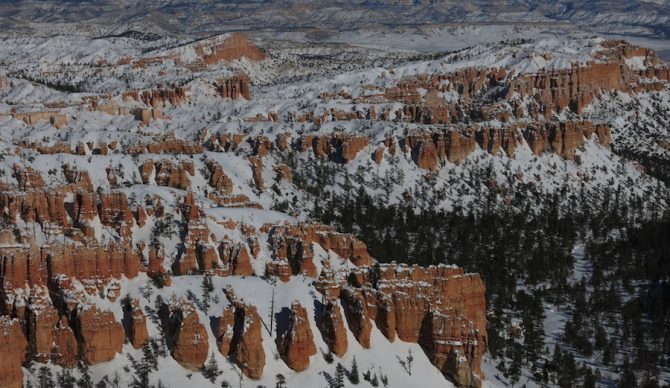
The hoodoos of Bryce Canyon are incredible. But with a layer of snow, it’s a crazy juxtaposition you have to see in person. Photo: Heyden
2. Better photos
National Parks in the southern Utah region are known worldwide for the red rock that punctuates the desert scape. And while the hoodoos that make Bryce Canyon famous, or the huge vertical faces that jettison into the sky in Zion are stunning in and of themselves, add snow and the places are exponentially more complex visually. It’s a juxtaposition. A trompe l’oeil. For most, the desert evokes a feeling of heat, dryness. Snow shatters that preconception, and to witness it first-hand is incredible. Not to mention, far fewer people have photos of these parks in the winter simply because there are fewer people to take photos of them. This brings me to my last point on this, during the summer if you go to take a photo at Angel’s landing or in front of a hoodoo, you can expect to either be photobombed or wait your turn to get a shot solo. Not the case in winter.
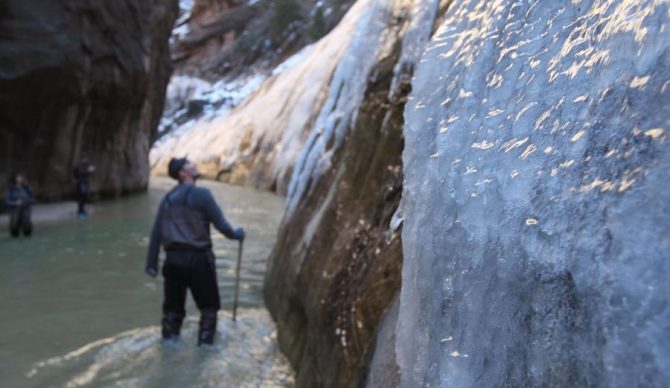
Talk about a crazy experience. Crazy cold! Photo: Marshall
3. Different activities
By virtue of the fact that there’s snow on the ground, and the weather is colder, visiting a national park in the winter time means the possibility of certain activities that are simply not available to you in any other season. Snowshoeing, cross-country skiing, snowmobiling (likely not in the park, but around it for sure), these are a few activities to look out for that are seasonal and can make for an incredible experience. I myself went cross-country skiing for the first time along the rim of Bryce Canyon (imagine that!). Some common summer activities may also be modified to adapt to winter conditions. For instance, in Zion, you can hike the narrows in a dry suit (which is an absolute blast!) to shield yourself from the harsh 40-or-so degree water. During our experience, we hardly saw a soul on the hike. It was only after that our guide informed us that during the summer the Narrows are crawling with visitors.

First-time cross-country skiing. Check.

