
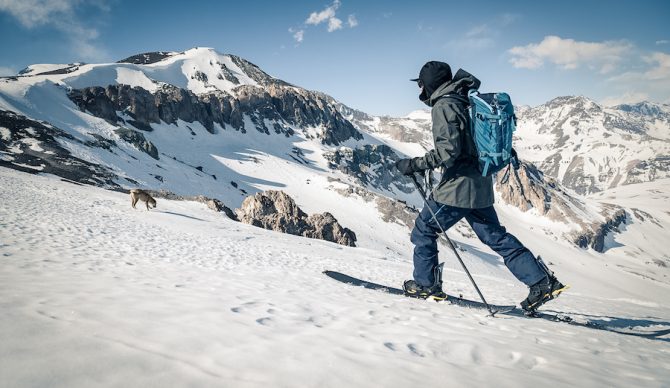
Photo: Arcade Belts

Editor’s note: Back in September of 2016, acclaimed snowboarder and explorer Nick Russell traveled south to Chile to climb mountains, ride, and satiate his wanderlust. The following is part two of a journal Nick kept throughout his travels, originally published on Arcade Belts’ blog. If you missed part one, check it out here.
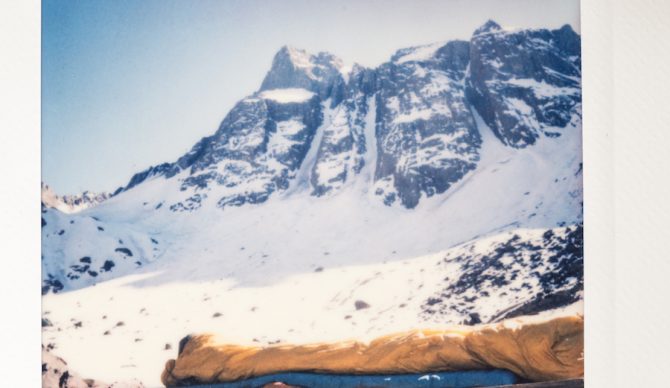
Photo: Russell
September 26th- Cajón del Maipo
It is nearing 1 a.m. and I am violently awoken as the pavement turns to a rugged dirt road. My friend, Juan Martin, is driving us in what he calls his “city car” instead of his truck. The grade of the switchbacking road becomes steeper and we start to bottom out. “From here we walk,” Fede declares. My two amigos help me with my scattered gear, but they are only dropping me off at the top of the canyon and heading back down to Santiago. Roughly a five hour round trip through the middle of the night to do a favor for a guy they hardly know. That goes to show the kindness of the Chilean people.
Gingerly floating down the loose rock and talus hillside, lights, and a generator buzz become brighter and louder. Several minutes later, we are walking through the heart of a fully functioning hydroelectric dam, known as the Alto Maipo project. This large scale operation is highly opposed by many around the country. There are several factors which fuel the fire for opposition to the Alto Maipo project, ranging from recreational to environmental impacts. As of recent, the dam operations have limited and restricted access into the high Andes. Several kilometers from the approach points to the terrain, the road is guarded by a security checkpoint, resulting in the need for a midnight arrival. This land which rests beyond the gate is worthy of a national reserve. It deserves to be protected and shared with the public.
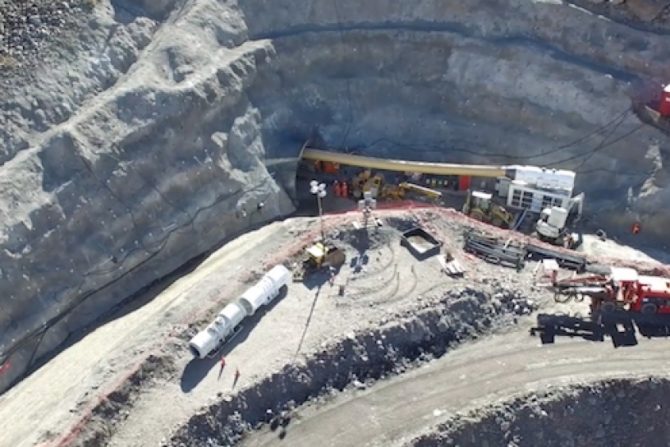
Aerial view of the Alto Maipo hydroelectric project. Photo: El Mostrador
Men with reflective vests and helmets smile and wave to greet us in the tunnel. We continue out from the dam and back into the darkness, dipping off the dirt road. Hopping over sagebrush and boulders, patches of snow finally appear in the warm night. By moonlight, an outline of a grandiose face presents itself on the back wall of the cajón. We have arrived. I find a flat area near their friend Seba’s stone walled hut and lay out my sleeping bag.
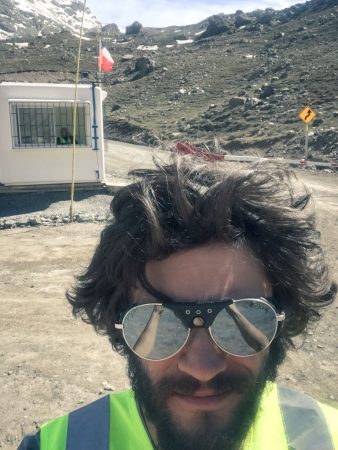
Selfie at the Alto Maipo project.
September 27th- La Arena
In the middle of the night, two furry creatures found their way to my star capped sleeping corridors. A puppy licks my face as I open my eyes in a dazed state of drowsiness. Am I dreaming? The sun rises only slightly over the peaks to the east, but it is more than enough to showcase the surrounding glory.
The walled line of choice once again exceeded my sense of scale. While it certainly proves to be as steep as perceived, the ascent takes almost twice as long as originally anticipated. Small rock chips wiz by, snapping me out of the sluggish climb upwards and into an alert mindset. Unique outcroppings of rock act as checkpoints, as I break for small sips of water or nibbling on a Honey Stinger chew.
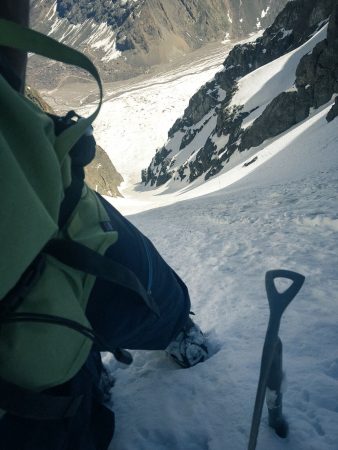
Photo: Russell
Several hours pass and I reach the dead end atop this classic sustained 1000m line, stretching all the way down to the Yeso River below, where I filled up on water earlier this morning. I meticulously chip away a starting point for my drop-in. Each movement is carefully conducted. I’m sure not to drop anything, as it would be total devastation. Axe in hand, I enjoy the ride.
After visiting the Maipo Valley and seeing the massive terrain features with my own eyes, and having experienced the epic beauty of the valley I can truly understand why so many Chileans have stood up to the Alto Maipo Dam Project.
The dam diverts precious water from the Yeso lake, which provides drinking water to the majority of the greater Santiago Metropolitan area. The energy created does not go to people living in the capital, but to other privately owned mining companies. The energy companies claim that Chile is in a crisis, thus justifying these types of projects. Yet as a whole, only roughly 18% of the country’s energy goes directly back to the people. That leaves a whopping 72% that goes to mining companies.
Right now, Chile is producing an active generation of talented climbers, skiers, and riders that are passionate about the environment in which they live. If they are any indications of what is to come, there is hope for the preservation and proper use of places like Maipo.

