
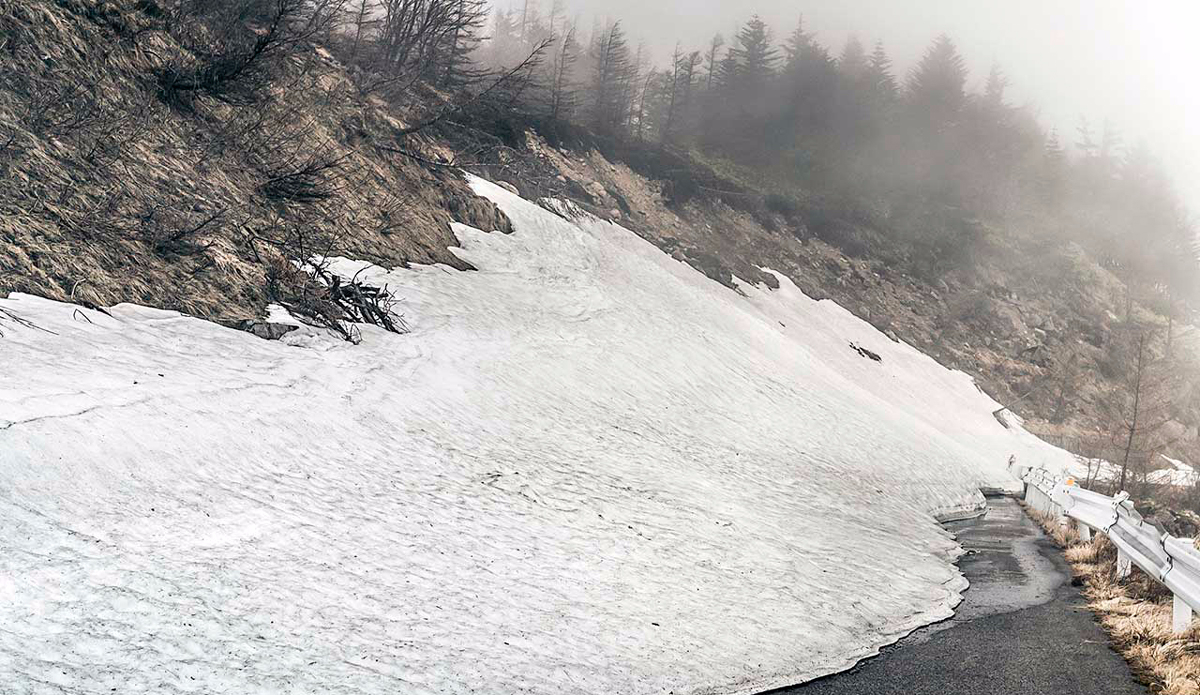

With two feet of snow covering the road ahead of me as I hiked, it was difficult to sense if what I was doing was dangerous or not. It didn’t feel dangerous, but my inexperience and the unknown road ahead added to my nervousness as I passed through rain, wind, sun, and snow. I experienced a whole spectrum of sensations until the altitude decreased, the snow fading with it. On the descent, I was able to get back on the bike and even though the road was littered with rocks and other debris, it wasn’t long until I built up some speed. I began to take in the amazing scenery, following meandering switchbacks.
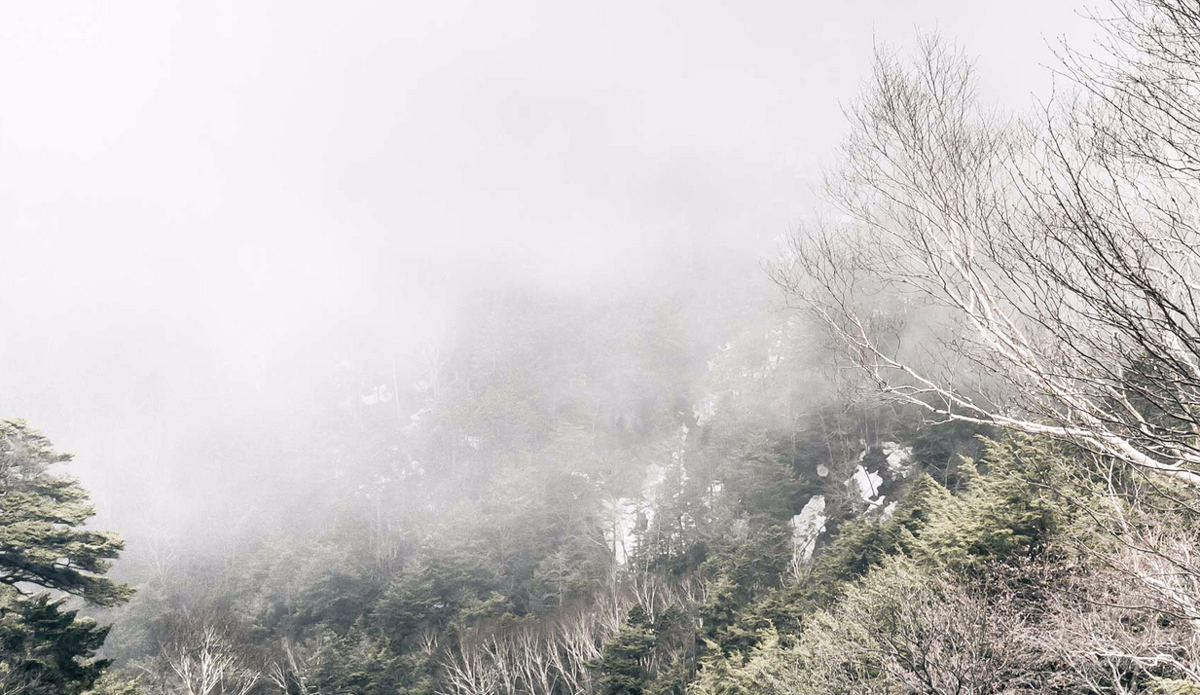
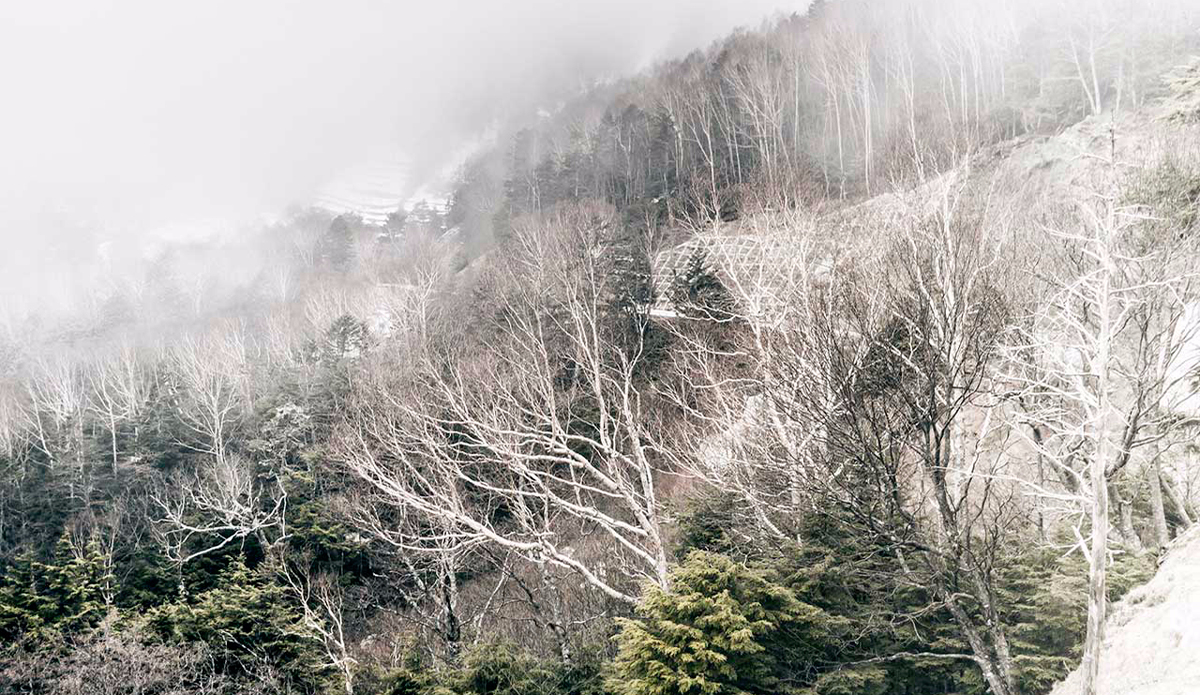
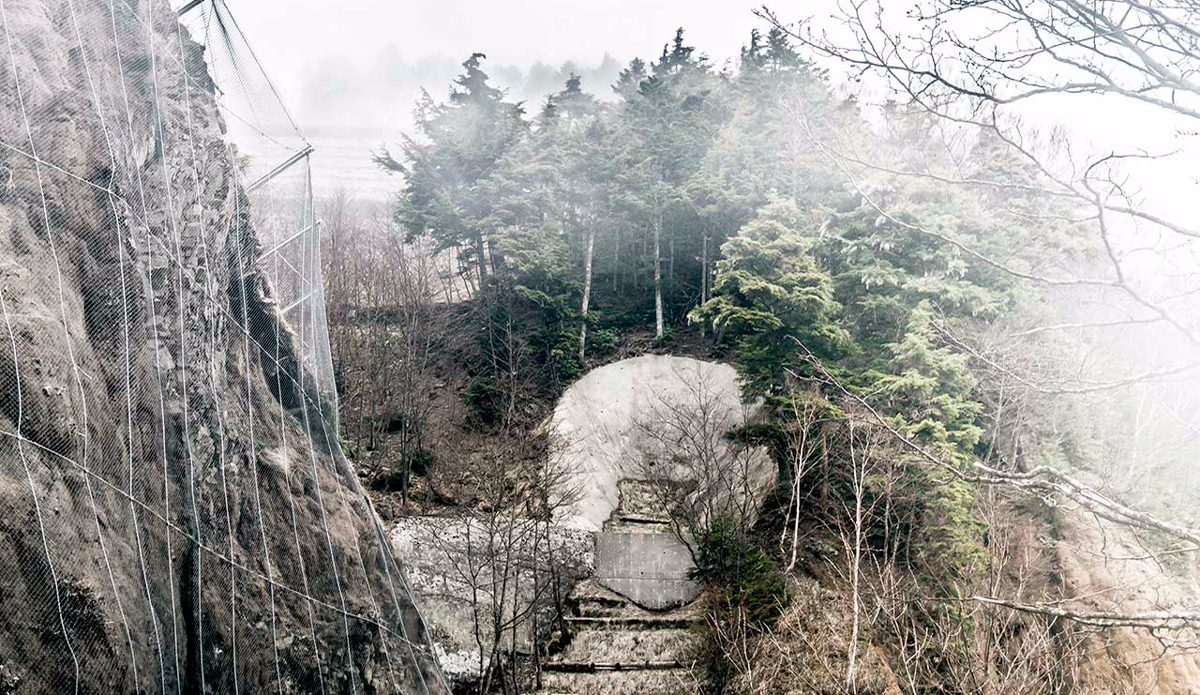
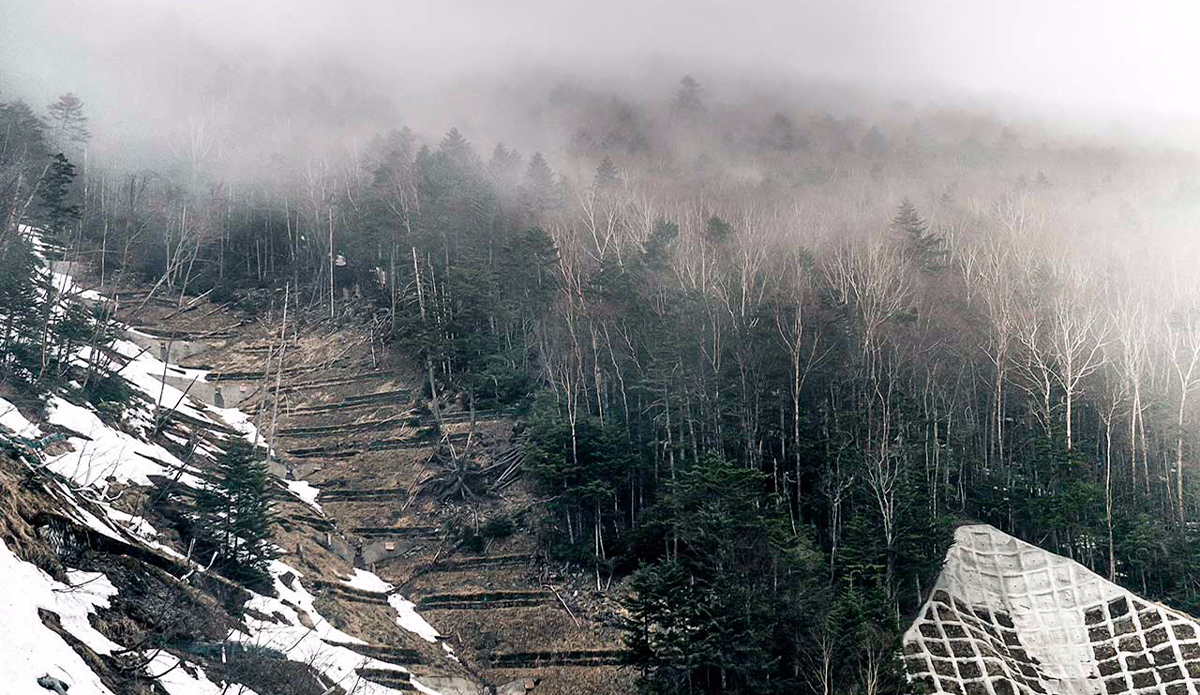
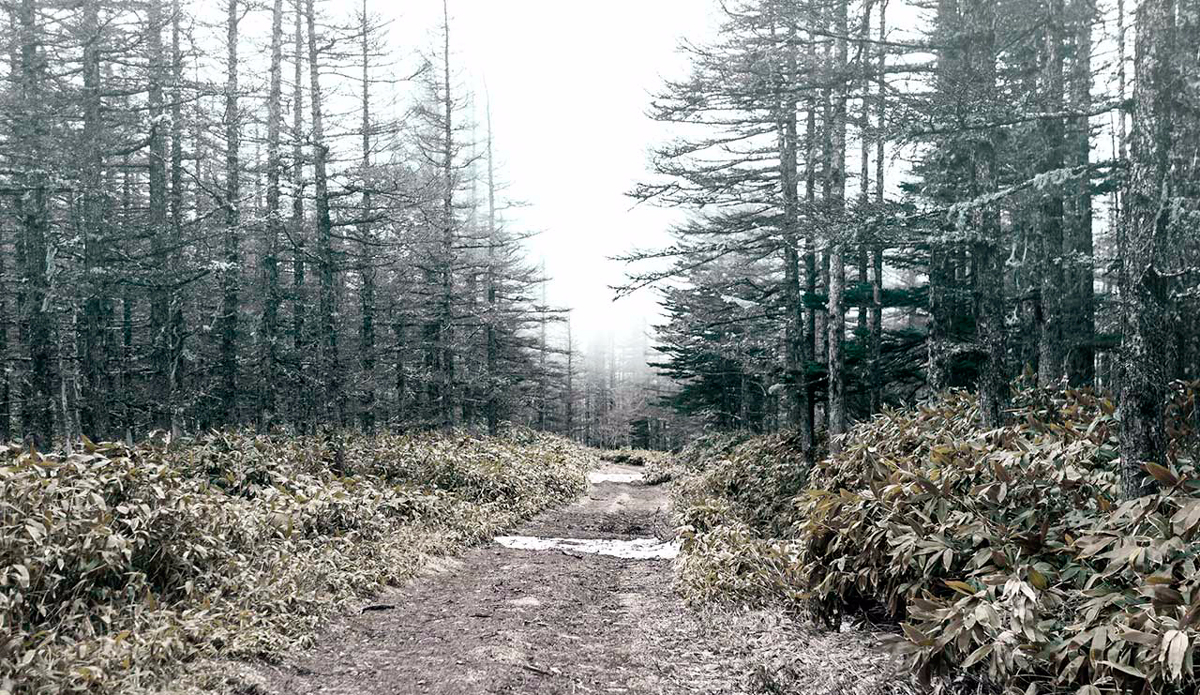
It was after about 10 kilometers of pure joy that I realized, because of the snow, I’d missed a vital turn that would have taken me home. Then, an adrenaline-fueled climb back up through the storm took me further into the snow than I’d hoped. There was subtle fog and a light rain coming in as I ascended the final few hundred meters up the Yatsugatake mountain range in Nagano Prefecture, west of Tokyo. The temperature dropped and the change in air pressure was palpable. A motorcyclist who had passed me earlier awkwardly turned his heavy tourer around, telling me the road ahead wasn’t passable. I should probably have listened, but the idea of going back along the same road wasn’t something I was considering.
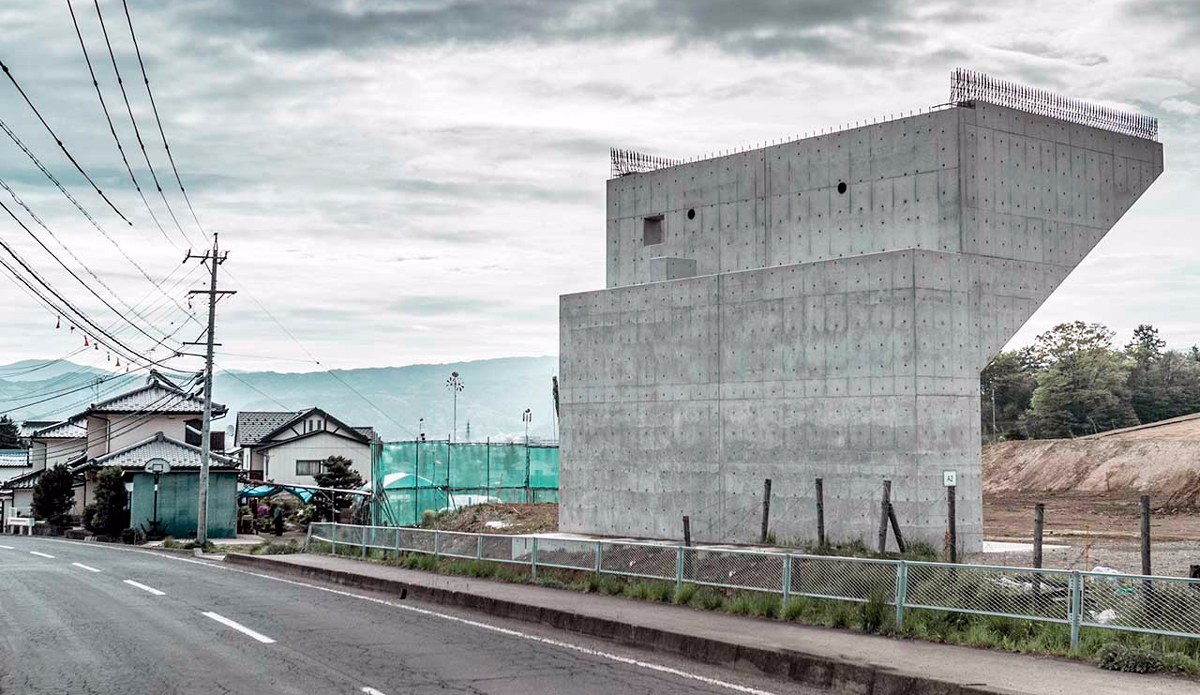
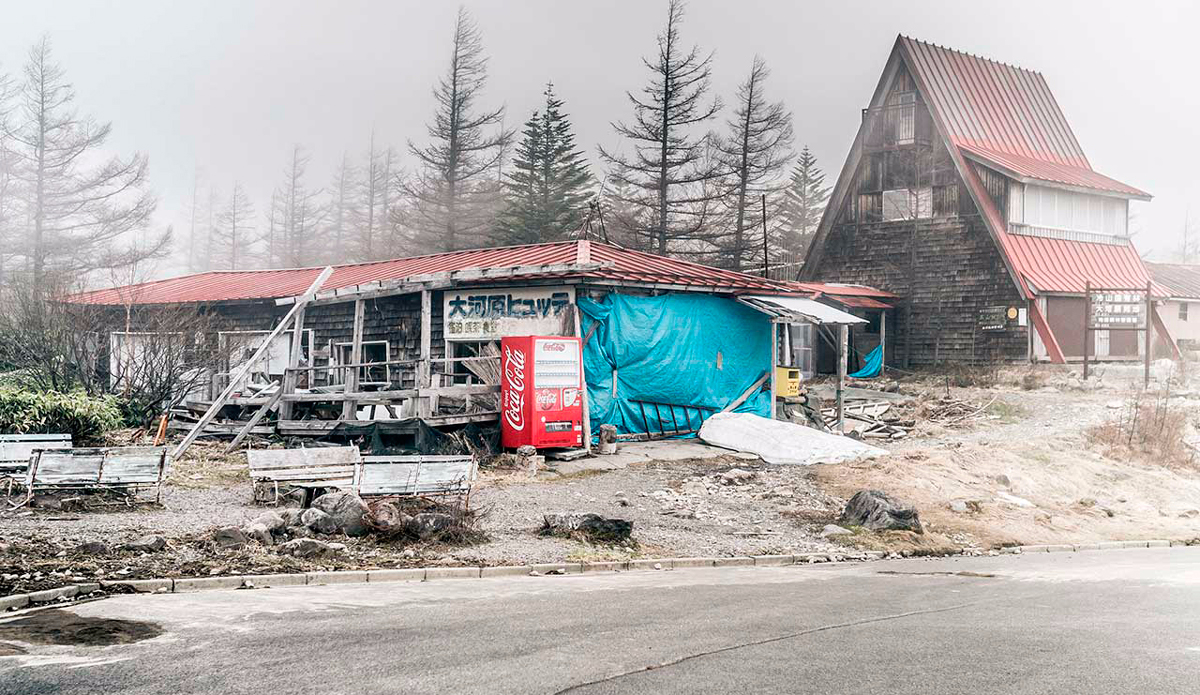
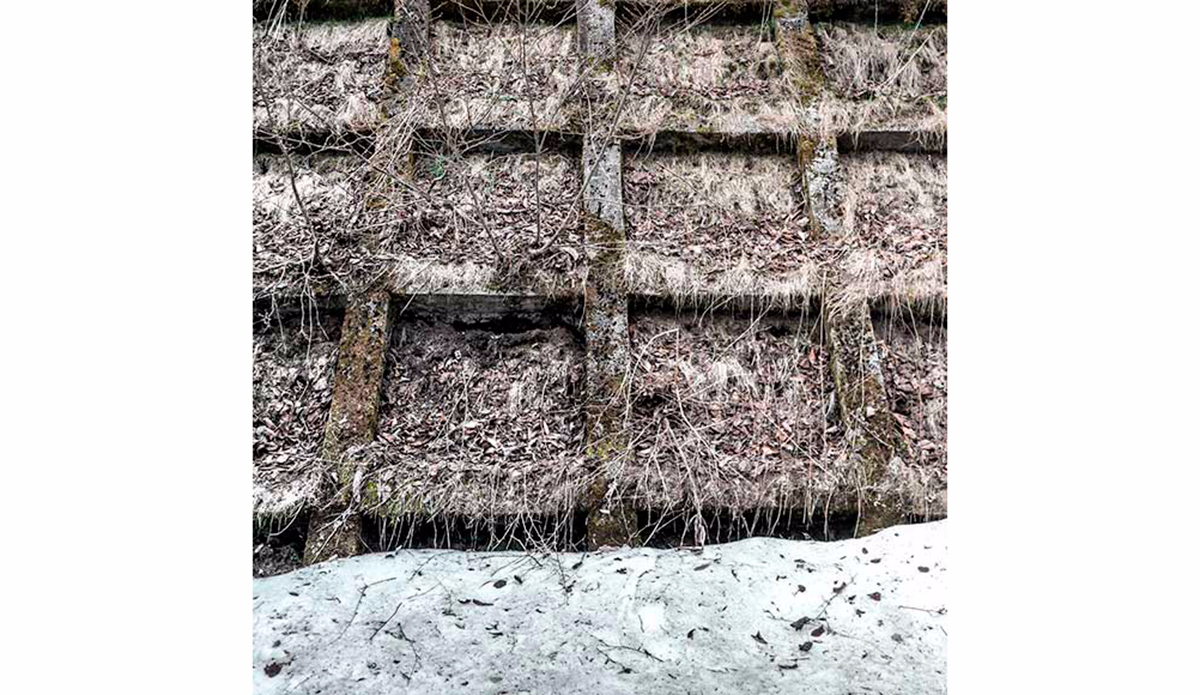
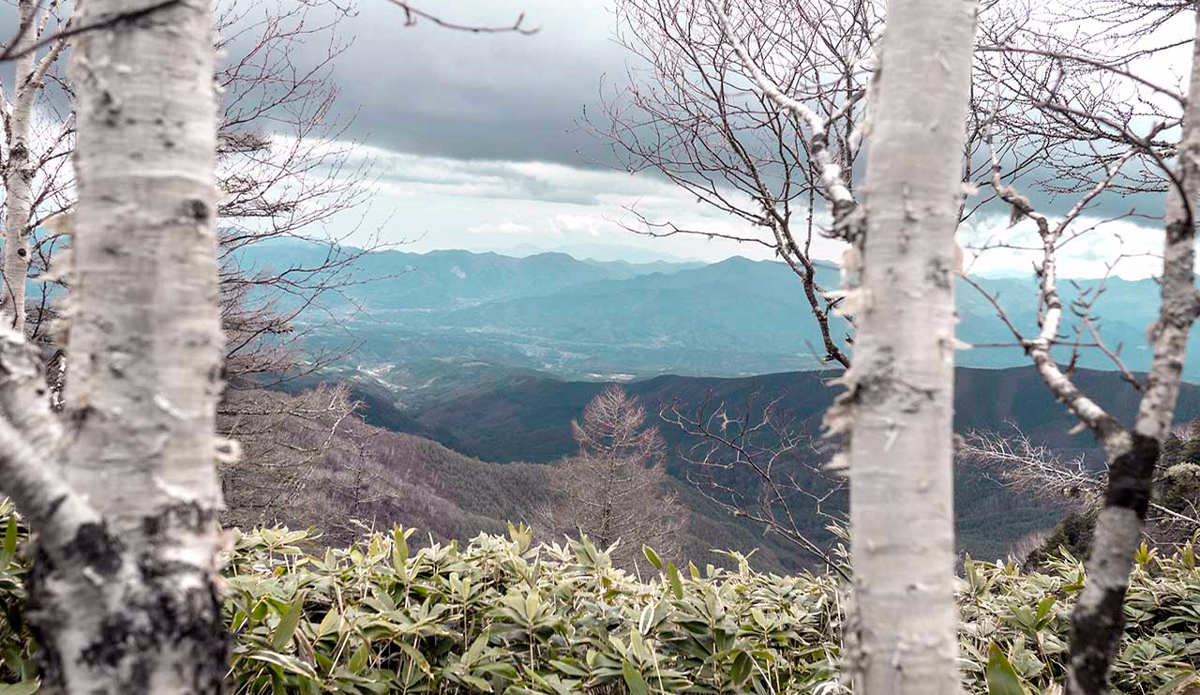
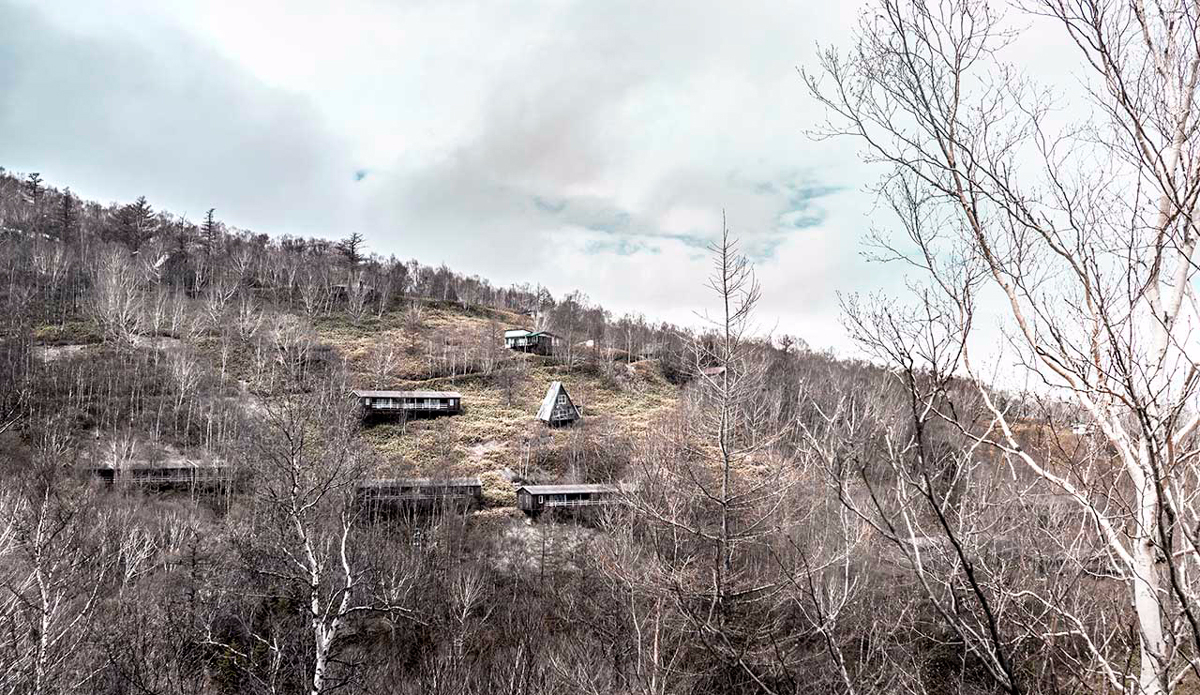
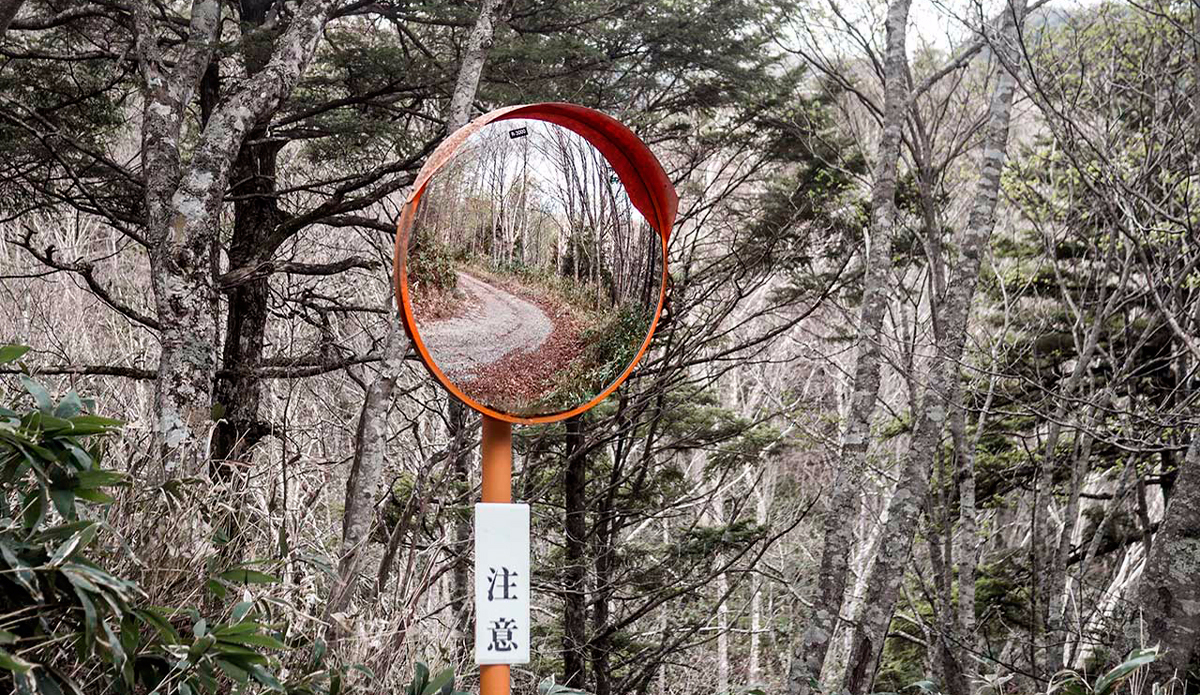
At first, the road that leads from Lake Matsubara towards the Yatsugatake mountain range is nondescript as far as Japanese country roads go, but to a foreign eye almost every faded detail holds something. The road would take me on a long series of climbs to the summit of Okawara Pass at around 2100 meters above sea level. The mountain range itself intersects Japan’s Northern and Southern Alps, which are equal in scale but Yatsugatake has a moodier feeling than its neighbor. I was told there could be a little snow left in the mountains, and as I climbed higher there were small but impressive remnants of winter. In retrospect, it seems absurd that I was impressed by the small remnants of snow early on, not knowing there would be full coverings of snow further into my ride.
I’d experienced this region’s amazing mountains in photographs but had never seen it for myself. As the altitude increased, the strong smell of evergreen consumed me: spending most of my time in Tokyo it’s easy to forget the smells, sounds, and sensations that are out there. Nature feels much more intense when it isn’t part of your everyday routine. After witnessing the abundance of intriguing back routes and gravel roads, my main concern was that my route would be far too normal, too civilized.
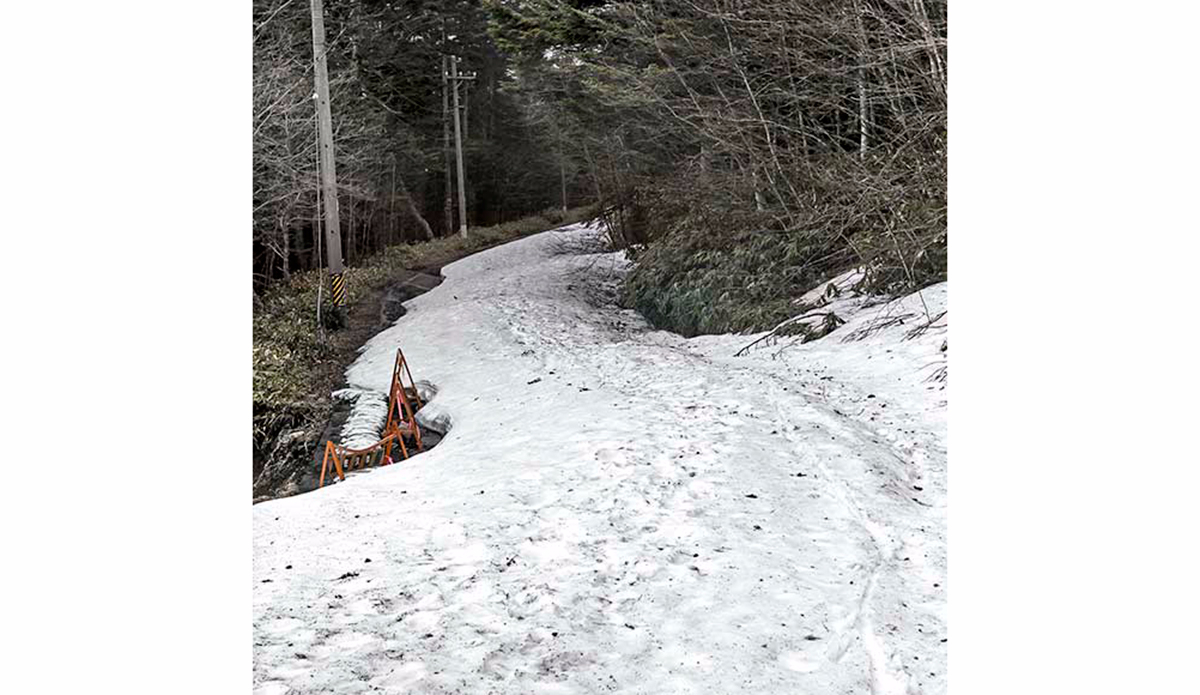
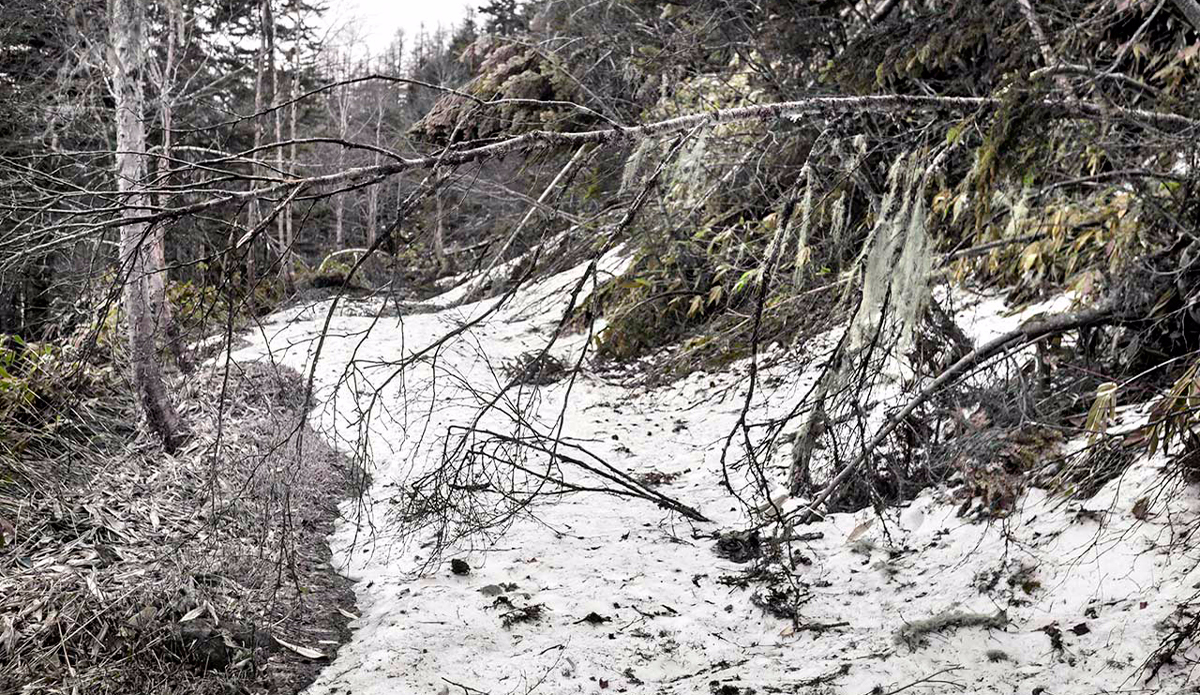
I was trying to find was mostly covered by another snow drift. I pushed ahead, hoping that what appeared on the map as a simple route toward the lake would become a clear descent after this initial belt of snow. Unfortunately, the thin ribbon of road became increasingly wild, even when, after a small glimmer of hope where a gravel trail started to emerge, the road began to climb again and the snow returned; gravel, snow, gravel, snow, fallen trees, snow, overgrowth, water; this pattern of progressively deteriorating conditions continued. The road was still increasing in altitude and becoming overgrown with vegetation. The snow and mist thickening, I could see no tracks from anything other than small unknown animals. At this point things began to get scary.
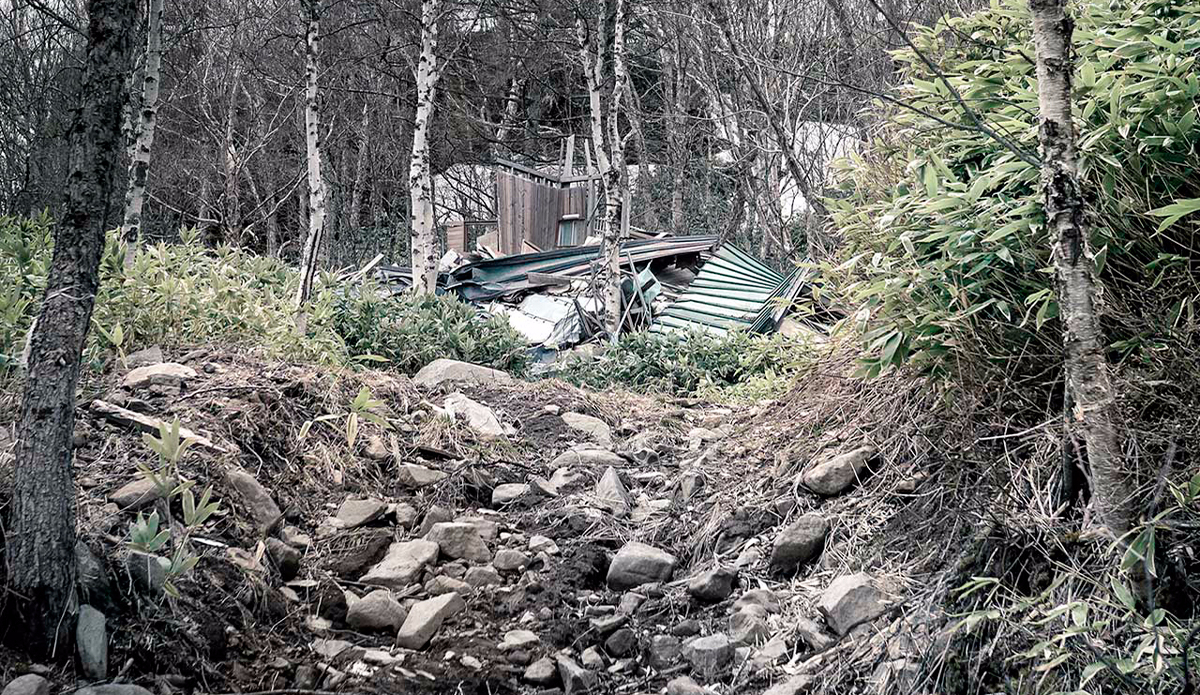
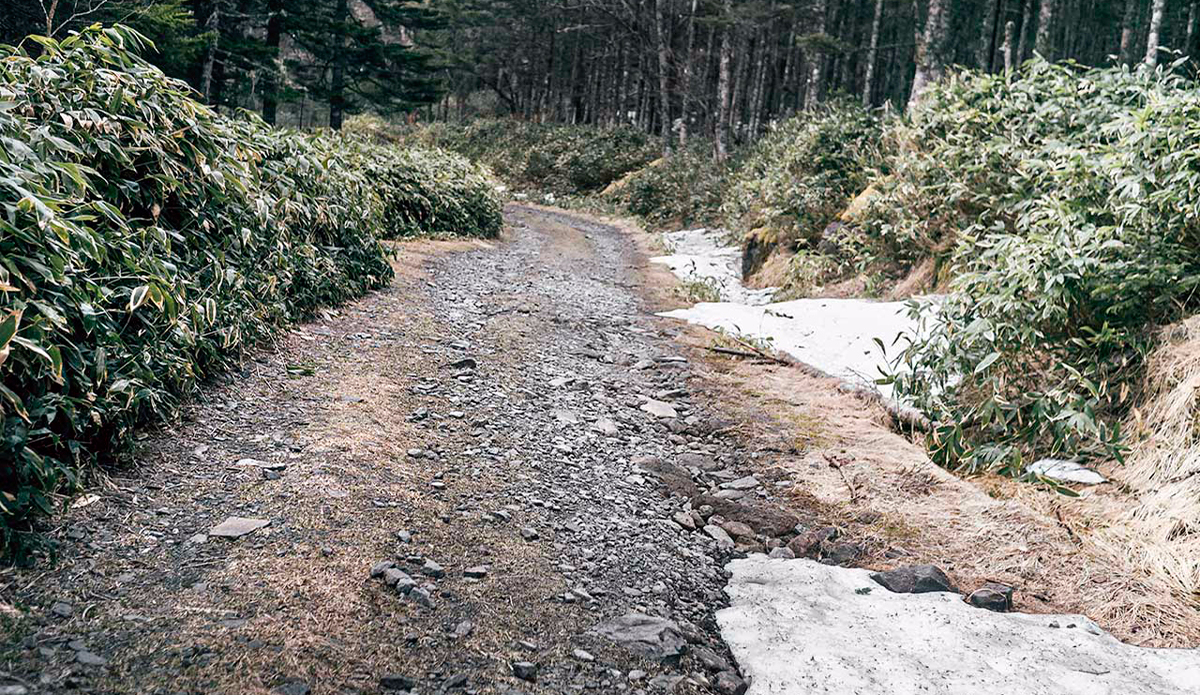
Taking some time to pause was probably the best decision I made that day. Pushing forward in the hope of better conditions seems to be the human default that often ends in disaster. Checking back more carefully on my GPS, the road would actually rise at least another 500 meters there, and with conditions unknown. So I made the decision to turn back and head for a previous route which led to another trail and an obvious descent that would hopefully take me to some kind of familiarity. When the snow did finally subside, what emerged was more than a gravel road, oversized rocks made even rolling virtually impossible, especially with road tires. Through a combination of walking and riding I covered about 15 kilometers with the occasional hope that the road would become smooth, only to be forced back into walking. It’s surprising that I got as far as I did without a puncture, but it was bound to happen – this road was extreme and more suited to a mountain bike. At least by the time I did get a flat I’d made it back into the sun, so taking time to remove my wheel gave me the chance to rehydrate and check my phone for a signal – nothing. Some hikers passed by with optimistic smiles, but there was still a long way to go and I had no idea when the trail would become road. Juggling whether to ride the rocky path with only one spare tube was tricky; my decision was either to be the vibrations and possible damage of going downhill on a road bike, or alternately, the slow awkward gait of my stiff, carbon-soled cycling shoes, which were becoming more disfigured with every step.
After another hour of this painful descent, the first farmhouse I saw in the distance marked the end of the trail and the beginning of a beautifully smooth road that ran through small fields and farmland. Above, there was a clear blue sky and eventually a ringing phone which meant I was within reach and could explain why I was so many hours behind schedule. There were still over 15 kilometers of road between here and home, but the sense of relief was astonishing, and even though the road soon became harsh and uneven with speeding trucks and cars forcing me into the gutter, the adventure was over. Once my adrenaline had subsided I was completely spent, emotionally and physically. The final five kilometers were a long and steep series of slow climbs that seemed never-ending, but would eventually take me home.
For more from Lee Basford, head on over to Humankind.jp. And don’t forget to follow him on Instagram.
For more from Terasu, visit them at terasulife.com and check out their Vimeo. Also, as with Lee, don’t forget to follow them on Instagram, as well as Like them on Facebook and follow them on Twitter.

