
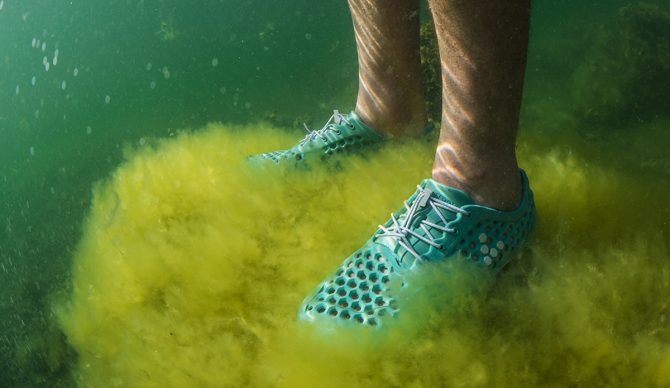
The Ultra 3 Bloom is made from algae biomass, so each pair allegedly reduces 40 balloons worth of carbon dioxide from the atmosphere. Photo: Vivobarefoot

Editor’s Note: This feature is powered by our friends at Vivobarefoot.
Foot dexterity is a massively important attribute in living an active lifestyle – especially when it comes to something like surfing. The ability to move your toes around freely as they were meant to function is well…functional. Running, climbing, keeping your feet attached to (or glued to a surfboard) all require a decent amount of dexterity. With the proliferation of information made available by books like Born To Run by Christopher McDougall, it’s become more widely understood that keeping our feet cramped up in shoes and socks 90% of our lives does more to damage to them than protect them. Thick, cushioned soles don’t allow your feet to feel the ground, reducing sensory feedback to the brain and resulting in clumsy movement. Essentially, we rob our own bodies of something they were built for with a very common article of clothing. Everything from muscles to tendons is compromised by the average shoe, increasing the likelihood of enduring runners knee, shin splints, pelvic and lower back pain, and a laundry list of other nagging or serious injuries for everyday athletes.
Enter the barefoot fitness revolution. Even though going fully barefoot is still mostly reserved for the beach, there’s been a growing market for shoes made to minimize the distance between our soles and the ground. And to be honest, for as much as I run, surf, and live an overall active life, I’ve always avoided jumping on the bandwagon primarily because “barefoot” shoes are typically not super stylish.
Not too long ago, however, a good friend of The Inertia and overall great guy who charges big waves, Torsten Durkan, started working with a company that focuses on this part of our body. Interestingly, they’ve added a commitment to sustainability to their line of barefoot-focused footwear through their Ultra Three Bloom shoe.
The Ultra Three Bloom uses an algae-based foam that claims to be the first sustainable alternative to the synthetic and petrochemical EVA ubiquitous in the global shoe game. According to Vivobarefoot, the algae biomass offsets a significant amount of the petroleum ingredients common for conventional flexible foams. It’s the same stuff that Firewire is using in their Kelly Slater traction pads, and it’s generally a good thing.
From the perspective of net impact, Vivobarefoot claims that each pair returns 57 gallons of clean water to the habitat and reduces 40 balloons worth of carbon dioxide from the atmosphere. No one’s mad about getting in shape while not killing the earth.
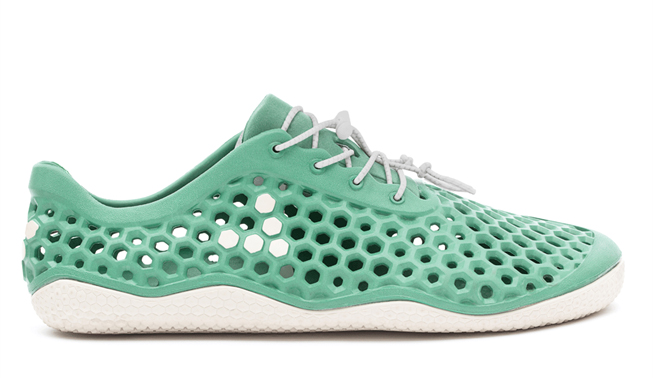
The Ultra 3 Bloom’s use of algae biomass helps offset the ubiquity of petroleum ingredients found in conventional flexible foams. Photo: Vivobarefoot
So when I saw Torsten running in a pair, I texted him. “They actually look kinda rad.”
Torsten filled me in that he’d started using a particular pair for rain and snow boots and some hiking and training shoes as well. A few weeks later, a pair showed up in the office for me. They were a “water-resistant movement shoe” made for wet environments. Imagine trail runs in wet areas or hiking along a river, climbing on wet rocks, and all that jazz in something designed to feel like you’re barefoot. Now, I’m not much of a camper or hiker, but I do enjoy morning runs just as much as I enjoy a dawn patrol surf session. In fact, I honestly have a hard time getting out of bed and straight into the Pacific unless I’m expecting head-high barrels (or just good waves in general). So I actually run a lot more often than I surf in the morning these days. I live a few blocks away from the beach and just one block from the Hermosa Valley Greenbelt, a bark trail that runs the length of Hermosa Beach and Manhattan Beach. It’s seemed like a solid place to at least ease my way onto the barefoot bandwagon, which is what I’ve been doing the past two weeks now.
Photo: VivoBarefoot
Vivobarefoot actually offers a 100-day trial for barefoot beginners, so I’m currently giving myself that much time to test out the difference between their “amphibious adventure shoe” and my standard running shoes. Having almost nothing between the soles of my feet and the random little inconsistencies of a bark and dirt surface means I feel every little bump under my feet, which has taken some time to get accustomed to. But I have now started to notice how sore my feet are on the days I wear my standard trainers to the gym instead of going for my “barefoot” runs. So, two weeks in and I can say I finally understand the difference between going barefoot and sticking with the status quo cushioned shoes. Beyond the anatomical innovation, I appreciate the desire to innovate with a more sustainably-produced product. Turns out, a lot of people wear shoes. If more consumers begin to demand this type of technology in their footwear, the more quickly it will become widely adopted.
The Ultra 3 Bloom is available for $80 on Vivobarefoot’s website.

