
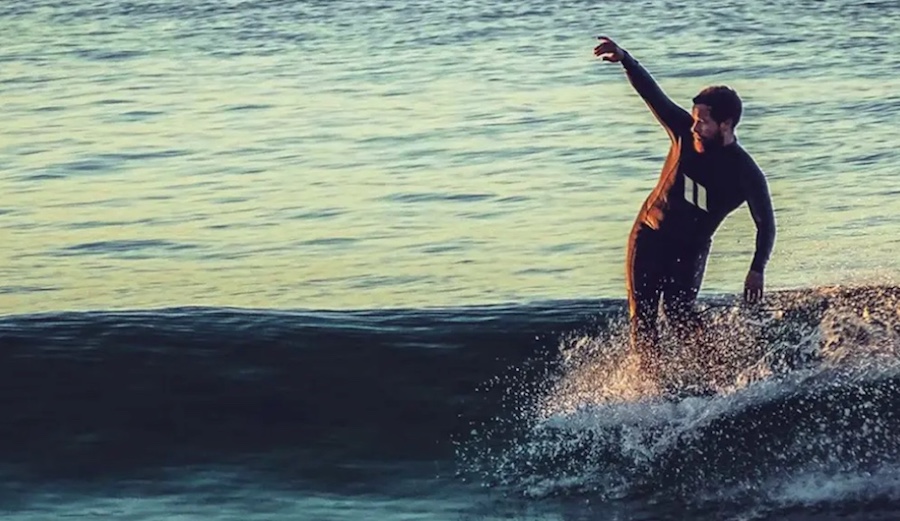
Dr. Javier Leon of the University of the Sunshine Coast in Queensland, Australia conducting research. Photo: KJ Lockett

Soon students at the University of the Sunshine Coast in Queensland, Australia will have the opportunity to surf and chat with locals in the lineup for college credit.
The course, called the “geography of surfing,” will cover topics ranging from the science behind waves – and, in particular, why the Sunshine Coast’s famous pointbreaks get so good – the economic benefit of quality surf, surf history and culture, and the future of surfing with the proliferation of wave pools and surfing’s 2020 Olympic debut.
Dr. Javier Leon, a longtime surfer and course instructor, believes this course is the first of its kind in Australia and one of few like it around the world.
“The point of the course is to look at the relationships between Noosa’s unique surfing culture, the community and the environment,” Dr. Leon said in a University of the Sunshine Coast blog post.
“By the end of it, we’ll be able to answer questions such as what makes the waves around Noosa so great from a physical perspective. But we also want to know who surfs the waves, and why they surf them, and how much money are they spending, and what it means for surfing culture in general.”
Dr. Leon is far from the first college professor to take a multidisciplinary look at surfing in the classroom. This effort is just the latest example of a surging academic interest in surf culture, its economic benefits, and its impact on the environment.
Stateside, San Diego State University’s School of Hospitality and Tourism Managment boasts the Center for Surf Research – a preeminent resource for researchers drawing connections between sustainable tourism and surfing. And further north, the University of Southern California often offers a course in surf journalism.
Dr. Leon’s geography of surfing course will allow students to map and measure waves across Noosa’s famed pointbreaks, a World Surfing Reserve, using drones and GPS devices.
If the topics of the course aren’t as far-ranging and ambitious enough, the potential impacts of climate change will also be a major theme.
“There’s already evidence that wave climate is going to change on the east coast,” said Dr. Leon.
“For example, southern swells, which push all the sand up the coast, are going to weaken – there are already scientific studies to show that. We want to understand if there are threats to the wave quality.”

