
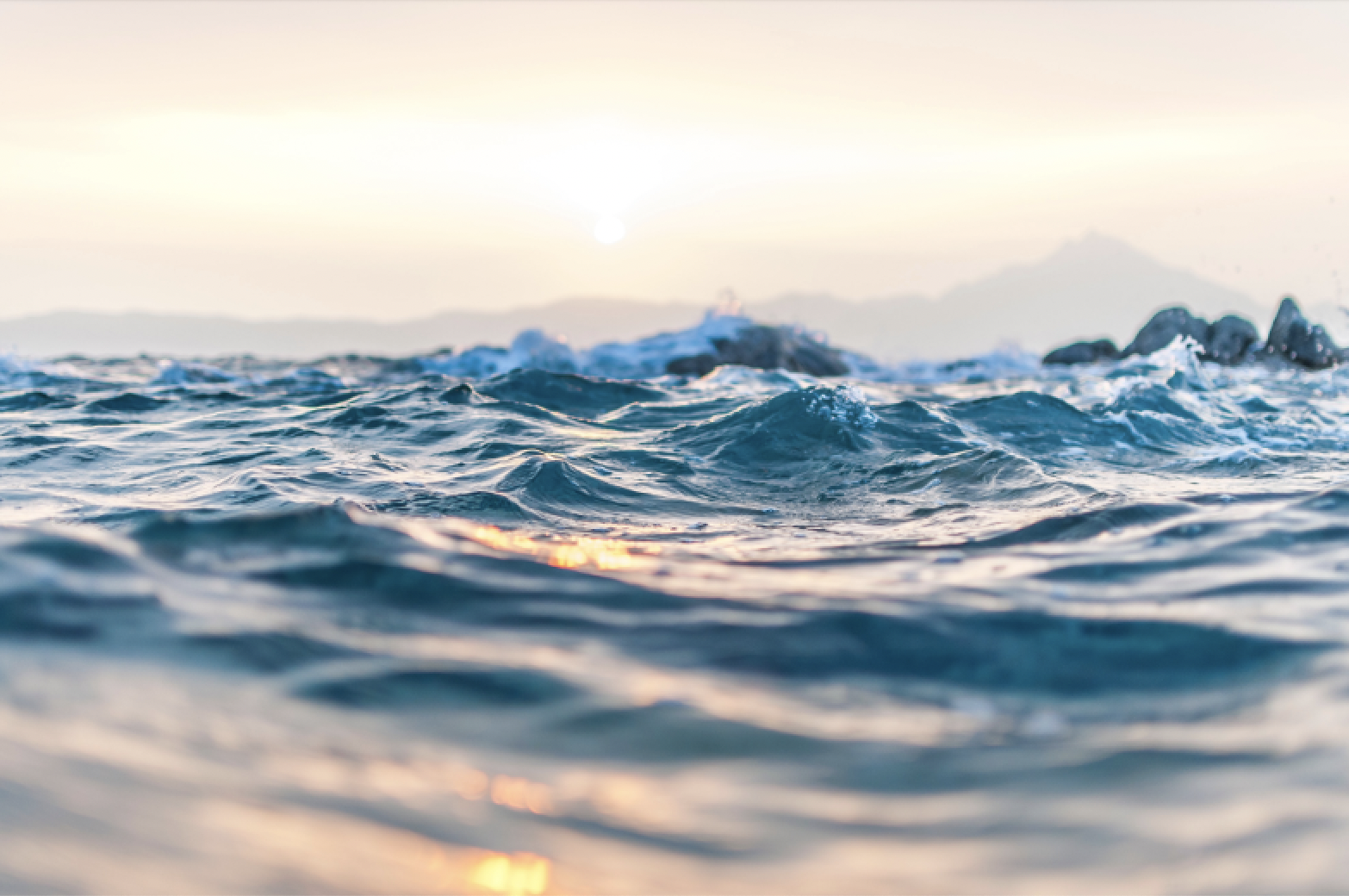
A supercontinent may be coming. Photo: Anastasia Taioglou//Unsplash

We’ve all heard of Pangea — the supercontinent that existed during the late Paleozoic and early Mesozoic eras. But have you heard of Amasia? According to scientists, we may have a new supercontinent in the next 200 to 300 million years and Amasia is its working name.
According to CNN, researchers at Curtin University in Australia and Peking University in China used 4-D geodynamic modeling to simulate the movement and evolution of Earth’s tectonic plates. Their findings? A supercontinent may form as the Pacific Ocean shrinks or “closes up.”
“Over the past two billion years, Earth’s continents have collided together to form a supercontinent every 600 million years, known as the supercontinent cycle. This means that the current continents are due to come together again in a couple of hundred of million years’ time,” lead author Dr. Chuan Huang said in a statement.
Throughout history, supercontinents have formed in different ways via introversion and extroversion. Introversion is when internal oceans close during the break up of the previous supercontinent while extroversion is when the pervious external superocean gets smaller.
The Indian and Atlantic oceans are young but the Pacific Ocean is the oldest ocean on Earth and is part of the Panthalassa superocean that began to form 700 million years ago. According to the findings of the study, as tectonic plates lose strength and thickness the formation of a supercontinent becomes more probable.
If a new supercontinent does, in fact, form, it will mean lots of changes. Researchers predict there will be more earthquakes and less biodiversity.
“Earth as we know it will be drastically different when Amasia forms. The sea level is expected to be lower, and the vast interior of the supercontinent will be very arid with high daily temperature ranges,” Li said. “Currently, Earth consists of seven continents with widely different ecosystems and human cultures, so it would be fascinating to think what the world might look like in 200 million to 300 million years’ time.”
So, what will that mean for the future of surfing? Most likely, some of our favorite surf spots will be lost. But, with new land and more earthquakes, there could be new options as well. We won’t be here to see how it all plays out, but future generations may be surfing the WSL Finals at an entirely new venue.

