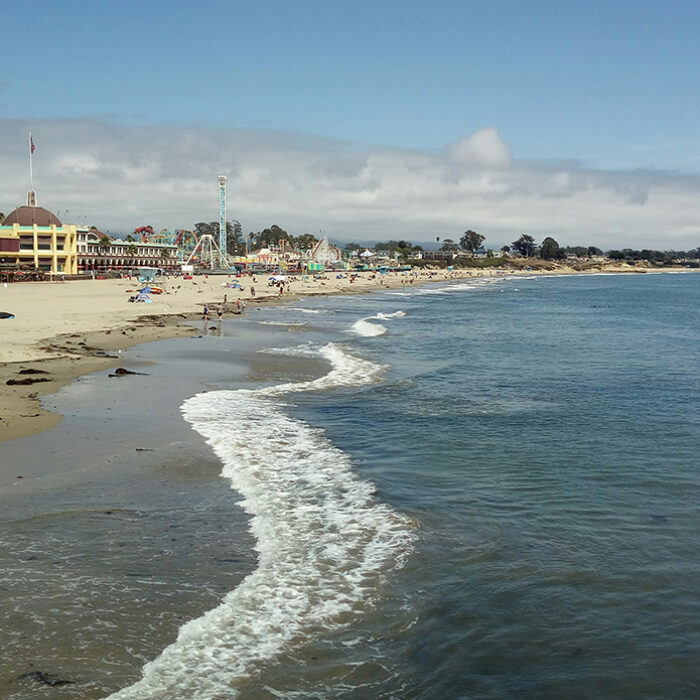
Great white sharks like to use the waters off Southern California and northern Baja as a nursery for their pups. It’s not all that uncommon to see a juvenile flitting around in search of a morsel of food, but it is uncommon for a great white shark to wash up dead on a beach — which happened at Torrey Pines over the weekend.
“There is an aggregation of juvenile white sharks that use Torrey Pines as a nursery. We estimate that there are 30 sharks there,” Dr. Chris Lowe, Director of the Shark Lab at Cal-State Long Beach, told CBS 8. “Unfortunately, fisherman have found out and illegally targeted the sharks. So, over the last few months, we’ve noticed an increase in sharks carrying fishing tackle that have broken off and I’d say about 40 percent of sharks had gear trailing off them.”
According to Dr. Lowe, there are “at least a dozen” sharks swimming around with hooks in their mouths or line trailing off of them. Some of those lines can be 100 yards long and have weights tied to them, which, as you’d imagine, is bad for sharks.
The shark that washed up at Torrey Pines was clearly caught by a fisherman. “The jaw was ripped and line tears in the body. The most likely cause of death is fishing,” Dr. Lowe said. “During its necropsy, we found fishing line tearing the jaw with hooks and the shark died of organ torsion. Its internal organs were twisted and that was the primary cause of death and it had signs of infection caused from the hook.”
White sharks have been protected in California since 1994, so anyone targeting them can be prosecuted. Prosecution, however, is nearly impossible, since some of the catches are accidental.
“It’s always sad to see that, especially for a young one,” Dr. Lowe continued. “The population is going up. It hasn’t been happening at a high enough rate to affect the population yet. If more and more people do this, there will be an effect on population. It won’t endanger them, but it could in the future.”