
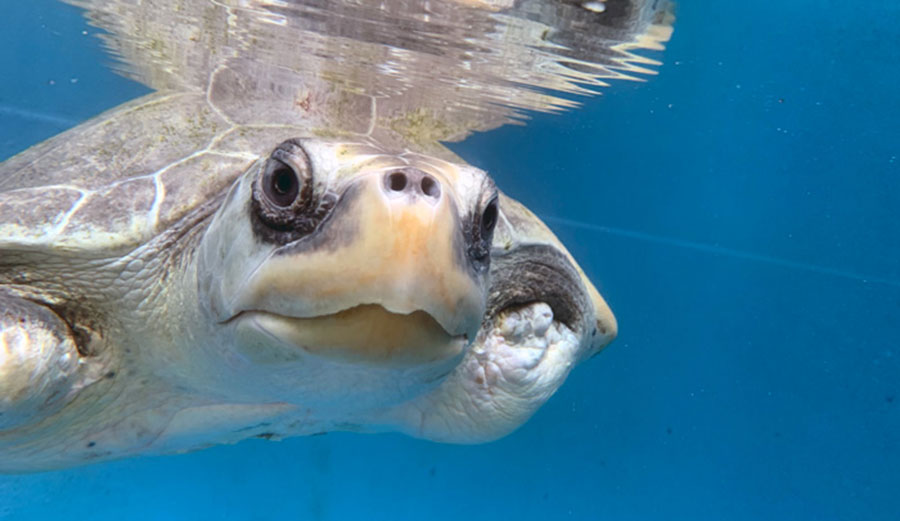
Heidi the olive ridley sea turtle has found his forever home in England. Photo: The Olive Ridley Project

In April of 2018, an olive ridley sea turtle was pulled from a ghost net in the South Malé Atoll in the Maldives. The turtle was injured so badly by the entanglement that its left front flipper needed to be amputated and its right simply didn’t work. Now, after four years at a veterinarian-led turtle rescue center in the Maldives called the Olive Ridley Project, the turtle has found a forever home: The National Marine Aquarium, the largest display for sea life in the United Kingdom, has officially welcomed Heidi.
Initially thought to be female, her rescuers named her Heidi. They soon realized they’d made a mistake, but the name stuck. Although he does have one flipper left, he’s considered a double-flipper amputee as the right one doesn’t move. He can’t be released into the wild. Heidi can still move around, but he’s only able to use his back fins. He’s not a light animal — some 64-pounds — and his mobility issues would likely prevent him from escaping would-be predators or foraging for enough food.
During the four years he spent at the Olive Ridley Project, vets put him through surgery and rehabilitation. It was likely a tough stretch — Heidi didn’t see many other turtles or any large marine life in general — so it’ll take him a while to get comfortable in his new home. But in the four years he spent at the rehab facility, he charmed his way into the hearts of the people working with him.
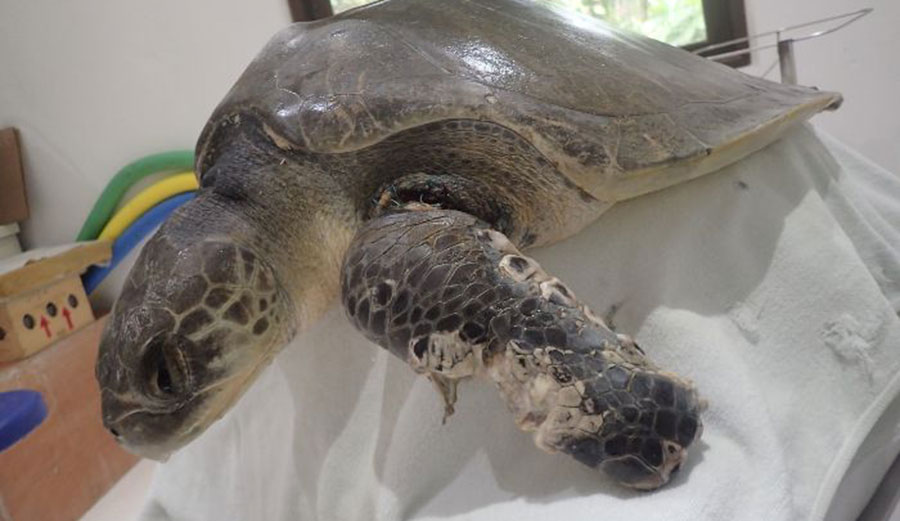
Heidi’s left front flipper deteriorating after suffering from entanglement wounds. Photo: The Olive Ridley Project
“You’d come in the morning,” said Dr. Claire Petros, lead veterinarian at the Olive Ridley Project, “and he would raise himself up with his little back flippers and come say good morning to you every single day.”
At the beginning of November, he began his 26-hour journey from the Maldives to the The National Marine Aquarium in Plymouth, England. Once he got to his new aquarium, he spent the first stint in isolation. With a gate separating him from the Great Barrier Reef exhibit, he slowly got his bearings.
“He has not seen other large marine life for over four years so it will take him a little time to get used to the stingrays and groupers already in the tank,” said Marcus Williams, curator at the aquarium and the Ocean Conservation Trust, in an emailed statement to CNN.
On December 20, the gate was lifted and Heidi swam out into his forever home. As of this writing, aquarium workers say he’s still shy, but they have high hopes.
“He has enjoyed swimming at the surface and playing in the water flow but it may take him a little time before he voluntarily dives down to explore the rest of the tank,” Williams continued.
While Heidi may have been rescued, he’s one of many turtles that get trapped in ghost nets. And most, sadly, don’t survive. Ghost nets are abandoned fishing nets that end up floating around the ocean. They can be nearly invisible and are the cause of countless deaths. According to World Animal Protection, more than 136,000 turtles, dolphins, whales and seals get tangled in abandoned nets or gear each year.

