

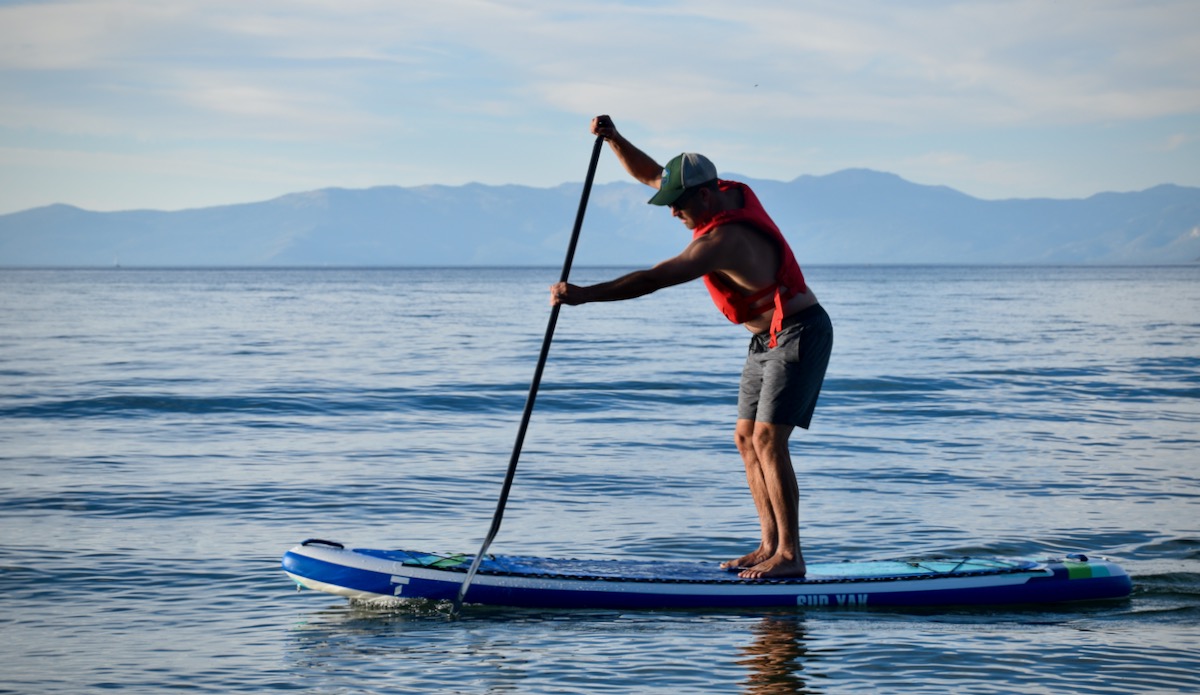
We tested the best inflatable paddle boards from ISLE, iRocker, BOTE, Red Paddle Co., NRS, and more, to help you find the right model for your experience level and budget. Photo: Shannon Bruckbauer//The Inertia

Inflatable stand up paddle boards (iSUPs) have transformed the sport of stand up paddling, making it more affordable and accessible than ever for anyone to own their own board. Inflatable paddle boards are much easier to store and transport than traditional hard paddle boards, and continued improvements in quality, performance, and affordability make them a great choice for any recreational paddler.
With so many different brands and models out there, it can be overwhelming to find the right option for you. We’re here to help. Our expert testers have been paddling SUPs for over 15 years and have been on the water to experience each new trend and technology that has emerged in this evolving market. We’ve personally tested nearly 30 of the best inflatable paddle boards on the market over the past three years to bring you our recommendations below.
Navigate To: Comparison Table | How We Tested | Buyer’s Guide
Related: Best Paddle Boards | Best Surf SUPs | More Paddle Gear Reviews
The Best Inflatable Paddle Boards
Best All-Around Inflatable Paddle Board: ISLE Explorer 3.0
Best Budget Inflatable Paddle Board: ROC Kahuna
Runner-Up Best All-Around iSUP: BOTE Breeze Aero
Best Inflatable SUP/Kayak Hybrid: BOTE LowRider Aero
Most Stable Inflatable Paddle Board: NRS Jukdo
Best Lightweight/Packable iSUP: Kokopelli Chasm-Lite
Best Inflatable Paddle Board for Touring: Red Paddle Co. Sport Plus
Best All-Around Inflatable Paddle Board
ISLE Explorer 3.0 ($795)
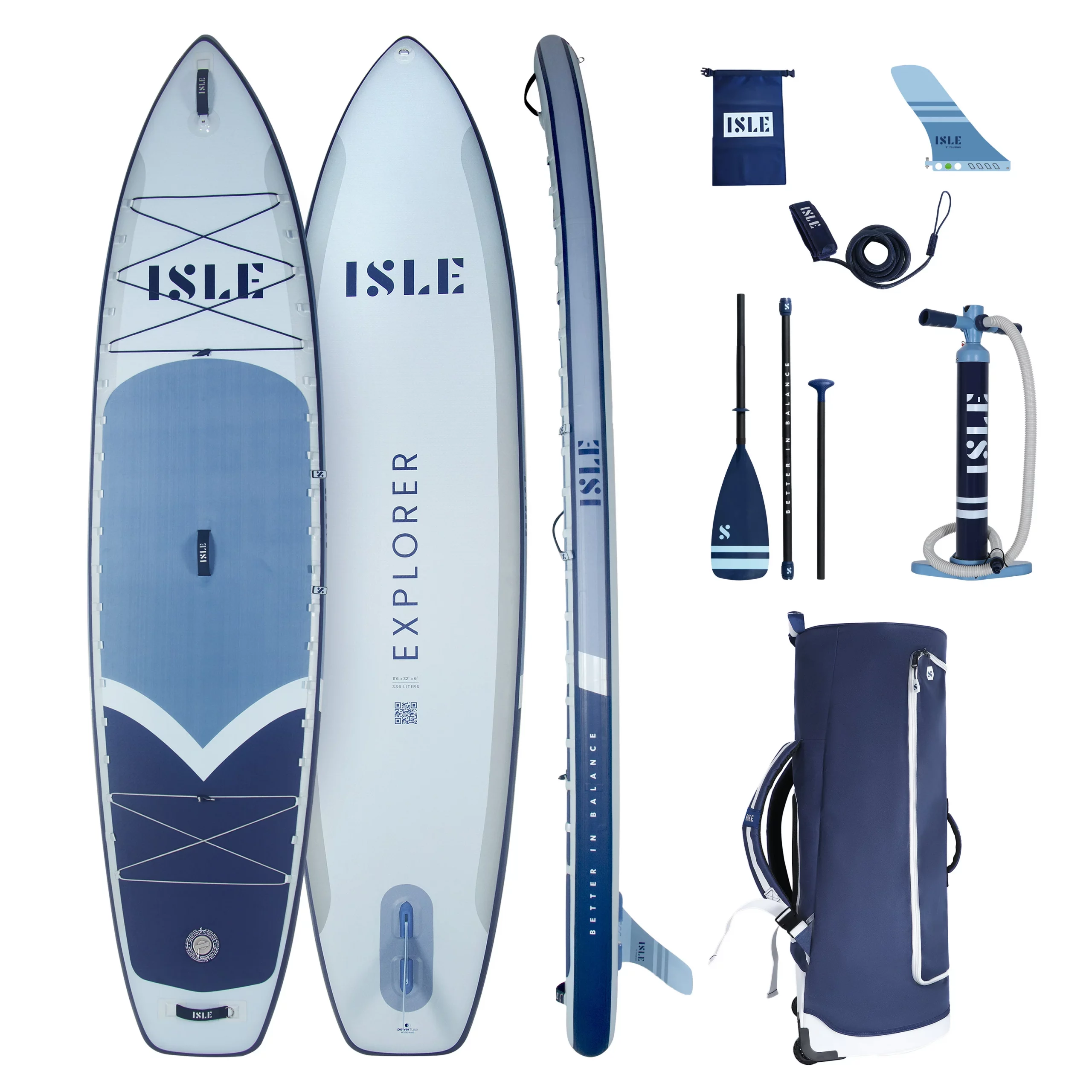
Available Sizes: 11′ 6″
Size Tested: 11′ 6″ x 32″ x 6″
Weight: 19 lbs
Fin Configuration: 1 removable center fin
Pros: Great blend of speed and stability, high-quality construction and accessories, decent price
Cons: Kayak conversion accessories must be purchased separately
The ISLE Explorer 3.0 is our favorite all-around inflatable paddle board and the one we’d recommend for most people. It hits the sweet spot for most paddlers with nice materials, good construction quality, great all-around paddling performance, and an attainable price tag. The Explorer doesn’t have any major performance weaknesses and would make an ideal board for beginners and experienced paddlers alike.
On the water, the Explorer 3.0 provides a nice balance of stability and speed with its 11′ 6″ x 32″ x 6″ dimensions, detachable center fin, and a high-quality hybrid-carbon paddle. Off the water, the included carry bag has some of the most comfortable backpack straps of any board we tested, as well as wheels, making storage and transportation a little less daunting.
An upgraded version of the Explorer 2.0, the Explorer 3.0 is 20% lighter, and the bag itself is much more compact and now includes wheels for easier transport. This added off-the-water convenience is a big advantage over other boards that are much heavier and bulkier to carry, and more difficult to inflate. We also love that if you purchase the Cloud Kayak Seat, Cloud Kayak Foot Brace, and the Remix Carbon SUP-Kayak Extra Paddle Blade, you can transform the board into a fully functioning kayak.
This sort of kayak conversion kit is a popular trend among inflatable paddle boards. If you’re looking for a board with all of the kayak conversion accessories already included, we recommend the BOTE LowRider Aero, highlighted below. However, the LowRider Aero can feel a bit sluggish due to its hefty size and width, so we’d stick with the ISLE Explorer 3.0 for the best all-around stand-up paddling experience. Read our review of the ISLE Explorer 3.0 here.
CHECK PRICE ON Amazon
The ISLE Explorer 3.0 is our favorite all-around inflatable paddle board, thanks to its balanced on-water performance and easy off-water experience. Photo: Rebecca Parsons//The Inertia
Best Budget Inflatable Paddle Board
ROC Kahuna ($220)
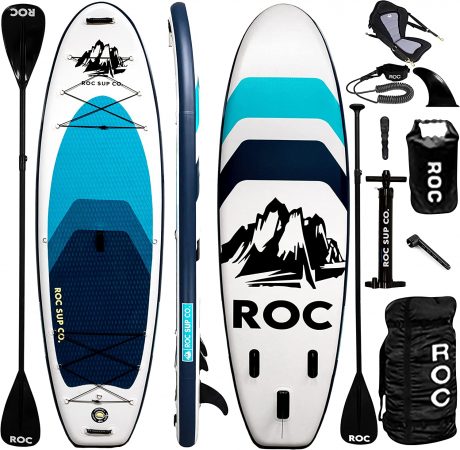
Available Sizes: 10′ Explorer | 10′ Scout | 10′ 6″ Kahuna
Size Tested: 10′ 6″ x 33″ x 6″
Weight: 18 lbs
Fin Configuration: 2+1 fins, center fin is removable
Pros: Great value for the price, lightweight, good stability, includes all needed accessories, surprisingly durable
Cons: Lightweight design means the board is less rigid, not super fast, accessories are more basic
The ROC Kahuna is a simple, affordable, well-designed inflatable paddle board with clean aesthetics and solid all-around performance. At 10′ 6″ long and 33″ wide, it provides a fun, stable paddling experience that makes this board a great choice for families or beginner paddlers. With its rounded nose and lightweight design, it’s not the fastest board we paddled, and it didn’t do the best in choppier water, but the lightweight design makes it more convenient for storing, hauling, inflating, and deflating.
The ROC is also surprisingly durable, with our test unit showing no signs of undue wear and tear compared to higher-priced options. It includes front and rear grab handles and front and rear cargo rigging, as well as bonus accessories like an attachable kayak seat, a convertible SUP/kayak paddle, a small waterproof dry bag, and a decent carry bag with comfortably padded backpack straps (but no wheels). The bag is the only part of the package we’ve seen to have durability issues in the three years we’ve been paddling this board, with one of the bottom seams beginning to give way, but better the bag than the board itself! You can also save a few bucks by opting to buy a package without the added kayak seat, or purchasing one of the 10′ models listed above instead of the 10’6″ Kahuna.
The only other accessory we don’t love is the convertible paddle, as the connection points are fairly basic, so the different paddle sections aren’t perfectly secure. Stepping up in price to the Retrospec Weekender Plus ($450) or the BOTE Wulf Aero ($559) will yield nicer overall accessories, but we’re confident that paddlers on a budget will not be disappointed with the ROC Kahuna. Read our full review of the ROC Kahuna here.
CHECK PRICE ON AMAZON
The ROC Kahuna is a simple and affordable inflatable SUP that includes the option to paddle it as a kayak, with a convertible paddle and an attachable kayak seat. Photo: Nick Bruckbauer//The Inertia
Runner-Up Best All-Around Inflatable Paddle Board
BOTE Breeze Aero ($799)
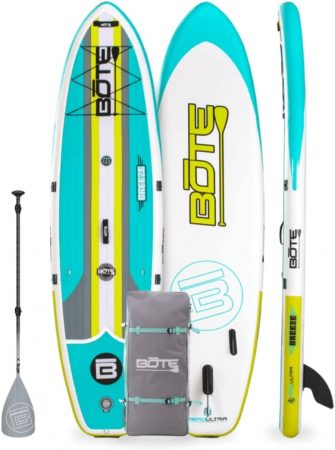 Available Sizes: 10′ 6″ | 11′ 6″
Size Tested: 11′ 6″ x 33″ x 6″
Weight: 22 lbs
Fin Configuration: 2+1 fins, center fin is removable
Pros: Good stability, nice accessories, good value, compatible with many unique add-ons from BOTE
Cons: Width and dimensions make it a little slower than other options
The BOTE Breeze Aero is another mid-tier inflatable SUP that provides a great blend of paddling performance and value. It paddles well in choppy conditions thanks to its generous width and gently rounded shape, and is a great choice for paddlers looking to outfit their kit with all kinds of extra accessories. Like most inflatable SUPs, the Breeze Aero includes everything you need to get on the water, including a three-piece adjustable paddle, travel bag, removable center fin, hand pump, and repair kit. BOTE also offers tons of additional accessories that are built specifically to fit this board, such as coolers, carry straps, inflatable seats, magnetic speakers, and drink cups.
The Breeze Aero just missed out on our award for the best all-around inflatable paddle board, as our team prefers the overall performance of the ISLE Explorer 3.0. The ISLE has a slightly narrower waist and pointier nose, as well as a nicer stock paddle, making it faster than the Breeze Aero, and giving it a more refined overall paddling experience. However, the Breeze Aero is a bit more stable than the ISLE due to its additional inch of width and slightly rounder nose shape, and is much more versatile thanks to the assortment of available accessories. For a higher-performance paddling experience, we’d recommend the ISLE. For a more relaxed day hanging out on the water, we’d recommend the Breeze Aero. Read our full review of the BOTE Breeze Aero here.
CHECK PRICE ON BOTE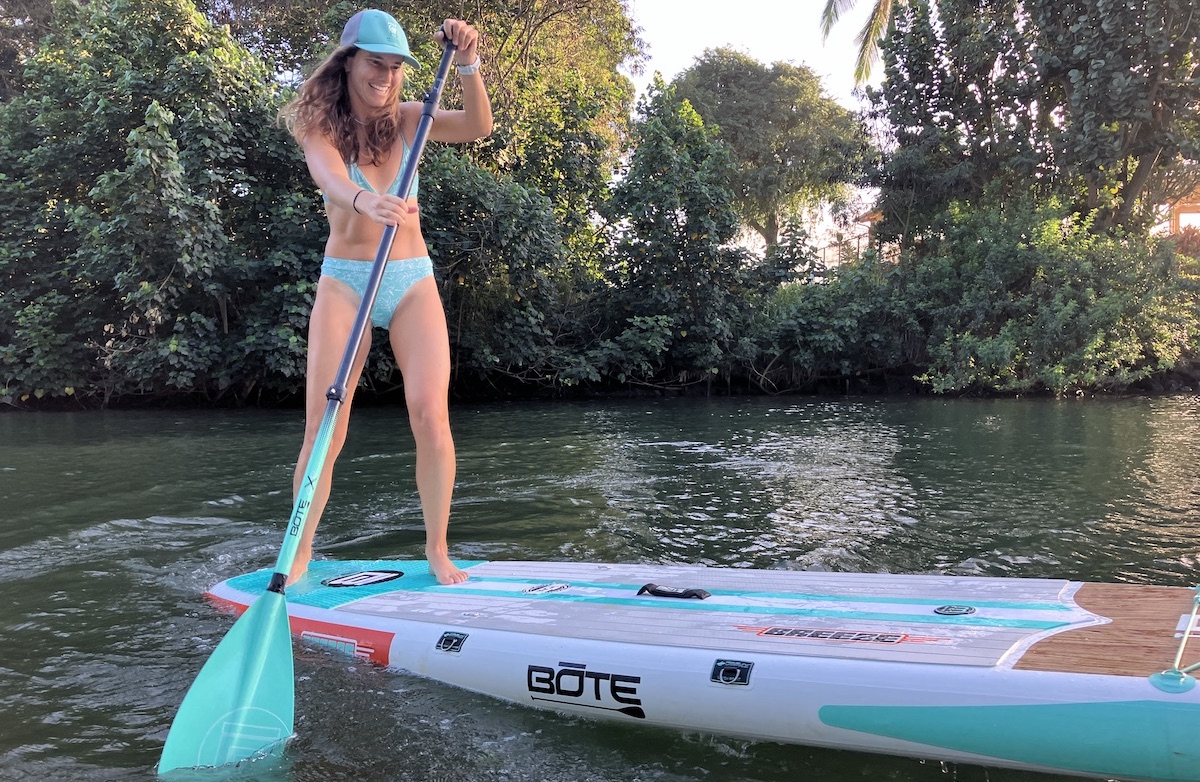
Photo: Jenna Miller//The Inertia
Best Inflatable SUP/Kayak Hybrid
BOTE LowRider Aero ($899)
Available Sizes: 10’6″, 11’6″ (tandem)
Size Tested: 10′ 6″ x 36″ x 6″
Weight: 30 lbs
Fin Configuration: 2+1 fins, center fin is removable
Pros: Very wide and stable, includes kayak seat and convertible paddle
Cons: A little sluggish, large and fairly heavy
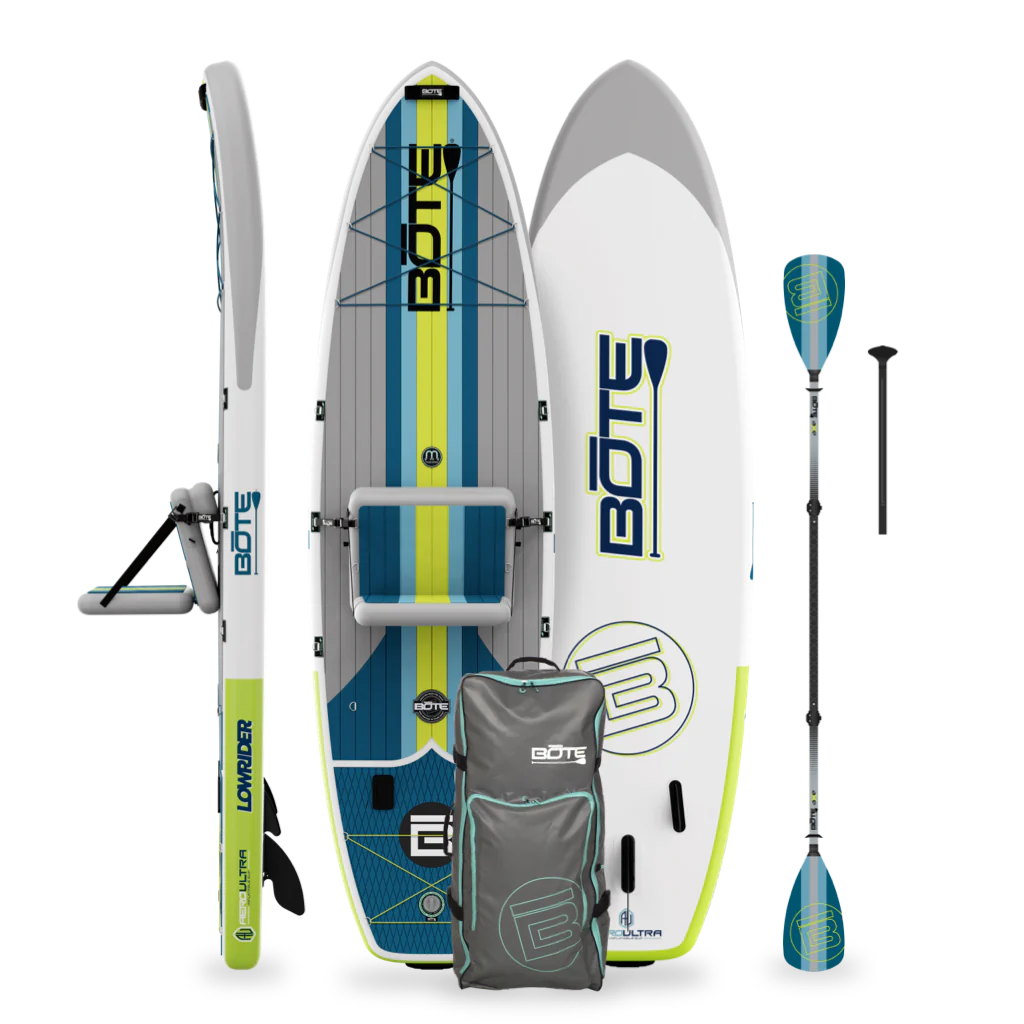
If stability is your top priority when looking for a paddle board, you’ll love the BOTE LowRider Aero. Measuring 10’6″ x 36″x 6″, it’s one of the widest boards we’ve tested (along with the NRS Jukdo 110 and the iRocker Blackfin Model X) and, as a result, one of the most stable. However, what really sold us on this board is the included high-quality kayak conversion kit. BOTE has one of the more comfortable and well-made kayak conversion kits on the market, with a great seat and sturdy extra paddle blade. However, unlike the ISLE and Tahe kayak conversion kits, a footrest is not included.
While most iSUP packages we tested come with cheaply-made stock paddles, the included four-piece hybrid carbon/fiberglass paddle is surprisingly sturdy and has a nice grip along the shaft, a major plus. The LowRider Aero is also compatible with BOTE’s wide range of accessories like racks, drink holders, and coolers, so you can also use it for fishing or a relaxing day on the water.
Because the LowRider Aero is such a large board, it takes a lot of work to get it inflated. The board (weighing 30 pounds by itself) and carrying case are also pretty heavy, but luckily, the carry bag has padded shoulder straps and wheels. Despite its heft, it cuts through the water pretty well and is much easier to maneuver than we anticipated, thanks to its 10’6″ length. There is also an 11’6″ tandem version of this board that comes with a second paddle and kayak seat.
The ISLE Switch and the Tahe Beach SUP-Yak are other hybrid kayak/SUP competitors that come standard with a kayak conversion kit. While both of those models include a footrest attachment, we still prefer the LowRider Aero for its more comfortable and supportive seat, and nicer overall paddle. Read our full review of the BOTE LowRider here.
CHECK PRICE ON REI Photo: Jess Jeong//The Inertia
Most Stable Inflatable Paddle Board
NRS Jukdo ($1,095)
Available In: 11’0
Size Tested: 11’ x 36” x 6”
Weight: 27 lbs
Fin Configuration: 2+1 fins, all removable
Pros: Inflates to 20 PSI, deck pad extends all the way to the tail
Cons: Doesn’t include a paddle, width isn’t great for paddling long distances
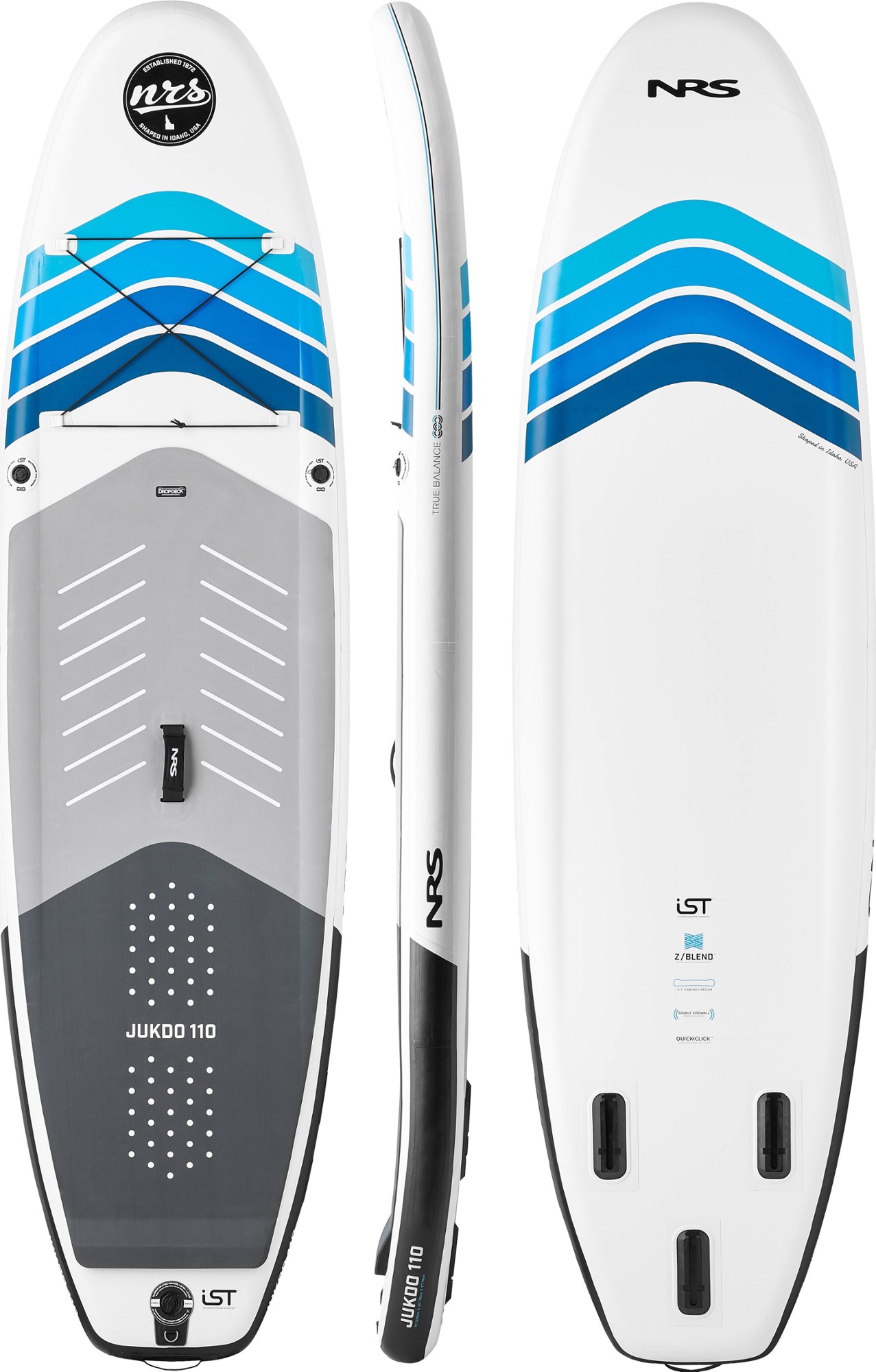
The NRS Jukdo is one of the widest and most stable inflatable paddle boards that we’ve tested. Along with its hefty 36-inch width, raised side rails with separate inflation chambers provide a rigid and stable platform to ride on. And where most inflatable paddle boards can inflate to a maximum of 15 PSI, the Jukdo can be inflated to 20 PSI, further enhancing the rigidity and stability. The Jukdo is a great pick for beginners, larger individuals, tandem paddlers, or anyone looking for a little extra stability on the water.
The Jukdo has a 2+1 fin setup, and the fins are all removable in case you’re paddling somewhere with shallow rocks or reefs. The fins sport a quick click-in design, so they’re easy to insert and don’t require any tools. The package also comes with a high-pressure pump to confidently reach the 20 PSI limit, but it still takes a good amount of work to get it inflated to full capacity.
Compared to the Jukdo, the BOTE LowRider Aero, another 36-inch wide board known for its stability, is a bit more affordable and more versatile thanks to the included paddle (the Jukdo notably does not include a paddle) and kayak conversion kit. The Jukdo feels heavier-duty and more rigid, though, thanks to its multiple inflation chambers and 20 PSI inflation capacity. The LowRider Aero is a better pick for more casual paddling, while the Jukdo would handle more technical paddling objectives a bit better. Read our full review of the NRS Jukdo here.
check price on REI
Photo: Maddie Bryan//The Inertia
Best Compact/Lightweight Paddle Board
Kokopelli Chasm-Lite Inflatable SUP ($999)
Available Size: 10′
Size Tested: 10′ x 30″ x 6″
Weight: 12.9 lbs
Fin Configuration: 1 removable center fin
Pros: Packs down super small, bag doubles as a dry bag
Cons: Pump isn’t very powerful, not super stable in choppy/windy conditions
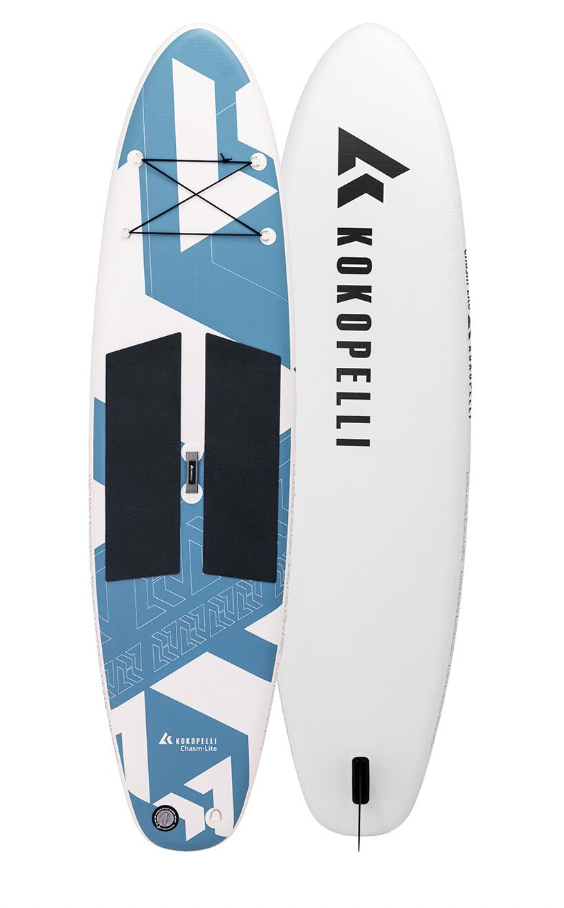
The Kokopelli Chasm-Lite is one of the lightest and most compact inflatable stand up paddle boards on the market. The board itself weighs just 12.9 pounds, and the entire package weighs in at 17.5 pounds. The board and all of its accessories pack down into a backpack that doubles as a dry bag that stands just 26″ x 13″ x 9.5″, making it easy to store and transport.
The board itself features an all-around shape. Although it is not the most stable board we tested, it’s plenty stable on flat water and works on the open ocean if you’re an experienced paddler. The board comes with a carbon fiber four-piece paddle, leash, fin, and pump, and it all packs away easily into the included bag. The pump itself isn’t the most powerful due to its compact size, but it gets the job done.
If you’re looking for a compact board that’s a bit more stable, the Red Paddle Co. Compact MSL Pact is a great option. The Red Paddle Compact MSL weighs 16 pounds (Chasm-Lite is 12.9 pounds), is 4.7″ thick (Chasm-Lite is 6″ thick), and has a twin fin setup (Chasm-Lite has a single center fin). The pump included with the Compact MSL is significantly better and more effective, but the entire package costs $1,499 compared to the Chasm-Lite’s $999. Read our full review of the Chasm-Lite here.
CHECK PRICE ON REI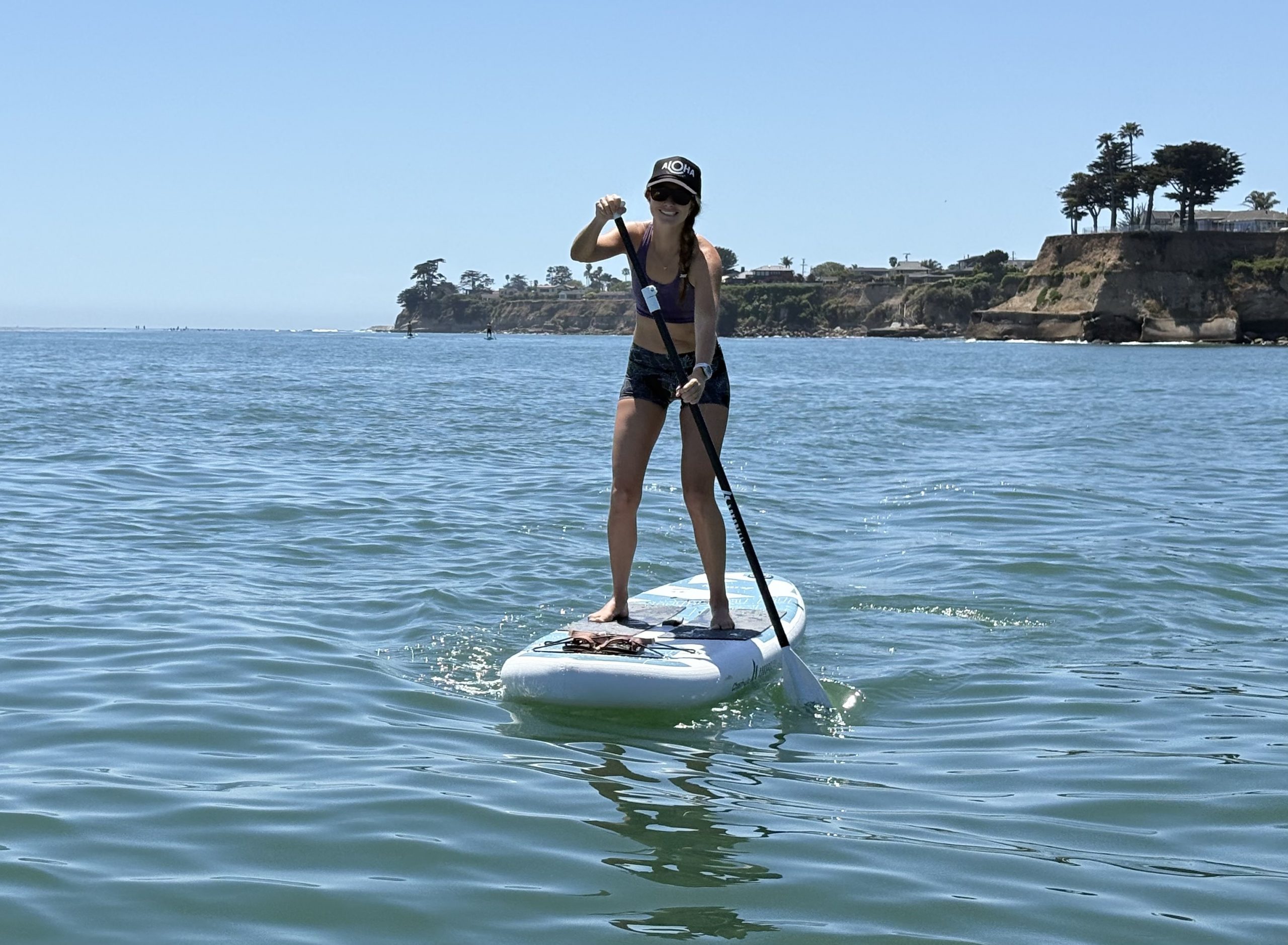
The Kokopelli Chasm-Lite is super light and packs down small for easy transport. Photo: Rebecca Parsons//The Inertia
Best Inflatable Paddle Board for Touring
Red Paddle Co. Sport Plus ($1,349)
Available Sizes: 12’6″, 14′
Size Tested: 12’6″ x 28″ x 4.75″
Weight: 21 lbs
Fin Configuration: 1 removable center fin
Pros: Hydrodynamic and fast, quality accessories, RSS battens make it feel like a hard board
Cons: Doesn’t come with a paddle, very narrow, might not be stable enough for beginners
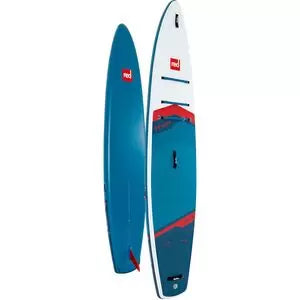
If you’re looking for a board to help you cover long distances with ease, look no further than the Red Paddle Co. Sport Plus. Measuring 12’6″ x 28″ x 4.75″, the Sport Plus is narrower and thinner than most inflatable paddle boards, allowing it to cut through the water quickly and efficiently.
If you’re new to paddling, the Sport Plus may be a tad unstable for you. It only has a 28-inch width and a very pronounced point to the nose. But if you’ve spent some time on the water, you should do just fine. To help make the board feel stiffer and more stable, it comes with a rocker stiffening system where you insert plastic battens into the side of the board. You can paddle without them, but they make the Sport Plus more rigid so that it feels like you’re paddling a traditional hard board as opposed to an inflatable.
The Sport Plus is a premium product made for experienced paddlers, and may exceed the price range and experience level of most casual paddlers. In that case, the ISLE Explorer 3.0, at one foot shorter and four inches wider, is a great option. While it’s not as flat-out fast as the Sport Plus, it will be more forgiving (and therefore more fun and enjoyable) for a wider range of paddlers, and is still faster than most other intermediate boards. Read our full review of the Red Paddle Co Sport Plus here.
Check Price on Green Water Sports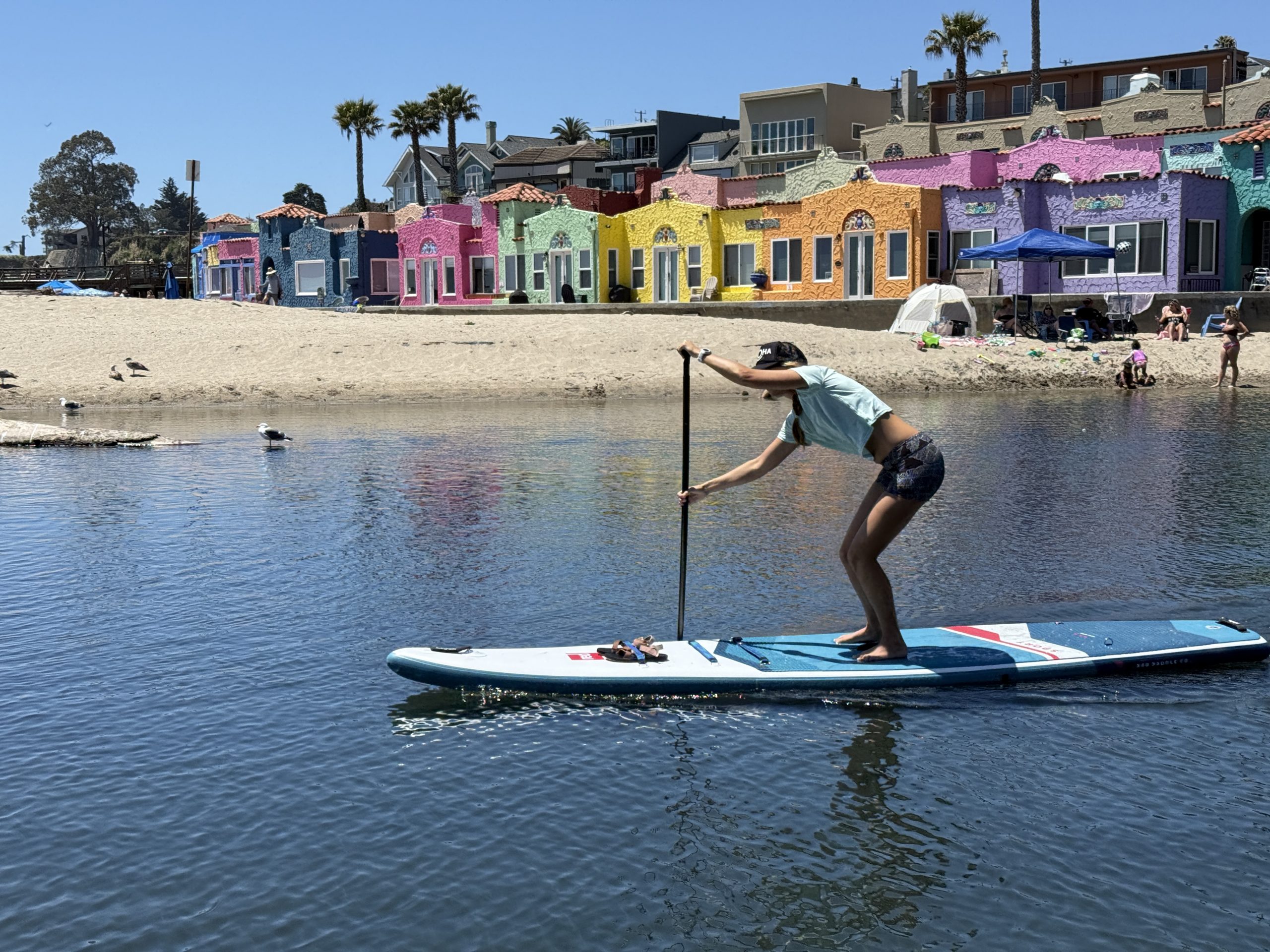
The Red Paddle Co. Sport Plus is a speedy board, making it great for covering long distances on the water. Photo: Rebecca Parsons//The Inertia
More of our Favorite Inflatable Paddle Boards
While the above top pick winners represent the best of the best inflatable paddle boards on the market, there are so many more awesome boards that we’ve tested. Below are some more great of our favorites that we’ve personally paddled, but were edged out by our top picks.
Another Great All-Around Inflatable Paddle Board
iRocker Cruiser 7.0 ($699)
Available Sizes: 10’6″
Size Tested: 10’6″ x 34″ x 6″
Weight: 25 lbs
Fin Configuration: 2+1 fins, all removable
Pros: Includes an electric pump, nice accessories, fairly affordable
Cons: Not super fast
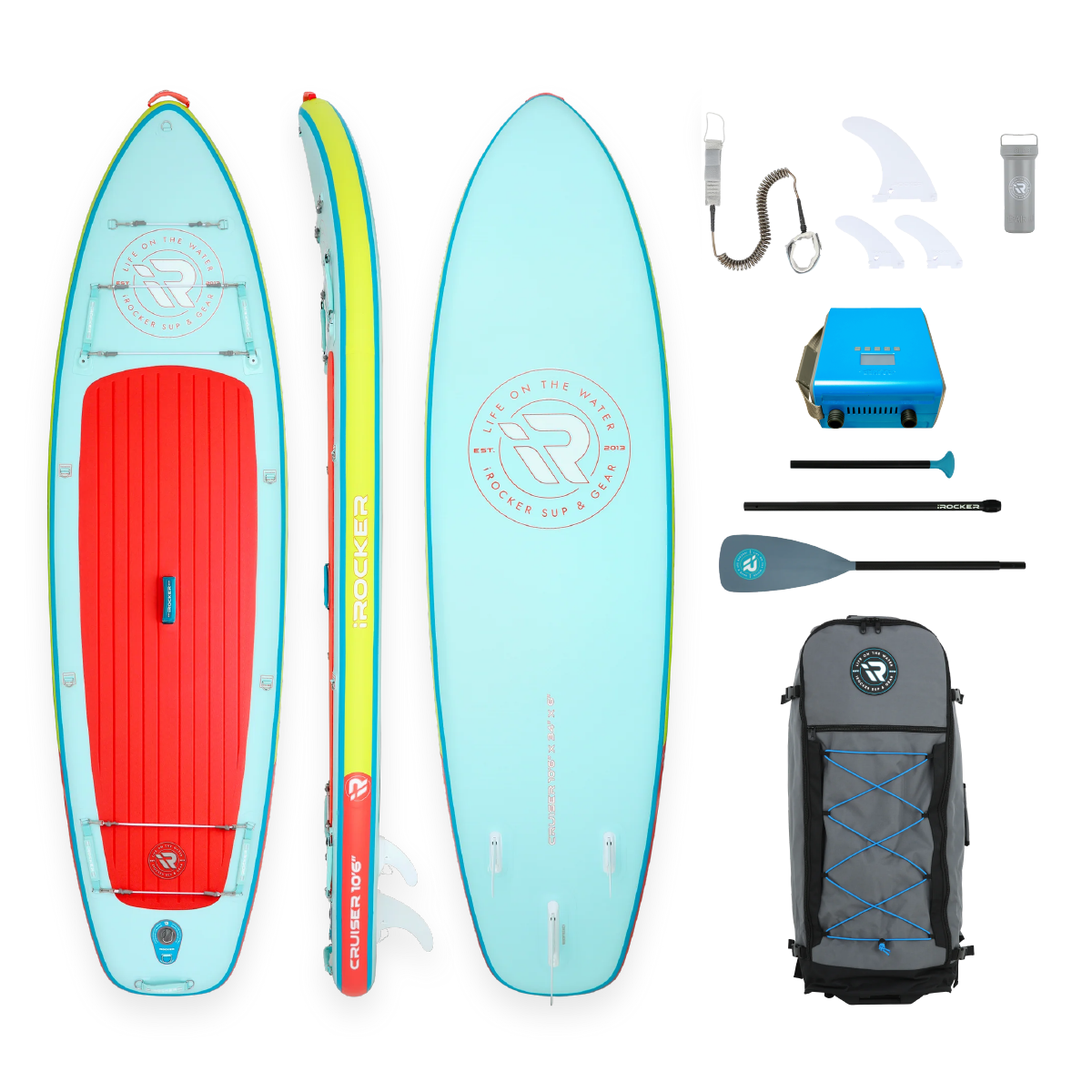
If you’re looking for an eye-catching board to get out and cruise on, the iRocker Cruiser 7.0 is an excellent pick. Measuring 10’6″ x 34″ x 6″, the Cruiser was designed to deliver a stable ride for beginner paddlers, SUP yogis, or those who like to paddle with gear or pups/kids onboard. As such, it’s not the speediest board, but the pointed nose allows it to cut through the water efficiently.
The Cruiser 7.0 kit includes the board, nylon fins, a leash, a carbon paddle, a wheeled backpack, a repair kit, and an electric pump. We were very impressed by the quality of the included accessories, especially at the $650 price point.
Unlike a lot of paddles included in SUP packages, the included carbon paddle is relatively high-quality and has a secure connection point that doesn’t move around while paddling. The fins have a click-in design, allowing you to secure and remove them without any tools. The leash has a key pocket on the ankle, which we thought was cool. And the fact that the bag has wheels? Impressive.
The Cruiser is comfortable to paddle and has a foam deck pad underfoot. It comes in four bright colors, and at $650, we found it to be a fairly affordable option that doesn’t sacrifice performance or quality accessories. The Cruiser is similar to the ISLE Explorer 3.0, but the Explorer is a foot longer, paddles more quickly and efficiently, and has a top-tier feel and finish at an approachable price point. Read our full review of the iRocker Cruiser 7.0 here.
CHECK PRICE ON iRocker
Photo: Rebecca Parsons//The Inertia
Great Value and Performance for Advancing Beginners
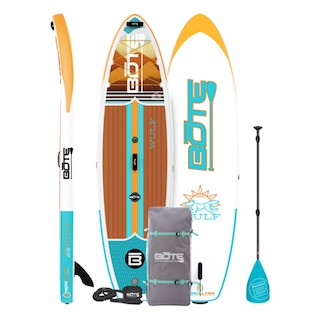
BOTE Wulf Aero ($559)
Available Sizes: 10’4″, 11’4″
Size Tested: 11’4″ x 34″ x 6″
Weight: 22 lbs
Fin Configuration: 1 removable center fin
Pros: Good balance of glide and stability, reasonable price, upgrade in performance compared to most budget-priced boards
Cons: Takes a lot of effort to manually inflate, accessories are good quality but fairly basic
The BOTE Wulf Aero is a great all-around inflatable paddle board that’s available at a reasonable price point. For $559 (and often on sale for less), you get the board, adjustable paddle, coiled leash, removable center fin, hand pump, repair kit, and a travel backpack. Designed with newer paddlers in mind, the Wulf Aero is wide and incredibly stable, while still maintaining reasonable glide speed that’s due to its slightly pointed nose. At its size and width, some drag is to be expected, but we were pleasantly surprised with the streamlined design and feel of the board.
Although the included accessories aren’t anything to write home about, they serve their purpose well and get the job done. The adjustable paddle breaks down into three pieces for storage and doesn’t slide around while you’re paddling, which we appreciate. The deck pad runs the length of the board and feels comfortable underfoot. The bungee straps on the nose are perfect for storing your backpack or any items you wish to pack along for your paddle. Because the Wulf Aero is a bigger board and the hand pump is single-barreled, it does take some time and effort to inflate it. It’s certainly doable, but if you want an easier experience, it’s worth investing in an electric pump. At the end of the day, the board and all its accessories easily fit back into the included backpack.
The Wulf Aero is very similar in size, shape, and construction to the iRocker Cruiser 7.0 above, but we gave a slight edge to the Cruiser since it includes an electric pump and has slightly nicer accessories, like a wheeled carrying pack.
CHECK PRICE ON REI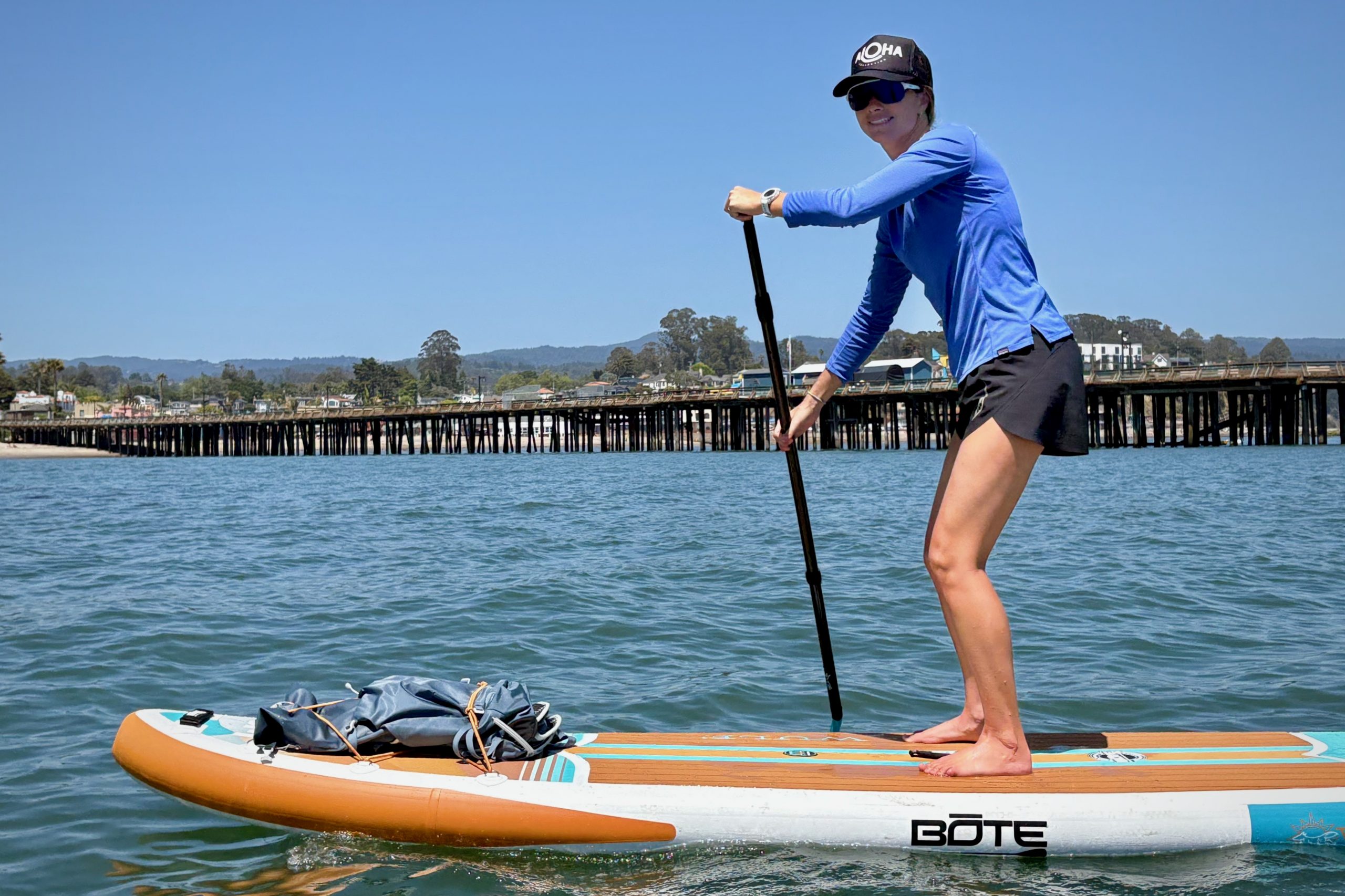
Photo: Rebecca Parsons//The Inertia
Best Inflatable Paddle Board for Fishing
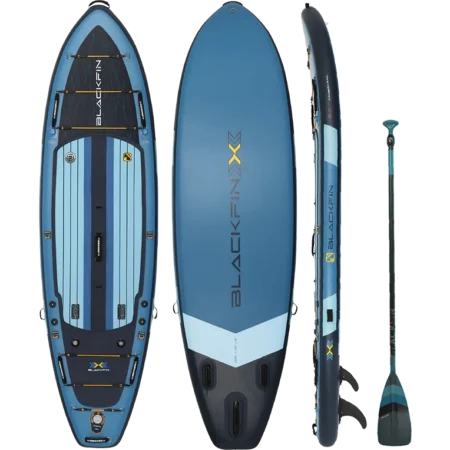
iRocker Blackfin Model X 7.0 ($899)
Available Sizes: 10’6″
Size Tested: 10’6″ x 35″ x 6″
Weight: 27 lbs
Fin Configuration: 2+1 fins, all removable
Pros: Insanely stable, comes with an electric pump, lots of compatible accessories available
Cons: Heavy, slow to paddle
Measuring 10’6″ x 35″ x 6″, the iRocker Blackfin Model X 7.0 is an extremely big and stable paddle board. The extra-wide design, coupled with the 450-pound weight limit, makes the Model X a great board for beginners, larger paddlers, folks looking to paddle tandem with their kids/pups, yogis, and people looking to fish from their board. It has several attachment points for gear so you can rig your board for long days on the water, and it is compatible with many iRocker accessories, such as a hard cooler, lunch box cooler, inflatable kayak seat, fishing rack, GoPro selfie mount, a SUP anchor, speaker, sand spear mount, and more.
One of the drawbacks of the size of the board is that it’s big and heavy, making it somewhat difficult to transport. We were able to carry it from the parking lot to the water without too much trouble, but you wouldn’t want to carry the board far. While boards this large are usually more difficult to inflate, the Model X can be packaged with an electric pump that makes inflation a breeze.
The BOTE LowRider Aero and the NRS Jukdo are similarly stable, like the Blackfin Model X, but each board is optimized for slightly different uses. The LowRider Aero includes a kayak conversion kit and is ideal for paddling around with kids or dogs. The NRS Jukdo is very rigid and stable, and is optimized for more technical paddling, like in rivers or streams. The Blackfin Model X is probably the most versatile of the three.
CHECK PRICE ON iRocker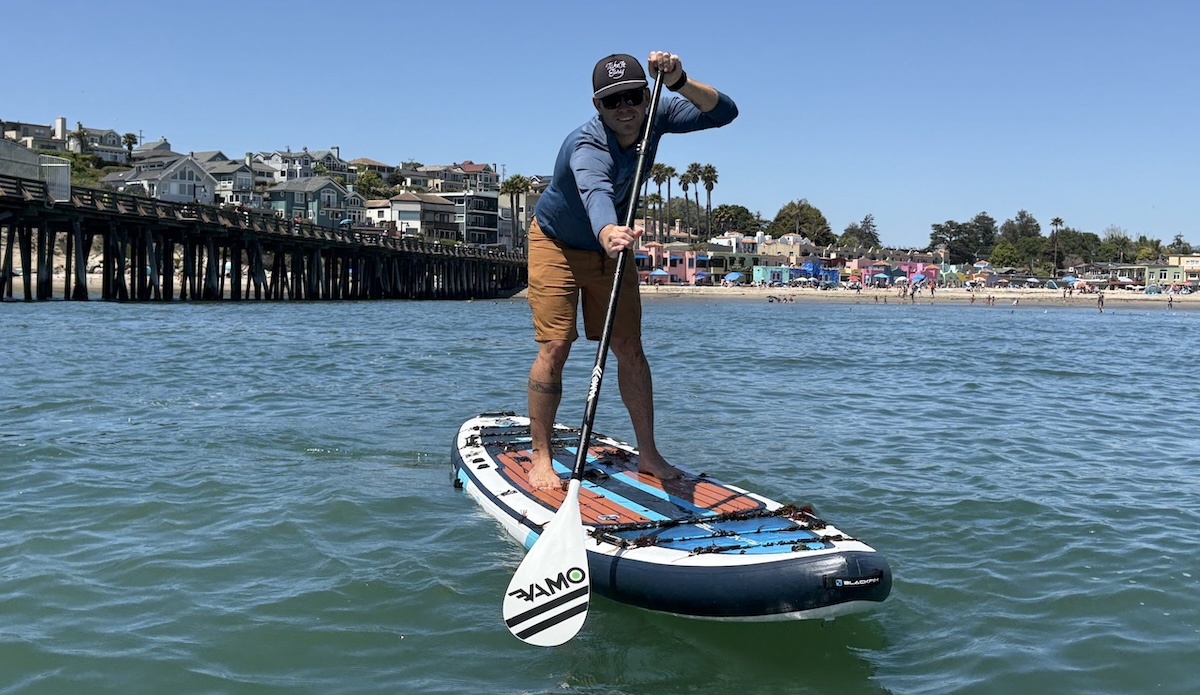
Photo: Rebecca Parsons//The Inertia
Another Great SUP/Kayak Hybrid Board
ISLE Switch ($995)
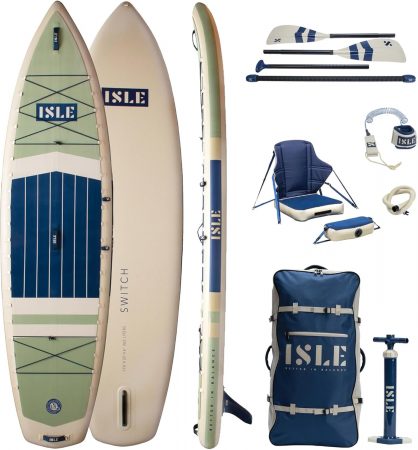
Available Sizes: 11’6″
Size Tested: 11’6″ x 35.5″ x 6″
Weight: 19 lbs
Fin Configuration: 1 removable center fin
Pros: Super stable, nice accessories
Cons: Pump doesn’t seal well, not the most maneuverable
Appropriately named, the ISLE Switch is an inflatable board that can easily switch between a stand up paddle board and a kayak. Measuring 11’6″ x 35.5″ x 6″, the Switch is a large board that is capable of supporting up to 425 pounds. Due to its length and extra wide width, it’s incredibly stable, and we found it works well for solo paddlers, larger paddlers, or those who like to paddle with kids or pups onboard. The only downside of the extra stability? You lose some speed and maneuverability.
The Switch comes with a decent pump, but for some reason, we were having trouble getting it secured and sealed to the board and ended up needing two people to ensure it stayed attached while pumping. We’ve tried lots of ISLE boards in the past and have never had this issue, so we may have received a faulty pump, but either way, it’s something to think about. We’d recommend upgrading to an electric pump like the HOTO Air Pump Master, regardless, as it’ll make your life a lot easier when inflating this beast of a board. The Switch can be inflated to 17 PSI, resulting in an incredibly stable ride.
One of our favorite things about ISLE is its high-quality accessories, and the Switch is no exception. The board comes with a secure, durable paddle, a leash, a cushy kayak seat and footrest, a carbon SUP/kayak paddle, a carry bag, and a touring fin. The Switch is a great option, but we selected the BOTE Lowrider Aero as the best overall kayak/SUP hybrid due to its shorter, more maneuverable length, the option for a larger tandem size, and the slightly lower price.
CHECK PRICE ON Amazon
Photo: Rebecca Parsons//The Inertia
Premium Construction and Compact Design
Red Paddle Co. Compact MSL Pact ($1,499)
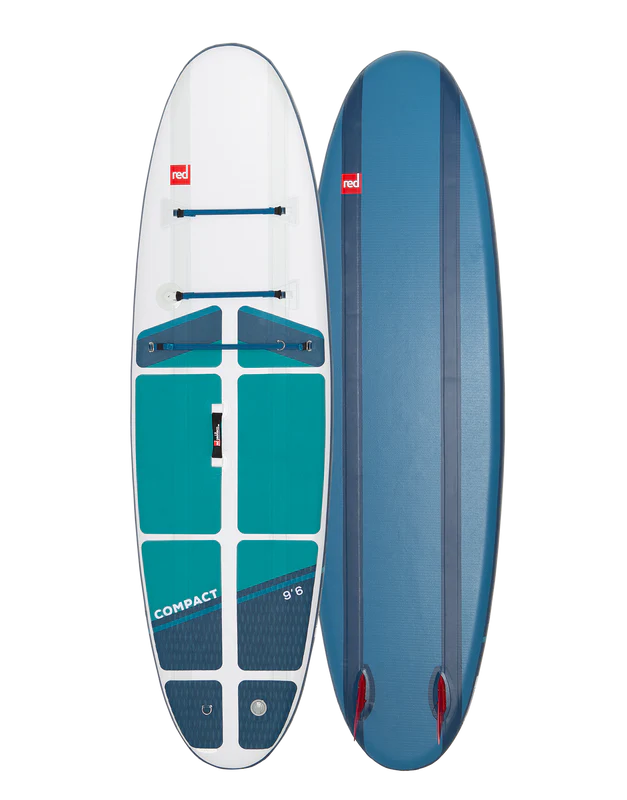
Available Sizes: 9’6″ | 11′ | 12′
Size Tested: 9’6″
Weight: 15 lb 15.7 oz
Fin Configuration: 2 side fins, both removable
Pros: Packs down impressively small, carbon paddle, double-barrel pump
Cons: Can be tricky to repack, lower volume may not be stable enough for beginner paddlers
The Red Paddle Co. Compact MSL Pact is one of the most packable inflatable paddle boards we have ever tested. It packs down into an impressively small backpack (22″ x 16.5″ x 12.6″) but inflates into a full-sized, high-performance paddle board, complete with fins, a five-piece carbon paddle, and a double-barrel hand pump. The included backpack is padded and comfortable to carry around.
The Compact is thinner and lower volume than most inflatables, making it more maneuverable but also less stable. As experienced paddlers, we loved it, but if you’re a newer or larger paddler, it might not be for you. We found that this board performed best in flat water, but it also worked well in small surf.
If you’re looking for an even lighter and more compact board, the Kokopelli Chasm-Lite is incredibly lightweight and packable, but doesn’t perform quite as well on the water. The Compact MSL complete package is roughly 14.5 pounds heavier (32 pounds vs. 17.5 pounds), but due to the higher performance and quality pump and paddle, we felt that it was worth the extra weight. Read our full review of the Red Paddle Co. Compact here.
CHECK PRICE ON Green Water Sports
Photo: Julia Borland//The Inertia
Solid Performance at a Great Value
Retrospec Weekender Plus ($400)
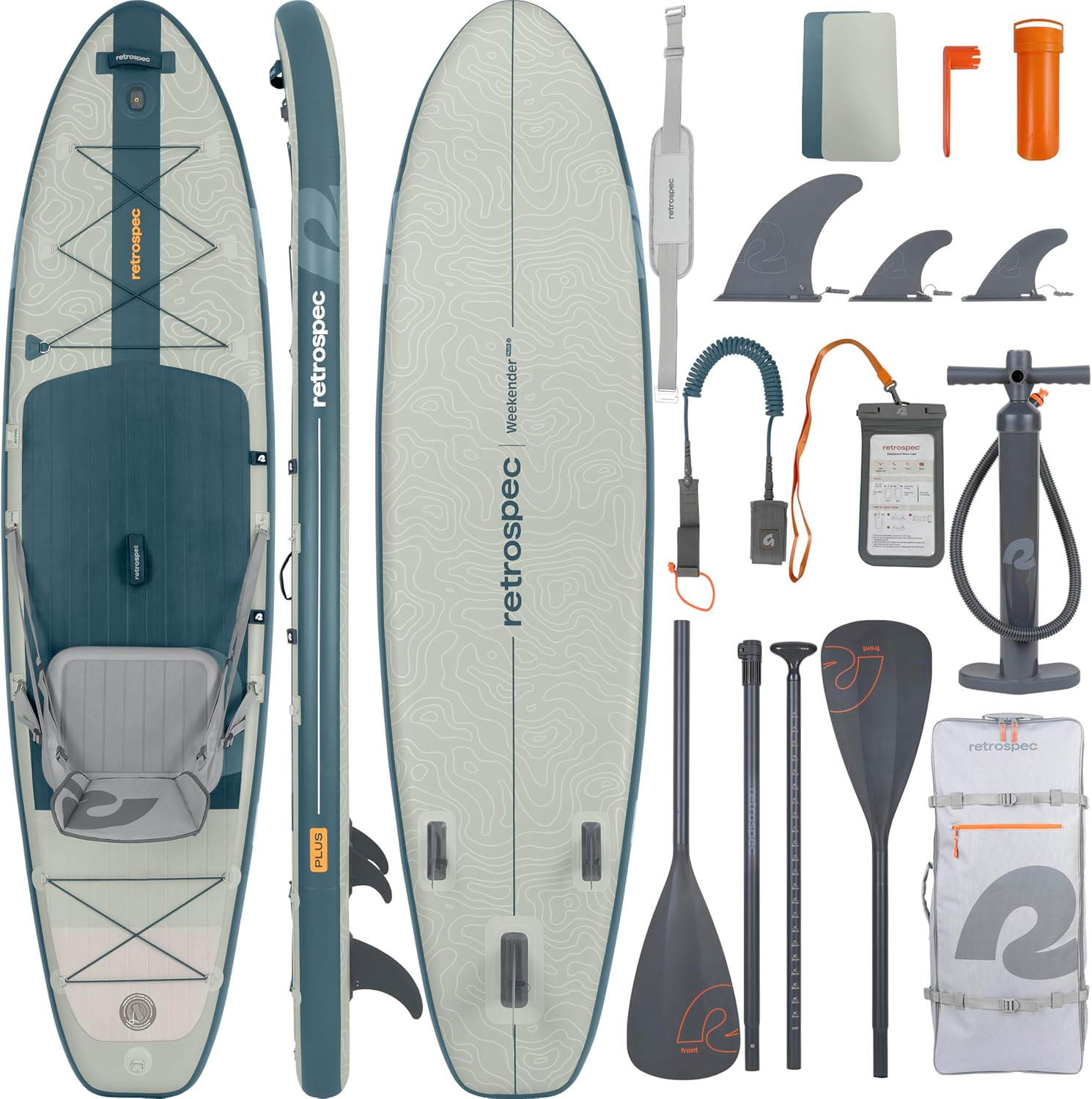
Available Sizes: 10’6″
Size Tested: 10’6″ x 33″ x 6″
Weight: 23 lbs
Fin Configuration: 2+1 fins, all removable
Pros: Good value, includes Velcro paddle attachment, includes kayak conversion kit
Cons: Cheap plastic fins
If you’re looking for a value-priced inflatable paddle board with all the bells and whistles, look no further than the Retrospec Weekender Plus. Priced at $380, the Weekender Plus comes with everything you could possibly need to get on the water, including the board, fins, convertible paddle, pump, leash, repair kit, carry strap, dry bag, and kayak seat. Inflatable paddle board packages in this price range typically have lower-quality accessories, but we were pleasantly surprised by the Retrospec’s quality. The paddle is pretty generic, but the pieces stay securely connected while paddling, which isn’t always the case for all the stock paddles we’ve tried.
The Weekender Plus features front and rear bungee tie-downs, which we found to be the perfect place to stash jackets, water bottles, snorkeling gear, and other essentials. The kayak conversion kit includes a kayak paddle attachment as well as a removable seat that can both be stowed onboard to transition from one paddling mode to another while on the water. The board also has a velcro paddle attachment on the side of the board, which helps keep the paddle securely stashed while you’re carrying the board or while adjusting your gear out on the water
Measuring 10’6″ x 33″ x 6″, it does a good job balancing paddling speed and stability, though bigger paddlers may prefer a wider board like the BOTE LowRider Aero or the iRocker Blackfin Model X. Value-priced boards often feel less rigid and refined than more premium models, but this board feels nearly as rigid as some of our top picks like the ISLE Explorer 3.0 and the BOTE Breeze Aero. At $450, the Weekender Plus provides excellent value, and fills a nice price and performance gap between lower-quality budget boards and more expensive premium boards.
CHECK PRICE ON RetrospecAnother Capable Hybrid Design
Tahe Beach SUP-Yak ($700)
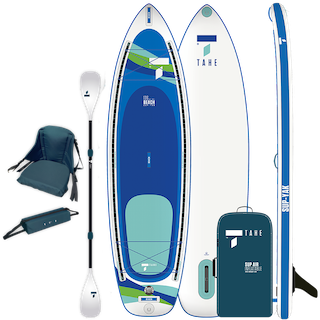 Available Sizes: 10’6″
Size Tested: 10’6″ x 34″ x 6″
Weight: 23 lbs
Fin Configuration: 1 removable center fin
Pros: Good stability, comfortable full-length deck pad, dual full-length daisy chains to attach kayak seat and accessories
Cons: Not the fastest board, some complaints about long-term durability
The Tahe Beach SUP-Yak is another great example displaying the growing popularity of hybrid SUP/kayak designs. Similar to the BOTE LowRider Aero and ISLE Switch above, the SUP-Yak includes a kayak seat, foot rest, and convertible paddle. It includes full-length daisy chains along the top of each side rail, offering plenty of flexibility for attaching and adjusting the position of the kayak seat and foot rest. Measuring 10’6″ x 34″ x 6″, the board feels very stable when standing or sitting, and the full-length deck pad offers plenty of comfort and versatility for multiple paddling configurations.
The kayak seat is pretty comfortable with a nice padded bottom and a softer back rest, though we prefer the comfort and performance of the more rigid seat on the BOTE LowRider Aero. The included accessories are of the expected quality for a board in this price range, and are easy and comfortable to use in normal conditions.
The SUP-Yak is easy to inflate, deflate, transport, and store, thanks to its relatively smaller dimensions and reasonably light weight of 23 pounds. During our first summer of testing, we had absolutely no quality or durability issues with the SUP-Yak, but it’s worth noting that some online reviews mention concerns about long-term durability. We will report back on any issues as we continue to paddle this board in the future.
CHECK PRICE ON REI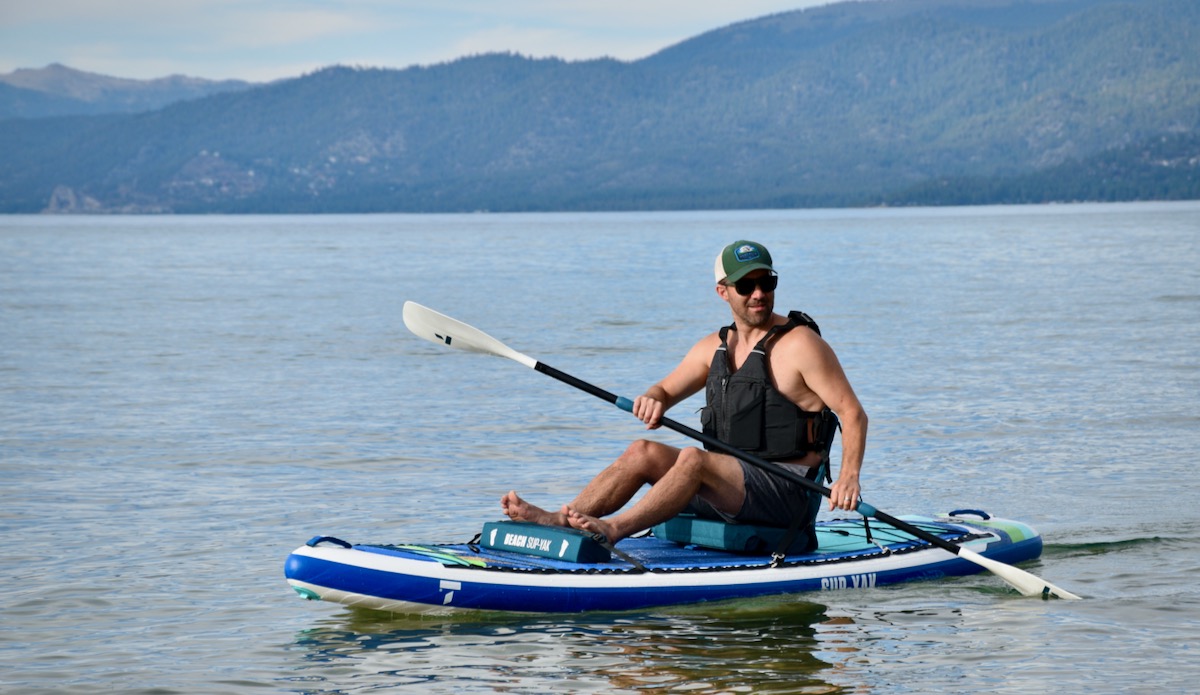
Photo: Shannon Bruckbauer//The Inertia
Another Great Ultralight Inflatable Paddle Board
NRS X-Lite 100 Paddle Board ($795)
 Available Sizes: 10′
Size Tested: 10′ x 31″ x 5″
Weight: 13 lbs 3 oz
Fin Configuration: 1 removable center fin
Pros: Super lightweight, great pump, great all-around shape
Cons: Doesn’t come with a paddle, doesn’t track super well through the water
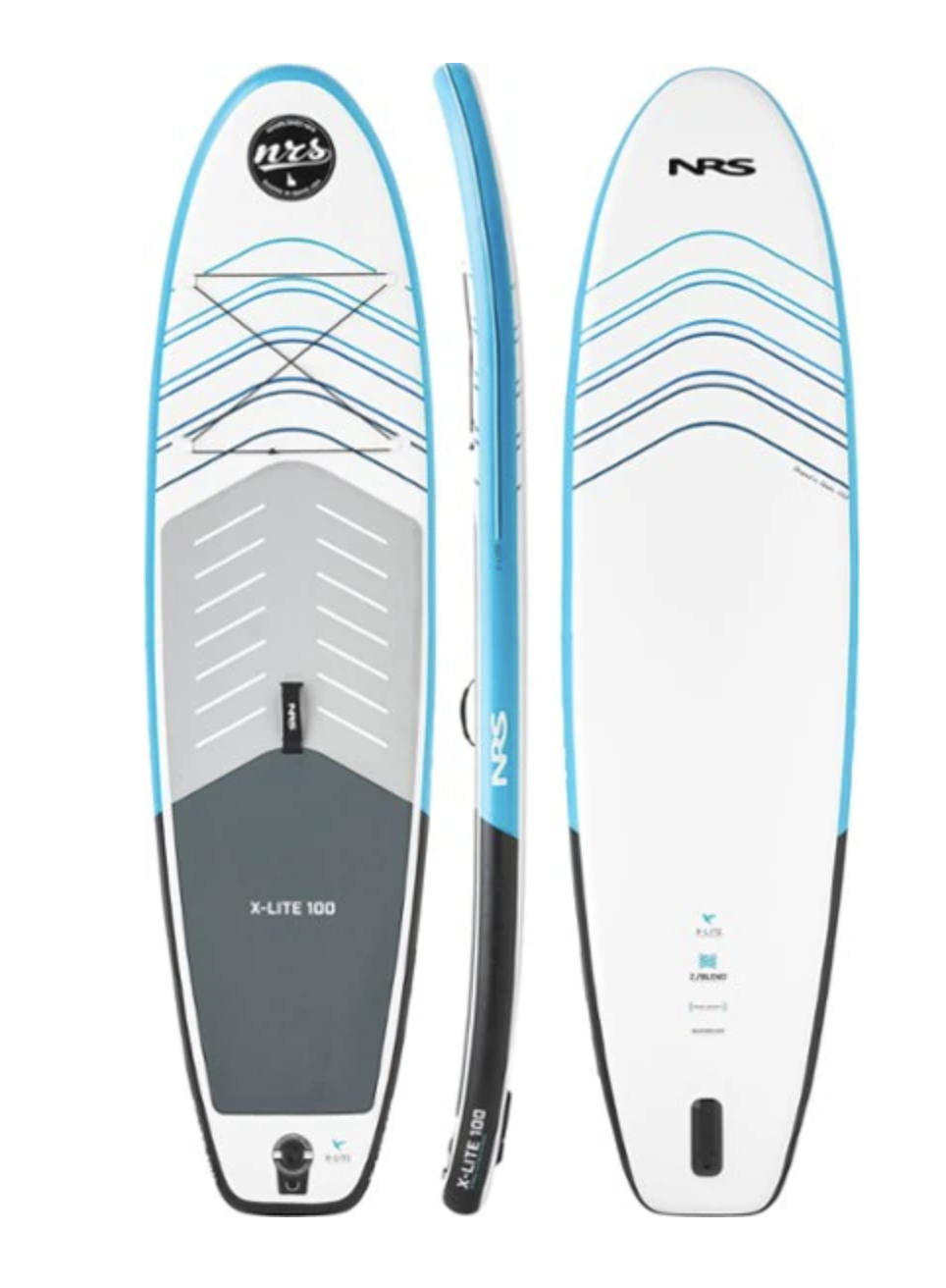
NRS recently launched their X-Lite series, and it’s safe to say that we’re big fans. Designed to be lightweight without sacrificing performance, the NRS X-Lite 100 paddle board weighs just 13 pounds, 3 ounces, and packs up nice and small. When we first got the X-Lite inflated, we were blown away at how light and easy it is to carry.
While the X-Lite doesn’t include a paddle, it does have some great features and accessories. The board comes with a high-pressure Super Pump II, and the board can be inflated to 20 PSI, ensuring it’s extra rigid. The board features an EVA foam deck pad that’s nice and grippy, bungee rigging on the nose, a neoprene wrapped center handle for carrying, and a click-in fin.
While most of NRS’s boards are designed for the river, the X-Lite features an all-around design and is best suited to flat water. Because the board is so light, it turns easily, sometimes too easily – it can be challenging to paddle the board quickly and keep it straight. Because of this, we preferred the overall performance of the Kokopelli Chasm-Lite, our favorite ultralight/packable design.
CHECK PRICE ON REI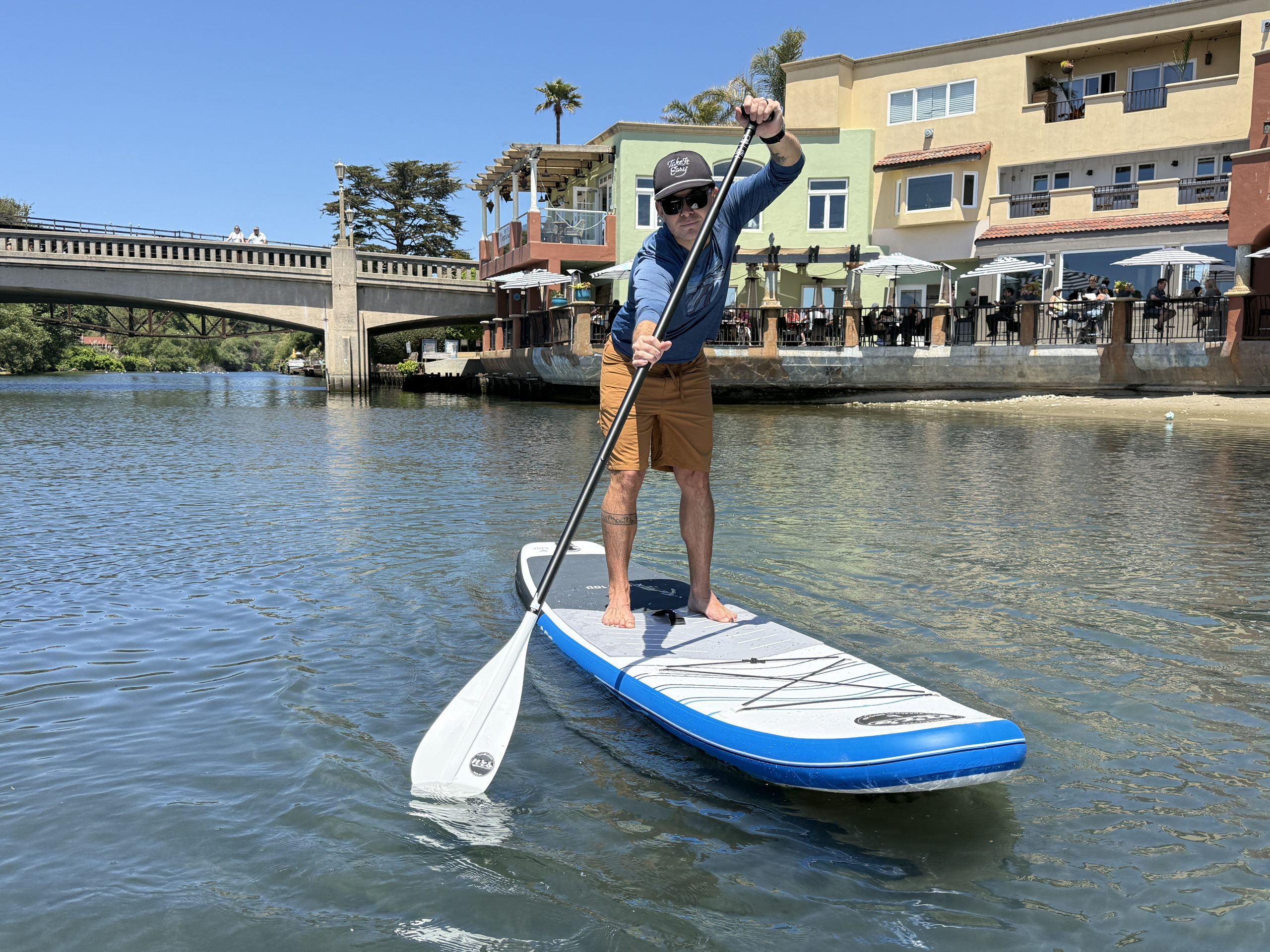
Photo: Rebecca Parsons//The Inertia
Honorable Mentions
With so many incredible inflatable paddle boards out there, our job is to sift through all the options to help you find the best product to meet your needs and budget. This means that we often have to leave some very capable products off our list. Below are some boards that we previously tested and enjoyed, but later got displaced by products that we’d more highly recommend.
The ISLE Explorer Pro is a more premium version of our top overall pick, the ISLE Explorer 3.0. The Explorer Pro includes carbon fiber inserts along the rails and the top and bottom panels for added rigidity and a more customizable suite of add-on accessories. However, it doesn’t include a paddle or a pump, and we didn’t think the slight performance improvements were worth the added expense over the Explorer 3.0.
The Funwater Discovery is a capable budget option that provides a nice blend of stability and speed, making it a good pick for beginners and families. When comparing budget-priced boards, we opted to endorse the ROC Kahuna, which is a bit more rigid and stable, and includes nicer accessories.
The Red Paddle Co. Voyager is one of the fastest inflatable SUPs that we’ve tested, but it has a very specialized design that is narrower and less stable than others, limiting its use to only very experienced paddlers. Instead, we opted to include the Red Paddle Co. Sport Plus, also a very fast board, but it is available in more lengths and widths, is slightly easier to paddle, and is often more widely available.
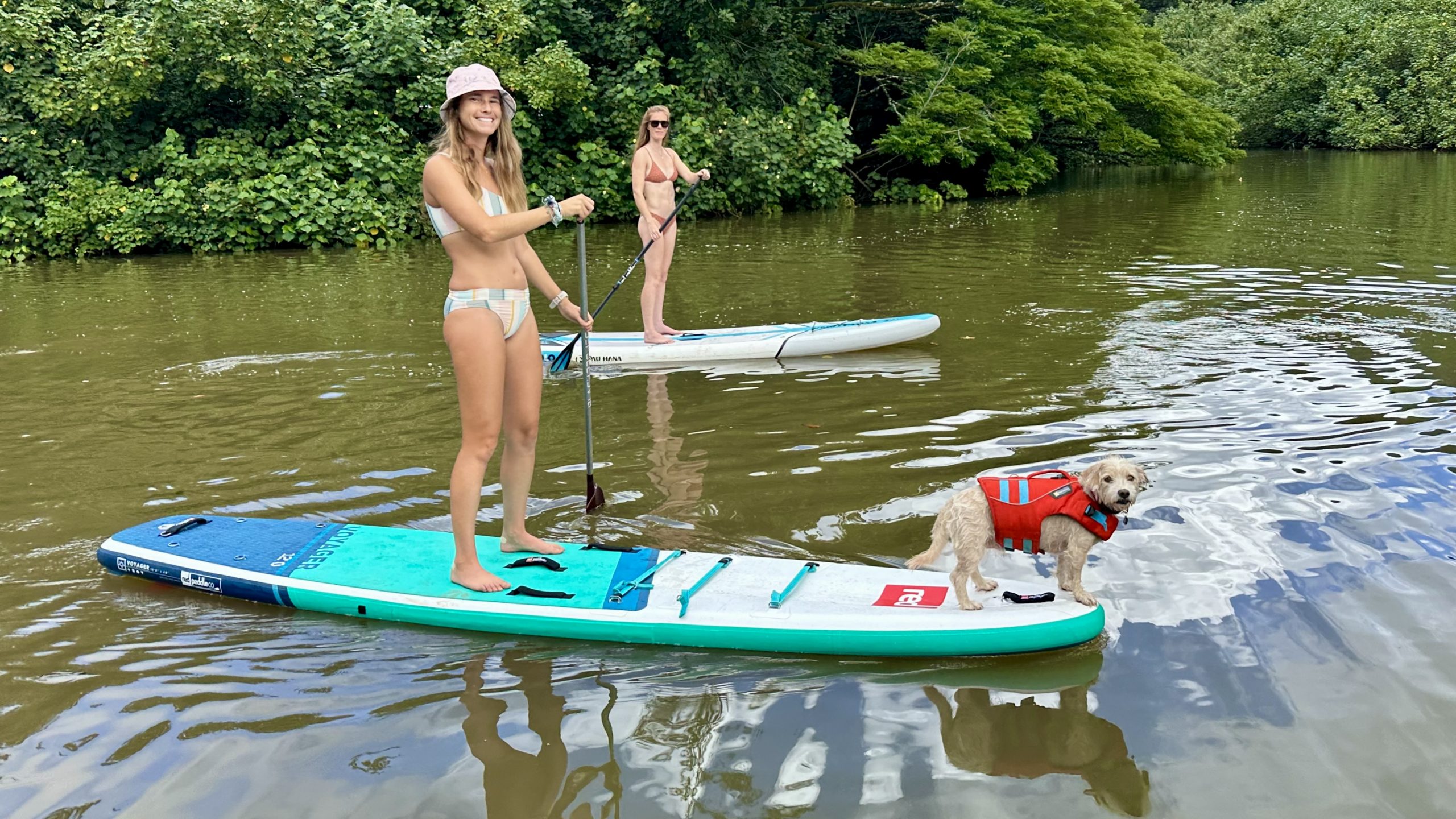
The Red Paddle Co. Voyager is one of the fastest inflatable SUPs we’ve tested, but it is not as forgiving nor as readily available as the Red Paddle Co. Sport Plus. Photo: Rebecca Parsons//The Inertia
Best Inflatable Paddle Boards Comparison Table
| Board | List Price | Size Tested | Weight | Fin Configuration |
| ISLE Explorer 3.0 | $795 | 11′ 6″ x 32″ x 6″ | 19 lbs | 1 removable center fin |
| ROC Kahuna | $220 | 10′ 6″ x 33″ x 6″ | 18 lbs | 2+1 fins, center fin is removable |
| BOTE Breeze Aero | $799 | 11′ 6″ x 33″ x 6″ | 22 lbs | 2+1 fins, center fin is removable |
| BOTE LowRider Aero | $899 | 10′ 6″ x 36″ x 6″ | 30 lbs | 2+1 fins, center fin is removable |
| NRS Jukdo | $1,095 | 11’ x 36” x 6” | 27 lbs | 2+1 fins, all removable |
| Kokopelli Chasm-Lite | $999 | 10′ x 30″ x 6″ | 12.9 lbs | 1 removable center fin |
| Red Paddle Co. Sport Plus | $1,349 | 12’6″ x 28″ x 4.75″ | 21 lbs | 1 removable center fin |
| iRocker Cruiser 7.0 | $699 | 10’6″ x 34″ x 6″ | 25 lbs | 2+1 fins, center fin is removable |
| BOTE Wulf Aero | $559 | 11’4″ x 34″ x 6″ | 22 lbs | 1 removable center fin |
| iRocker Blackfin Model X 7.0 | $899 | 10’6″ x 35″ x 6″ | 27 lbs | 2+1 fins, all removable |
| ISLE Switch | $995 | 11’6″ x 35.5″ x 6″ | 19 lbs | 1 removable center fin |
| Red Paddle Co. Compact MSL Pact | $1,499 | 9’6″ x 32″ x 4.7″ | 16 lbs | 2 fins, both removable |
| Retrospec Weekender Plus | $400 | 10’6″ x 33″ x 6″ | 23 lbs | 2+1 fins, all removable |
| Tahe Beach SUP-Yak | $700 | 10’6″ x 34″ x 6″ | 23 lbs | 1 removable center fin |
| NRS X-Lite 100 Paddle Board | $795 | 10′ x 31″ x 5″ | 13.2 lbs | 1 removable center fin |
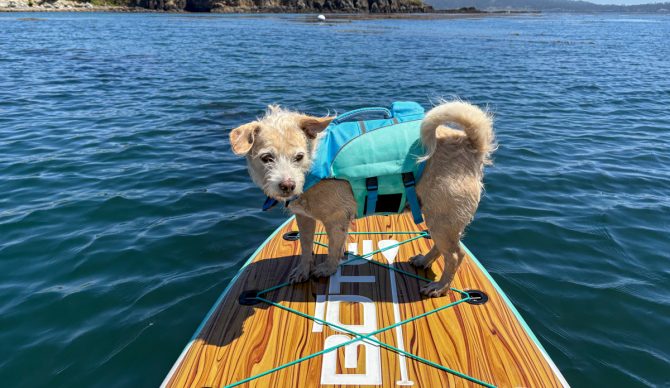
We made sure to get a diversity of opinions in testing these paddleboards, from beginners to experts, and everyone in between. Photo: Rebecca Parsons//The Inertia
How We Tested The Best Inflatable Paddle Boards
From the cool, clear waters of Lake Tahoe to the rugged and moody San Francisco Bay to the warm tropics of Hawaii, our team of paddling experts put these inflatable paddle boards to the test in various rivers and streams, alpine lakes, and in the open ocean. We tested each board’s performance in a diverse set of weather and water conditions, paying close attention to features like glide, tracking, and stability, and evaluated every part of each board’s package, from fins, paddles, and leashes to pumps and carrying bags. Along the way, we rolled, unrolled, inflated, deflated, stored, and transported each board to help identify the best model for your needs and budget.
In the end, we evaluated and scored each board based on its paddling performance, stability, construction quality, ease of use, and accessories to help bring you our expert recommendations.

Our top picks are based on hands-on testing that took place in some beautiful paddling destinations. Photo: Will Sileo//The Inertia
Leading our testing team are Nick Bruckbauer and Rebecca Parsons. After moving from the Midwest to Santa Barbara, CA, in 2008, Nick initially explored the local waters via kayak — until a trip to Hawaii in 2011 forever turned him on to the world of stand up paddling. Since then, he has personally owned numerous inflatable and rigid paddle boards and has tested and written about over 25 different models for various outdoor publications. Now making his full-time home in the outdoor mecca of Lake Tahoe, Nick has paddled the west coast from Seattle to San Diego and in eight different states.
Rebecca first began her career writing for SUP the Mag, learning the ins and outs of the industry and the sport. Since she first picked up a paddle in 2012, Rebecca has competed in numerous SUP races, surfed world-class waves, and is proud to call world-champion paddlers her friends. These days, you’ll find Rebecca surfing or paddling near her home in Honolulu, Hawaii, or in Santa Cruz, CA.
We first published this article in April 2023 with an initial test lineup of 12 boards. Throughout the following paddling seasons, we continued testing on Lake Tahoe in the surrounding alpine lakes, in the San Francisco Bay Area, and later in Hawaii and at additional locations along the California coast.
Throughout 2023, 2024, and 2025, we updated this Guide at least twice a year to reflect our most recent testing experiences and to ensure that our Guide recommends the best available products in this ever-changing market. In our most recent update in August 2025, we dropped one discontinued board, rearranged our lineup a bit to better highlight the top performers, and added two new products, the BOTE Wulf Aero and the Tahe Beach SUP-Yak.
Our team of SUP experts has also tested the best SUPs for surfing, as well as accessories like the best life jackets and the best SUP paddles. Check out our full suite of Paddling Reviews for more information.
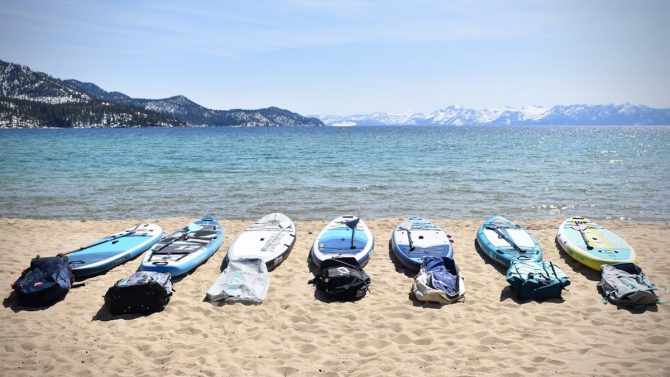
Paddleboard testing on Lake Tahoe. Photo: Nick Bruckbauer//The Inertia
Best Inflatable Paddle Boards Buyer’s Guide
Inflatable Paddle Boards vs. Solid Boards
Traditional solid stand up paddle boards are typically constructed with a foam core and a rigid fiberglass and epoxy shell. Their stiffness and rigidity help them slice through the water and maintain their speed and momentum, even if it’s wavy or choppy. Solid boards can be constructed with specific shapes and dimensions to optimize paddling performance, and their smooth fiberglass and epoxy shells provide a slippery surface that maximizes glide and efficiency. Once you arrive at the water with your solid board, there is almost no setup time before paddling and almost no takedown time when you’re ready to leave.
While solid boards typically provide better on-the-water performance than inflatable models, there are some disadvantages. The obvious main drawback is their size, which requires lots of space in a yard, shed, or garage for storage and a large vehicle or a roof rack for transport. Solid boards are also usually more expensive than inflatables. Their fiberglass and epoxy construction can make them prone to scratches, dings, and dents that require fixing to keep the board watertight.
The clear advantage of inflatable SUPs is their portability. A full-size inflatable board can be packed down to the size of a large duffel bag, easily stored in a closet or corner of an apartment, and thrown in the trunk of a car or even transported by bike, bus, or airplane (we’ve brought inflatable SUPs on airplane trips with us as checked baggage, and it’s no more complicated than checking any other piece of luggage).
Lightweight boards like the Kokopelli Chasm-Lite and the Red Paddle Co. Compact have unique designs where the board can be folded in half length-wise before being rolled up, making them easier to deflate and allowing them to be stored more compactly. On the other end of the spectrum, larger, heavier-duty boards like the BOTE LowRider Aero, the Red Paddle Co. Sport Plus, and the NRS Jukdo are heftier and harder to inflate, deflate, and transport, but they include big, burly carry bags that are supplemented by comfortable backpack straps and built-in luggage wheels.

Inflatable paddle boards can be packed down into a large duffel bag, making them easy to store and transport. Photo: Nick Bruckbauer//The Inertia
Inflatable boards are also less susceptible to dings and dents since their structure is less rigid, and their softer surface makes them more forgiving for beginner paddlers who might take a few falls. Most inflatable SUPs also come in a convenient package that includes every accessory you need to hit the water (fins, pump, paddle, leash, etc.), and are typically less expensive than solid boards.
Historically, the main drawback to inflatable SUPs is that they are slower and less stable than solid models due to their softer and more flexible construction. Inflatable models typically lack the stiffness and rigidity of solid boards, so they tend to flex and deform and get pushed around in choppy water, which hinders paddling efficiency and stability. The PVC material used in most inflatable models isn’t as smooth as the fiberglass and epoxy on solid boards, so inflatable models don’t glide through the water as efficiently. Inflatable models also require a good deal of time and effort to inflate to the recommended pressure, so you’ll want to account for roughly 10-20 minutes of setup and takedown time before and after paddling.
With the growing popularity of stand up paddle boarding in the last decade, inflatable models have made huge improvements in performance and convenience. New design features like carbon fiber inlays, rail-stiffening inserts, dual inflation chambers, or high-pressure construction help increase the stiffness and rigidity of today’s boards, closing the performance gap with solid boards. Many inflatable packages also come with high-capacity dual-chamber pumps or electric pumps that drastically cut down on inflation time and effort.
The Red Paddle Co. Sport Plus is one of the fastest inflatable boards we’ve ever tested, and one that performs most similar to a hard board. It includes Red Paddle Co.’s patented RSS batten system, where rigid inserts along the side rails help increase the rigidity of the board and help it slice through the water. The Sport Plus also includes a high-capacity dual-chamber pump for easier inflation and to ensure it is inflated to the proper pressure to maintain rigidity.
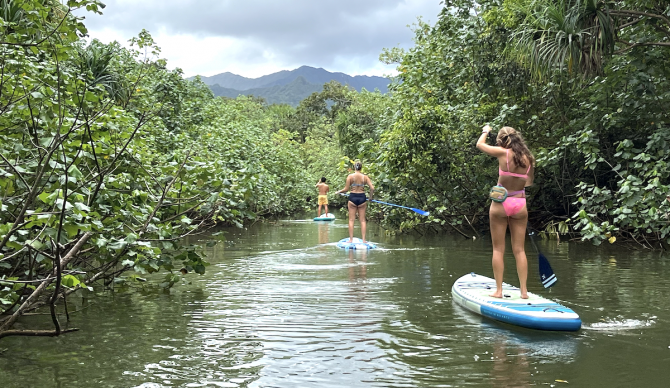
Testing iSUPs in Hawaii. Photo: Rebecca Parsons//The Inertia
Size, Shape, and Paddling Performance
Paddle boards come in all different shapes and sizes that will impact the paddling performance and the convenience of storing and transporting the board. Generally, longer and narrower boards like the Red Paddle Co. Sport Plus and ISLE Explorer Pro will be faster, as they will track in a straight line and glide better. Longer and narrower boards will typically have less stability, though, and are better suited to more experienced paddlers who are comfortable on a board and prioritize paddling speed and efficiency.
In general, shorter and wider boards like the BOTE LowRider Aero and the NRS Jukdo will be slower than longer boards since the additional width won’t glide through the water as efficiently. Shorter and wider boards will typically be more stable and more maneuverable, and are ideal for beginners who prioritize stability.
The overall volume of the board (the 3-dimensional multiplication of the length, width, and thickness) will also impact the board’s stability and weight capacity. Lower-volume boards will be less stable, more nimble, and more suitable for smaller or more advanced paddlers, while higher-volume boards will be more stable and suitable for all types, including larger paddlers.
| Length | Width |
| Short: less than 10′ | Narrow: less than 30″ |
| Moderate: 10′ to 12′ | Moderate: 30″ to 33″ |
| Long: more than 12′ | Wide: more than 33″ |
If you’re looking for a maneuverable board to surf on or a board for children or smaller paddlers, then a shorter board (less than 10′ in length) is most appropriate. Likewise, if you’re interested in long-distance touring and optimizing speed and efficiency, then a longer board over 12′ in length would be best.
Most of the boards in our test lineup fall in the moderate length range of 10′ to 12′, and most are in the moderate width range of 30″ to 33″. This is a sweet spot for excellent all-around performance, a balance of speed and stability, and reasonable ease of use when it comes to inflating, deflating, hauling, and storing.

Most of the boards in our test lineup fall within the 10′ to 12′ length range, which we believe is the sweet spot for most paddlers. Photo: Nick Bruckbauer//The Inertia
Price vs. Quality & Performance
When it comes to inflatable paddle boards, you typically get what you pay for, and there are some common quality and performance benchmarks that can be seen at different price levels. How much you should spend depends on your experience level, the conditions you paddle in, and how frequently you hit the water.
Budget Boards ($500 or less)
These models will typically be sold in a package with everything you need to hit the water (except a life jacket), including the board, fins, leash, paddle, pump, and carrying bag. They usually have simple, lightweight designs without a ton of bells and whistles. However, they usually include basic accessories, like an aluminum paddle and a thin, lightweight carry bag.
If you’re a beginner paddler, looking for a board for your kids or family, and plan to paddle on calm water like a lake, a calm river, or a protected ocean, we’d recommend a budget board. Ringing in at $250, the ROC Kahuna was our top pick budget board thanks to its incredible price and reliable performance, and construction.

The ROC Kahuna is a great budget paddle board. Photo: Rebecca Parsons//The Inertia
Mid-Tier Boards ($600-$900)
Spending some extra money will introduce a noticeable step up in the quality of materials and construction, and the performance level. Boards at this level will typically have more robust construction and will have a noticeably nicer fit and finish. Improvements over the budget boards can be seen with extra features like more grab handles, nicer padded grab handles, more cargo rigging, and nicer cargo rigging. Paddles in this price range will typically be nicer with a fiberglass or carbon fiber shaft and a nylon blade.
Carrying bags will be more robust with zippers, extra storage pockets, and backpack straps. These boards will often feel stiffer and more rigid in the water because of their heavier-duty materials, which will make them better-suited for paddling in more diverse conditions (like wind, waves, and chop) because the board, fins, and paddle will be more responsive to your paddling input. If you’ve paddled before and you’re looking to upgrade your setup to improve paddling performance or to get a little more quality for frequent paddling, it’s worth spending the extra money. Some of our favorite mid-tier boards are also some of our favorite all-around boards that we would recommend for most people, including the ISLE Explorer 3.0, the iRocker Cruiser 7.0, and the BOTE Breeze Aero.

The Bote Breeze Aero (left) and the ISLE Explorer (right) are both in the $600-$900 range and provide a noticeable improvement in construction quality and performance over the budget models. Photo: Jack Bober//The Inertia
Premium boards ($1,000+)
Premium boards will have more complex designs, higher-end materials, and a premium construction finish. Many designs will have fancy extras to improve board performance, like carbon fiber layers, dual inflation chambers, or reinforced side rails to improve board rigidity and stiffness. These help them paddle in all types of conditions, more similar to a rigid board.
Accessories at this level will also be premium. Fins will be made from higher-end materials. The paddles will often have carbon fiber shafts and blades. Carry cases will have premium materials, comfortable padded straps, and luggage wheels. These boards may come with nicer dual-chamber pumps or electric pumps. Boards in this price range are typically best suited for experienced paddlers or those who hit the water frequently and will appreciate a more refined experience. Some of our favorite premium boards include the Red Paddle Co. Sport Plus, the NRS Jukdo, and the Red Paddle Co. Compact MSL.
Board Construction and Features
All of the boards we tested come with some type of fin configuration, a deck pad, carry handles, and cargo rigging. Higher-end boards will often also include D-rings or daisy chains to tie down additional gear or accessories and extra features like GoPro camera mounts.

A 2+1 fin setup is the most common. Photo: Rebecca Parsons//The Inertia
Fins
Fins stick out beneath the paddle board to help keep the board stable in choppy water and to help the board glide and track in a straight line. There are different fin configurations that serve slightly different purposes. Some fins are removable, while some are permanently fixed to the board. Longer fins have more of an impact on glide and stability, while shorter fins provide better clearance for shallow water or obstructions like vegetation or fallen trees. The most common fin configurations are:
Single Fin: one fin, usually longer, removable, and in the center of the board, ideal for keeping the board straight and stable in open water
2 Fins: two fins of the same size, sometimes removable and sometimes fixed
2 + 1 Fins: the most common setup. Typically includes one longer, removable center fin, and two smaller, permanently fixed side fins

The ROC Kahuna has the most typical fin configuration, with a larger, removable center fin and two smaller, permanently fixed side fins. Photo: Nick Bruckbauer//The Inertia
Deck Pad
The Deck Pad is a cushioned, textured surface on top of the board where the paddler will sit, kneel, or stand. Some deck pads simply cover about half of the length of the board where the paddler is located. Some cover nearly the entire length of the board to allow for a more dynamic paddling position or extra passengers like kids or dogs. The BOTE Breeze Aero has a deck pad that covers about 3/4 of the board, making it great for SUP yoga or paddling tandem.
Some deck pads include a raised stomp pad at the rear of the board, which helps the paddler gain leverage for quick side-to-side maneuvers. Deck pads come in different sizes, shapes, textures, thicknesses, and materials, but generally have a pretty similar feel and performance.
Carry/Grab Handles
Every inflatable SUP that we tested has a carry or grab handle in the center of the board to carry the board under your arm. Most boards also have grab handles at the front and rear of the board. These make it convenient to pull the board out of the water from one end or for two people to carry the board, one at each end.
Handles typically vary in quality based on the price and quality of the board. Budget boards might have one or two handles that consist of basic webbing. More premium boards likely have multiple handles that are more ergonomic and well-cushioned. Boards like the NRS Jukdo have a neoprene-wrapped handle for extra comfort.

Carrying handles and grab handles greatly aid in transport. Photo: Rebecca Parsons//The Inertia
Cargo Rigging
Each board has some type of cargo rigging or tie-down points. Designs, styles, and quality vary depending on the board’s price and quality. Even the most basic boards will typically have some bungee cord webbing at either the front or rear of the board. You can also add them with some sort of glue if they’re not included.

Cargo rigging or tie-down straps are the perfect place to stash essentials. Photo: Rebecca Parsons//The Inertia
Higher-end boards will have cargo rigging in both the front and rear of the board that is made of more premium materials like thicker bungee cords or webbing straps. Our top pick, the ISLE Explorer 3.0, has bungees in both the front and aft, which is a game-changer when you’re hauling lots of gear. Many boards include built-in metal D-rings that you can clip or tie gear to, or create your own cargo system.

Each board has slightly different configurations of deck pads, grab handles, and cargo rigging, usually dependent on the price level and quality of the board. Photo: Nick Bruckbauer//The Inertia
Extra Features
Many higher-end boards include extra built-in features that improve the paddling experience. Some boards have built-in screw mounts to attach a GoPro camera, fish finder, or other electronic accessories. More and more boards include built-in D-rings, a kayak seat, and a hybrid kayak/SUP paddle so that the board can be comfortably paddled while sitting down or standing up. The BOTE LowRider Aero, the ISLE Switch, and the Tahe Beach SUP-Yak are all marketed as hybrid boards that can be converted into kayaks. Other boards include proprietary accessories, like magnetic accessory attachments, custom seats, built-in paddle holders, or attachments for a shoulder carry sling.
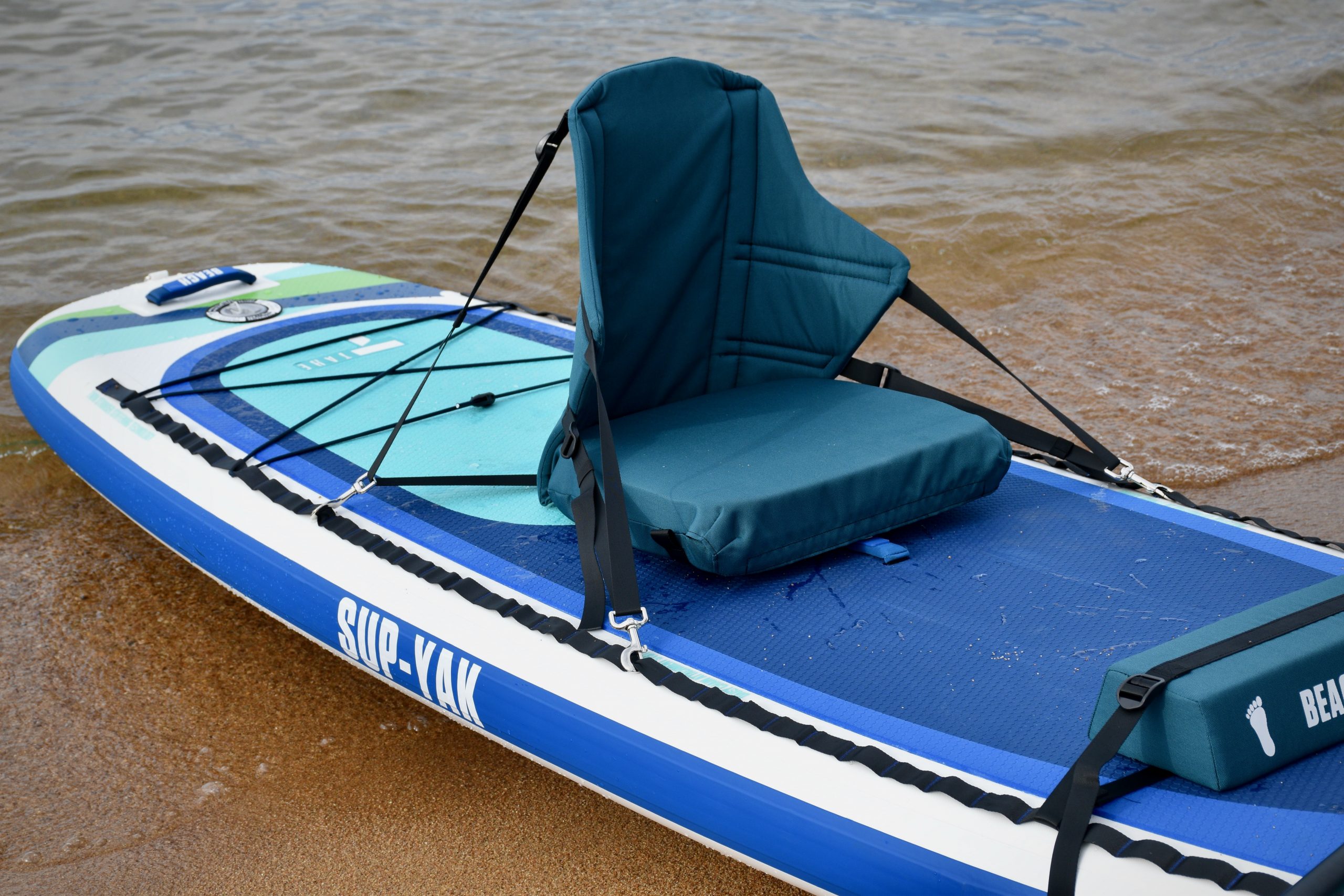
The Tahe Beach SUP-Yak includes a kayak seat and footrest that can be attached anywhere along the full-length daisy chains. Photo: Nick Bruckbauer//The Inertia
Accessories
All of the boards we tested come with fins, a paddle (except the Red Paddle Co. Sport Plus and the NRS X-Lite 100 Paddle Board), an ankle leash, a pump, and a carry bag. As previously described, the quality of these accessories is usually pretty consistent with the price level of the board. Make sure you also include the best life jacket for your experience level and swimming abilities. Check out our review of the best SUP paddles if you’re looking to upgrade the stock paddle that came with your kit.
Budget models will include flimsier plastic fins, heavier aluminum paddles, and basic pumps and carry bags. Spending a little more money to get a mid-priced board will typically come with nicer fins with heavier-duty materials, lighter paddles with carbon or fiberglass shafts, and improved carry bags with better materials and nicer padding on the handles and straps.

The Explorer 3.0 comes with a wheeled bag for easy transport. Photo: Jenna Miller//The Inertia
Premium-level boards will include high-end accessories. Fins will typically be made from high-tech materials that blend a lighter weight with better stiffness, paddles will typically have carbon fiber shafts and possibly carbon fiber blades, and the carry bags will be of the highest quality, with features like locking zippers, extra storage pockets, and luggage wheels.
Some models include bonus features like a waterproof phone pouch, a waterproof dry bag, or a kayak conversion kit with a kayak seat and a convertible paddle.
Pumps and Inflation
One of the biggest challenges of inflatable stand up paddle boards is the time and effort required to inflate them. Most iSUP packages include a pump of some sort, either single or double-barrel. We found double-barrel pumps in higher price point packages like the Titan II dual-chamber one from Red Paddle Co. The double-barrel pumps were much more efficient, making it quicker and easier to get your board water ready. Or, if you want to make things even easier, consider purchasing an electric pump like the HOTO Air Pump Master. Two of the boards on our list, the iRocker Blackfin Model X and the iRocker Cruiser 7.0, include electric pumps in their packages.

Inflating a paddle board by hand can take a good amount of time (10-15 minutes) and effort. Electric pumps make this process much easier! Photo: Rebecca Parsons//The Inertia
Weight, Packability, and Transport
The main advantage of inflatable paddle boards over their solid counterparts is that they can be deflated and packed away into a duffel bag. This makes storage and transport much easier for those without a large vehicle, roof rack, garage, or big storage space. However, different boards have different levels of convenience when it comes to inflation, deflation, storage, and transport, typically depending on the size of the board.
On one end of the spectrum is the Red Paddle Co. Compact MSL Pact. This lightweight model has one of the thinnest and lightest carry bags that is still capable of holding the board, paddle, and pump. However, the bag doesn’t come with wheels, so you’re committed to carrying it on your back. At the other end of the spectrum is the Red Paddle Co. Sport Plus. This board is big and heavy, but includes a bulky dual-chamber pump for easier inflation, and a large, wheeled carry bag to transport everything.
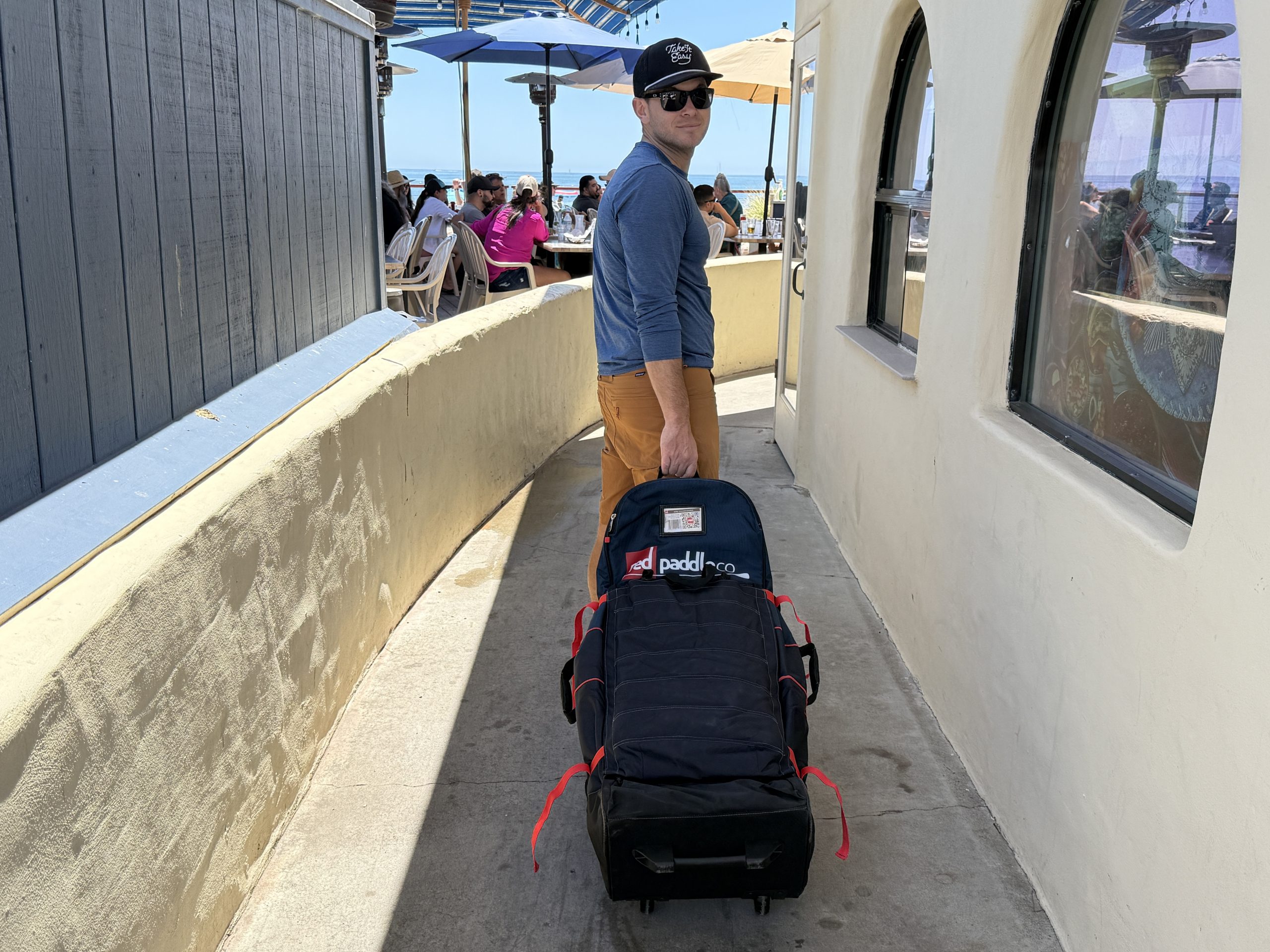
Wheeled carry bags make it much easier to transport bigger and heavier boards. Photo: Rebecca Parsons//The Inertia
Return to Comparison Table | Return to Top Picks
Related: Best Paddle Boards | Best Surf SUPs | More Paddle Gear Reviews
Editor’s Note: We’ve also reviewed The Best SUP Paddles and The Best Lifejackets for Paddleboarding. Need something to wear when paddling? Here’s our guide to The Best Board Shorts, The Best Sun Hats, and The Best Rashguards. For more paddling gear reviews and features on The Inertia, click here.

The Best Life Jackets for Paddle Boarding, from Foam Vests to Inflatable Belts


