

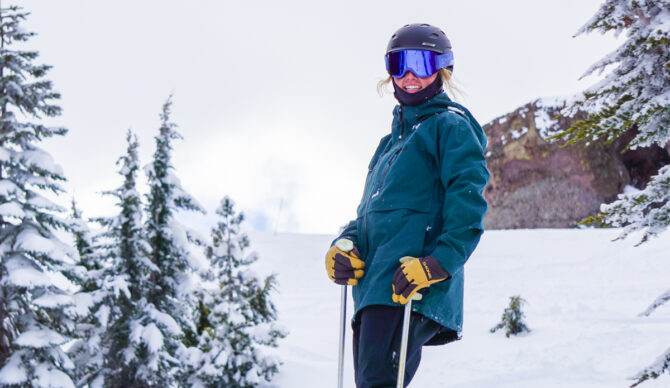
The updated Trew Gear Stella Primo is our best all-around pick for 2026. Photo: Will Sileo//The Inertia

The ski outerwear market is saturated. You know it, and we know it. But the reality is you really only need one – maybe two – well-chosen ski jackets to get you through a season (and hopefully many more). With that in mind, we considered factors ranging from durability and waterproofing to breathability and weight in our search for the best women’s ski jacket. Functions and features were, of course, strong considerations as well. And we certainly didn’t neglect style, cut, and fit. If you’re gonna shred hard, it’s worth looking good, too.
We did the research and got our hands on more than a dozen different jackets to put to the test. And the past few seasons certainly did just that. From storm days to bluebird days, in the rain, dense “Sierra Cement,” and blower powder, we tested these jackets in all of the variable conditions that the U.S. West has had to offer, and here we give you our choices for 2026. The jackets we include in this list not only survived, but thrived in these tough conditions with the functionality to keep us dry, warm (but not sweaty), and looking stylish until the last bell.
Editor’s Note: We most recently updated this article in March of 2026, adjusting rankings after a season of testing some new ski jackets that just hit the market this year, and re-testing the latest versions of some older favorites.
Navigate To: Comparison Table | How We Tested | Buyer’s Guide
Related: Best Women’s Ski Bibs | Best Men’s Ski Jackets | More Ski Gear Reviews
The Best Women’s Ski Jackets
Best All-Around Resort Skiing Shell Jacket: TREW Gear Stella Primo Jacket
Best Women’s Budget Ski Jacket (Insulated): Mountain Hardwear Women’s Firefall
Best Women’s Budget Ski Jacket (Shell): Stio Skyrider Jacket
Best Women’s Insulated Ski Jacket: Outdoor Research Powderverse
Best Women’s Backcountry Ski Jacket: Black Diamond Women’s Recon LT
Best Premium Women’s Ski Jacket: Arc’teryx Sentinel Jacket Women’s

When it’s time to layer up, these women’s ski jackets have what it takes to keep you warm and protected on the mountain. Photo: Chase Boyd//The Inertia
Best All-Around Resort Skiing Shell Jacket
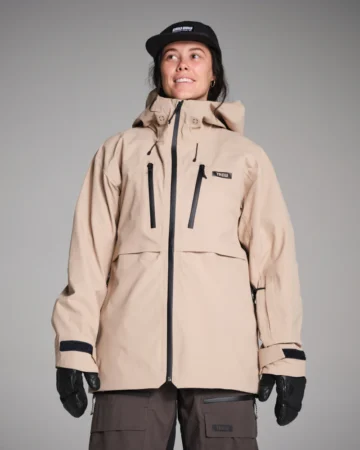
TREW Gear Stella Primo Jacket ($599)
Best For: Resort/backcountry
Weight: 814 g
Fit: Relaxed/freeride
Pros: Lightweight, durable, great design, large pockets
Cons: Hood is oversized, but adjustable
Editor’s Note: The Stella Jacket has been updated for 2025/26 with a new pocket layout and fit.
The Trew Stella Primo worked hard to earn the title of best overall shell for the buyer’s guide. Trew came out with a new pocket design this season, which changed the look of this classic jacket, so folks were curious to see if the new design would hold up to last year’s, which was adored. After many sunny days, a few storms, and even rain, our tester can confidently say the 2026 Stella Primo is even better than the last.
With a new pocket design, the look is relatively simple and much sleeker than the prior version. With two hand pockets and two chest pockets (all quite large), there’s plenty of space on the jacket’s exterior for need-to-reach essentials. The new relaxed fit adds a bit more of a roomy feel to this new freeride style. The shell itself is super durable, with the material unchanged from the prior version, and boasts 20k waterproofing and 20k breathability. Plus, it’s PFAS-free. The seams are taped, so your phone and lunch are safe during a storm. There’s a zip pocket inside for your keys or phone, and two mesh stash pockets for gloves, skins, etc. Even though this jacket is rated for the resort, it is more than touring ready with RECCO technology, a breathable shell design, chest pockets for your beacon, and 12-inch pit zips under each arm. Our tester brought it into the backcountry and never felt too hot or cold while moving uphill or down.
The best part about this jacket is how customizable it is to you. The helmet-compatible hood has cords on both sides and the back to make it fit your head, whether you are riding in a storm in the resort with your helmet or heading uphill with a hat. The velcro is tough on the arm cuffs and easy to adjust over your gloves. The powder skirt is there when you want it, but not noticeable when you don’t, and the cord on the hem can tighten up that straight, relaxed fit to whatever your heart desires. This jacket really does it all. To top it off, it’s made out of recycled nylon, so you know there are a lot of lives woven in there. But don’t worry, it has a lot more to give. Another huge plus worth noting – the jacket is offered in plus sizes, to help everyone find their best fit.
It is a close call between the TREW Stella and the Arc’teryx Sentinel (below) for Best Overall Women’s Ski Jacket. Both are fully-featured, comfortable, and durable. We found the nicer material of the Sentinel to be a solid comfort upgrade over the Stella (the Sentinel also has a soft interior lining), but had trouble justifying the $150 upcharge that comes with the Arc’teryx Sentinel at $750. However, if you have the room in your budget, the Sentinel is a worthy upgrade. Worth noting – the Stella has a much roomier fit than the Sentinel, so one or the other might be a better choice depending on your preferences there.
CHECK PRICE ON Trew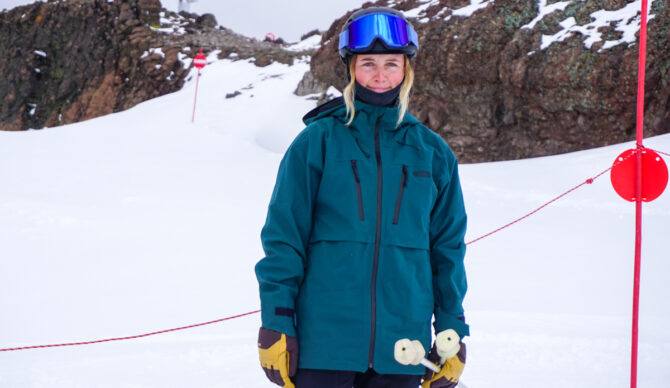
Photo: Will Sileo//The Inertia
Best Women’s Budget Ski Jacket (Insulated)
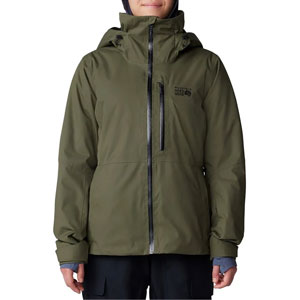
Mountain Hardwear Women’s Firefall Insulated Jacket ($269)
Best For: Resort
Weight: 950 g
Fit: Regular
Pros: Great price, comfortable fit, venting system, adjustable hood
Cons: pockets could be deeper, insulated (resort-specific), color options
With a comfortable fit, breathable shell fabric, insulation for simplified in-bounds skiing, a helmet-compatible hood with a drawcord, zip vents, pockets galore, and even a powder skirt with pant integration, at $289 (a fraction of what other insulated jackets, such as the Flylow Charlie Coat ($600), go for), the Firefall is a steal for those who ski strictly lift-accessible terrain and want a do-it-all jacket without shelling out the big bucks.
The only aspects of this jacket that could be improved are the features and color options. The pockets, while definitely providing enough storage to get through a full day of skiing, would be even better with deeper inner pockets. In terms of style, the color options are fairly limited, but they have been updated this year to more muted colors, rather than the splashy colors of last year that weren’t our favorites – and it’s also offered in classic black, which goes well with anything. But again, it’s a durable, capable jacket, and for under $300, you will be hard-pressed to find anything better.
CHECK PRICE ON REI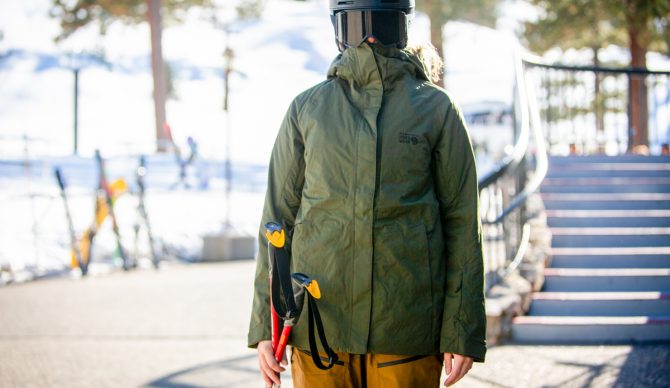
Photo: Chase Boyd//The Inertia
Best Women’s Budget Ski Jacket (Shell)
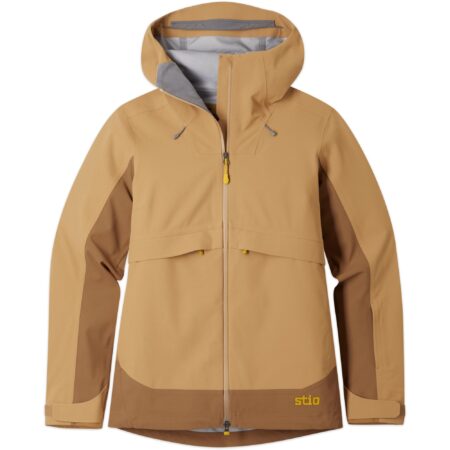
Stio Skyrider Jacket ($350)
Best For: Resort
Weight: 680 g
Fit: Regular
Pros: Comfy inner liner, light jacket, super waterproof DWR, lined chin guard
Cons: Inside pockets are all mesh, the zippered pocket is small, only two color options
Looking for a solid weather-proof shell that doesn’t break the bank? It can certainly be tough to bite the bullet with snow gear. And when you’re ready to leave your old jacket behind, you want to be able to trust the next one will last you years. With an overly saturated market and sometimes incredibly steep price tags, it may feel tough to find something you trust on a budget.
Lucky for you, our tester was able to get her hands on the Stio Skyrider jacket. A lightweight, durable shell that comes in at $350, about $150 less than your average shell of similar quality. Built with 100% recycled polyester and Stio’s new waterproof PeakProof 3L Canvas plainweave, the Skyrider offers complete protection from the elements. Our tester wore this on the hill in a rainstorm and said, “I quite literally shook the water droplets off of me.”
Another major plus of this shell is the utter comfort you feel when you put it on. Stio took some extra measures to really seal the deal for you, including the slightly roomy fit, the soft interior of the body and sleeves, and the brushed tricot on the inner collar to bring some comfort where it’s needed. The simple design also allows for 4 pockets on the front, one mesh inside, one zipped inside, and an RFID pass pocket on the left arm. This jacket does it all and takes extra care along the way.
With the impeccable outer layer protecting you from the rain, the inner layer creating comfort, and enough pockets for all the on-hill goods, $350 is an absolute steal. The Stio Skyrider was an easy winner for our best budget shell.
Check Price on REI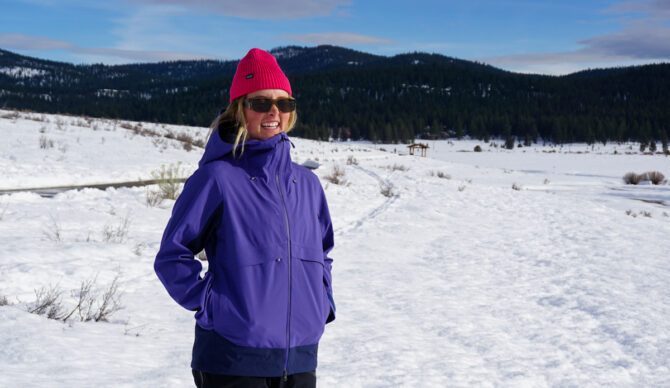
Photo: Will Sileo//The Inertia
Best Women’s Insulated Ski Jacket
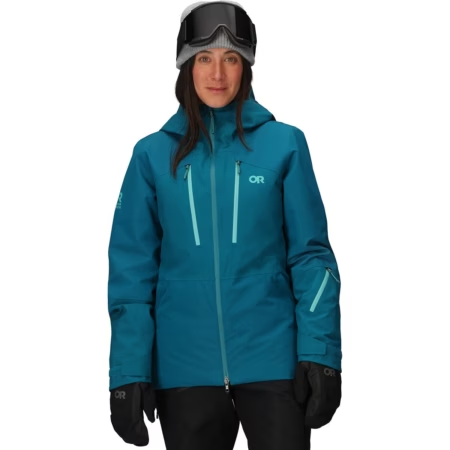
Outdoor Research Powderverse ($399)
 Best For: Resort
Weight: 776 g
Fit: Regular
Pros: Great colors, feels like a shell despite the light insulation, wrist gaiters
Cons: Heat stays inside, could be more breathable
For the colder, cloudy days on the mountain, you’ll need a jacket that will keep you warm on the lift but won’t make you sweat on the descent. The Women’s Powderverse Jacket from Outdoor Research grants that wish. The Powderverse is a lightly insulated jacket meant for the ladies who rip around the resort in any conditions. It fits well with a slight curve at the back to make more room for your hips. With this little structure, the back becomes more fitting, but there’s still plenty of room to move around. It has all the necessary pockets and components to hold your goods through the day, with two chest pockets, two hand pockets, a pass pocket on the left arm, plus a drop-in and a zippered inside pocket with plenty of room for valuables. The Powderverse also comes in some beautiful colors, which will make you noticeable but not flashy on the hill.
Our tester went out night skiing in this jacket. Despite the open skies and cold temps, she felt perfectly warm being out here for a few hours with only a baselayer beneath. OR boasts its AscentShell technology, allowing the jacket to be breathable and waterproof. Our tester agrees with the durability of the jacket to combat some light storms, but it was less breathable than she had hoped. After a few laps working up some heat, it felt a little trapped inside, but unzip a few inches, or open the vents, and you’re good to go.
On another note, the interior lining is truly something to write home about. This material is soft, comfortable, and well placed on your back and chest. For an insulated jacket, it feels like a shell. So if you are looking for something durable, weather-ready, and with some more warmth (but not too much), the Powderverse could be calling.
CHECK PRICE ON BACKCOUNTRY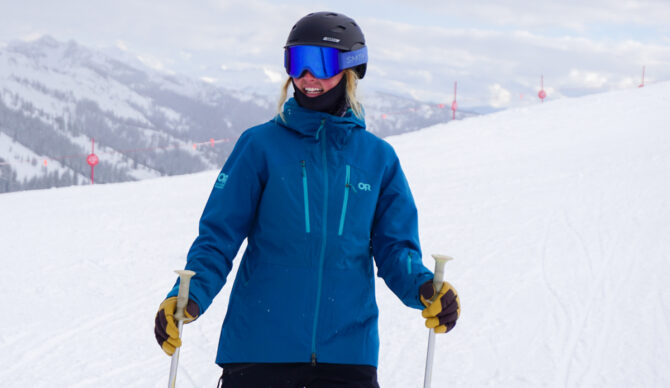
Photo: Will Sileo//The Inertia
Best Women’s Backcountry Ski Jacket
Black Diamond Women’s Recon LT ($450)
Best For: Backcountry
Weight: 427 g
Fit: Fitted
Pros: Incredibly lightweight and breathable, soft/stretchy, fun colors
Cons: Lacks pockets/features
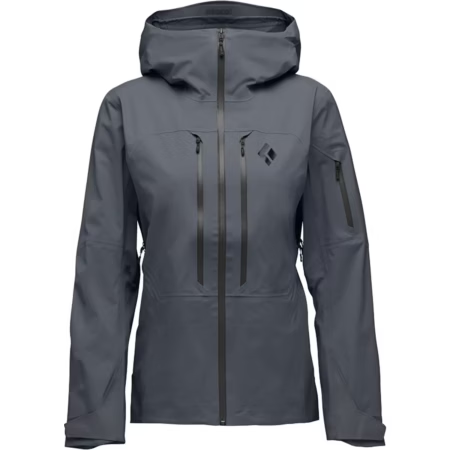
Most things Black Diamond makes have a preference for the backcountry. The Recon LT Shell Jacket takes that preference to the extreme, shedding tons of weight without compromising waterproofing or windproofing. The four-way stretch material is exceedingly comfortable and allows for completely unrestricted movement, something surprisingly hard to find in a true shell jacket.
The pit zips are large and allow for plenty of ventilation if the lightweight and breathable material isn’t enough for your exertions on the uphill. Underneath, there is enough room to layer, although this jacket is slightly more fitted than the other jacket we tested from Black Diamond, the slightly heavier and more feature-rich Recon Stretch Shell, featured further down, and a favorite of ours for mixed resort and backcountry riding.
That being said, the features are not lacking on this backcountry shell, especially when considering most skiers wear a backpack when venturing off-piste. Plus, the price point, at a reasonable $400 (compared to the near-double price point of $750 for the Arc’teryx Sentinel Jacket), seals the deal. A helmet-compatible hood, adjustable drawcord hem, zippered pack-compatible hand pockets, adjustable velcro cuffs, and a zippered pass pocket are all packed into this lightweight shell.
Because this jacket is designed for the backcountry, it would not be our first choice for in-bounds skiing. While it is fully featured, it lacks interior pockets, and the two large hand pockets + small upper-arm pass pocket provide enough room for essentials if you’re carrying a backpack, but don’t provide the level of organization we’ve come to expect in a resort-skiing shell. Additionally, it may not be the best option for intensely cold or stormy chairlift-accessed skiing due to its breathability. And while it is fairly durable, especially for such a lightweight jacket, it’s not up to the same standards of toughness as a true resort shell.
As noted, though, it is not marketed for that, and this is in no way a strike against this jacket. If your primary concern is low weight, combined with top-tier waterproofing, windproofing, and breathability for alpine touring, this is the jacket for you.
CHECK PRICE ON REIBest Premium Women’s Ski Jacket
Arc’teryx Sentinel Jacket Women’s ($750)
Best For: Resort/backcountry
Weight: 605 g
Fit: Regular
Pros: Super waterproof, sealed zippers, large front pockets
Cons: Small inside pockets, expensive
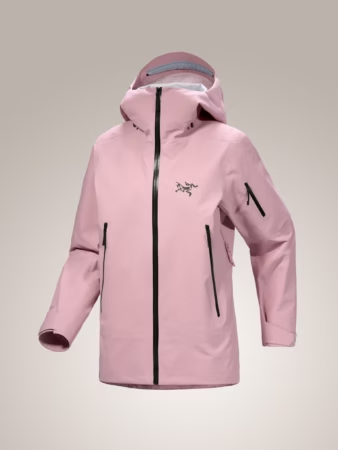
You’ve probably seen this one around. The sleek design, large front pockets, and water beading off the robust Gore-Tex material that’s offered in stunning colorways. You know it. We’re talking about the Arc’teryx Sentinel Jacket for women.
This shell has a lot going for it. The colors are incredible – changed yearly, but always offered in classic black as well. We’re huge fans of this year’s light pink colorway. The classic Arc’teryx front pockets that zip from hem to chest are stylish and super roomy. Along with two inner pockets, a powderskirt, a pass pocket, a helmet adjustable hood, and long, perfectly placed pit vents, this shell has it all. The fit of the classic Sentinel jacket is about as down-the-middle as you can get. Neither baggy nor truly fitted, the jacket provides ample room for layering, but we suggest sizing up for a true “freeride” fit. Even with all the sleek design, you may be wondering if it’s worth the price tag, but the truly standout feature of this jacket shows when the precip is out. This jacket repels water faster than you can even see it hit that stunning pink surface.
It was a slow start to the season this year, with a couple of warm and wet storms that rolled through. And while it sure wasn’t the snow we were hoping for, it gave our tester the opportunity to give this jacket a run for its money in less-than-ideal conditions. Feet of rain fell on the Sierras, and day after day the Sentinel prevailed. The PFA-free Gore-Tex ePE fabric delivers. Even on the toughest storm days with blizzards at the top of the mountain, she felt nothing but the pressure of wind on her back.
The hood also works wonders in tough weather. With a helmet-compatible StormHood, it adjusts simply and securely without sacrificing sight. The interior is soft with a light flannel backing lining the inside of the 3L weave. The cozy inside and high-quality waterproofing material on the outside made this an easy winner for our best premium jacket. The fabric feels luxurious, maintaining durability without feeling stiff thanks to that brushed interior backer.
For the backcountry, this jacket is surprisingly light, even when compared to dedicated backcountry shells, making it a decent option for occasional journeys outside of the resort. However, that brushed interior lining will add a bit of warmth, worth considering for the uphill. For a backcountry-specific hardshell from Arc’teryx, check out the Women’s Rush Jacket.
This jacket is definitely on the pricey side, maybe even maxing out the range on the pricey side. But if staying dry in super wet conditions is your number one priority and you are looking for a durable, reliable jacket for resort skiing or touring that can handle it all, it’s well worth it. Our Best Resort Skiing Shell Jacket, the TREW Stella, saves you $150 with slightly heavier material, more pocket space, a baggier fit, and without the comfort of the brushed interior lining, but if your wallet can handle the price of the Sentinel, you won’t be disappointed.
CHECK PRICE ON REI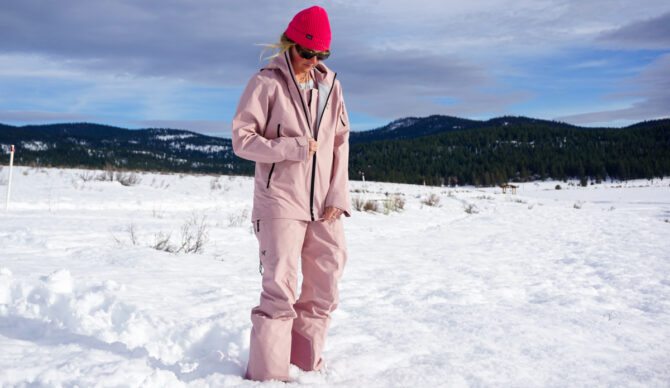
Photo: Will Sileo//The Inertia
Best of the Rest
Runner-Up Best All-Around
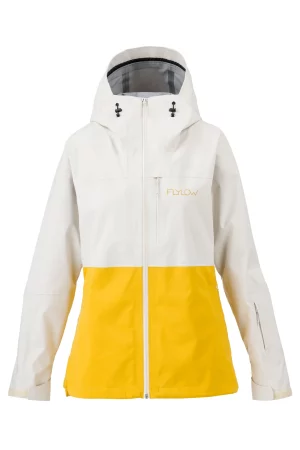
Flylow Lucy Jacket ($420)
Best For: Resort/backcountry
Weight: 612 g
Fit: Slimmer than other jackets, making it tighter over extra layers
Pros: Accessible pockets, 12-inch pit zips, and PFC-free DWR
Cons: Lighter colors show dirt easily, trim fit may require sizing up to better accommodate layering underneath the jacket
When we shop for new outdoor gear, we want it to serve multiple purposes. The Flylow Lucy Jacket exemplifies gear that does double duty, so you only have to invest in one jacket to switch between chair-accessible and backcountry adventures. Lightweight but durable, stylish but full of features, this versatile outer layer will shield you from winter storms and ominous rain, but it will also breathe on the bootpack.
Lighter than many other jackets we’ve tested, the Lucy is better for milder winter days than frigid ones. The athletic fit was less accommodating of thicker insulation and midlayers, but with only a baselayer against our skin, we stayed at the perfect temperature on warmer and higher-output days, such as a 30-run ski day on Mt. Hood or a 2,000-foot ascent on the alpine trail. That, coupled with its packability, accessible pockets, and 12-inch pit vents, makes it a top-tier option for the skier who splits their time between in and out of bounds.
While we are huge fans of the variety of colorways the Lucy is available in, one downside of the lighter shades is that they show dirt and stains more easily. However, because the DWR coating is free of PFCs, you should wash the jacket more often anyway to keep the water-repellent outer coating performing at its best. Another minor downside is the trim fit, which our tester found to be a bit restrictive when layering up with a puffy jacket underneath. Check the size charts, and consider sizing up. It was a tough choice between this jacket and the Rab Khroma Latok for Runner-Up Best All-Around. In the end, the high price point of the Khroma Latok pushed it further down the list, but we decided to give it some props as the jacket with the best features. The bang-for-buck of the Lucy jacket is top-tier, but if price is less of a concern, we’d likely point you towards the Khroma.
Read our full review of the Flylow Lucy Jacket here.
Check Price on REI
Photo: Amelia Arvesen//The Inertia
Best Features on a Women’s Ski Jacket
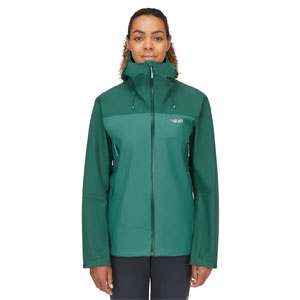
Rab Women’s Khroma Latok GTX Jacket ($680)
Best For: Backcountry/resort
Weight: 546 g
Fit: Fitted, with room to layer
Pros: Attention to detail, durability, 3L GORE-TEX Pro 28,000mm waterproofing/windproofing, partially recycled materials
Cons: Expensive, limited color choices
The Khroma Latok Jacket, without question, rose to the top of the list out of every jacket we tried. At 546g, this jacket is lightweight enough to tour with (and lighter than even most other high-end backcountry options here, such as the Ortovox 3L Guardian Shell at 741 g), yet still extremely durable and more than wind/waterproof enough for any big day in serious conditions. This is the jacket we would trust no matter what the day brings. Somehow, it looks good, too.
The functionality is of the highest standard: every single aspect of this jacket has been engineered for the hardcore skier. For example, the zippers are extra-large to make opening and closing the front a breeze, even with thick mittens on.
While this jacket is designed for the backcountry, it is more than capable of handling anything skiing in-bounds throws your way: blower pow, rain, sleet, high winds, or a bluebird spring ski day. With two weights of GORE-TEX Pro Most Breathable to balance protection, weight, and breathability, the jacket is flexible, durable, and breathable, a rare combination. With heavier-duty fabric across the shoulders and outer sleeves, the jacket can withstand almost all scrapes and falls. The lighter-weight fabric around the core allows for lower overall weight and bulk, greater mobility, and improved breathability.
The length is perfect as well: not too short, and not so long that it looks strange or impedes movement. Powder is no match for getting inside this jacket, and we tested it out on some proper powder days (4 feet coming down in one day, to be exact). The features are also impeccably designed: inner and outer pockets that are accessible even with a backpack on, a two-way adjustable, helmet-compatible hood, and a stretch Matrix powder skirt you won’t notice unless you need it.
The only aspect of this jacket we could find fault with was the limited color selection, but even that is a stretch, as the colors offered are not offensive in the slightest: the choice between deep maroon, muted green, slate grey, and bright blue should have something for most, but the absence of black or tan is odd, considering this jacket could easily be a staple for any dedicated skier.
Complete with a 100% recycled face fabric, the Khroma Latok Jacket leaves nothing to be desired and allows you to focus on the parts of skiing that should require your attention, like avalanche safety, reading the conditions, and choosing lines in and out of bounds.
CHECK PRICE ON BACKCOUNTRY
Photo: Chase Boyd//The Inertia
Another Great All-Around Shell
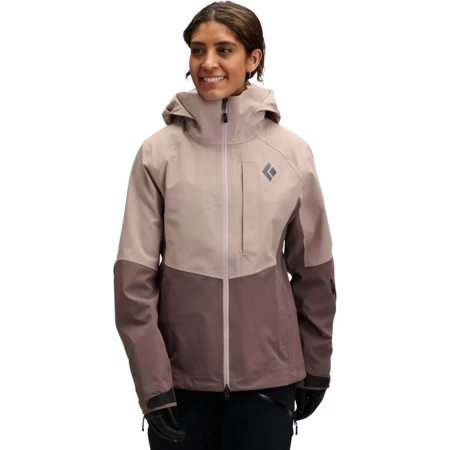
Black Diamond Women’s Recon Stretch ($500)
Best For: Resort/backcountry
Weight: 667 g
Fit: Normal, room to layer, but still reasonably fitted
Pros: Lightweight, extremely durable, designed for optimal functionality in all conditions
Cons: Lacks an inside zip-able chest pocket, main zipper slightly harder to zip than others due to waterproofing
Black Diamond blew us away with the Recon Stretch Shell jacket, a true one-jacket solution for backcountry enthusiasts, powder hound ski bums, hardcore 150-days-a-year skiers, and everyone in between. With seamless comfort, impressive breathability, windproofing, and durability made to last (with a practical lifetime warranty, to boot), although the color options leave a little to be desired, this is true ski outerwear performance at its finest. The price point, at a reasonable $450, seals the deal.
While this jacket is marketed as a hybrid, it is actually lighter than many backcountry-specific shells of the same variety. Even better, it somehow retains body heat better than backcountry-specific shells, meaning less packing of unnecessary layers for all but the coldest days.
The Recon Stretch Shell combines a durable 4-way stretch fabric (it really is noticeable, think Lululemon NuLux fabric versus regular cotton leggings to work out in) with their waterproof/ breathable solution, BD.dry, for a jacket that is designed to be capable of a full day of skiing in or out-of-bounds.
Our tester noted how intuitive the temperature regulation was while wearing this jacket. She did multiple bootpacks at Palisades Tahoe, descended icy chutes, ripped moguls until her quads were sore, cruised around with friends on the groomers, sat for significant periods of time without moving, and never felt too hot or too cold.
The only area this jacket could improve on is the features. While this jacket has all the pockets you could need, including a chest pocket and two mesh internal drop pockets in addition to the standard side pockets, our tester (and many skiers) prefer to store phones inside the shell near their chest, where some jackets offer a final, zip-able interior pocket. While not a deal breaker, it would be a nice improvement to see in the future. We also found the front zipper to be a bit harder to zip and unzip than other jackets we tested due to the waterproof construction.
What elevated other hybrid jackets like the Flylow Lucy and Rab Women’s Khroma Latok jacket over this one is the quality and lightness of the materials used in those two shells. In the case of the Khroma Latok, which weighs a mere 546 g, it is the insane durability and performance of the GORE-TEX Pro Most Breathable material. However, it costs a pretty penny ($680), and the awesomeness of GORE-TEX Pro Most Breathable is best appreciated on the skin track rather than at the resort. With the Flylow Lucy Jacket, it is the relative lightness (612 g) and extreme comfort of the buttery soft and breathable material.
CHECK PRICE ON REIRunner-Up Best Budget
686 Hydra Thermagraph ($299)
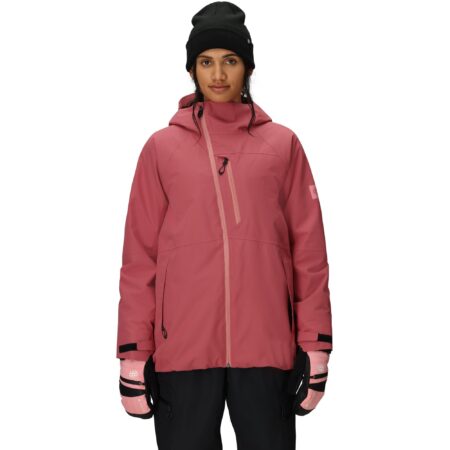
Best For: Resort
Weight: 1002 grams
Fit: Boxy
Pros: Great niche pockets, great colors, wrist gaiters, budget option
Cons: Collar doesn’t fold down when jacket is not zipped all the way, mesh-lined pit zips
Enter 686 Hydra Thermagraph. The do-it-all jacket is bound to send some steeze your way on the trail. This relaxed free ride insulated jacket comes in hot pink, light blue, and sleek black with pockets galore. Truly the perfect pocket jacket with a large mesh inner stash, lip balm specific nook, and even 686 tissues in the tissue pocket! The wrist gaiters fit nicely on the hands and keep the snow out of your gloves and jacket sleeves. With all of these unique features and a super stylish design, it’s hard to believe it comes in right at $300, a fantastic option for a ski jacket on a budget.
The insulation layer has 686 THERMAGRAPH tech inside. Built with patches of insulation around key areas of your body. This allows heat to move inside your jacket from warm to cold areas, keeping the air flowing as you move through the mountain. While testing this jacket, it definitely held up in the cold. It kept our tester warm without making her sweat and was the perfect choice for a big storm day, especially with the hood fitting so well over a helmet.
On the warmer days, when she wanted some space from the high-neck guard, it was a bit problematic. With the style of the angled zipper comes the high side of the jacket, which simply does not want to fold down. But if you have it all the way zipped, it reduces chin rub and is super easy to breathe in. The mesh-lined pit zips are also not ideal for the warmer days, but are nonetheless a great addition to the design on the cold ones. This jacket is for a lady who runs cold, works hard, and is looking for a low investment, high value steezemeister of a kit.
Check Price on REI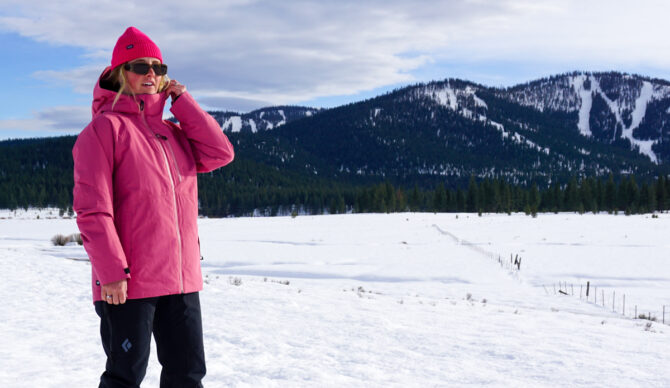
Photo: Will Sileo//The Inertia
Runner-Up Best Insulated
Patagonia Storm Shift ($499)
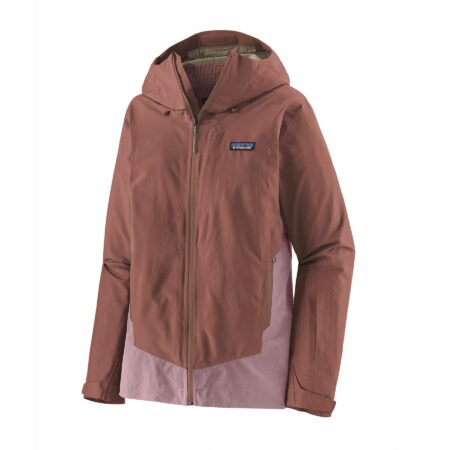
Best For: Resort
Weight: 723 g
Fit: Regular
Pros: Light shell, cozy and fuzzy inside, warm with light insulation
Cons: Smaller pockets, a bit bunchy at the bottom
For our runner-up best insulated, we bring you the Patagonia Storm Shift. This trim-fitting jacket has all the perfect pockets and adjustability you need to face the mountain. Plus, a fuzzy-lined layer keeps you cozy inside. With just a baselayer underneath, our tester was prepared for the windy summits at the top. This jacket is durable and complete with a PFAS-free DWR layer. When taking it out in some precipitation, the jacket did gather water after a little bit of being out there, but our tester never felt it through the 2L shell. Patagonia worked hard to bring down the price of this Gore-Tex jacket. They made this a 2L design instead of a 3L and added that nice inside lining to keep the price down for a great waterproof jacket while also ensuring comfort all around.
A major plus of this design is the visor and the two-way adjustable hood. Most hoods have adjustments on the sides and the back of the hood. The storm shift has the back cord, but lets the side ones hang closer at about collar bone level. This allows you to pull straight down to adjust the hood and let the ends hang out of sight, unlike hoods with side draws.
The Storm Shift is a great choice for all types of resort skiing. A powder skirt lines the inside, pass pockets are outside, a comfortable second layer keeps you warm, and that barnacle blue is sure to catch some eyes on the mountain. And even with a trim fit, the fabric is stretchy and allows you to move with ease. Plus, when choosing to invest in a solid ski jacket, Patagonia is a great place to put your money. Both for their environmental mission and the quality of their gear.
Check Price on REIRunner-Up Best Premium
Norrona Lofoten Pro ($899)
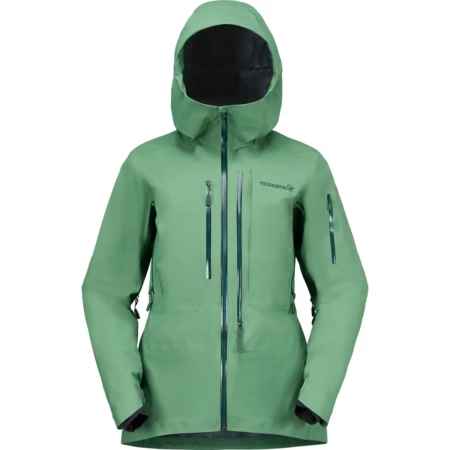
Best For: Backcountry/resort
Weight: 540 g
Fit: Trim
Pros: Wrist gaiters, chest vent, breathable
Cons: Expensive, no hand pockets
Norrona is known for its high-performance gear made with quality and environmentally friendly waterproof materials. The brand prides itself on using the best materials for its unique designs and goes a little further in each piece to add some flair. The Lofoten Pro follows suit. The shell membrane is made with a GORE-TEX ePE fabric, which makes it light and thin while seriously waterproof. The cut itself is unique for a freeride jacket, but those quirks make a difference. For one, it has comfortable wrist gaiters that fit snug around your thumb when you stretch your arms through. Second, the back of the jacket comes down lower than the front, allowing for some extra protection from snow slipping through. And third, the asymmetrical cuffs have velcro, which folds tight and covers the tops of your hands, a luxury you don’t know you need until you try it.
Our tester brought this jacket out in the resort and in the backcountry. She noted the great vents and breathability, but also the lack of hand pockets on the front. The chest pockets were big enough to store her essentials, but it took some getting used to without pockets for her hands. In the resort, she felt free to move as she made her way up the lifts and down the mountain. The shell does not offer much warmth, but on a sunny day with a baselayer, all was well. It was great for the resort, but this jacket may even be a better choice for the backcountry. The vents are unbeatable. Two full zips are located under each arm, PLUS a mesh chest vent for front ventilation. These features made a huge difference on the uphill. One small zipped pocket and one mesh stash pocket line the inside, just above a removable powderskirt. It was great to be able to take the powderskirt off before the tour, and zip it back on when heading to the resort.
This jacket does have a lot of bells and whistles, and for those subtle but glorious luxuries, it comes at a steep price. However, Norrona doesn’t lie with their quality, their ingenuity, and their mission to make great gear. The Lofoten is a prime jacket to invest in for a quality, weather-proof, backcountry shell.
CHECK PRICE ON BACKCOUNTRYHardwearing Resort Jacket
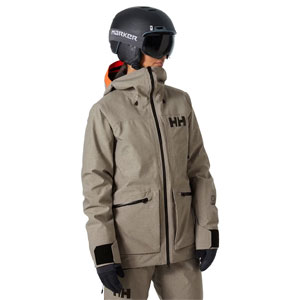
Helly Hansen Powderqueen 3.0 Jacket ($465)
Best For: Resort
Weight: 1100 g
Fit: Average
Pros: Insulated, durable, ample pockets, helmet-compatible neon hood
Cons: Not as breathable as a shell jacket
This jacket surprised us with its durability. Bell-to-bell powder skiing in Sierra Cement? No problem. Fall down a chocolate-chip-studded chute and come out without so much as a rip in your coat? Check. If you’re looking for an insulated jacket that will survive cold temperatures, powder, and long days at the resort, the Powderqueen 3.0 is right up your alley.
There’s a reason Ski Patrol often chooses Helly Hansen for their uniforms: the durability and warmth of this thing is no joke. With nothing but a baselayer on underneath, our tester wasn’t the least bit concerned about getting cold in the coldest of temps on offer (given, it’s the West Coast). Truthfully, she was a little worried about overheating, but the breathability was a lot better than comparable insulated jackets, and you can spend a lot more for comparable quality, such as with the Flylow Charlie Coat, so it’s hard to complain. And the seam-sealed, super-durable shell of this jacket was worth it on deep days. Her notes read, “I stayed out for 8 hours in a blizzard without issue. Did not need to layer. Got a little sweaty but never hot or cold.”
With tons of pockets (including a ski pass pocket), a powder skirt, helmet-compatible hood (with the classic HH neon flare), elastic cuffs with thumbholes, and Recco technology, this jacket is an obvious choice when you’re switching your goggles out for a storm lens, and it’s coming down hard out there.
The main downside of this jacket is the reduced breathability due to the insulated and 2L construction, which certainly makes this jacket less versatile than a 3L shell jacket. The color choices are surprisingly pretty, with muted greens and purples to choose from, but weirdly, there is no classic black option at this time.
CHECK PRICE ON REI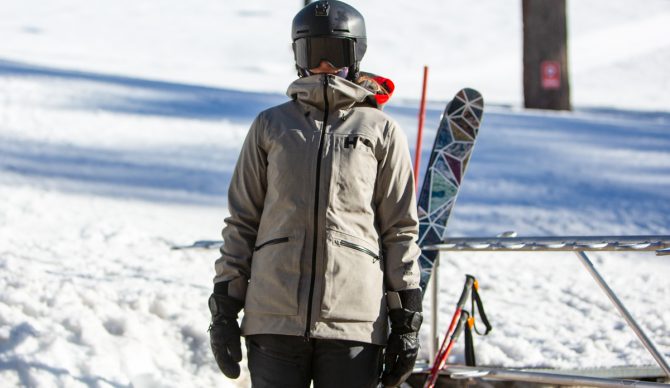
Photo: Chase Boyd//The Inertia
Down-Insulated Ski Jacket
Flylow Charlie Coat ($599)
Best For: Resort
Weight: Not listed
Fit: Regular
Pros: Down insulation, color options, weather-resistant, durable
Cons: Fit
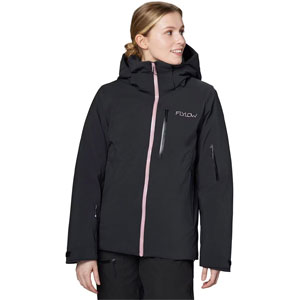
Flylow’s Charlie Coat brings the heat, packing 700-fill down insulation into a top-tier waterproof/breathable shell. This jacket is on the snug size, so definitely size up if you are in between sizes. Our tester found this jacket to be slightly more fitted than other similarly marketed insulated jackets, such as the Helly Hansen Powderqueen. Keep in mind, our tester does prefer relaxed fit jackets, but between all of the jackets she tested for this review, the Charlie Coat was definitely on the slimmer side, with only a bit more room than the Ortovox Guardian Jacket.
That being said, the Flylow Charlie Coat comes in some gorgeous color options, is extremely stretchy and soft for an insulated jacket, and would be a great option on a colder storm day. The seams are fully sealed as well, meaning you can feel confident about staying dry even if you stay out until the last chair.
The 700-fill down insulation is also surprisingly breathable, a huge plus for those who will still work up a sweat in the coldest of conditions. While it is only rated at 10k for breathability, with insulated jackets, breathability typically is not the number one concern. Our tester found this jacket to be breathable enough on all skiing days below freezing. Another bonus is the larger-than-normal underarm zips, providing solid venting if it is a warmer day or you’re bootpacking somewhere.
With a removable powder skirt, internal and external pockets, and an adjustable hood, this jacket has everything you could need for a day of cold or stormy skiing inbounds.
CHECK PRICE ON REIStylish Resort Shell
Stio Women’s Figment Jacket ($500)
Best For: Resort
Weight: 765 g
Fit: Relaxed
Pros: Lightweight, plenty of pockets, beautiful color options, seamless fit
Cons: Waterproofing
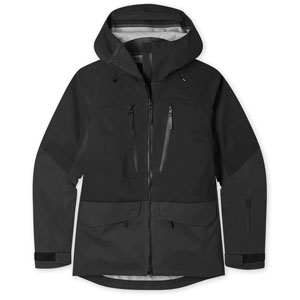
The Stio Figment Jacket is lightweight, stretchy, and has an effortless outerwear-without-being-outerwear feel to it. Precisely what we are looking for in a touring shell, this jacket makes a great option for touring, even though it is slightly heavier than a true backcountry-oriented shell.
The jacket feels extremely breathable for being given a low rating of 10,000 mm. Our tester noted that she never felt too hot or sweaty, and the zip vents add to its appeal for taking into the backcountry. The features do not disappoint either, with the helmet-compatible hood, inner mesh pockets, goggle wipe (something you don’t think about, but definitely use!), and the storm-sealing hem.
The only major downsides of this jacket are the waterproofing and the durability. While Stio’s Figment Jacket is marketed to have a waterproof rating of 20,000mm, our tester found it to be less confidence-inducing on truly rainy days than, for example, the Rab Khroma Latok or other similar, lightweight shells.
That being said, this jacket fit almost perfectly, was stretchy enough to allow for a full range of movement without feeling overly thin, and looked great (for apres, too, not just the skin track). The light color options leave this jacket susceptible to oil stains, dirt smudges, and things of that sort, but, of course, you can always go for classic black, so this isn’t a fault of the jacket itself.
CHECK PRICE ON BACKCOUNTRY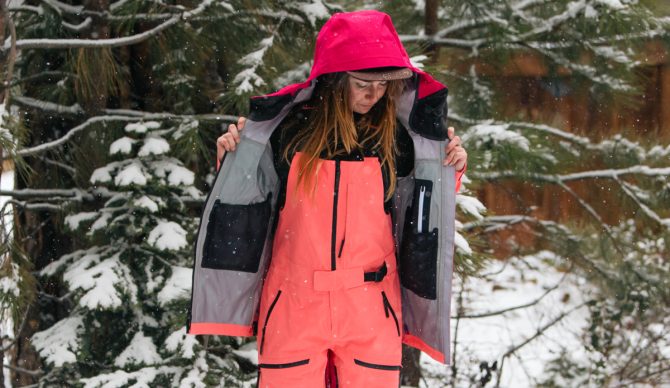
Photo: Ella Boyd//The Inertia
Warm and Wallet-Friendly
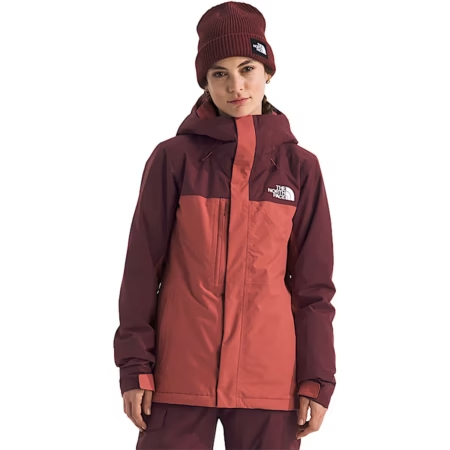
The North Face Freedom Insulated Jacket ($320)
Best For: Resort
Weight: 807 g
Fit: Average
Pros: Great colors, well insulated, velcro-protected main zipper
Cons: Small chest pocket, small pit vents
For cloudy and cold days, you need to rely on something more than working up a sweat. If those shells aren’t cutting it, an insulated jacket may be your next move. The North Face Freedom line is all-time. With true-to-size fitted feel, great colors, and timeless materials that have made TNF so well known, you can’t really go wrong here. Our tester got her hands on the Freedom Insulated Jacket and brought out the kit on a partly cloudy 30-degree day. With just a baselayer beneath, she was the perfect temperature the whole ski day. Not too hot nor too cold. The insulated layer was comfortable to ride in and almost felt like a layer of protection compared to the shells she was used to wearing in sunny Northern California. The interior is soft, easy to move in while riding, and comfortable to wear around town. The hood is adjustable, and a velcro flap falls over the main zipper, protecting it from the snow.
The pocket situation is unfortunately minimal. There are nice hand pockets of a decent size on the front, and a chest pocket the size of your smartphone, but inside is lacking, with only a large mesh stash pocket. Our tester is a fan of the inner zip for valuables. But the hood adjusts nicely over your helmet, and the pit zips, although shorter than usual, give nice air flow through their mesh openings.
This jacket is a fantastic option if you’re skiing the resort and mostly hitting groomers. If you’re working up a sweat and skiing super hard, you’ll probably want to ditch that insulation quickly. But if you take your time enjoying the beauty and just like to be in the snow outside, this could be your answer. The Freedom Insulated is definitely a recommendation for the colder and cloudier climates. This 30-degree off-and-on storm day was a perfect fit for the jacket. It kept our tester warm on the chair and didn’t make her sweat on the way down. The full zip up to the chin was an added plus with its soft layer hugging the chin nicely and further keeping out the cold. If you’re a lady who runs cold, the North Face Freedom Insulated is a great option for your resort skiing this winter.
Check Price on REI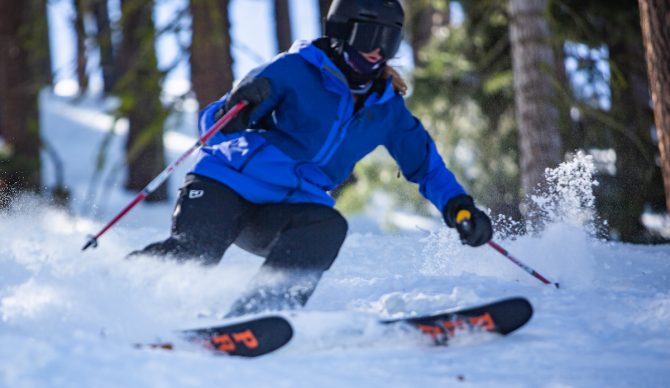
Tearing it up in the Ortovox Guardian. Photo: Chase Boyd/The Inertia
Honorable Mentions
Another jacket we loved is the Ortovox 3L Guardian Shell Jacket, with a lightweight, breathable, and durable material with a light merino backing. This style has been discontinued, but we highly recommend any of Ortovox’s other jackets, especially those that make use of the light merino wool backing for added comfort.
The Strafe Outerwear Lucky 2L Insulated Jacket is another top-tier choice of ours that has since been discontinued. Stylish and lightly insulated, it was a great pick for skiers who run a little cold, but still shred hard.
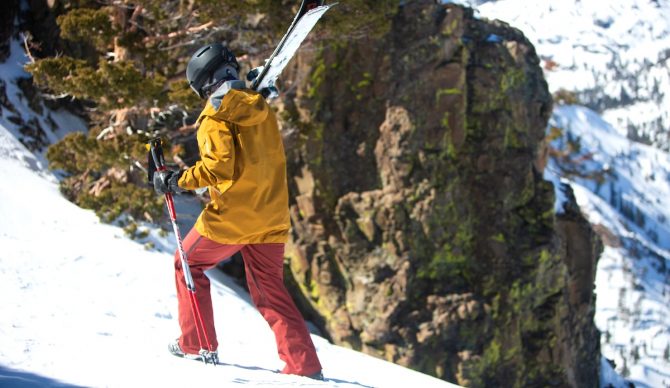
Photo: Chase Boyd//The Inertia
Best Women’s Ski Jackets Comparison Table
| Jacket | Price | Best For | Weight | Material/Waterproofing | Fit |
| TREW Stella Primo Jacket | $599 | Resort | 814 g | 3L Primo material, 20,000mm waterproof/breathable | Relaxed |
| Mountain Hardwear Women’s Firefall Insulated Jacket | $269 | Resort | 950 g | Dry.Q 70D Textured Weave 2-Layer | Regular |
| Stio Skyrider Jacket | $350 | Resort | 680 g | PeakProof 3L Canvas | Regular |
| Outdoor Research Powderverse | $399 | Resort | 776 g | AscentShell 2L | Regular |
| Black Diamond Women’s Recon LT Shell | $450 | Backcountry | 427 g | BD.dry 3L stretch material | 20k waterproofing / 20k breathability | Fitted |
| Arc’teryx Sentinel Jacket | $750 | Resort/ Backcountry | 605 g | 3L GORE-TEX, light flannel backer | Regular |
| Flylow Lucy Jacket | $420 | Resort/ Backcountry | 612 g | Tactic 3L 20k/20k softshell (100% recycled polyester) | Trim |
| Rab Women’s Khroma Latok GORE-TEX Pro Jacket | $680 | Backcountry | 546 g | 80D recycled GORE-TEX Pro Most Breathable 3-Layer construction | Regular |
| Black Diamond Women’s Recon Stretch Ski Shell | $500 | Backcountry | 667 g | BD.dry 3L material | 20k waterproofing / 20k breathability | Relaxed/true to size |
| 686 Hydra Thermagraph | $299 | Resort | 1002 g | 2L infiDRY, 20k waterproofing | Boxy |
| Patagonia Storm Shift | $499 | Resort | 723 g | 2L Gore-Tex | Regular |
| Norrona Lofoten Pro | $899 | Backcountry/ resort | 540 g | 3L Gore-Tex Pro | Trim |
| Helly Hansen Powderqueen 3.0 | $465 | Resort | 1100 g | 2L Helly Tech Professional | Regular |
| Flylow Charlie Coat | $600 | Resort | Not listed | Intuitive Perm 2-layer fabric | Regular |
| Stio Women’s Figment Jacket | $500 | Backcountry | 765 g | PeakProof 3L 100% recycled polyester, 150 Denier face fabric | Relaxed |
| The North Face Freedom Jacket Insulated | $320 | Resort | 807 | 2L Dryvent | Average |

We’ve spent multiple seasons testing for this review. Photo: Chase Boyd//The Inertia
How We Tested The Best Women’s Ski Jackets
We rated each jacket on its durability, comfort, features, and breathability/ventilation. For consistency, we mostly tested only 3L shell jackets, focusing on all-mountain durability. We also tested a few insulated options, which we noted. All the jackets listed here are top choices to begin with, so while a few are named here as top picks, we stand by all the jackets in this guide as highly capable and well-made options.
For the past three years, we’ve been testing the best women’s ski jackets, and kept this guide up-to-date as we get out there with the latest and greatest each season to make this guide the most up-to-date review of women’s ski jackets on the internet.
Our testers for this review are Amy Burdick, Ella Boyd, and Amelia Arvasen.

Testing the Flylow Lucy Jacket on Mt. Hood. Photo: Amelia Arvesen//The Inertia
Ella Boyd is a born-and-bred East Coast skier who skied in Maine for almost 20 years before turning her attention to the West. During the 2023/2024 season, Ella got over 100 days under her belt at Palisades Tahoe/Alpine Meadows testing these ski jackets (as well as ski bibs). 23/24 was a wonky season in the West: the perfect variable conditions for gear testing. Rainy days, powder days, bitterly cold days, and bluebird sunshine, Ella got out there and put these jackets to the test.
We continued our testing during the 24/25 season with Amelia Arvesen, an experienced writer, tester, and backcountry enthusiast. She tested some top-pick resort/backcountry options, with a focus on uphill travel, at her home mountain of Mt Hood, Oregon.
For 2025/2026, Amy Burdick tested a wide variety of ski jackets and gave the guide a major overhaul after standout options like the Trew Gear Stella jacket and Black Diamond Recon Stretch jacket received full makeovers at the beginning of the season. With fresh fits, colors, and features to test, Amy had her work cut out for her, but working for a ski resort has its advantages, namely: lots of testing time on the hill. Our most recent update in the spring of 2026 reflects her testing.
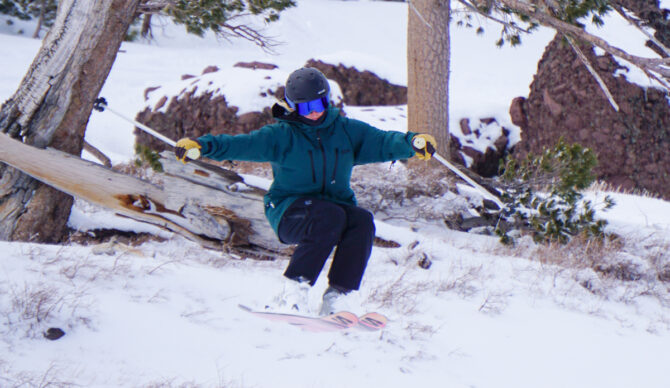
When you’re shredding hard, the last thing you want is lower-quality material holding you back. Photo: Will Sileo//The Inertia
Best Women’s Ski Jackets Buyer’s Guide
Features
Pockets
Pockets are easy to overlook when purchasing a ski jacket, but they are a secret weapon: the right amount of pockets doesn’t add extra weight, but also allows you to pack things on your person and omit using a backpack if you do it right. Even when wearing a backpack, pockets are useful for resort and backcountry expeditions (to hold things like skins, gloves, or a phone for music while going up and down the mountain).
Exterior pockets, often either on the chest or at the hip, are a necessity. Some jackets place those hip pockets higher up, so they’re still accessible with a backpack on.
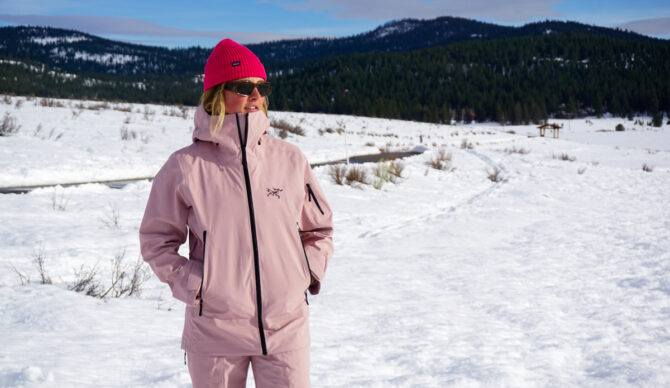
Large “alpine pockets” are a standout feature of most Arc’teryx shells. Photo: Will Sileo//The Inertia
While we often rely on pants or bibs for beacon pockets, jackets can be holders of radios, phones, and other important gear you need quick access to in a pinch. Some pockets have weatherproofing in the form of seam-sealed zippers or flaps that cover horizontally-opened pockets. This can be a plus if you do a lot of powder skiing, but for the average day, it can be cumbersome and add time during critical moments, reaching for a ski pass, a quick snack on the hill, or anything else you may need in a pinch. For example, Black Diamond’s Recon Stretch Shell offers a jacket with waterproof seams, and the TREW Gear Stella Jacket, pictured above, has powder-proof coverings over the zippers.

Fully buttoned up for harsh weather in the Flylow Lucy Jacket. Photo: Amelia Arvesen//The Inertia
Hood
Look for the keyword “helmet-compatible hood” when purchasing, meaning the hood is big enough to accommodate your head with a helmet on. While helmet-compatible hoods are useful, without adjustability, they can feel massive. Two-way adjustability is even better, giving you the ability to cinch down the hood for wearing without a helmet. Some hoods are also removable, which is great if you ski somewhere where you see a lot of bluebird days.
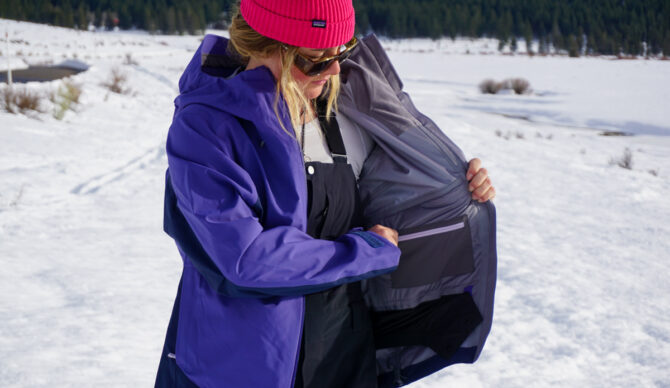
Inside pockets on the Stio Skyrider. Photo: Will Sileo//The Inertia
Other Features
Features can be the difference between the absolute best jacket and the second-best ski jacket. Powder skirts, wrist gaiters, and large zippers to grab on to may feel silly on regular days, but on storm days, they become absolute necessities.
Wrist gaiters, a small, thin cuff with thumb holes that goes under your gloves and keeps out the snow, are a much-appreciated feature on a small number of the ski jackets included here. Rab, for example, included these in the Khroma Latok Jacket, and it elevated the performance of this durable shell on a powder day when the wind is blowing powder up and down the mountain. Wrist gaiters are truly a game-changer for keeping snow out of your sleeves. Whether you prefer a gauntlet-style or an undercuff-style glove, a wrist gaiter will ensure no snow gets down to your inner layers.
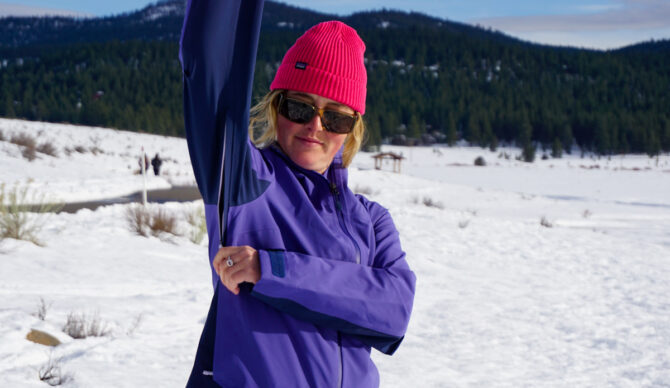
Pit zips are a key feature for staying cool when working hard. Photo: Will Sileo//The Inertia
Breathability/Ventilation
If you’re looking for a one-jacket-quiver, you will need some sort of ventilation. Plenty of jackets are capable of touring and lapping the resort, and what sets this kind of jacket apart is the ventilation system, both in the material choices and in terms of features like pit-zips.
It goes without saying that shells are going to be more breathable than insulated jackets, and you have the freedom to choose your own layering system as opposed to getting the same warmth every time. However, most jackets take things a step further with pit zips, one of the more commonly found methods for ventilation. The Stio Figment Jacket, Outdoor Research AscentShell Jacket, and Rab Khroma Latok Jacket are some options with zippered ventilation.

Burly material on the Helly Hansen Powderqueen 3.0 jacket earned it some points in the durability category. Photo: Chase Boyd//The Inertia
Durability
The definition of durability is an object’s ability to withstand damage, but with skiing, there is more to it than that. The elements can be damaging without directly damaging a jacket (think: wind, cold, snow, rain, grease from lift wheels), and then skiing itself can result in damage (rips from rocks, trees, poles, and you name it). A durable jacket should withstand these things and provide mental comfort that one fall, slip, or scrape in a glade will not result in a jacket that won’t make it through the rest of the season. Naturally, insulated jackets tend to feel heavier, but this does not necessarily mean they are more durable, unless it is in the name, such as with the Helly Hansen Powderqueen 3.0 Durable Jacket (which really is quite durable due to the Melange Ripstop fabric).
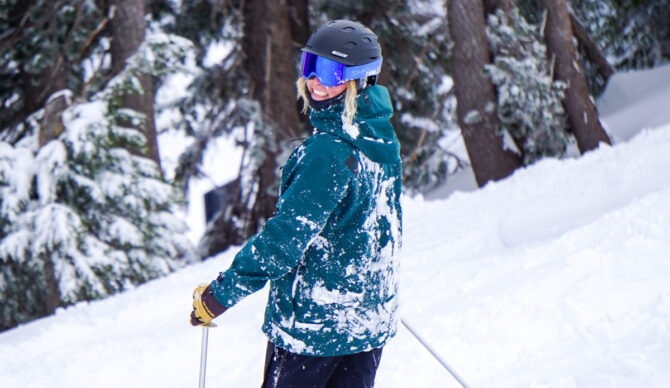
Tumbles ain’t got nothing on the durable Primo fabric Trew Gear uses in the Stella. Photo: Will Sileo//The Inertia
Shells can also feel more or less durable: think the Trew Stella Jacket, which is designed for the resort and the backcountry, versus the lightweight Black Diamond Women’s Recon LT Shell, which is designed with the backcountry in mind. Resort jackets tend to feel more durable than backcountry jackets, because durability tends to be inversely proportional to lightweight and breathability. However, these aspects do not have to be either/or (as shown by the Rab Women’s Khroma Latok and Flylow Lucy), but for the average consumer, where price point matters, you may be sacrificing breathability for durability or vice versa.
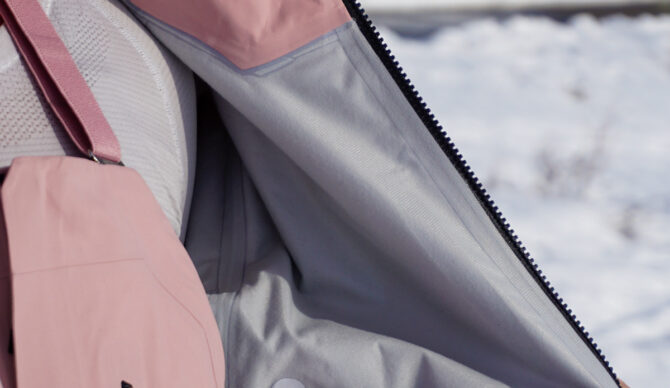
A brushed inside lining on the Arc’teryx Sentinel gives a huge boost to overall comfort. Photo: Will Sileo//The Inertia
Comfort
Comfort relates to both fit, such as relaxed versus fitted jacket styles, and also the softness of the material itself. Jackets lined with polyamide, such as the Helly Hansen Powderqueen 3.0, or with brushed inner fabric, such as the Arc’teryx Sentinel, lead to a more comfortable experience. Stretch can also affect comfort. Some jackets offer 4-way stretch, such as the Black Diamond Women’s Recon Stretch, which can enhance the comfort exponentially. Sometimes, there is a certain je ne sais quoi that makes one jacket especially comfortable for no apparent reason, and this simply comes down to personal preference.

Lightweight, stretchy material is a defining feature of the Flylow Lucy Jacket and matching Siren Bib. Photo: Amelia Arvesen//The Inertia
Material
The material of the jacket is, of course, integral to its performance. The unfortunate part is that you cannot have the best of both worlds: breathability and weight versus waterproofing and durability are somewhat inversely correlated.
As a general rule, look for GORE-TEX material in terms of waterproofing and durability, but, given the previous, it may not make GORE-TEX jackets the winner in terms of weight and breathability. Proprietary fabrics and DWR finishes like Black Diamond’s BD.dry, Flylow’s Perm HD fabric, and others follow close behind GORE-TEX, and may be superior in some cases, depending on the jacket’s other construction factors.

Putting the Arc’teryx Theriss (discontinued) to the test. Photo: Chase Boyd/The Inertia
You may also notice the 2L vs. 3L descriptors of various jackets. Both of these construction types have a waterproof (but still breathable) membrane sandwiched by an exterior layer of material on the outside for durability and a lining on the inside to separate the waterproof/breathable membrane from your skin. The outside layer is then coated in a Durable Water Repellent (DWR) finish that keeps water from seeping in and adding weight, as well as reducing breathability. This DWR can wear out with use, but it is easily revived with special washes.
In a 3L design, all three layers – inside, outside, and the waterproof membrane – are fused together, making for a single contiguous piece of fabric. This helps a jacket breathe better, and is also more durable as the waterproof membrane is protected both on the inside and outside. 2L material has the outer two layers fused together and the inside liner hanging separately. 2L material is also often used for insulated jackets, where the inside liner is replaced with layers of insulation. For backcountry touring and high-performance skiing, 3L material such as that on the Rab Women’s Khroma Latok is far and away the top choice for increased breathability and reduced weight, whereas if you’re just getting some laps in on the resort, a 2L jacket like the Mountain Hardwear Firefall will do the job.

A high collar on the Flylow Lucy Jacket protects the face even with the hood down. Photo: Amelia Arvesen//The Inertia
What is GORE-TEX?
GORE-TEX has been around for a while. Since 1969, in fact. GORE-TEX is just the name, given by W. L. Gore & Associates, for their waterproof, breathable fabric membrane.
GORE-TEX blocks liquid water while allowing water vapor to pass through and is designed to be a lightweight, waterproof fabric for all-weather use. In other words, it combines waterproofing and breathability, doing exactly what we need as skiers and what we all previously thought was impossible.
Nowadays, GORE-TEX comes in different constructions like GORE-TEX Pro (designed for increased durability) or GORE-TEX C-Knit (for increased breathability and low weight without sacrificing weatherproofing), among many others.
Return to Top Picks | Return to Comparison Table
Related: Best Women’s Ski Bibs | Best Men’s Ski Jackets | More Ski Gear Reviews
Editor’s Note: For more gear reviews and features on The Inertia, click here.
Photo: Will Sileo//The Inertia

