
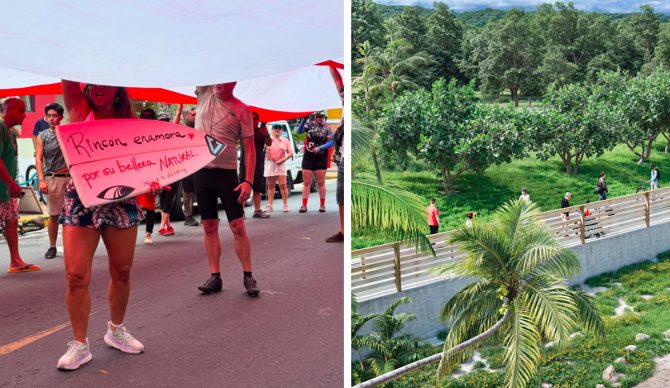
A protester, left, and an artist’s rendering of the path, right. Photos: Surfrider Puerto Rico

For weeks, Puerto Ricans have been protesting the construction of a new coastal bike path they fear could negatively impact the natural environment and waves along two miles of the island’s west coast. Despite desperate actions by protesters, such as climbing and chaining themselves to trees that are marked to be cut down, government officials insist the project move forward.
Surfrider Foundation has come out as a vocal opponent of the current scope of the bike path project; in fact, their Puerto Rico chapter has been critical of the plans for nearly two decades. The blueprint calls for two miles of paved path to connect Domes Beach to Rincón Public Beach.
While Surfrider supports the concept of a bike path, they believe that local authorities are making grave mistakes by building too close to the shore and failing to adopt a nature-based approach. They point to other disastrous bike path projects built too close to the ocean in Isabela, Puerto Rico and Ventura, California where the paths were destroyed by the ocean.
“Coastal bike paths are not a bad idea,” wrote Surfrider CEO Chad Nelsen on LinkedIn in an article titled Bikeway to Hell. “Riding your bike along the beach and ocean is one of life’s great joys, and the more we are out on bikes the better! However, we must ensure that we design these bike paths so they do not destroy the very natural resources they are providing access to. I don’t know why these projects are continually designed so poorly with seemingly no understanding of coastal dynamics. That said, the solution is pretty simple: Engage the community at the outset.”
View this post on Instagram
The path would pass through Tres Palmas Marine Reserve, which is a crucial habitat for marine wildlife such as turtles and coral. Locals fear that the proximity to the ocean, six-foot seawalls, and removal of trees will limit beach access, disrupt wildlife, and also accelerate erosion, which would negatively impact surf spots in the area. The original plans were devised 30 years ago, and opponents argue that the project lacks environmental reviews and doesn’t consider changes that have occurred in the coastline. Opponents also highlight that the path may violate federal law as per the Endangered Species Act and Clean Water Act.
Police have been arresting protesters (many of whom have used bicycles as a symbolic way to voice their concerns) and protecting the construction efforts that have already started clearing trees and plant life to make room for the path.
“Most community members who love the coast and ocean inherently understand their dynamic nature, have witnessed historical changes, and know what’s best for their community,” added Nelsen. “If designed well with community input the locals will become champions of the project instead of protesters…I hope the mayor and municipal leaders (in) Rincón come to their senses, listen to their constituents, put a pause on their project to rethink it so that the bike path becomes a community asset instead of a community nuisance. Let’s learn from the past and desire a better future.”

