
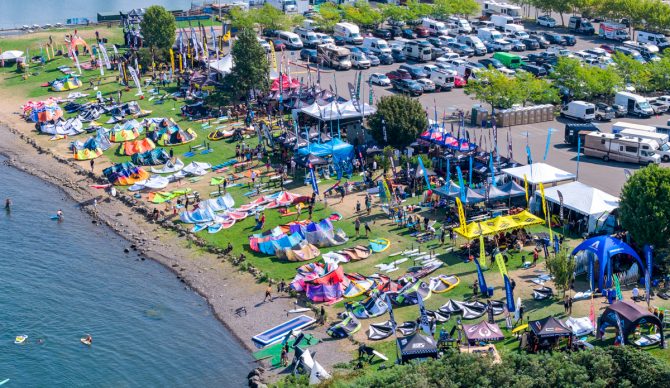
AWSI from above. The sheer quantity of gear laid out on the grass is a little mind-boggling. Photo: Toby Bromwich//AWSI

Last week, I attended the AWSI (Association of Wind and Watersports Industries) expo. A bit of a cryptic name, the expo brings together all the major brands, and many up-and-comers, in Hood River, Oregon, to build connections, community, and, of course, try out all of the latest and greatest gear for kiting, windsurfing, and, of course, foiling.
As The Inertia’s gear editor, I attended to get my salty paws on as much foiling gear as I possibly could, and test it all back-to-back in the incredible wind and swells of Hood River, Oregon. With the river flowing one direction and the wind blowing the other, the river can serve up miles upon miles of rolling windswell. Armed with a foil, it’s a playground that provides endless hours of “wave” riding.
The windsports industry may be fairly small, but it’s one of the most innovative on the planet, with designers and athletes constantly pushing the boundaries of what’s possible. Take the parawing, for example. It was only invented a year ago, but at the expo, most brands were quietly testing their V2 products or brazenly showing them off to the masses.
So here are a few products and industry trends emerging from the show:
Exciting Products
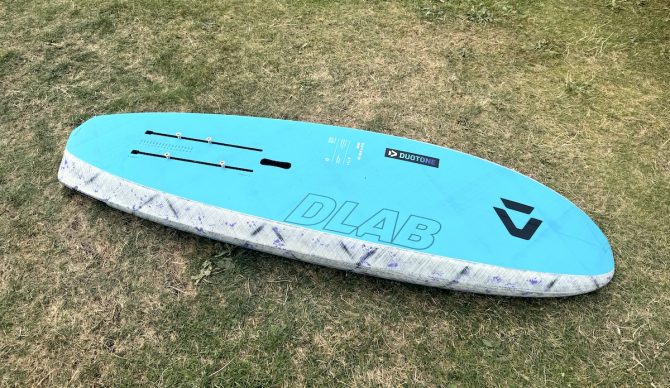
Pick this bad boy up, and the difference in weight to a traditionally-constructed foil board is instantly noticeable. Photo: Will Sileo//The Inertia
Duotone D-Lab Skybrid (Hollow Core Technology)
While foil board design has been progressing like crazy the past couple of years with the emergence of downwind boards and mid-lengths demonstrating the importance of clean, efficient lines that help the rider get up on foil with less power and effort, board construction hasn’t changed that much, with most brands using foam, carbon, and sometimes lightweight woods like bamboo to construct boards.
Duotone might be shaking that up a bit. New for 2026, Duotone took its popular Skybrid mid-length design and literally hollowed it out. The result is the Duotone Skybrid D/LAB Hollow Foil Board. It uses Duotone’s new Hollow Shell Composite construction to achieve a 30 percent weight reduction over the standard Skybrid foil board. And when riding, the difference is instantly noticeable. I tested the 70-liter version, and was blown away by the low swing weight of the board – when up and riding, it feels like a prone board with snappy turns and effortless pumping.
Hollow foil boards aren’t necessarily something new, but Duotone is the first brand we’ve seen to bring this construction style into mainstream production for wing foiling. Time will tell if this is a new trend in foil boards or a one-off design.
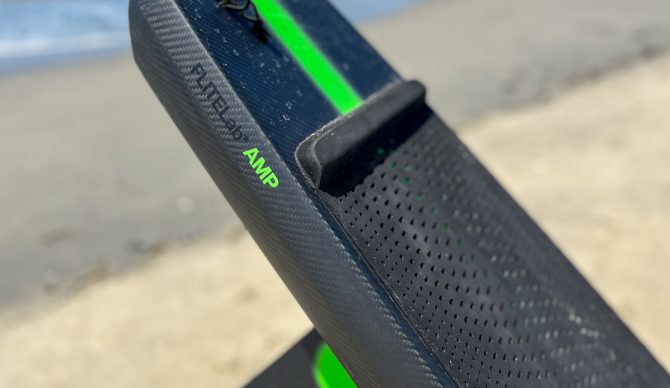
Sleek carbon belies a powerful jet built into the board itself. Photo: Bowen Dwelle//The Inertia
FLITELab Ampjet
FLITELab is a project that’s been teased for a while now thanks to the wildly popular Instagram page of Adam Bennetts (@misterbennetts). For the past couple of years, we’ve seen Adam paddling into impossible waves and absolutely ripping on a small, black prone foil board. But that board is more than just stealthy carbon – titled the “AMPJet,” these foil boards hide a small but powerful jet impeller in the board itself, giving you a boost to help get up on foil when prone foiling, winging, parawinging, etc.
In testing, I was super impressed with the power and sophistication of this system. When activated, the jet produces a customizable thrust that gradually increases, and then cuts out as you get up on foil. It’s not enough to get you up on foil by itself – especially considering that the jet is in the board itself, instead of being attached to the mast – but that just means that once you’re up on foil, there’s absolutely zero drag, and the weight of the jet and battery are well-positioned in the center of the board, and just above the front foil wing to minimize swing weight. There are far too many nitty-gritty details to dive into here, so to learn more, check out our in-depth review.
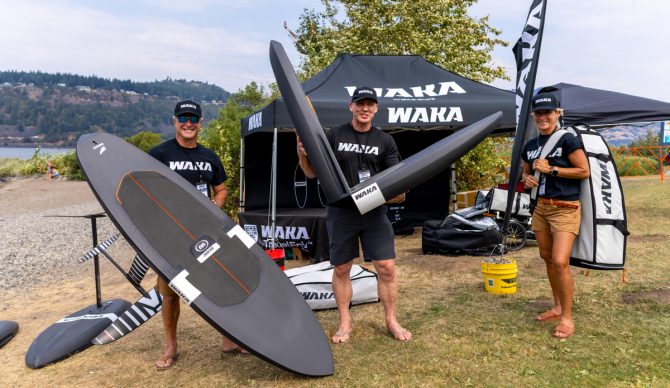
It folds! Photo: Toby Bromwich//AWSI
WAKA Glide – Folding Foil Board
Traveling with foil equipment has always been a headache. From oversized bags to the careful quiver selection required to avoid going over the 50-poind weight limit of most airlines, there often tough decisions to be made. With the WAKA Glide folding foil board, travelers can avoid the pain point of oversized luggage. The Glide is a full-carbon foil board that folds in half, with a carbon-Kevlar “living” hinge. Secured by three titanium bolts, the board is as stiff as any other carbon foil board on the market, and the fact that it folds allows the designers to go longer with the board’s overall shape, providing tons of glide and easy foil starts.
In other words: this is no gimmick, but a legit, high-performance board, albeit one with an ace up its sleeve. Unfortunately, due to the madness of running around AWSI trying to get my hands on as many different pieces of gear as I could in a short three-day span, the WAKA is one piece of foiling equipment I didn’t get the chance to try for myself. But based on feedback we’re hearing from trusted sources in the industry, this board doesn’t compromise on performance.
New Trends
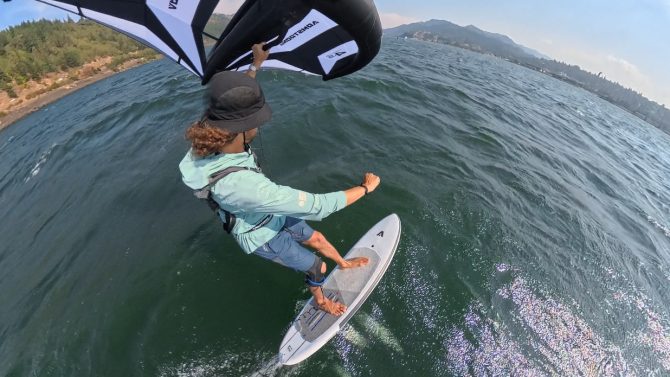
Ripping small swells on the Armstrong MA mkII 790. Photo: Will Sileo//The Inertia
Redefining Surf Foils: The Glide – Turn Sweet Spot
For the past few years, the foil characteristics of glide and maneuverability have been at odds with one another. Want to glide forever with easy pumping? You’ll want to turn to a foil with a higher aspect ratio (AR), and consequently, worse turning ability. While that principle still holds true, the latest surf foil wings have brought these aspects of foil design closer together. Three foils that I tested at AWSI – the Duotone Crest, Armstrong MA mkII, and Code Foils X-Series – are prime examples of this. All three offer incredible turning and responsiveness, with a lot more glide than you think would be possible with foils in the eight to nine AR range.
The Crest, with an AR of 9, leans a bit more towards the “glide” side of the equation, with tons of speed and surprisingly easy turning, while the MA mkII and X-Series foils, with an AR of 8 and 8.2, respectively, are all-out rippers that provide a shortboard-surfing feel, while maintaining plenty of glide to get you pumping into the next section or out the back with ease. After testing so many high-aspect foils over the past year or so, it feels like a breath of fresh air to hop on some super responsive and surfy front wings that still glide quite well. I also want to give some props to Slingshot for their new Flow front wing. With an AR of 11, it’s no doubt a foil made for glide and efficiency, but it maintains a really fun and easy-turning ride. Pairing it with Slingshot’s new Flare tail and short fuse really loosens it up as well for sharper, more radical turns.
All that goes to say, there are a lot of incredibly fun and high-performing foils out there, all living somewhere on the glide vs turnability spectrum. The above foils have really defined a few new sweet spots for me and my riding style, and it’s up to each of us as foilers to identify which balance of glide and turnability feels the best, and leaves us stoked and wanting more after every session.
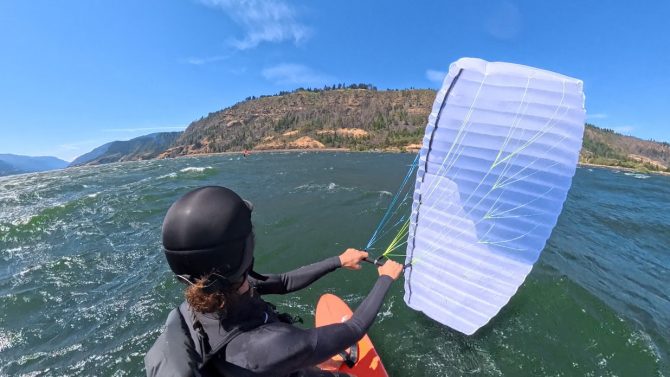
Riding the BRM Paia double-skin parawing at the Hatchery. Photo: Will Sileo//The Inertia
Double Skin Parawings
The parawing is the latest foiling discipline to burst onto the windsports scene, and with so much hype around this free style of foiling, all the major brands have been tuning out board and foil offerings for the parawing, as well as their own parawing designs to try and grab a piece of the new market. Drawing design inspiration from the paragliding world, it felt like only a matter of time before double-skin parawings began to take hold.
777 Gliders, out of Slovenia, were the first to put out a double-skin design, though it wasn’t a success right off the bat. Then, earlier this summer, Board Riding Maui, the original parawing brand, launched a double-skin design, the Paia, which proved the potential of the double-skin design – namely, wider wind ranges and vastly improved upwind angles. Flow Paragliders, another OG parawing brand which has had a lot of success with its D-Wing parawing, was testing out a double-skin parawing at AWSI, and I’m sure we’ll be seeing many more of these as the sport progresses.
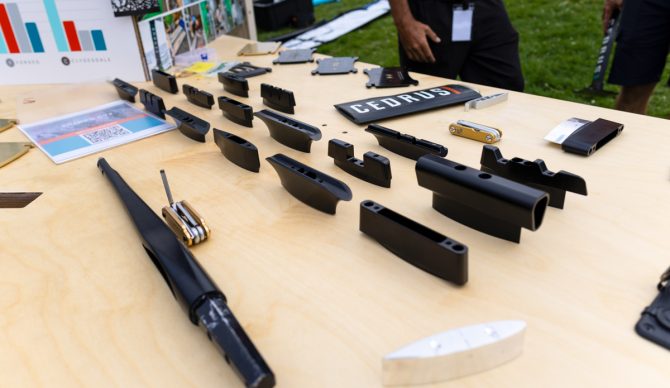
Foil Cedrus’s foil adapters let you ride whatever foil you want, whenever you want, without breaking the bank. Photo: Toby Bromwich//AWSI
Honorable Mentions
A few more things that caught my attention at AWSI:
Trench Boards
It seems that almost every foil board manufacturer has hopped on the Foil Drive train. From KT to North to Appletree, there were a lot of new foil boards on display with the distinctive “trench” dugout around the foil board tracks for a Foil Drive battery case to slot into. It’s quite plain to see that Foil Drive and e-assist foiling overall are anything but a fad.
New Parawings
Personally, I was hoping to see more production-ready parawings out on the grass (all the better for testing and including in our Parawing Buyer’s Guide). But there was still plenty of hype surrounding this new discipline of foiling, and many of the major wing brands had a prototype parawing or two lying around that, if I talked to the right people, were available for a quick rip up to the White Salmon Bridge to test out. Feedback was appreciated, and some of the designs were very close to ready, but nothing was quite finalized. I’ll be keeping tabs on these new designs as they get closer to being finished, and when they are, I’ll get them out on the water and include them in our buyer’s guide.
Foil Cedrus Universal Foil Masts
Foil Cedrus is a brand that does one thing and one thing very well – make foil masts. And not just any foil masts, but universal ones, able to be used with any brand of foil (yes, even Mikeslab). With a series of adapters, you can ride whatever foil brand you want, all with the same mast. Foil Cedrus just released an aluminum version of its adaptable mast, which the company claims to be just as stiff, and only a little heavier than the best high modulus carbon masts on the market. And at only $600, it’s basically a third of what most HM carbon masts cost. I’ve yet to test one for myself, but so far, all the feedback I’ve been hearing is overwhelmingly positive.
Innovative Product Award: Slingshot One-Lock
Finally, I want to recognize Slingshot for receiving AWSI’s 2025 Most Innovative Product of the Year award. Unveiled last year, the One-Lock system smooths out one of the biggest pain points in foiling – assembling your foil. By using an innovative latching system instead of screws, the One-Lock makes setting up your foil or swapping out components an absolute breeze. I’m a huge fan of the design, and hope to see it bring new riders into the sport – or at least ease their entry into our complex pastime.
Editor’s Note: For more, check out our page of Foil Gear Reviews.

