
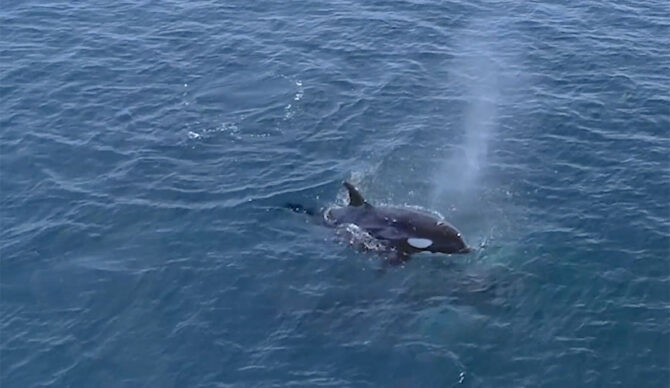
If you’re a juvenile great white, you ought to stay out of the Gulf of Mexico. Photo: Screenshot

Orcas didn’t get their nickname for being docile creatures. Humans have no need to fear the killer whale — unless said killer whale has been cooped up for a litte too long — but if you’re on an orca’s menu… watch out. Especially if you’re a great white shark swimming around in the Gulf of California.
A pod of orcas there known as Moctezuma’s pod has developed an interesting hunting strategy that makes use of something called tonic immobility. Moctezuma is the name of a male killer whale who might’ve been the one to learn the technique and teach it to the others. In short, it’s a way of getting at the shark’s liver, which is full of rich nutrients. The only problem: sharks don’t like to have their livers sucked out, so the orcas have learned that by ramming them repeatedly until the shark winds up upside down, they can induce a trance-like state that occurs when a shark is on its back.
While this behavior has been spotted relatively regularly, a new study has found that these orcas are specifically targeting juvenile great whites. Sharks have pretty huge livers, so it’s a big meal for the whale.
“Marine mammals, including orcas, store energy reserves in their blubber layer,” study author Salvador Jorgensen, a marine ecologist and faculty in the School of Natural Sciences at Cal State Monterey Bay, told IFLScience. “However, white sharks cache energy in their liver. The liver of an adult white shark can weigh over 600 kilograms [1,323 pounds] and is very rich in calories. An orca can immobilize a fully grown white shark and remove the liver in minutes. It is not by chance that orcas around the world favor the liver – they know where the good stuff is.”

