
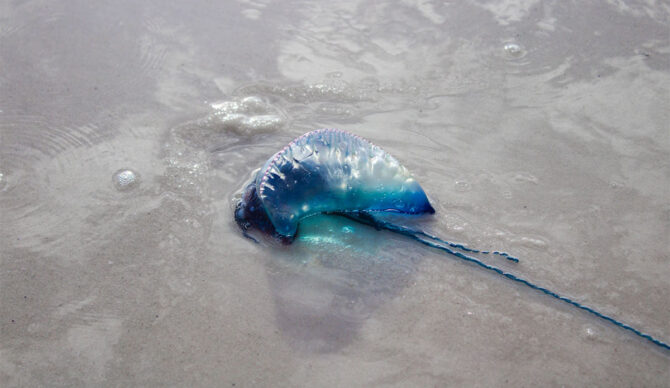
More bright and spongy means more stingy ouch. Photo: Unsplash

Australia is pretty well-known for the variety of ways its creatures can hurt you. Spiders and snakes and all manner of ocean creatures with venom and poison and stabby bits and sharp teeth call the place home, and right now, surf lifesavers are sounding the alarm about an inundation of bluebottle jellyfish. It’s not all that uncommon, but it’s worth the warning.
“We’ve certainly had some events down here where we’ve had thousands and thousands of bluebottles washed up on the shore,” surf lifesaver Henry Kiss told 9News. “They get pushed down the coast from the warmer waters and then a southerly breeze can push them into shore. Certainly we’ve had a couple of events already. It happens every few years.”
Bluebottles, also known as Portuguese Man-o-Wars, are one of the more famously painful jellies. It’s rare that a person would need to seek medical intervention for a sting, but it sure might feel like it. They come with intense pain that can last for hours or even days, as well as a stark red line where the tentacle landed.
Right now, a few beaches in Australia are lined with them, but Kiss has a relatively surefire way to tell if they’re still in the water.
“If they’re bright blue and they’re fresh and spongy, that means that they’re recent,” he explained. “That means that the chances of them being in the water currently is fairly high. If they’re a little bit old and crusty, that means that they’ve been there a while and the danger has probably passed.”
So what to do if you’re unlucky enough to wade into a gathering of bluebottles? Don’t pee on yourself, for starters. The best thing you can do is get into the tub.
“A hot shower with water as hot as the person can stand,” Kiss said. “Don’t boil the kettle and pour it over them, but get into a hot shower. The challenge with the bluebottles is that they won’t kill you, but if you’re swimming in the water and you get stung, people tend to panic. It’s the panic that really gets them into trouble.”

