
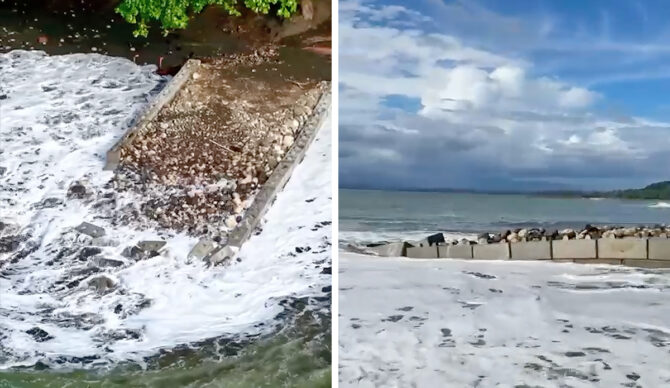
Construction of a new pier is already underway near the famous point of Pavones, Costa Rica. Photos: Walter Brenes

Costa Ricans worry that a new pier being built near the world-famous left-hand point of Pavones threatens the ecosystem, the wave, and tourism in the region. Walter Brenes, a Costa Rican lawyer with a master’s degree in environmental law, has filed petitions with the government to stop the project.
Brenes, 37, said he first heard of the plan a year ago and immediately identified issues with the scope. Even without a proper environmental impact study, he said, construction began three weeks ago, placing concrete blocks on the beach to create a ramp that will connect to the small pier just over a mile north of the Pavones point break. It’s unclear how far the pier would extend into the ocean.
Local officials claim that they’ve completed all the necessary studies and that the project will be finished in June.
Pavones, considered one of the longest waves in the world, is in southern Costa Rica on the country’s Pacific Coast and features a mixed-sand and cobblestone bottom. The sand deposited by the river is transported to the north by large south swells that enter the Golfo Dulce. A concrete pier could inhibit the flow of sand, Brenes said, which could cause the beach to grow and affect the world-class wave and sensitive wildlife. Similar issues are playing out in Puerto Escondido, Mexico.
Early work on the ramp has already been destroyed, since it sits in an area that’s hit by waves when strong summertime swells roll in from the South Pacific.
“They lost the ramp in less than one week,” Brenes told The Inertia on a phone call. “It’s stupid. They’re spending more than two-million U.S. dollars on something that is not going to be possible, because every week when the swells come back, it’s going to be destroyed.”
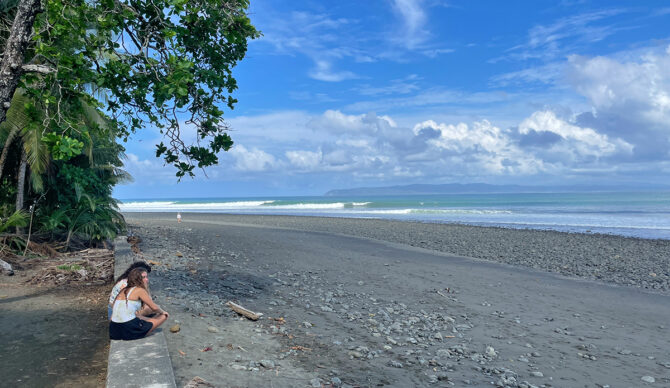
On a strong swell, the wave at Pavones can run for more than 500 meters. Photo: Evan Quarnstrom
INCOP, the country’s port authority, said that the new pier will reduce travel time between Pavones and the port of Golfito. Currently, the trip takes an hour and a half over land, while the pier would allow boats to arrive in 25 to 30 minutes, improving community access, they say. They add that it will improve conditions for fishermen and stimulate job creation.
Brenes argues if the wave or environment is affected, it will negatively impact the community that has grown around tourism. Some fishermen, he said, earn money by transporting surfers across the bay to Matapalo, and would be hurt by a decline in surf tourism, too.
“Obviously, there are some people who are in favor of the pier, because they’re fishermen,” Brenes said. “But there is no proof that (a pier) is needed, and it’s not proven that it’s going to generate more money for the community.”
Brenes also notes that the Golfo Dulce is a delicate environment, home to endangered hammerhead shark nurseries. It also harbors bull sharks, tiger sharks, whale sharks, rays, dolphins, whales, and coral.
“They don’t even have (environmental) and technical reports to prove there is not going to be an effect on the wildlife,” Brenes said.
Brenes has built close ties with the Pavones community, having worked with local organizations last year when authorities demolished structures to alter roads in the town. He’s simultaneously working to stop the construction of a marina in the town of Tambor and a pier in Puerto Viejo that could affect the world-renowned wave, Salsa Brava.
To stop the Pavones pier construction, he’s filed a complaint with the country’s Supreme Court and submitted a request for annulment against the project on environmental grounds. He said the Supreme Court has demanded that the country’s environment authority, Setena, respond to the allegations within three days.
According to Brenes, this isn’t just a fight for surfers. It will affect all locals and visitors who enjoy the town’s surf, wildlife, and nature.
“It’s not just about the surfers, it’s not just about the town or culture,” Brenes said. “It’s about the effects on the sharks and all the wildlife there.”

