
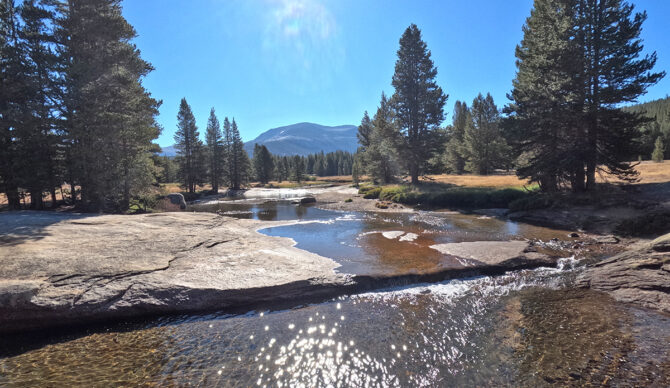
The Pacific Crest Trail cuts through Yosemite National Park. Photo: Evan Quarnstrom

Staff and board members of the Pacific Crest Trail Association (PCTA) recently traveled to Washington D.C. to protect conservation and funding of trail networks. The Trump Administration’s proposed 2027 budget would cut funding to the Forest Service trails by 64 percent, which would harm trail maintenance and management projects on the 2,600-mile Pacific Crest Trail trail between the Mexican and Canadian borders.
Mark Larabee, the advocacy director of PCTA, said that their entourage met with 30 House representative and all six senators from the PCT states as part of the “Hike the Hill” initiative — a partnership between American Hiking Society and the Partnership for the National Trails System to advance common goals. They targeted politicians with committee assignments in appropriations and public lands.
“While the Pacific Crest Trail certainly is our team’s focus during these meetings, we convey a broader message about the PCT’s place in the nation’s trail system and what that system brings to our collective emotional, physical and economic wellbeing,” Larabee wrote in a blog post. “Making sure Congress and the administration understand how much trails like the PCT mean to our country is key to our continuing success.”
According to Larabee, trail system volunteers donated more than 810,000 hours of work in 2025, a value of more than $29 million. He warns that the Trump Administration has already reduced the funding for public trails which has led to districts with no staff, delayed trail projects, and a general lack of care to trials necessary to withstand a high volume of hikers. The PCTA estimates that hundreds of thousands of hikers — or even as much as a million — use the PCTA each year.
The PCTA also stresses the importance of restoring the Legacy Restoration Fund — a five-year, $9 billion fund destined for deferred maintenance to public lands that expired in 2025. Additionally, the administration has proposed rescinding a 2001 policy that protected swaths of land from road construction.
“Recent federal priorities have signaled a reduced role for government in caring for our nation’s trails, with massive proposed cuts to trail budgets and significant reductions to agency staff,” Larabee said.
Larabee hopes their lobbying can restore agency staff and at least maintain current funding levels. He called the meetings a success, walking away with a restored faith in public servants’ willingness to protect the country’s trail system.
“While trails and public lands are up against major forces trying to erode or eliminate protections, funding and the public’s ability to engage in planning efforts, we found that Congress values trails and what the trails community contributes,” he said.

