
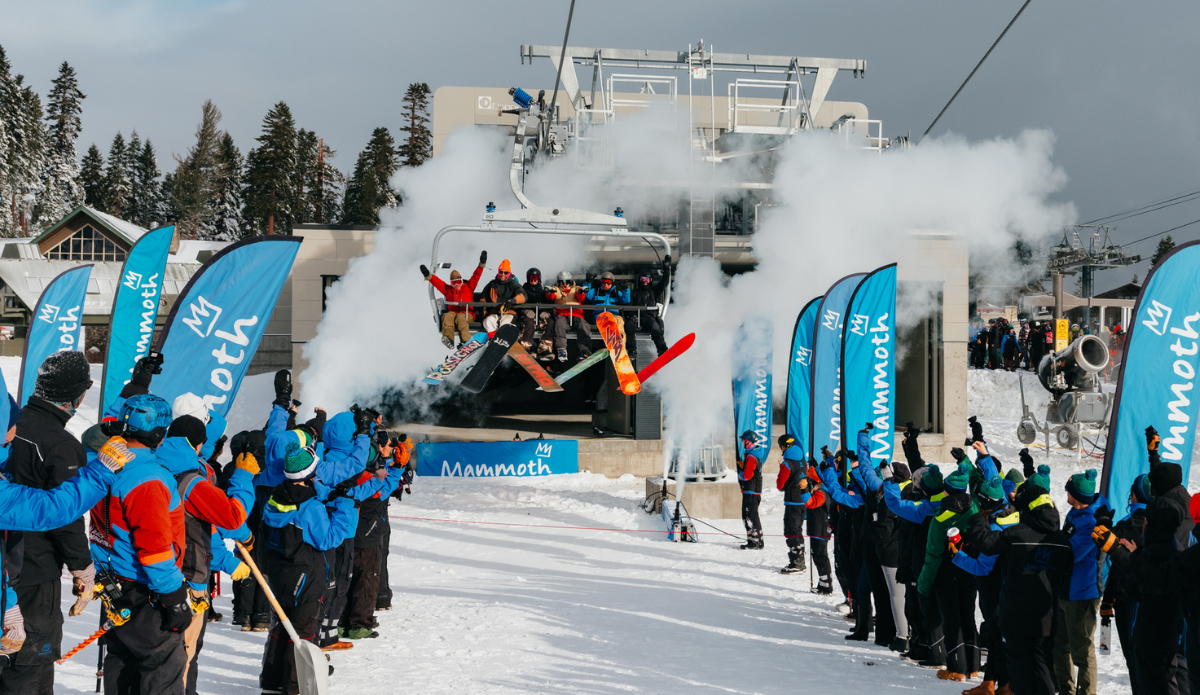
Photo: Mammoth Mountain

Last winter was all kinds of backwards out West. It didn’t kick off with a bang. Multiple resorts limped their way through the holidays and into 2026 without significant snowfall. Sure, there was coverage, but it wasn’t anything to write home about from California to Colorado and beyond. Then March came, and so did an offensive heat wave that shut down a lot of ski areas long before Easter. Next up, Mother Nature pulled a rope a dope and delivered a strong push into spring, enabling some places (not many) to extend seasons. Something that didn’t seem possible just a month earlier.
Mammoth Mountain probably cashed out the biggest jackpot from the spring reversal, miraculously pulling off a June 7 closing date. Less than two months later, we can now start talking about California’s ski season kicking right back into gear as Mammoth has announced plans for a November 13, 2026 opening day.
By our count, nobody else has announced a potential opening day in California yet. In fact, no resort in North America has circled its calendar yet, for that matter. Colorado resorts are typically the first in the U.S. to start spinning lifts, with Arapahoe Basin and Keystone Resort the safe money bets year in and year out to be first. Keystone took that honor for the 2025-2026 season, edging out its neighbor just 10 miles away on October 25, 2025.
As for Mammoth, it’s far too early to tell if the Eastern Sierra resort will be able to hit its targeted start. Last season’s opening day was pushed back by a week (more than once) due to snow lines being too high during the region’s first significant storm. And while California’s powder hounds are no doubt already foaming at the mouth with a strengthening El Niño, those weather patterns don’t always translate to cooler fall months and earlier snowfall. Mammoth, specifically, benefits from El Niño conditions most during peak season. The most recent El Niño in 2023-2024 brought just 14 inches of snow in November but that winter finished with a flurry: 133 inches in February, 2024. El Niño tends to shift the subtropical jet stream further south than normal, peaking in January through March.

