
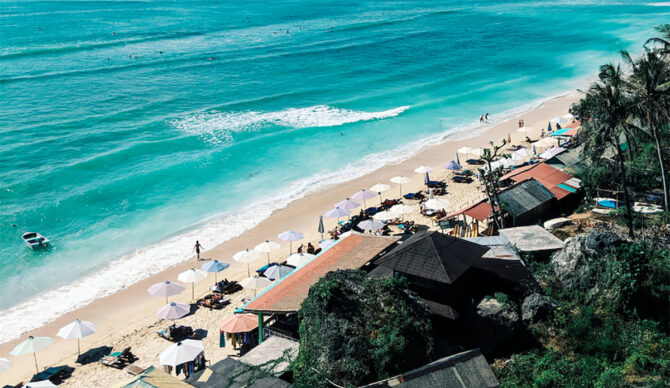
Surf tourism has had a major impact on water in Bali. Photo: Sebastian Puskeiler

The Canggu Shortcut has become a Balinese meme. The thin strip of road between rice fields that was, once, a quick way to the sand-covered reefs north of Kuta has a sub-genre on TikTok called Canggu Shortcut Fails. It features videos of cars and scooters toppling into the rice paddies. Elsewhere on Insta, influencers post clips of the daily traffic carnage, with the inevitable caption “Eat, Pray, Get stuck in traffic?”
Fucking hilarious, right? But what the Mac-clutching digital nomads, Lululemon-clad yoga teachers, bare-chested CrossFit Brazilians, German longboarders, mustached Aussie shortboarders and Portuguese padel players don’t realize is that the Canggu Shortcut is the epicenter of one of Bali’s most pressing issues: the theft of its drinking water, and the breakdown of a thousand-year-old water-sharing cooperative and irrigation system.
Like the rest of Bali, though on steroids, Canggu’s development has been explosive. The farmland has declined by 60 percent while land development has increased by 69 percent. The rice fields are disappearing, along with the practice of Subak, the centuries-old tradition that treated water as a resource to be respected and shared.
The rice fields are not only a source of income for farmers and good content for influencers, but also a vital part of Bali’s water infrastructure. A paddy slows runoff, stores water and recharges the aquifer below. When it is sealed under the concrete slabs of a gym, surf shop (twin fins only), juice bar, or boutique hotel, those functions are gone, forever.
“This is one of our deepest cultural institutions, the Subak,” said Professor Dr. Nyoman Sunarta from Bali’s Udayana University. “At the very least, these developments have to be curbed, especially those that damage irrigation and our rice fields in Bali.”
Subak, which has governed Balinese irrigation since the ninth century, might be going the same way as the rice paddies. It revolves around the concept of Tri Hita Karana — harmony between people, nature, and the spiritual realm. Water priests and members meet in temple courtyards to decide when water flows, who receives it, and in what order based on community consultation. It is the most studied example of communal resource governance in the world. UNESCO recognized the system as a World Heritage site in 2012. For centuries it has linked springs and wells to field and family. However, that ancient chain is breaking.
While land conversion and younger generations moving away from farming have played their part, you probably won’t be surprised that it is tourism that is putting the most pressure on the fragile links.
In 2025, Bali recorded more than 17-million visitors, four times its permanent population. It’s a huge, important part of the economy, but has led to tourism using two-thirds of Bali’s fresh water. It’s a safe bet to say the huge hotels, which can use around 3,000 liters a day for pools, gardens and laundry, aren’t checking in with the local priests to see if there’s enough to go round. Many homes have limited or intermittent supply.
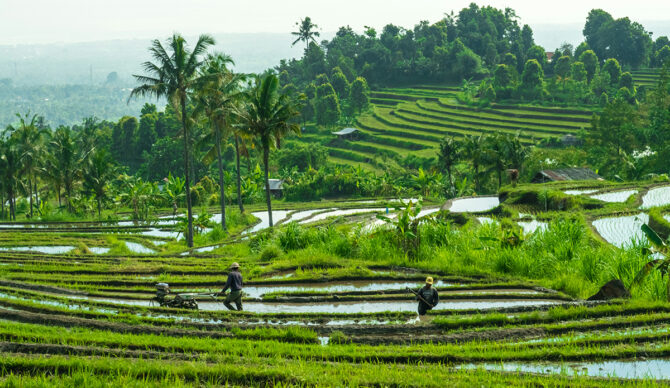
Rice paddies are key to Bali’s water supply. And there are less and less of them now. Photo: Sebastian Pena
Most of the water comes from backyard wells, many on the Bukit Peninsula, only half of which have commercial groundwater extraction permits from the government. Whether legal or not, they tend to allocate the water based on who buys the most (eg hotels) and none of the operators really care or monitor the effects on the aquifer below.
We might be guilty of over-banging the drum when it comes to the effects of development in Bali. In the past 12 months, The Inertia has published at least half a dozen articles on the themes of overdevelopment, gentrification, wave-threatening development proposals like the Uluwatu sea wall, crowd-driven lineup conflict, and environmental fallout that has come from the decade-long tourist boom.
Because Bali has been uniquely a surfer-led development over 50 years, there’s a degree of hard-wringing complicity. But on the ground, there’s a small army of activists trying to fight for some form of environmental regulation. And when it comes to the locals’ water being stolen, there might be no bigger or more important fight.
Niluh Djelantik is a social media influencer and an independent senator for Bali, who is arguing for a moratorium on new hotel development and enforcement of groundwater extraction rules.
“When you build a hotel, you have to provide water for thousands of people,” she said. “The revenue of Bali tourism comes from the sweat of the people. They don’t need another stress.”
What they do need is the basic right of access to water.

