
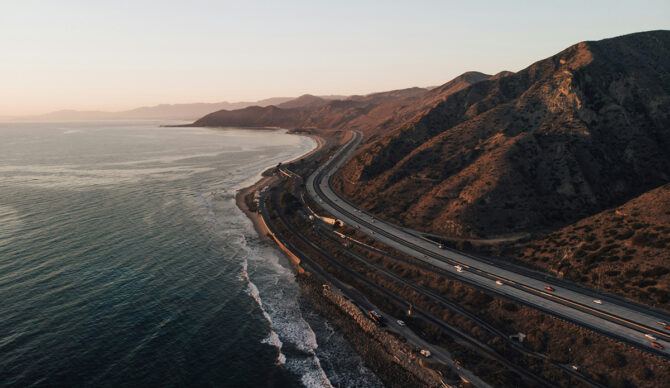
The state’s coastal watchdog agency voted against the Southern California fracking proposal. Photo: Steven Pahel//Unsplash

On Thursday, August 13, the California Coastal Commission voted to reject an oil company’s proposal to start fracking on an existing oil platform off the coast of Ventura, California. The decision does not mean the proposal is killed, but it creates an obstacle amid the federal government’s push to increase oil production in federal waters off Southern California.
The proposal is centered around increasing oil production at 16 wells on Platform Gilda, which sits nine miles southwest of Ventura in federal waters (state-controlled waters only extend three miles from the coast). The company behind the proposal, DCOR LLC, says fracking would increase production at the site from 1,100 barrels a day to 4,000 and prolong the facility’s lifespan by several decades.
The Coastal Commission’s decision supports its staff recommendation in a June report that says the fracking plan “would increase the likelihood and severity of an oil spill” and that measures in the proposal to avoid spills have proven to be “ineffective in preventing (them) in the past.” The commission accuses the federal government of attempting to open the door for more drilling by circumventing California restrictions that have prohibited fracking in federal coastal waters since 2018 and require environmental reviews.
The environmental advocacy nonprofit Center for Biological Diversity issued a statement backing the decision.
“I’m so glad the commission rejected this risky fracking plan. Californians are lucky to have such a strong champion standing up for the health of our coast,” Brady Bradshaw, a senior oceans campaigner at the Center for Biological Diversity, said. “Offshore fracking would raise the risk of an oil spill off California’s coast, and that threat to our marine wildlife and beautiful ocean environment just isn’t worth it.”
Hydraulic fracturing, known as fracking, is the process of injecting high-pressure fluid and chemicals into subsurface rock to reach oil reserves that are difficult or inefficient to extract via traditional methods. Opponents of fracking cite water and soil pollution, health concerns via chemical exposure, decreased air quality, and even increased earthquakes as adverse side effects.
According to analysis by the SF Chronicle, the Coastal Commission decision inserts new roadblocks for the project. The Bureau of Ocean Energy Management can’t authorize the fracking if the issues raised are not resolved. Otherwise, it can turn to the U.S. Secretary of Commerce for approval, which would probably lead to more litigation.
The decision comes amid a greater federal push to increase oil production in California. President Donald Trump has posted on social media to promote reopening a pipeline in Santa Barbara that could purportedly increase offshore oil production by 550 percent. Trump called California climate laws “radical” and said the state is conducting “coordinated regulatory attacks on American energy dominance.”

