-
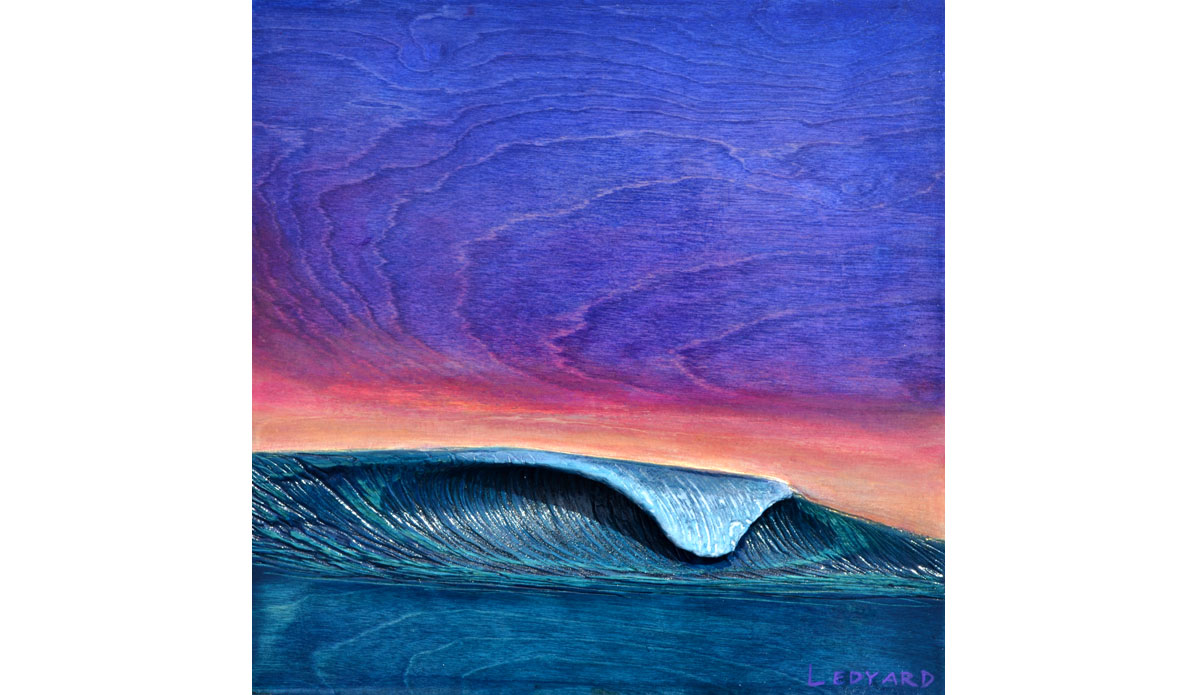
“Blaze” (12 in. x 12 in.) When selecting wood for a piece, I often look for grain patterns that I can use to create the sky or water. Image: Nathan Ledyard
-
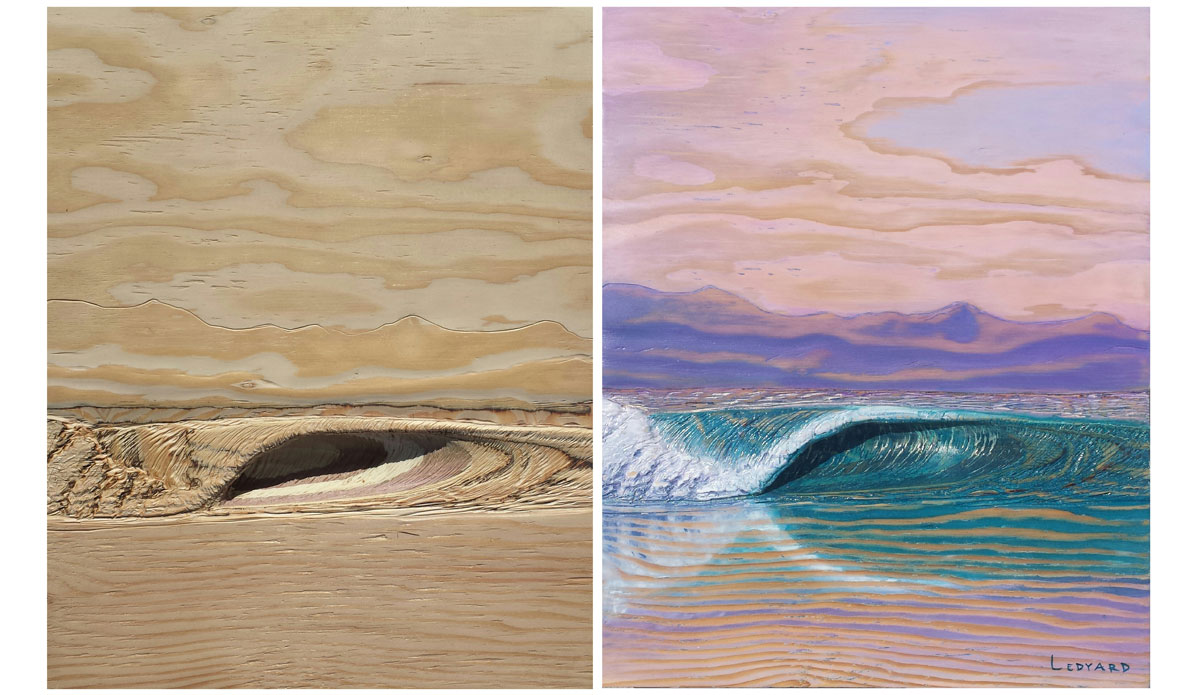
“Ingrained” (16 in. x 20 in.) This is another “before-and-after” view to illustrate how I use the wood grain to determine the composition of a piece. Image: Nathan Ledyard
-
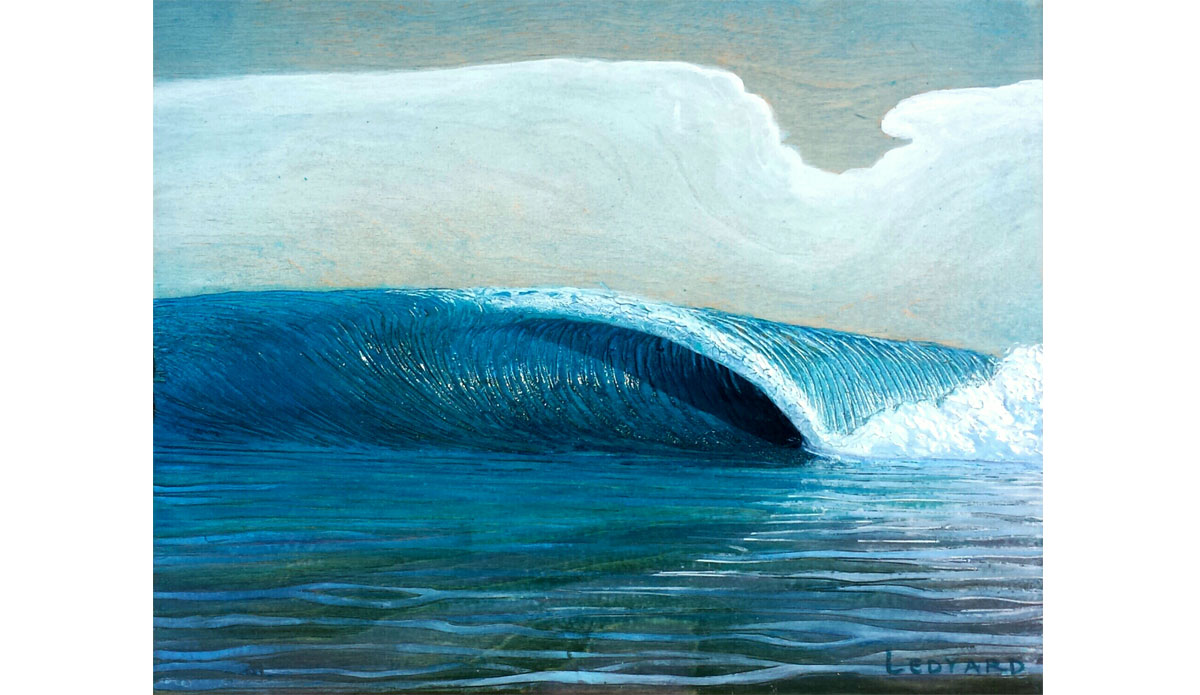
“Transparent Sea” (11’ x 14”) Here, I used the wood grain to create the reef below the surface of the water. Image: Nathan Ledyard
-
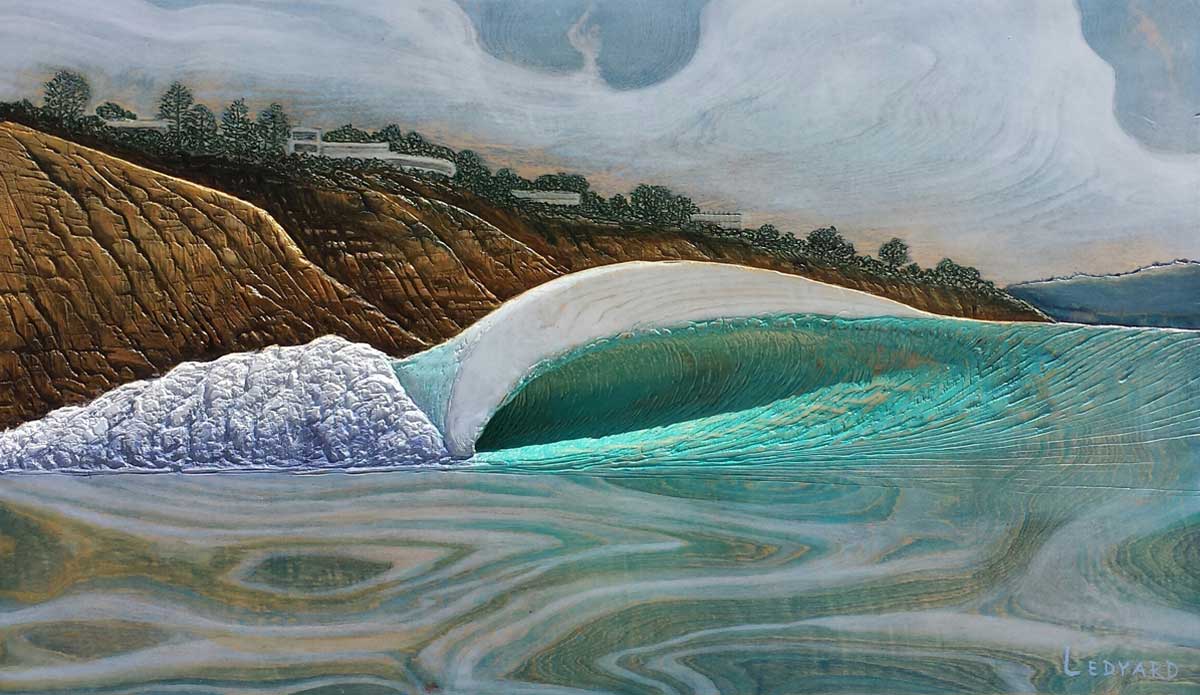
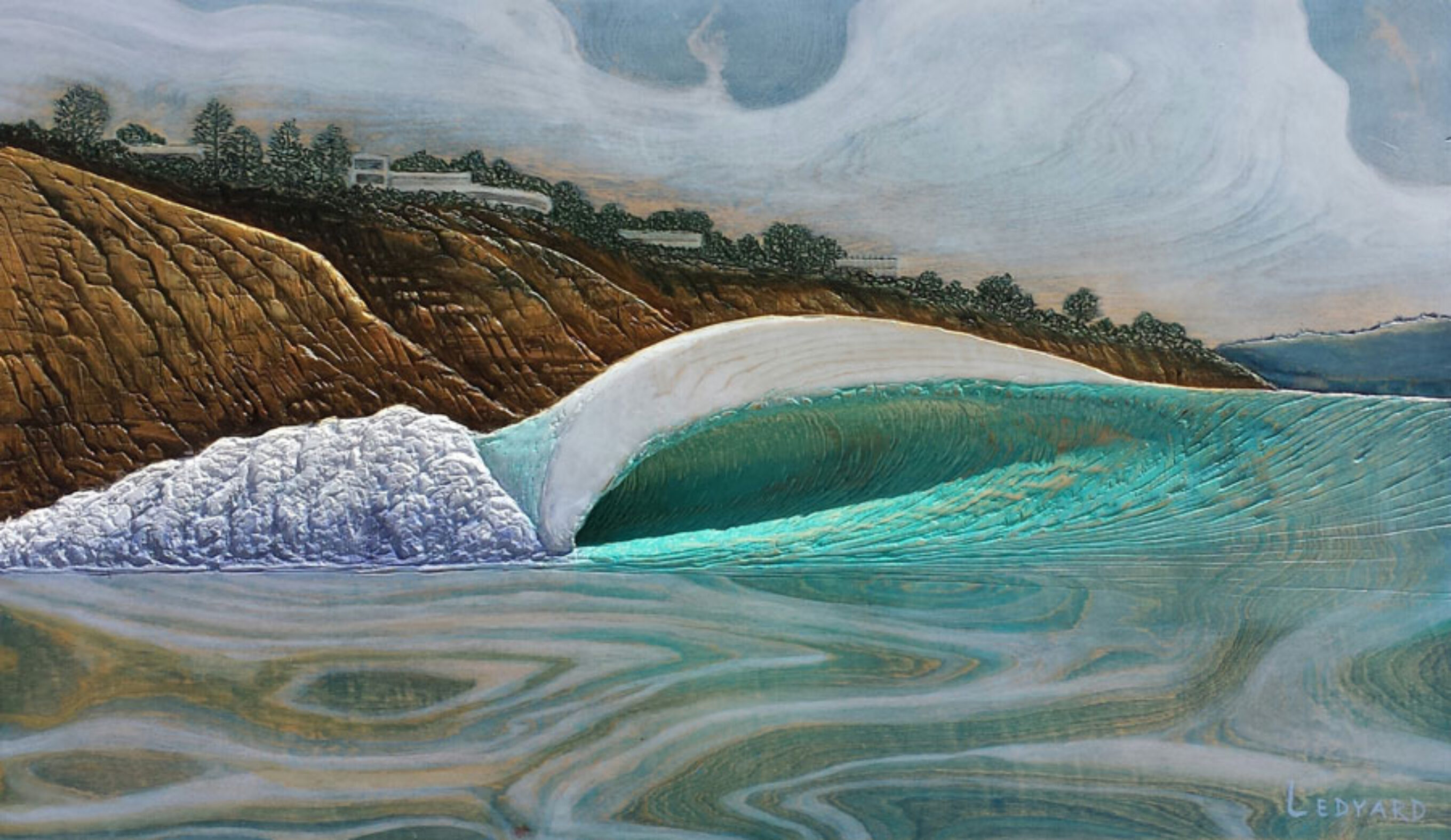
“Blacks Beach” (41 in. x 24 in.) This is one of my favorite pieces because of the way the wood grain flows throughout the scene. You can see the pattern of the wood in the sky, the foreground water, and even the spray coming off the wave. Most of the time I begin a piece by looking at the wood and trying to imagine a scene that fits with the pattern of the grain. This one was more difficult because it was a commission and I had to find a piece of wood that would fit a specific scene. Image: Nathan Ledyard
-
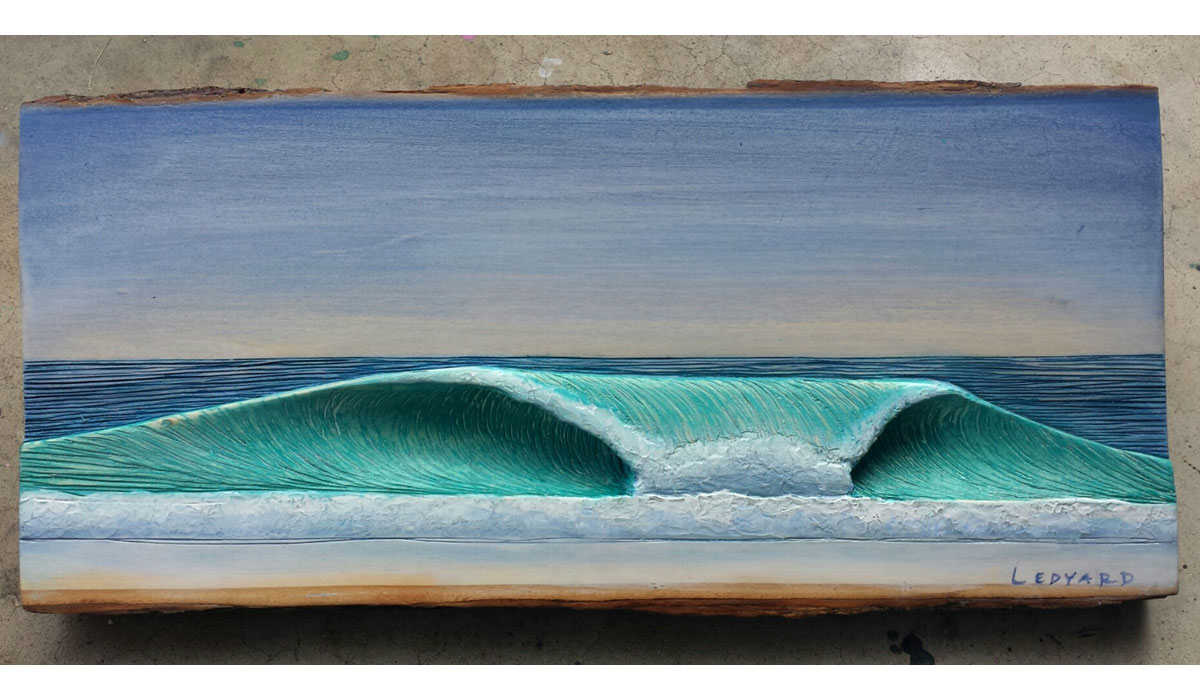
“Sandbar” (10” x 20”) I recently started working with basswood, which is soft and great for carving. This has allowed me to really focus on shaping my waves to make my pieces more three-dimensional. Image: Nathan Ledyard
-
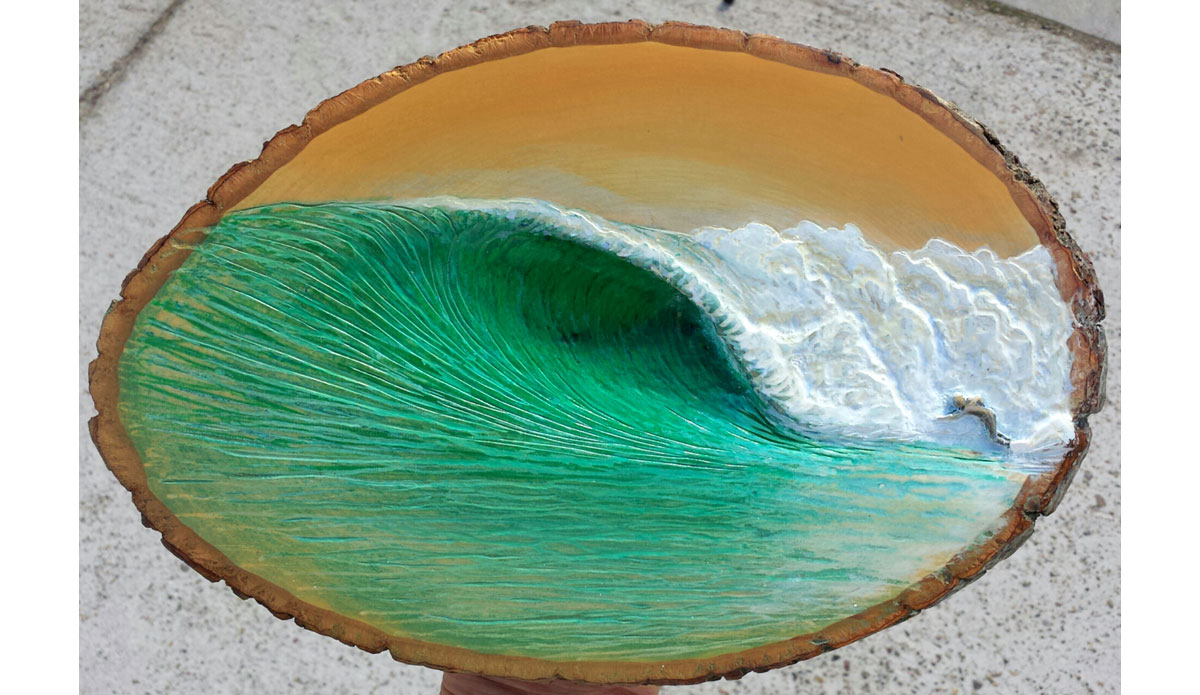
“Rounding the Corner.” This was my first time experimenting with round wood slabs. It’s also one of the few pieces where I decided to include a surfer. Image: Nathan Ledyard
-
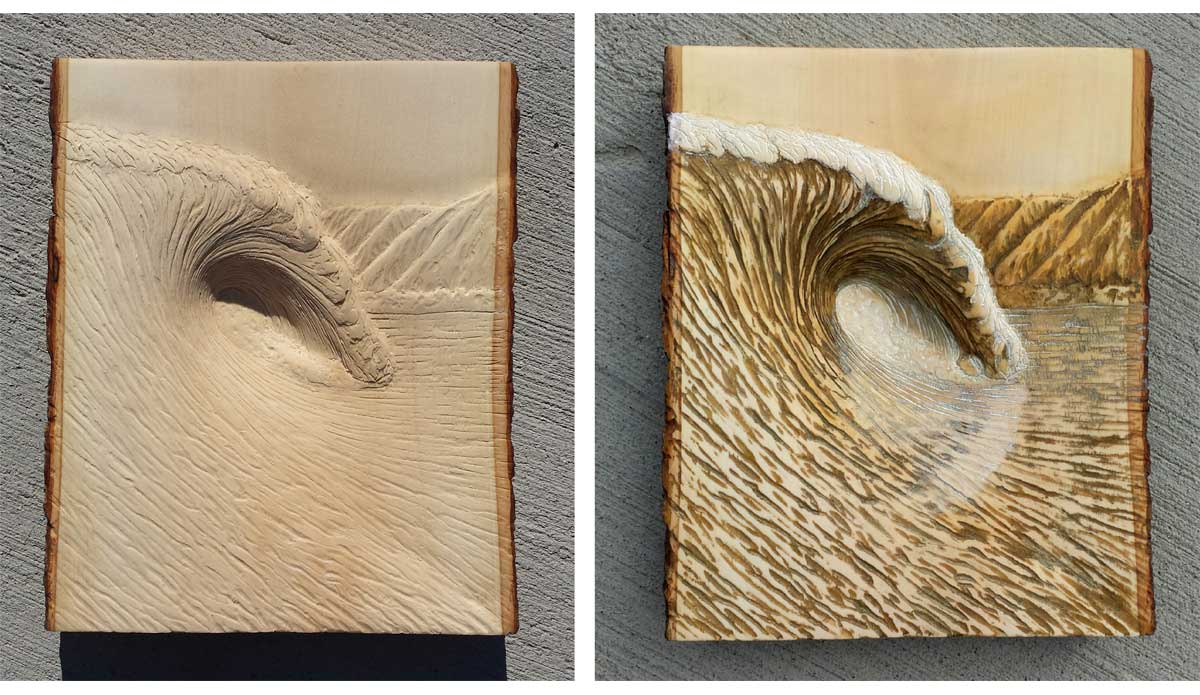
“Unbridled Power” (10” x 12”) Social media has been a big factor in my evolution as an artist. I love posting photos of works in progress because I’m able to get a lot of useful feedback. In this case, I posted a photo of the initial carving (left) and someone commented that the wave looked like a horse’s head. While that was not my intention, I thought it was a cool idea so I made the features of the horse more pronounced in the final version (right). Image: Nathan Ledyard
-
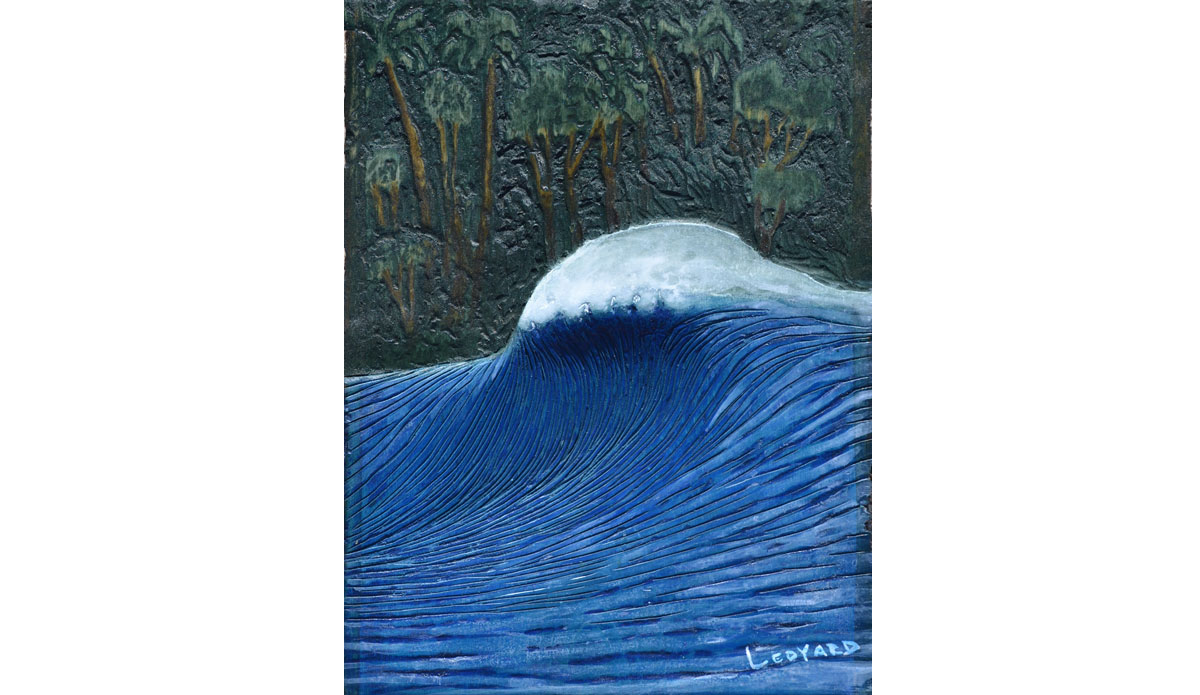
“Nias Peak” (12 in. x 10 in.) A lot of the pieces I do are commissions, which has helped push my art in new directions. In this case, I had to figure out how to combine a jungle background with offshore spray. This opened my eyes to other carved background possibilities such as rocks and cliffs. Image: Nathan Ledyard
-
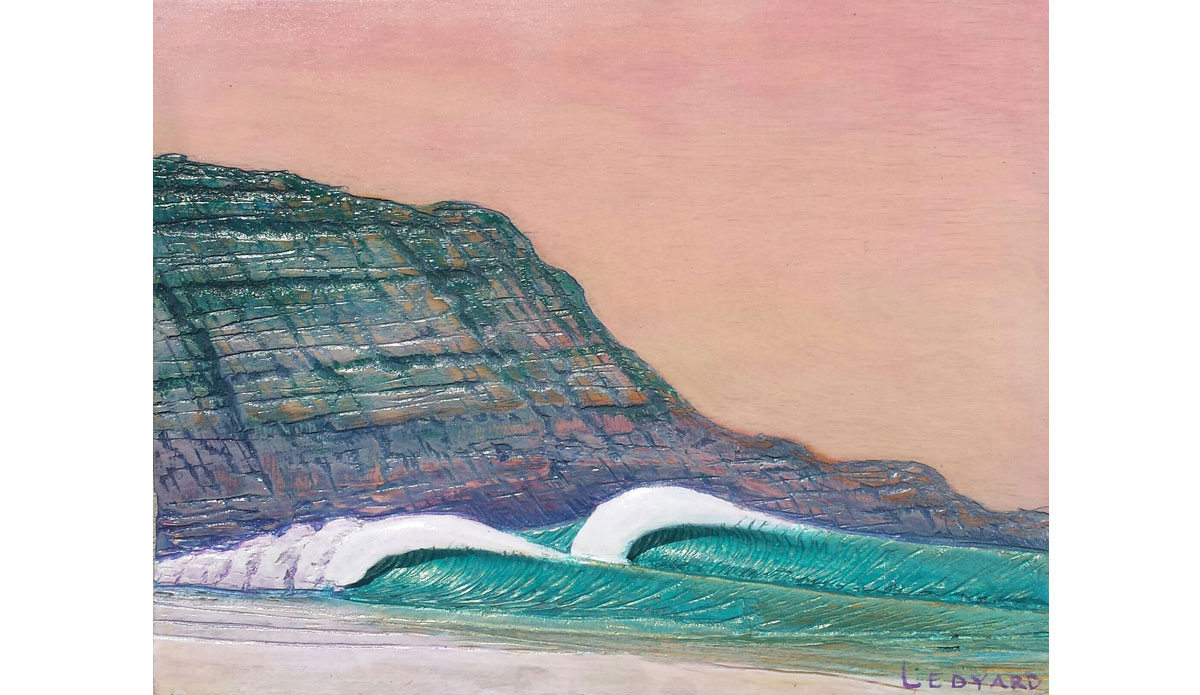
“Double on the Rocks” (11 in. x 14 in.) Here, I used a similar technique to carve away the background to bring out the waves. Image: Nathan Ledyard
-
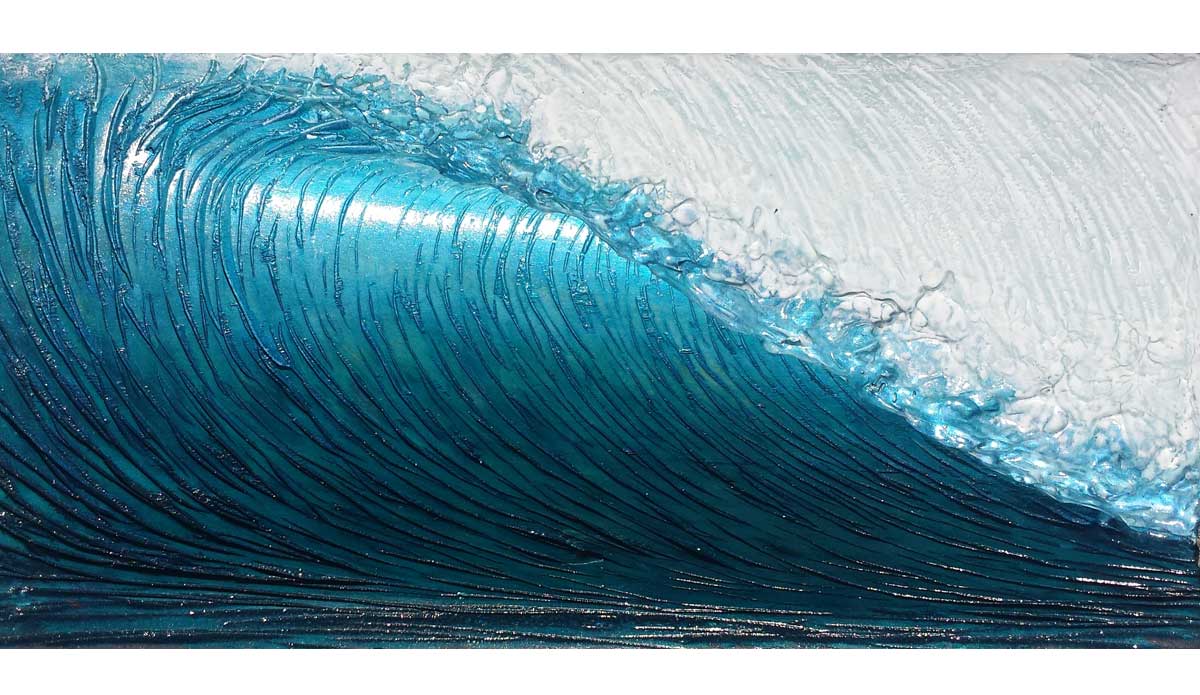
“Lip Line” (6 in. x 12 in.) Initially, I began carving waves to create a natural shadow under the lip when the light comes from above. When I made this piece I discovered that I was able to achieve a dramatically different effect just by changing the angle of the lighting. Image: Nathan Ledyard
-
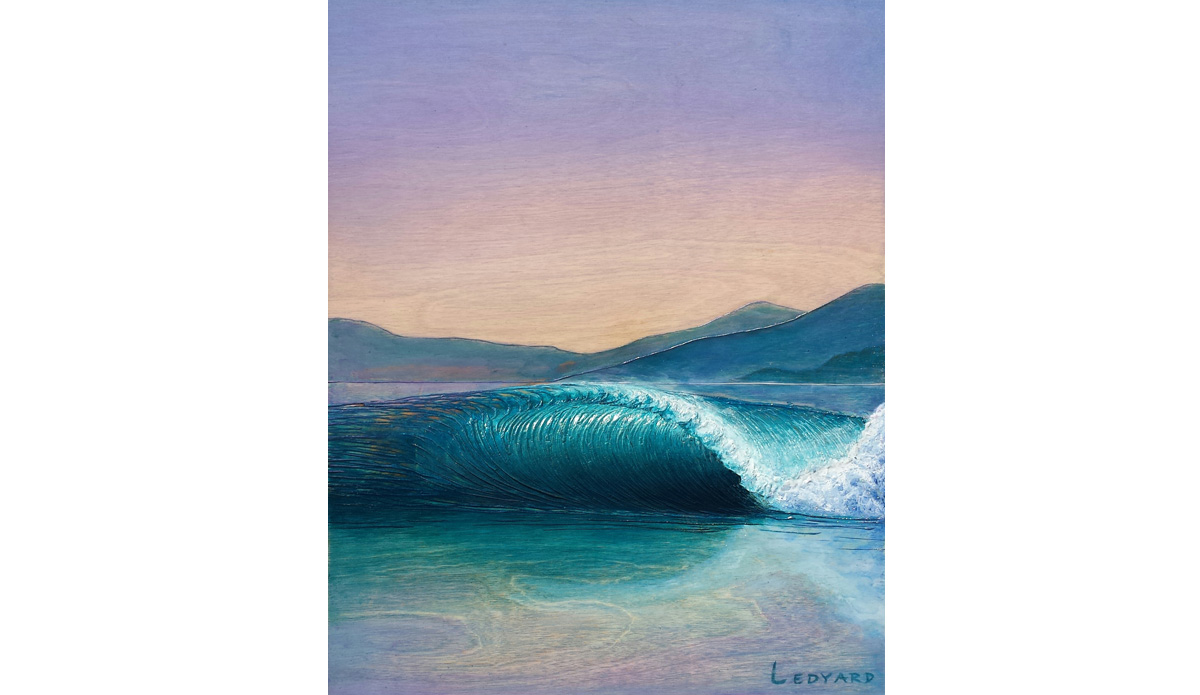
“Dream Wave” (16 in. x 20 in.) Using lighting from below to illuminate the inside of the wave. Iridescent paint enhances the effect. Image: Nathan Ledyard
-
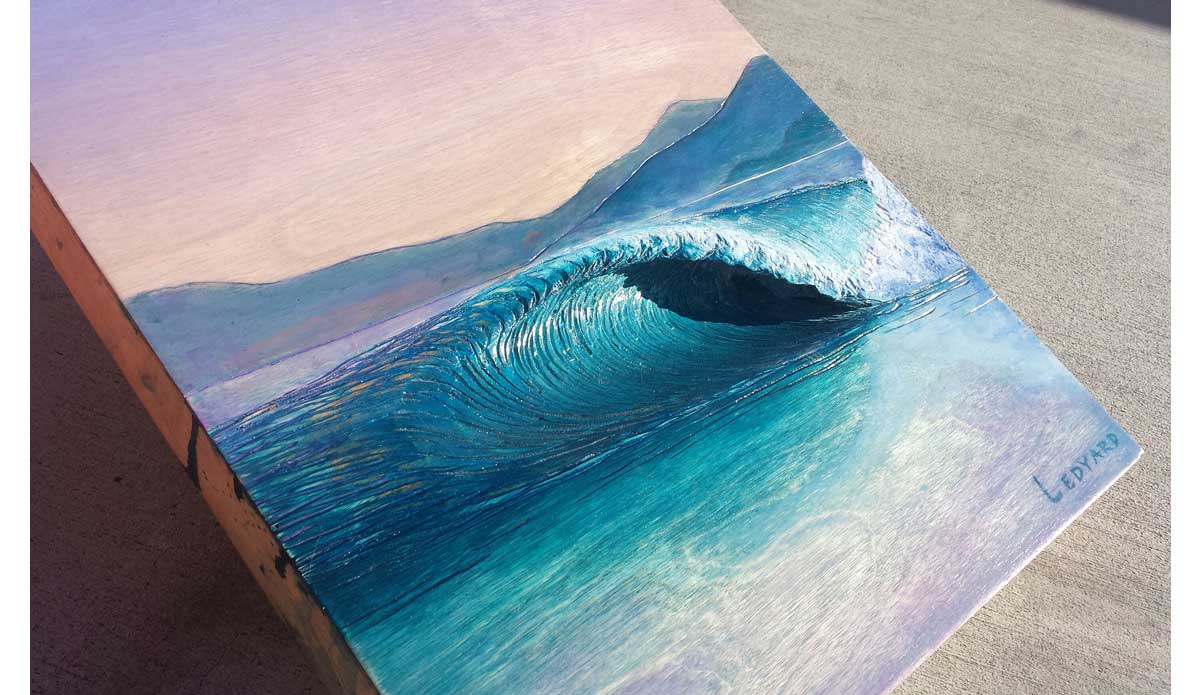
This is a side view of the previous piece. A lot of people don’t realize that my pieces are carved out of wood when they only see photos online. I started taking photos like this one to show how I shape my waves. Image: Nathan Ledyard
-
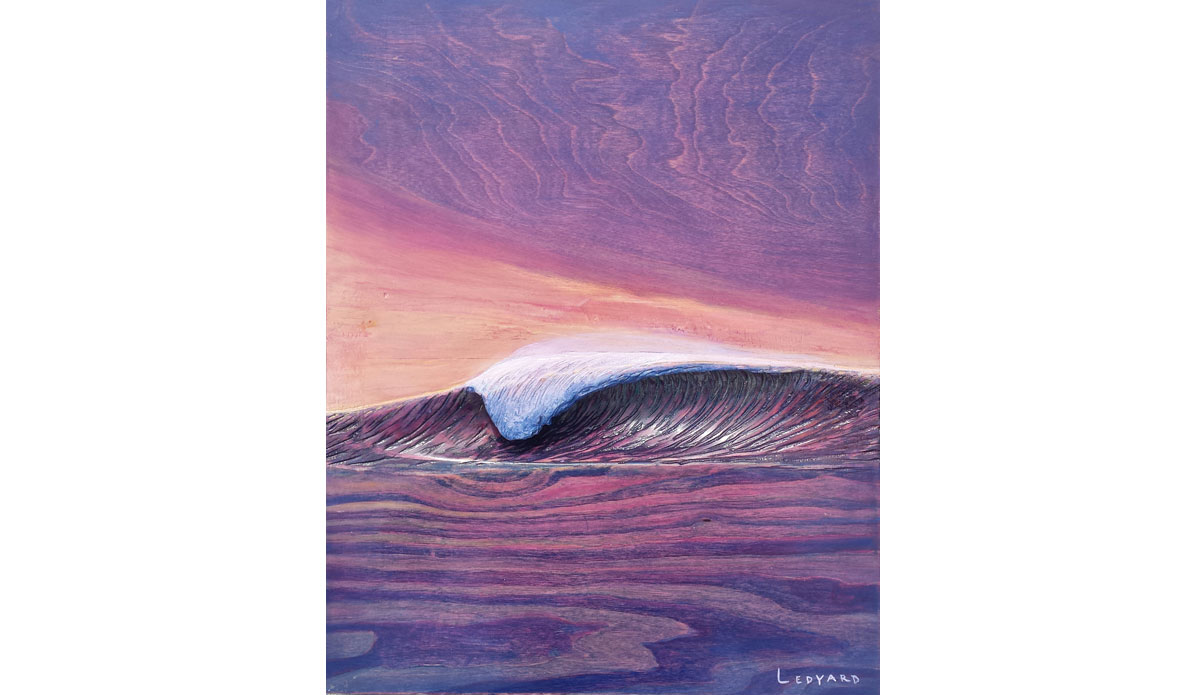
“Lava Tube” (16 in. x 20 in.) Commissioned pieces have also pushed me to use color combinations that are outside of my comfort zone, which has added to the diversity of my work. Image: Nathan Ledyard
-
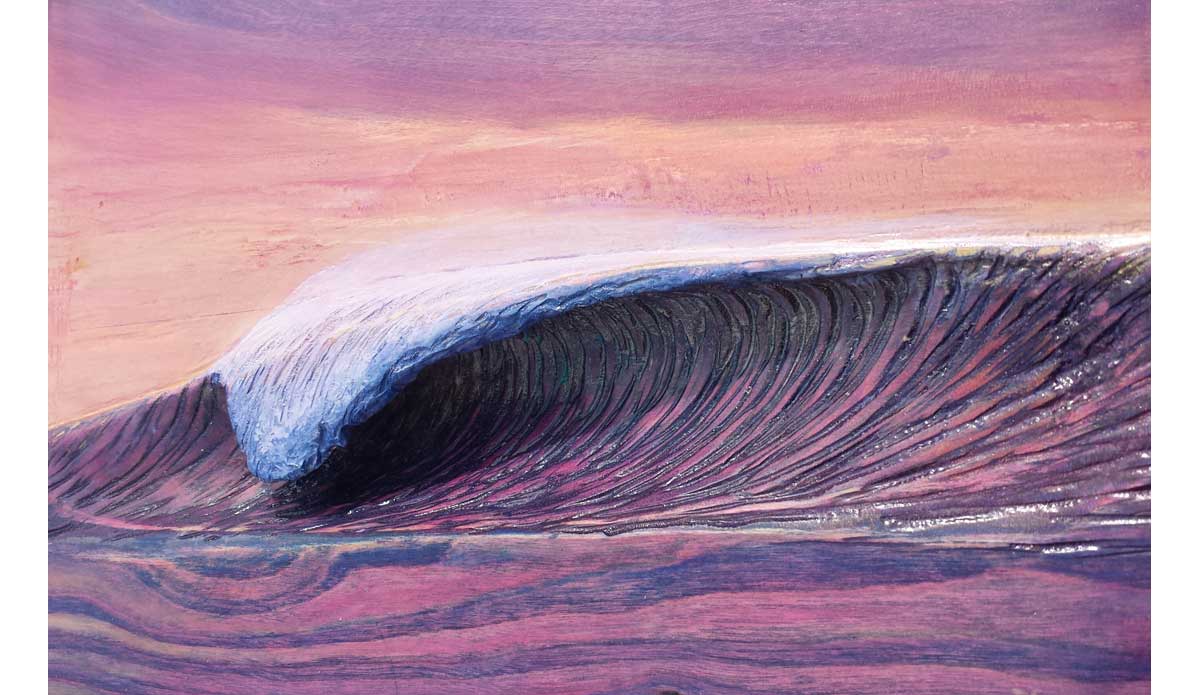
This is a side angle close up of the previous slide. The 3D carving results in a different appearance depending on the viewing angle and light source. Image: Nathan Ledyard
-
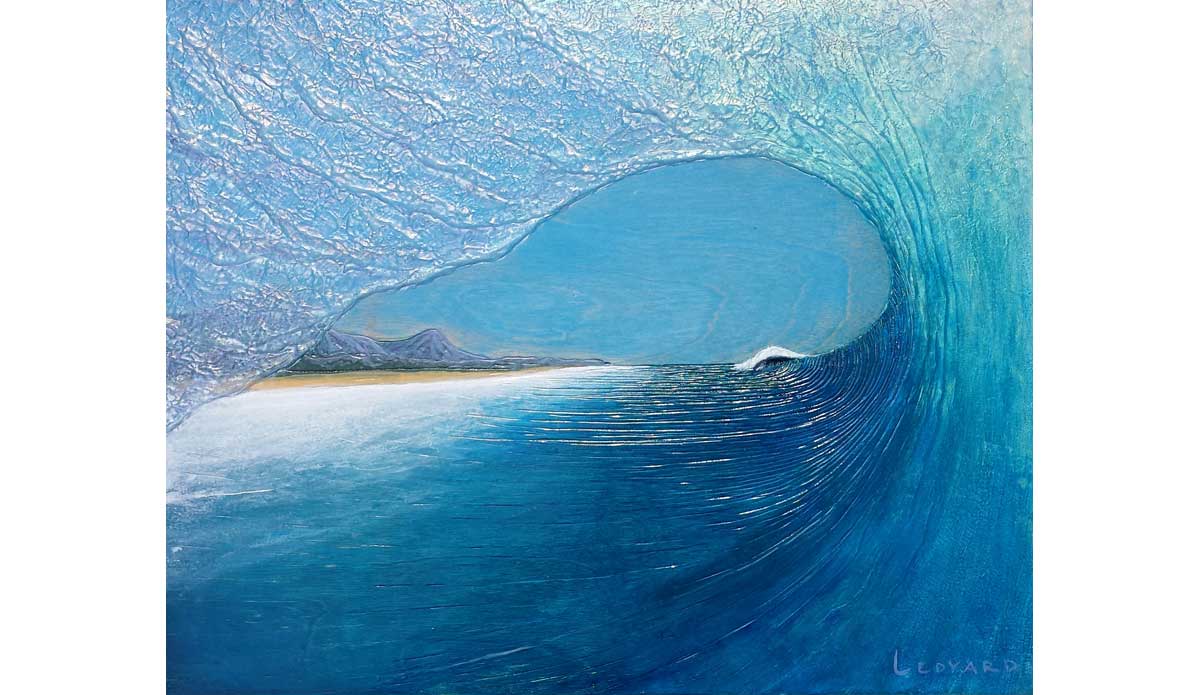
“Blue Room” (16” x 20”) I got the idea to make these barrel pieces a little over a year ago, and it ended up being one of my more successful experiments. Now that I have figured out my basic process, I’ve been focusing on refining my technique and craftsmanship. Image: Nathan Ledyard
-
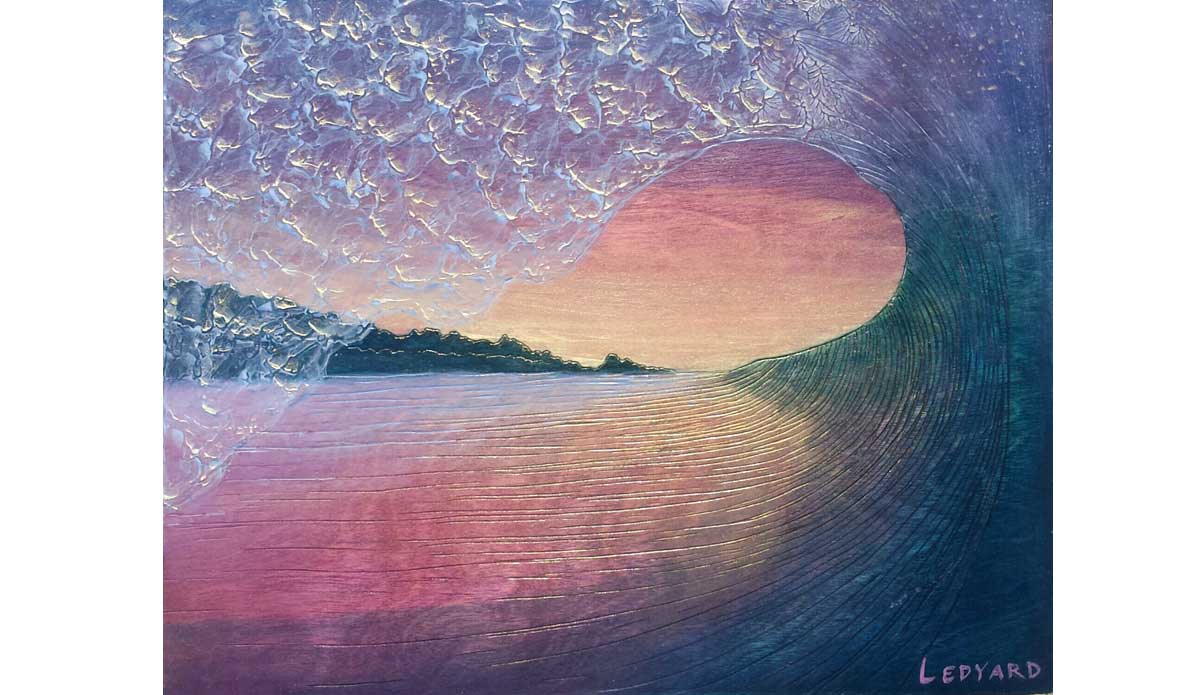
“Rainbow Road” (11 in. x 14 in.) One thing I’ve learned from doing commissions is that people love sunsets. I like to use gold paint to brighten the sky and to give the textured highlights added shimmer. Image: Nathan Ledyard
-
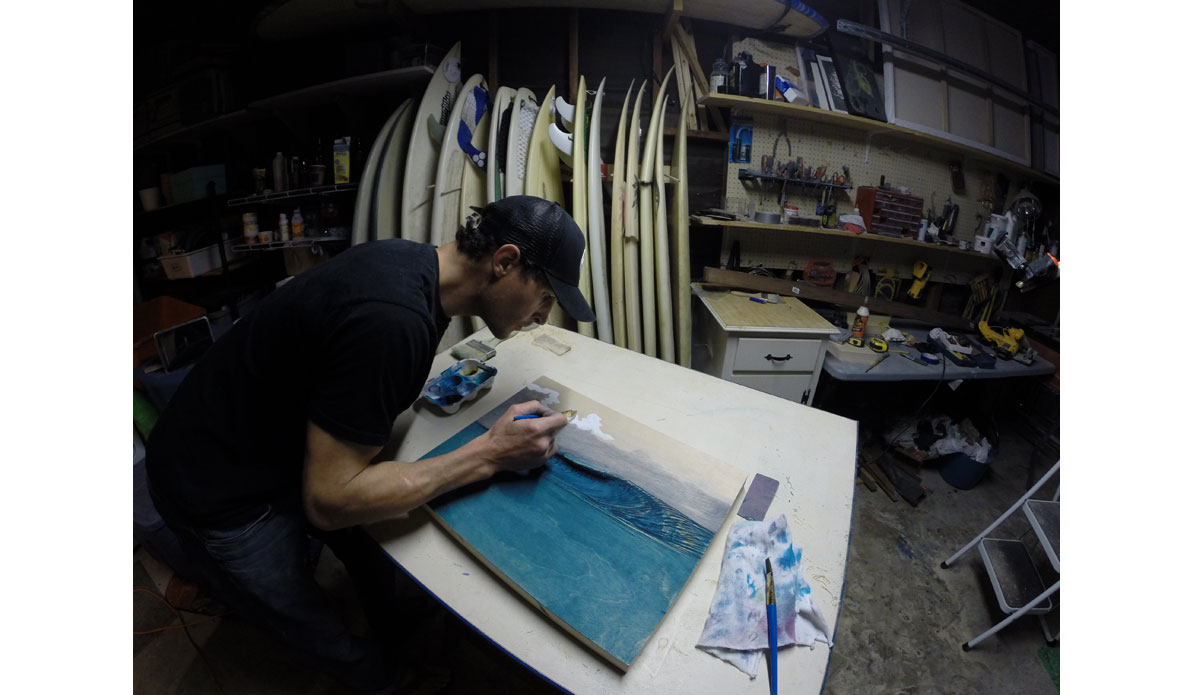
Me making one of my recent pieces. Image: Nathan Ledyard
-
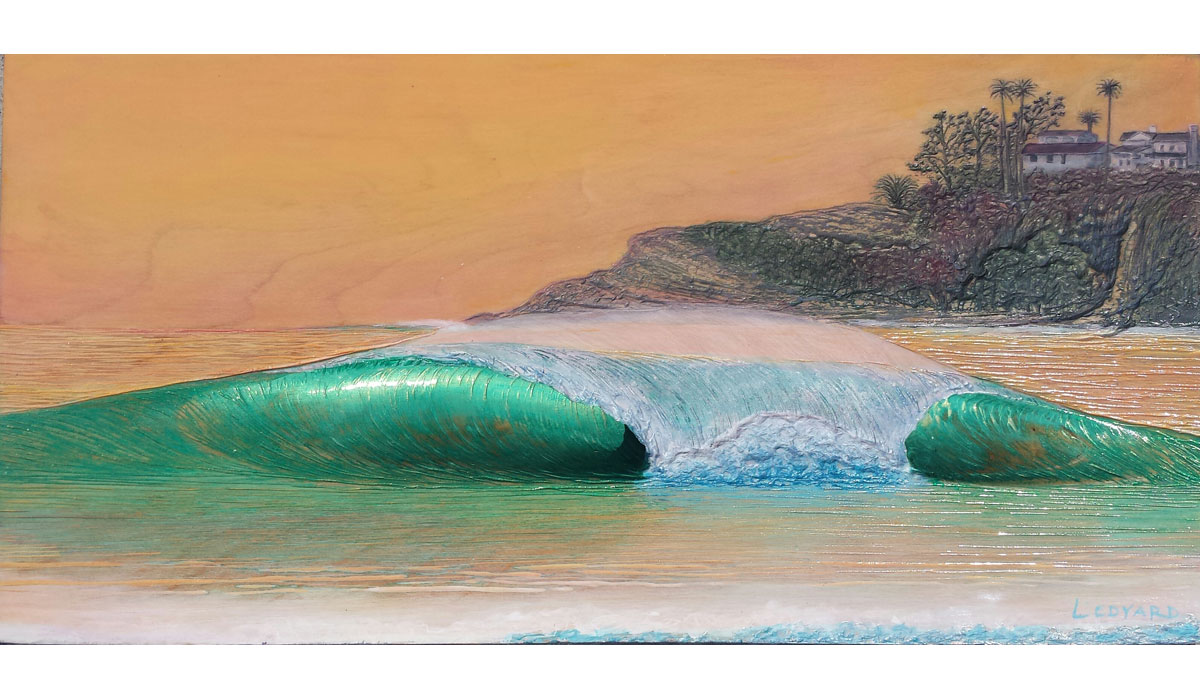
"Gravels" (24" x 12") Image: Nathan Ledyard
My art career began a few years ago when started painting on canvas, but it wasn’t until I discovered carving and painting wood that I truly came into my own as an artist. Since I began working with wood, my art has evolved from flat paintings to the three-dimensional carvings that have come to exemplify my style. At the same time I was developing my carving skills, I became increasingly interested in finding ways to incorporate the wood grain into my pieces. I start by looking at the wood itself, and then I try to tap into my experiences surfing and watching waves to come up with a scene that works with the grain pattern. For me, it is easier and more enjoyable than starting with a blank canvas, and I find that helps me keep my work fresh and organic.