
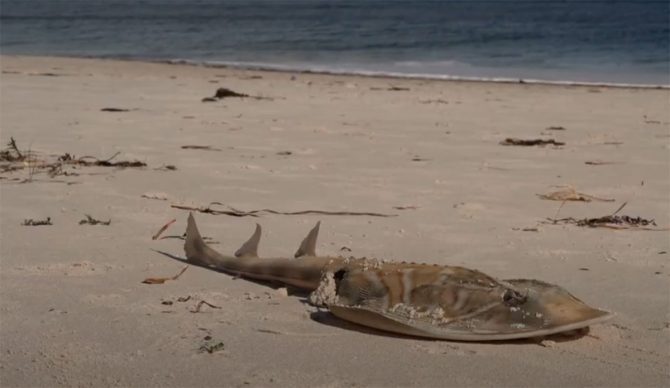
The algal bloom, which started in March, is now nearly 2,000 square miles in size. Photo: ABC//Screenshot

The usually-crystal clear waters of southern Australia are in the midst of something horrible: an algal bloom of catastrophic sizes that’s suffocating marine life and turning the waters a murky green.
“There are over 400 different species of marine life that have been killed off or have had deaths as a result of this algal bloom,” said Peter Malinauskas, South Australian Premier, to the Australian Broadcasting Corporation (ABC).” This is a natural disaster and should be acknowledged as such. I think politicians can do themselves a disservice when they get caught up in technicalities.”
According to reports, the bloom began in March, and over the course of the next few months, grew to an almost unbelievable size. The BBC reported that it is now 1,737 square miles in size, almost double the size of the Australian Capital Territory between Sydney and Melbourne. A storm at the end of June,when the bloom was worrying but not as worrying as it is now, pushed things to Adelaide.
Although the federal government has put an assistance package in place that has A$14 million in it, it has yet to formally declare the algal bloom a natural disaster. That designation is generally reserved for things like floods and brushfires. If it does, however, a greater response could be triggered.
Although algal blooms are naturally occurring, they are exacerbated by warming waters and nutrient pollution, which usually comes in the form of agricultural run off. Nutrients in the fertilizers, like nitrogen and phosphorus, can help the algae grow at unprecedented rates, throwing off the delicate balance that nature relies on.
The federal government has been accused of not making a big enough deal about what’s happening. “If this toxic algal bloom was wreaking havoc on Bondi Beach or on the north shore in Sydney,” said Greens Senator for South Australia Sarah Hanson-Young, “the prime minister would have already been on the beach with a response.”
According to federal Environment Minister Murray Watt, though, the bloom isn’t catastrophic enough to meet Australia’s legal definition of a natural disaster. Stretching from Coorong to the Yorke Peninsula, beaches are littered with dead animals of all manner, from fish to rays and everything in between.

