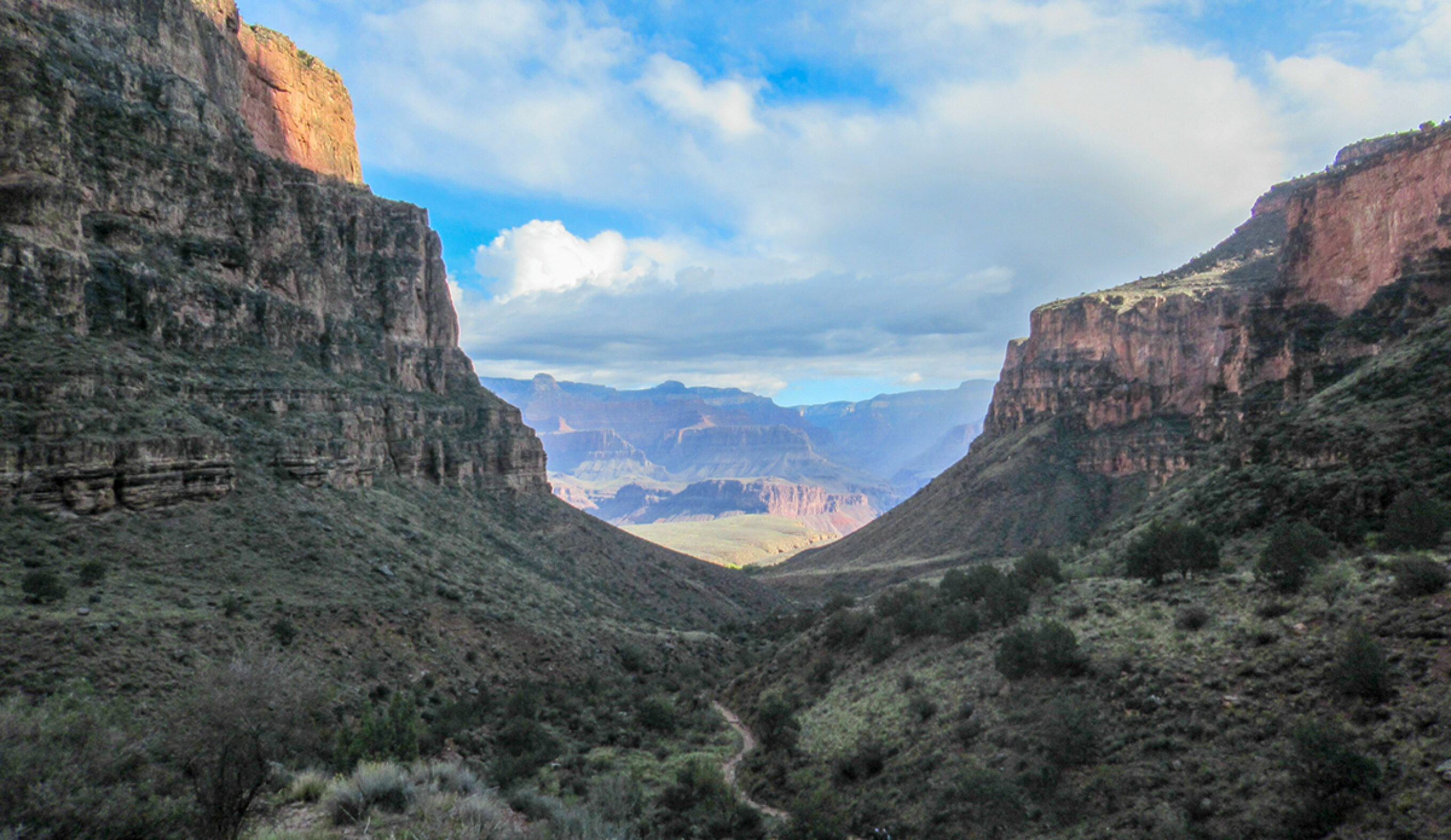
A regulatory department in Arizona approved a mining company’s request to increase the legal thresholds for arsenic at a uranium mine. Environmentalists, local government officials, and the Havasupai tribe have criticized the move, arguing that it could contaminate drinking water around the Grand Canyon.
The Arizona Department of Environmental Quality signed off on the application from Energy Fuels Resources Inc. to raise the arsenic levels in a well on the mining site by 10 percent. The amount of arsenic to trigger an alert was raised from 0.04 milligrams per liter to 0.05, while the acceptable amount was increased from 0.05 milligrams per liter to 0.55.
Scientists say the decision lacks sufficient research because the arsenic in the mine’s well could seep into the region’s groundwater.
“This decision did not comply with state regulations,” the Havasupai tribe told the indigenous news publication ICT. “The Tribe strongly disagreed with (the department’s) classification and expressed its concerns and opposition over the course of several meetings…”
A U.S. congresswoman, Adelita Grijalva, who represents Arizona’s seventh congressional district, implored the state regulator to deny the mining company’s request.
“If an operator wants to change the environmental protections, they should be able to demonstrate with clear scientific evidence, not by somebody who’s been hired by the mine to give you the story,” Grijalva told Inside Climate News. “It’s about ensuring that public health is never treated as an afterthought.”
The state regulator and mining company deny that the change in acceptable arsenic levels will negatively impact the environment. The regulator’s quality division director said the arsenic is naturally occurring and being drawn toward the mine by a hydraulic sink — not originating from the mine and spreading outward.
A spokesperson for the mining company, Curtis Moore, said the change was “routine” and that fluctuating arsenic levels are a normal part of mining operations. He accused activists of skewing facts to stoke fear in the tribes and community members.
The mine, which was first approved in 1986, did not operate for decades due to lawsuits and depressed uranium prices. Located less than 10 miles south of the Grand Canyon’s rim, it restarted operations in 2023 and received a $725 million loan from the Department of Defense last year to increase production at the site. The company aims to mine more than 1.6 million pounds of uranium over the next few years, as per the application.
The mine is located above the region’s aquifer — water that filters down to the Colorado River at the bottom of the Grand Canyon. While the tribe has made it clear they are not inherently opposed to energy development, they’re concerned lax regulations permit arsenic pollution that could one day cause irreversible damage.