
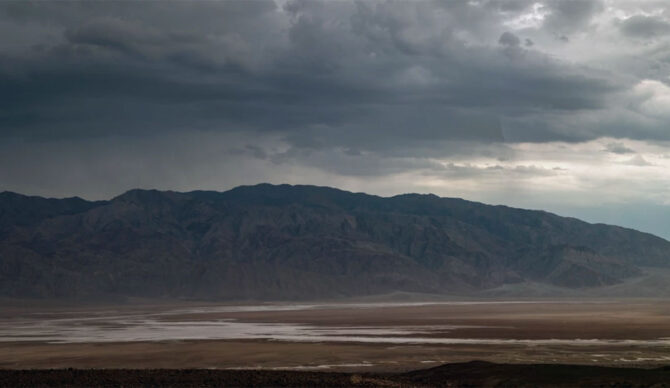
Dark clouds in Death Valley aren’t the most common of sights. Photo: NPS

Death Valley is a famously dry, hot place. So dry and hot that it’s known as the driest and hottest place in North America. But an atmospheric river that struck last week dumped an extraordinary amount of rain: a quarter of its annual average in a single day.
According to the National Park Service, the world record highest air temperature was recorded there at the aptly named Furnace Creek back in 1913. It was 134°F, and in the summer, it’s not uncommon for temperatures to hit 120°F. The average rainfall there is a shade under two inches, and since that’s not much at all, the ground is so parched and hard that summer thundershowers can cause flash floods.
“The park’s rocky, steep terrain causes water to run off quickly, creating fast-moving flows of mud, rocks and debris,” Death Valley National Park wrote on social media. “These floods have covered some roads and have eroded road shoulders, making travel hazardous.”
The atmospheric river that turned the desert into a mud pit slammed much of Southern California, and on November 15th, Death Valley National Park reported that the the Furnace Creek area had received a little over half an inch of rain. That doesn’t sound like much at all — and indeed it’s not in most places — but in Death Valley, that’s a legitimate deluge.
That’s nearly 25 percent of what they expect all year around, and as you’d guess, it made a serious mess. Several roads through the park were closed and vast areas were flooded. Atmospheric rivers aren’t all that uncommon this time of year, but this one was especially wet.
“California is ideally located for atmospheric rivers, as extratropical cyclones formed over the North Pacific Ocean can tap into warm tropical air and, when positioned right, transport a large amount of water vapor from the tropics to the California coast,” explained Columbia Climate School professor Mingfang Ting to IFLScience.

