
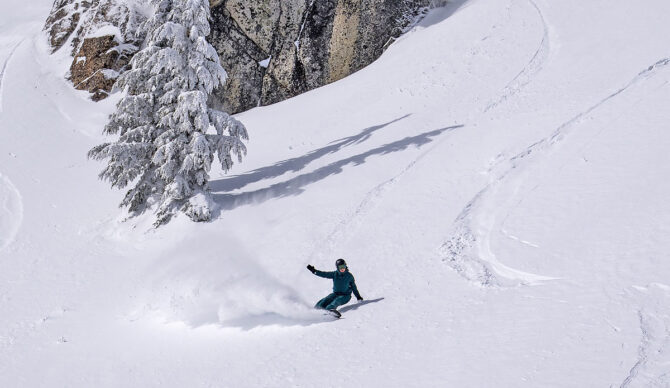
Hopefully, El Nino will bring much more of this to places like Palisades. Photo: Palisades Tahoe//screenshot

The World Meteorological Organization says it expects the transition to El Niño as early as May, according to the organization’s recent Global Seasonal Update. The late-April reportfrom the WMO is aligned with forecasts from several scientific organizations around the world monitoring this year’s anticipated “Super El Niño,” which many expect to arrive in the summer months and last through the rest of 2026.“After a period of neutral conditions at the start of the year, climate models are now strongly aligned, and there is high confidence in the onset of El Niño, followed by further intensification in the months that follow,” said Wilfran Moufouma Okia, Chief of Climate Prediction at the WMO, in another statement.
The WMO official also added that while many signs point to a strong El Niño this year, we’re observing the shift from La Niña to ENSO Neutral, and now the onset of an incoming El Niño during a period of low predictability.
“Models indicate that this may be a strong event – but the so-called spring predictability barrier is a challenge for the certainty of forecasts at this time of year. Forecast confidence generally improves after April,” he says.
With the onset of El Niño conditions expected to begin in May, that would make a declaration of El Niño possible by July. The distinction is important because the above normal sea surface temperatures observed right now aren’t the only ingredient in a recipe for the climate event. Sea surface temperatures must remain greater than .5 celsius above average in the tropical Pacific for overlapping consecutive months. Meanwhile, atmospheric changes have to align with those warmer sea surface temperatures too.
“The possibility of a very strong El Niño (1 in 4 chance) largely depends on the continuation of westerly wind anomalies across the equatorial Pacific throughout the Northern Hemisphere summer months, which is not assured,” the National Oceanic and Atmospheric Administration explained earlier this month.
El Ninos typically bring bigger waves and more snow to the southern half of the Western U.S. “We’ve looked at a lot of those winter storm conditions over the last 44 years, and typically, what happens is you get higher water levels along the coast of California, half a foot to a foot higher for the whole winter,” Dr. Patrick Barnard, Research Director of UC Santa Cruz’s Center for Coastal Climate Resilience, told us in March. “Storms are going to be right on top of higher sea levels. What’s consistent across all those (El Nino) events is larger wave energy, bigger waves, sometimes 50 percent above average during the winter. That’s the real kicker.”

