
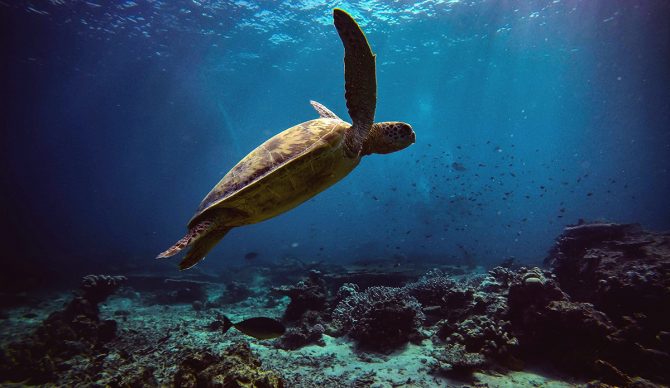
Green sea turtles are in a much better place these days. Photo: Jesse Schoff//Unsplash

Of the seven species of sea turtles on Earth, green sea turtles are the first to be removed from the endangered list. A new report from the International Union for Conservation of Nature (IUCN) upgraded its status from “endangered” to “least concern,” marking a major victory for global conservation efforts.
“We went from being pretty worried about green turtle populations to watching their numbers increase over the last few decades,” Bryan Wallace said in an interview with NPR. Wallace is a University of Colorado Boulder ecologist who oversaw the IUCN’s most recent review of the species. “They’re not entirely out of the woods yet, of course, but what the report shows is that, generally speaking, when we do the right things, conservation works.”
Green sea turtles inhabit tropical and subtropical waters around the world and can grow up to three to four feet in length.
Wallace said the turtles were once so abundant in the Caribbean that European voyagers could navigate the islands at night by listening to the sound of turtles breathing and their shells knocking against ship hulls.
It’s estimated that 95 percent of the 19 to 33 million green sea turtles once found in the Caribbean were killed — hunted for their meat and shells. Habitat loss and climate change have also contributed to their decline.
Wallace said his team doesn’t know the exact population of green sea turtles today, but they’ve witnessed steady increases in nesting sites since the 1970s. Another sign of their rebound, albeit an unfortunate one, is the rising number of green turtles caught unintentionally as bycatch in fishing nets and hooks.
Conservation measures since the 1950s — from protective legislation to new fishing technologies designed to keep turtles out of nets — have helped drive the species’ comeback.
The other six sea turtle species remain in trouble. The loggerhead, leatherback, and olive ridley are listed as vulnerable; the hawksbill and Kemp’s ridley are critically endangered. The flatback turtle is listed as lacking sufficient global data, but is considered vulnerable under Australian law.
Even as the green sea turtle’s global outlook improves, the species still faces localized threats across sections of the world’s oceans.

