
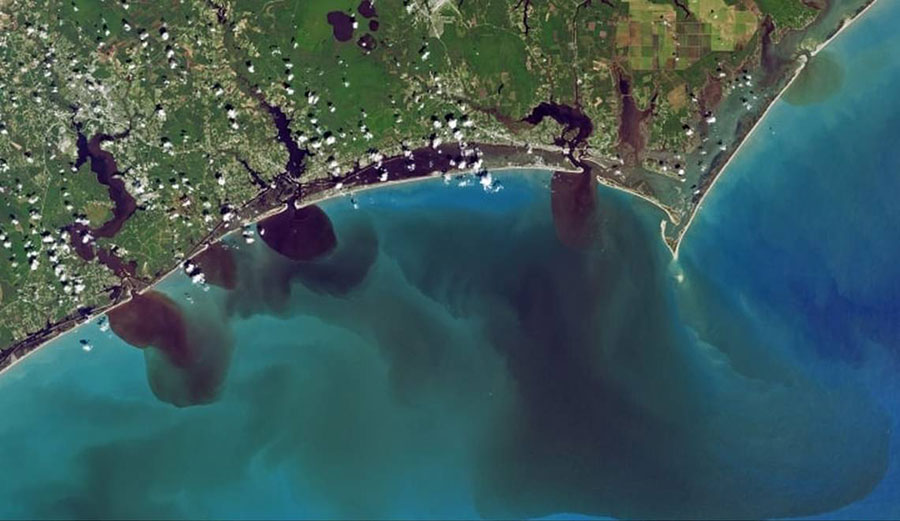
Hurricane Florence dumped around 8 trillion of gallons of rain on North Carolina. Now, it’s heading back to the sea, but it’s far from clean. Image: NASA

Hurricane Florence dumped somewhere in the region of 8 trillion gallons of rain on North Carolina. Like they say, however, all rivers lead to back to the sea, and NASA is watching as all that water as it makes its way back to the Atlantic. The images they’re recording show extraordinary amounts of dark, polluted water pouring from the rivers.
Hurricane Florence was, as Donald Trump said, “one of the wettest we’ve ever seen from the standpoint of water.” All that tremendously wet rain caused widespread damage, with rivers bursting their banks and spewing water all over everything. The flooding was catastrophic, and now rivers, streams, and creeks across the state are full of sediment and pollution. According to NASA, the water in the images “reveals how soils, sediments, decaying leaves, pollution, and other debris have discolored the water in the swollen rivers, bays, estuaries, and the nearshore ocean.”
With all that pollution comes a lot of risk. As anyone from California knows, surfing after it rains can be a risky proposition, as bacteria rates often go through the roof afterwards, and with them the chances of getting some sort of infection like vibrio or contracting a sickness that makes your eardrum blow up.Of course, some amount of organic matter is always present in rivers, but after an extreme weather event like Hurricane Florence, the sheer amount of it can be harmful to the environment. According to The News & Observer, “North Carolina researchers are linking hurricanes like Florence and Matthew to long-term effects of this discolored water to the deaths of aquatic life and water quality that can be unsafe for humans.”
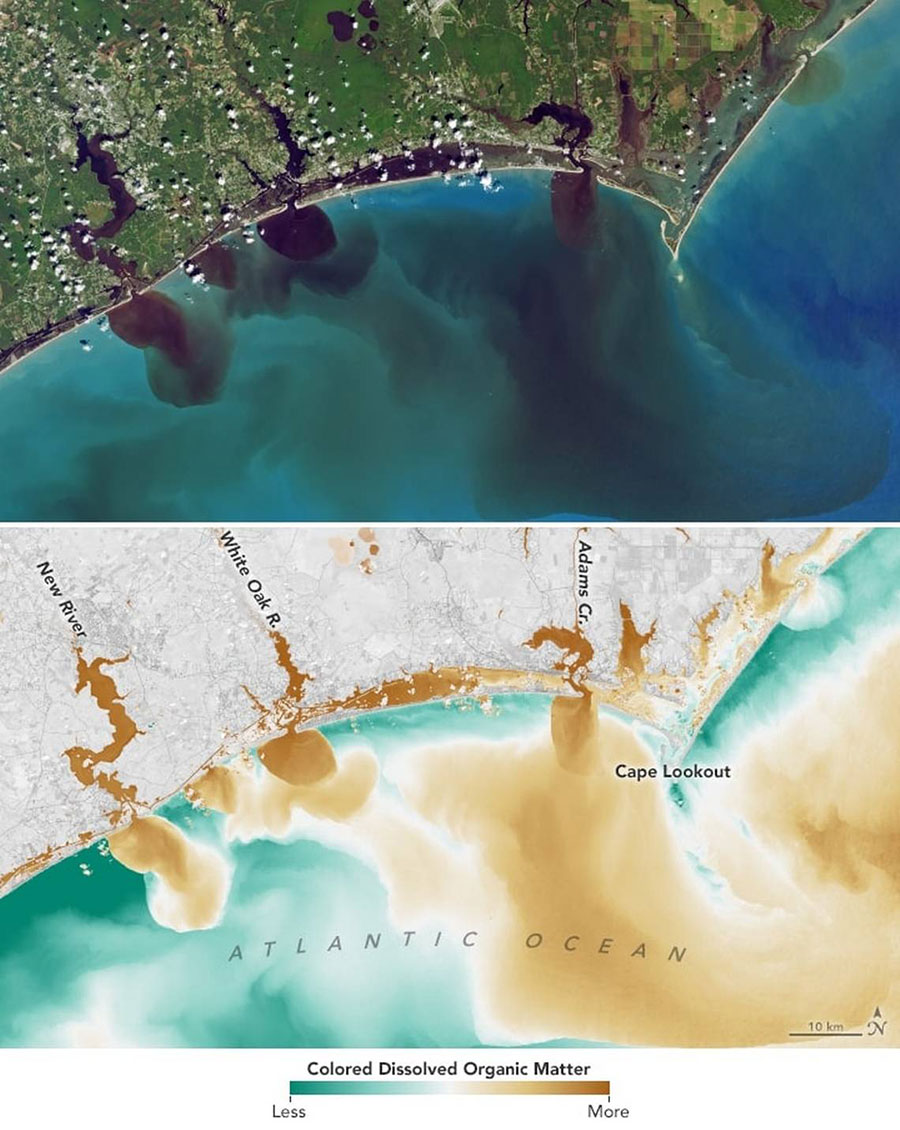
NASA’s true-color image shows how dirty the waters are. Image: Joshua Stevens NASA
A team from UNC is studying the water flow and they have found that the pollutants are mostly “leaves, straw, manure, wood, and food-processing waste.” As this huge amount of debris makes its way to the ocean, it can have disasterous effects, like dead zones.
“In the discharges after hurricanes Floyd and Matthew, these dead zones grew large enough to affect shellfish and finfish habitats for miles,” said UNC scientist Hans Paerl, one of the researchers studying the outflow. “Fish kills lasted for months.”

