
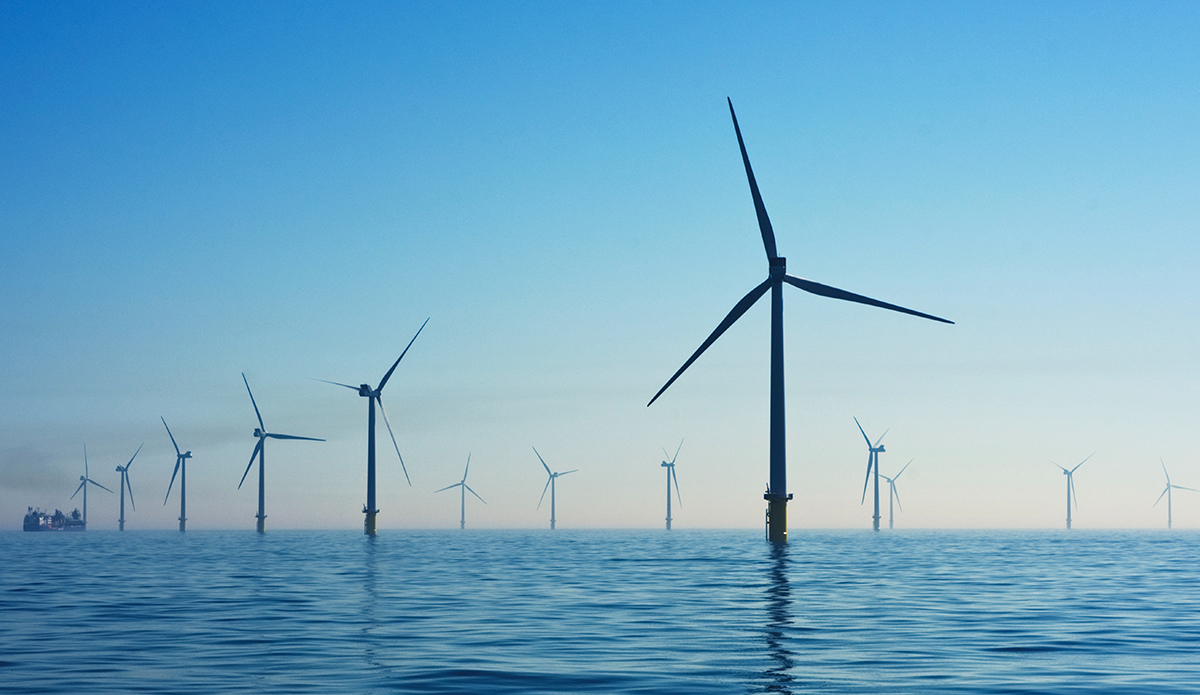
Rampion Offshore Wind Farm, United Kingdom. Photo: Nicholas Doherty // Unsplash

After two other planned offshore wind farms off the coast of New Jersey were scrapped in October, only one project with preliminary approval remains: Atlantic Shores. In a biological opinion issued Monday night, the National Oceanic and Atmospheric Administration said the wind farm off the state’s southern coast is not likely to jeopardize the continued existence of any species of endangered whales, sea turtles, or fish, as ABC reports. It is also not anticipated to destroy or adversely modify any designated critical habitat.
However, despite the fact that NOAA, the Bureau of Ocean Energy Management, the Marine Mammal Commission and New Jersey’s Department of Environmental Protection have all stated that there is no evidence linking offshore wind activities to whale deaths, many activists continue to oppose the projects. “These projects will intersect the migration path of the severely endangered North American right whale and threaten marine life,” said a statement from Save Long Beach Island, a group that describes itself as a “non-partisan, mission-driven grassroots coalition comprised of hundreds of concerned LBI homeowners, business owners and visitors.” The group continued that “Save LBI strongly believes that the damage to the marine ecology, to the human ecology (fishing, tourism, the shore communities), and to the New Jersey economy from this massive industrialization of our near ocean is unacceptable. The costs, damages, and risks far outweigh the purported benefits.”
NOAA said it does not anticipate that the project will seriously injure or kill any endangered whale or have any impact to any critical habitat for the North Atlantic right whale. The group stated that “all effects to North Atlantic right whales will be limited to temporary behavioral disturbance.”
In April, the NOAA issued a nearly identical ruling for Ocean Wind I and II, similar projects that would have also been in the same region. However, Orsted, the Danish company responsible for Ocean Wind I and II, canceled the projects, attributing the decision to inflation, supply chain problems and a lack of government subsidies.

