
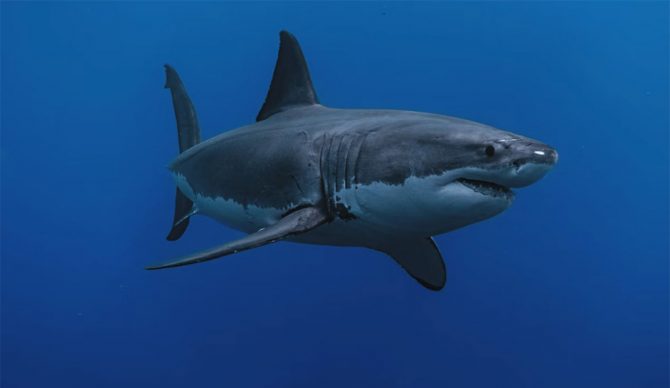
“Jaws” helped shape the global perception of great white sharks, but it shaped it all wrong. Photo: Unsplash

Fifty years ago, on June 20, 1975, a film hit theaters that would shape the global perception of sharks. Based on a book by Peter Benchley of the same name, Jaws was a massive hit, terrifying audiences around the world. Now, half a century later, OCEARCH, the self-proclaimed “global leader in ocean research and shark conservation,” is attempting, in its own small way, to set the record straight.
In the years following the success of Jaws, Benchley was vocal about his regret. He couldn’t have known just how massively popular his story would become, nor could he have known how it would contribute to the misconception of sharks as malicious creatures, hellbent on death and destruction. But the damage was done, and the toothpaste could not be put back in the tube.
“I couldn’t write Jaws today,” Benchley said in 2006, just before his death. “The extensive new knowledge of sharks would make it impossible for me to create, in good conscience, a villain of the magnitude and malignity of the original.”
Sharks, as you likely are aware, are of vital importance to the oceanic ecosystem. Although countless studies have proven that they’re not inherently hungry for human flesh, they have evolved to be nearly perfect hunters that are able to inflict terrible injuries on us, whether they’re meaning to eat us or not. But we need them. The ocean needs them. And we, as a whole, have them pegged all wrong.
“While Jaws captured the world’s fascination with great white sharks, OCEARCH is now, for the first time in history, revealing the true story of these majestic apex predators,” said Chris Fischer, Founder and Expedition Leader of OCEARCH. “Our research in the very waters where JAWS was set — from Cape Cod to Nova Scotia and down to the Gulf of Mexico — is uncovering the real-life migratory patterns and critical habitats of white sharks. This knowledge is demonstrating just how essential these predators are to maintaining the health and balance of our oceans.”
In the years since its founding in 2007, OCEARCH researchers have conducted almost 50 expeditions around the globe. They’ve tagged nearly 500 sharks and routinely work with 90 research institutions worldwide. That means they have a deep well of data to use a baseline, which they can use to glean insights into the breeding, feeding, and migratory behaviors of white sharks.
“Through the multidisciplinary research we facilitate, we are developing a more complete understanding of the Western North Atlantic white shark, including their essential habitats and threats to population recovery,” explained Dr. Harley Newton, the Chief Scientist and Veterinarian at OCEARCH. “This data contributes to global white shark conservation efforts and will help shape fisheries management policies that we hope will ensure a healthy future for sharks and the oceans they protect.”

