
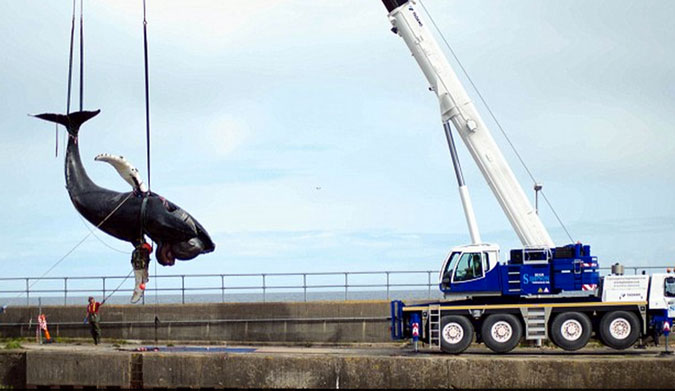
“Don’t drop it!”

A few years ago, a seven ton humpback whale washed up on a beach in Scotland. Since there really isn’t all that much you can do with a giant dead whale, authorities transported it to Wales, where they proceeded to freeze it with four tons of liquid nitrogen.
It might not seem like something many people would want, but Ben Fogle, who you know if you live anywhere other than the United States, decided that it would be cool to take the whale, strap a bunch of cameras to it, sink it to the bottom of the ocean, see what eats it, and put the whole thing on television.
When whales die without washing up on shore and getting blown up by dynamite (!), they generally sink to the bottom in something called a whale fall before getting snatched up by much smaller creatures.
Great white sharks can be a part of the festivities, depending on where the whale fall occurs. And in an area between Ireland and Wales called the Celtic Deep, great whites aren’t exactly commonplace. In fact, according to The Guardian, there is no evidence that they inhabit UK seas. While there have been reports, none of them have ever been definitively substantiated, although the former chairman of something called The Shark Trust said that a few of the sightings were “credible.”
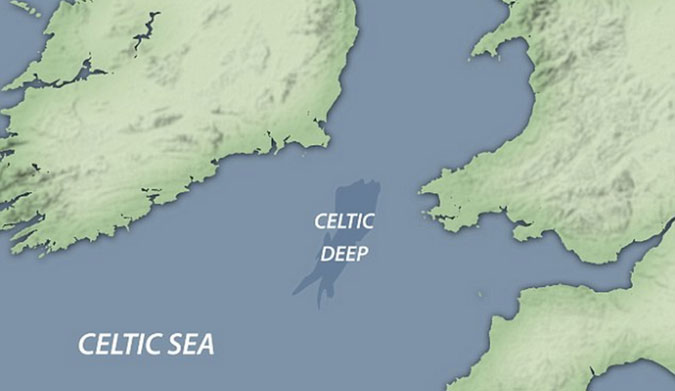
It’s not called the Celtic Deep because it’s shallow.
“The thing about great whites is they are able to maintain their body temperature so they can exist in slightly colder waters,” said Dr Andrew Brownlow, director of Scottish Marine Animal Stranding Scheme. “It’s not improbable they are around here.”
Because the area does contain normal prey for great whites and a temperature that they could survive in, the crew of the show is hoping to find and document the a great white in the area for the first time. They began their journey just a few days ago, towing the partially thawed whale about 35 miles off the coast, straight out from a few of the areas most popular surfing spots.
“It’s a top secret mission,” Fogle told The Sun, “so I can’t talk too much about it but it could be the most exciting and ambitious thing I’ve ever done. We might change what we know about the British Atlantic waters and what’s in them.”

