
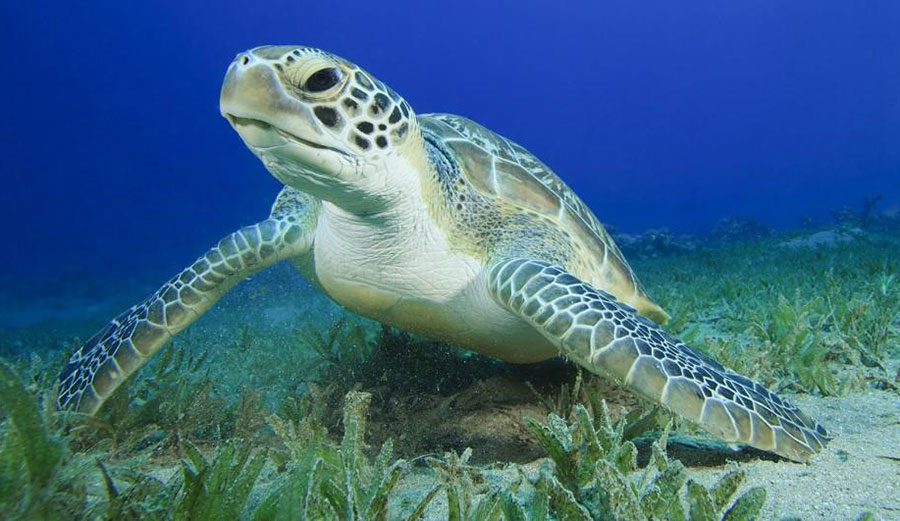
Good chance that’s a female. Photo: Nat Geo Kids

Something strange is happening to green sea turtles on the northern end of the Great Barrier Reef. Some 99 percent of them are female, which is not a good omen for the endangered species, since, as stupid as we are, males are an integral part of the whole procreation of the species thing.
Men, for the most part, are dumb. Not to stereotype too much, but the majority of us are, to put it simply, dumber than rocks. We walk around all day, giggling about farts, punching stuff, puffing out our chests, and generally thinking with our dicks. If it weren’t for men, the world would probably be less bloody and less dirty. While we’re stereotyping though, a world without men might be a little more passive aggressive. But a world without men would soon not be a world at all, as evidenced by the horrible Stephen/Owen King book, Sleeping Beauties. Do not read it, because you will become even more stupid.
Interesting fact: As is the case with many reptiles, the temperature at which the egg is incubated dictates whether a sea turtle is a male or female. It’s called Temperature-Dependent Sex Determination, which would definitely be the name of a sauna-based porn movie about a man determined to have sex in a sauna, were I ever to make one.
If the sand the sea turtle egg is in averages 84ºF, the male to female ratio is 50/50. Colder, and you get males. Warmer, you get females. Since the average temperature on earth is rising (cue climate change denier outrage), there are way more females being born, especially on the northern end of the Great Barrier Reef. Now, a little temperature fluctuation didn’t use to make much of a difference, since sea turtles don’t start sniffing around for sex until their mid-20s. Since global temperatures have steadily on the rise—at least according to those pesky ol’ peer-reviewed facts that every other country other than the U.S. agrees on—more and more females are hatching.
There is a glimmer of hope, though. “At the southern end of the reef, 65-69 percent of turtles are female, which no doubt makes for some very happy males, and could actually improve breeding prospects compared to a 50-50 ratio in a species where some males mate with many females,” wrote Stephen Luntz for IFLScience before going on to the doom and gloom you just read about. “The mid-reef region has almost no hatcheries. Among those born north of Cooktown, however, 99.1 percent of the juvenile turtles Jensen examined were female, along with 86.8 percent of adults. Among the subadult population, the male proportion was a shocking 0.2 percent, suggesting things have gotten much worse as the world has warmed.”

