
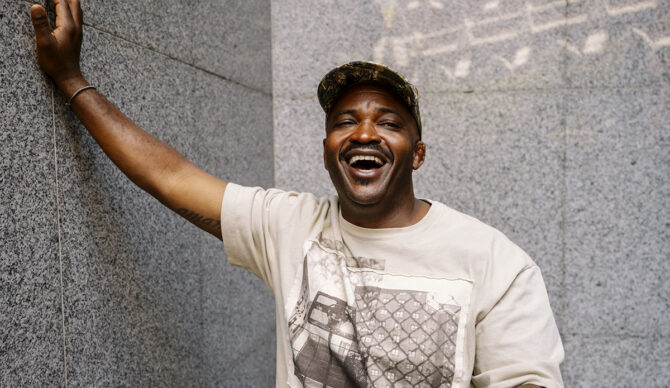
Selema’s world is pretty good right now. Photo: Team Ignition

Selema Masekela is on a short list of voices in action sports who command attention. Who else genuinely makes people stop and listen? In the surf world, maybe only Kelly Slater is on that level? Masekela has ridden a decades-long roller coaster of the rapidly changing media landscape, from the TV era to TikTok, and he’s still in the mix.
He recently started a new gig as host of The Team Ignition Show, a digital series where he links up with a wide range of extreme athletes to understand what drives them and experience their worlds firsthand.
I caught up with Masekela to talk about the new project and covered much more along the way, including how to stay relevant in media nowadays, AI’s influence on brands, the state of surfing five years after the social justice movement took center stage, and the role he may play in the LA 2028 Olympics.
It’s been a few years since we caught up with you. Tell me about the new gig.
I’ve been a storyteller of risk takers for the greater part of my career. My job is to put into context people who do shit that doesn’t make a lot of sense to the general public, and I do so in these confined spaces for the most part of an event or a contest. In this show, it’s really cool that I get to spend time with people and go through a bit of their process, learn what their relationship to calculated risk is and why, and then go out and experience the things with them – sit in a little bit more discomfort than I think I usually would (a lot more discomfort than I usually sit in the commentator seat).
We just got done doing three weeks in Australia where I was with these amazing twin brothers that do parkour, which I think in our action sports world, amongst the older generation, or even the millennial plus generation, there’s this bit of skepticism. But amongst young kids, they think it’s cool. It was next level, and super fun to learn about their why and their passion, and see how much of it correlates to what I know traditionally from the worlds that I’ve covered, but get it from this different perspective. I was also with one of the only women in the world who is an acrobat and race pilot, flying these single-engine sky Ferraris, basically. I had to go up and fly in this plane with her, sit in the front seat, do all of the flips and stalls. That was truly incredible. I got to fly the plane as well.
Have you already recorded the whole season, or is there still more to do?
There’s a bunch left to do. I’m going to Europe to do some snowboard shit, then we’ll be doing some stuff in the States. I went and hung out with Nitro Circus in Australia. I did some stuff with Jarryd McNeil, a freestyle motocrosser. I hadn’t ridden a dirt bike in, I don’t know, 20 years after a rather heavy slam in Oceanside. So I went out and experienced that, and got back on a dirt bike. I went and trained with lifeguard firemen in Australia, had to go into a day of fire school, real fire scenarios, which is something I never dreamed that I would get to experience. It’s been cool to sit outside of our normal pool of action sports risk and get out into these concentric circles for which the mindset is very similar, deeply calculated and premeditated.
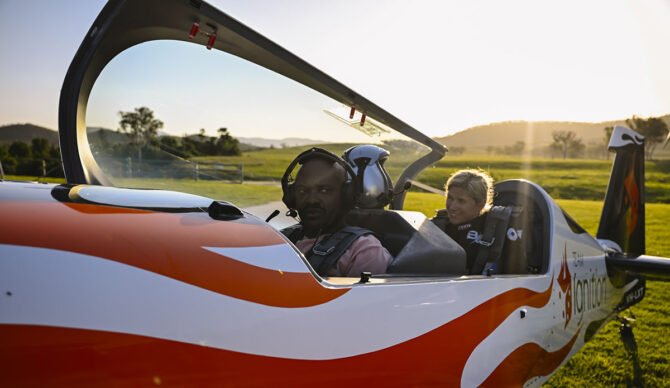
“I’m not scared, you’re scared.” Photo: TI
You’ve been in the media world for a long time. What are the latest trends or biggest changes that you’ve seen in the space?
The algorithm. The algorithm is king and queen. I think we all thought it was cute before and a place to share. I don’t think anyone thought that the algorithm would dictate that it doesn’t matter how good you are anymore. Outside of the handful of people who compete on a world tour – and even those people’s opportunity to cheat the algorithm is limited – you have to put in so much more work to get attention for what you do and create a bigger “why” for people to tune in outside of just your skill set. That part has been fascinating to watch, and to watch some athletes who, without the algorithm, maybe wouldn’t have the chance to perform and have the careers that they have. Their personality is as big as their talent in a way that others just want to go out and do the thing. Now you have to be a fucking CEO of a content company in order to be a professional athlete.
I’m curious and also wildly ignorant to how disruptive AI will be in siphoning off what curiosity looks like. We have this limited bandwidth. We’re already getting hammered with repurposed and repackaged content and people’s takes on what this content is, and their interpretations of it. Then along comes AI to be like, “Alright, well, let me take you into a deep, deep fantasy land.” Will this be enough as it gets more knowledge and more ability to siphon off even more? Will you be able to be an AI Pro?
Do you think AI is helping or hurting action sports brands that use it? Do you use it?
I don’t use it, but I haven’t learned how to use it as a tool yet. Don’t get me wrong, I’ve played around with it. When I sit on AI long enough, I realize that it’s not telling me anything I don’t know. It’s not giving me anything that I couldn’t come up with on my own, or better, by actually sitting and being present with myself. That’s just me. I haven’t used it as a deep-dive research tool. I haven’t used it to really sort through and contrast and compare in the way that I know a lot of people are using it. I have artist friends who are using it. I think at the end of the day, if brands overly rely on AI, they’re going to run up against a wall. AI knows as much as humans have ever known, and humans are still creating what we’re going to know. Maybe I’m an old person. I think that part remains infinite to the experience of being alive. It feels like something that a handful of people have convinced us is going to be the replacement, but I think it’s based on greed. AI is not going to take your job. A human being is going to make a decision that you are now expendable because they find AI to be more valuable. And that is the risk to brands, especially anyone whose product is rooted in creativity. I think we’re in the beginning of a very large fuck around and find out. If your interest in profit margin means that you’re going to rely on this heightened algorithm that is spewing out these configurations of shit that’s already existed, I don’t know how that’s ever going to feel brand new.
It’s an exciting time because it’s hella disruptive. But I’m of the belief you have to know how to use it as a tool, not to replace this thing that’s irreplaceable. I firmly believe that human intelligence is based on rooted experience and DNA like all the other fucking cosmic shit that comes with it. That part is not for sale. There are a handful of people who would like to make more money and make you believe that this thing is going to come for the entirety of us. I don’t think it’s rooted in reality.
It’s ironic. AI is supposed to “help” us, but most people in the workforce have anxiety that it’s going to replace them. What advice would you give someone who’s just trying to break into the media world? How is it different from when you did it?
Well, it’s a lot different than when I did it. I had to be selected. I had to prove myself worthy to show up on what existed as a handful of platforms for people to see the sports that we love. That landscape is dead now. It’s infinite. It’s open source. Everybody has the tools to present and build and tell stories. So you have to believe in what it is that you have to give that no one else has. That part is the thing that remains constant. It’s hella intimidating. What seems to be the du jour is doing a different version of what already exists, because that feels safe. It’s hella temporary and easily forgettable. I think it requires more. But I think the people who are making the best content, the people who are thriving, are continuing to take chances at being uniquely themselves and then using whatever tools they have access to to amplify that. At the end of the day, what you have to give is solely yours, and you got to lean into that harder than ever.
When I was in the come up, I knew I had an ability to tell the story of what people were seeing, maybe different than other people did, and I leaned into that. It gave me an opportunity for my voice to rise in a way that I never could have appreciated. But I stuck to my perspective and my lens. I learned from other people. I knew I couldn’t try to be somebody else. In the beginning, I maybe did try that, but once I realized, I can only do it my way.
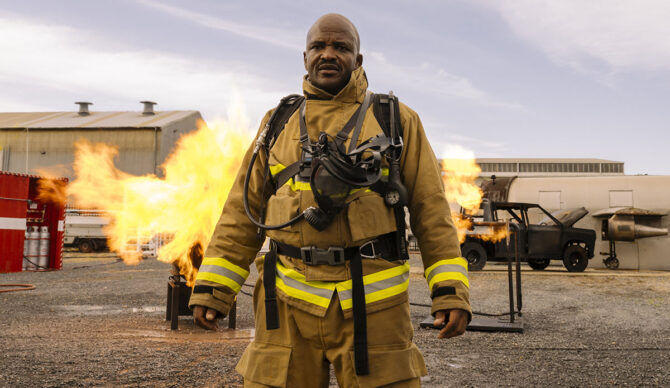
Not a bad look at all. Photo: TI
The last time we connected, the conversation was centered around racism, localism, surfing, and the nuance behind it. That was four years ago. Have you seen any changes or improvements since then?
I think it’s gotten better and it’s gotten worse. I think there are far more people from marginalized and diverse perspectives proudly showing up and taking up space. There are places for people to feel like they can see themselves. In reflection, that didn’t really exist before. I think that those things were born and lasting out of the place that we were in four years ago. I look at Ebony Beach Club and what Brick has built these last few years. I look at the fact that Mikey February is perhaps the most aspirational surfer on the planet. For people who don’t know anything about surfing, he’s the person they would want to be, or they think of when it comes to surfing. I look at the leaps and bounds that the women have made, not just in pay structure, but in the opportunity to be able to perform at the highest level. There’s a lot of progress. I think the old guard who still think they’re the ones who give permission for people to be able to show up in these spaces, they’ve dug their heels in a little bit harder. There’s a symbiosis with what we find ourselves in culturally, from a political standpoint. There’s more ignorance and people who just refuse to move forward. But I think that we have at the same time made progress. The pendulum swings both ways. So I’m cautiously hopeful.
I look at the brand landscape, and I see the handful of brands that decided to build this new idea of what community looks like into their culture. You naturally see more diverse takes on what it looks like and I don’t think it’s people being opportunistic. It’s just like, this is what it looks like now; these are the people who were taking part in it before and we’re going to showcase them because it makes sense for us so we can make money. And I never thought that brands would do it for “the right reasons.” There was a lot of knee jerk reaction in 2020 and ’21 and you saw all these brands suddenly want to look like they were adjacent to either the Black and Brown or LGBTQ+ community. A lot of them did it wrong, and a lot of them fucked up – fucked around and found out to the point where they put their tail between their legs and ran back in the other direction. There were the brands who I think were more patient, learned, found ambassadors that made sense, figured out how this could be good for their brand growth, and they’re thriving accordingly. So it also feels like fucking 50 years ago.
I can relate in that I have such a love-hate relationship with surf culture. It produces some of the coolest people I know, and also, some of the worst, all under the same umbrella.
I love surfing and I hate surfers. I felt that way for a long time, and I say that because I feel sorry for the people for whom surfing is so the entirety of their identity that they’re willing to fight others who would also like a slice of that. If it’s not your entire identity, then you can’t be. It’s ludicrous. But that’s still a part of that old mindset, that if you don’t do it the way I do it, and you’re not from here, then how the fuck could you possibly be like me? I love surfing. It’s a massive part of my life. But if I didn’t get to go do other things and then come back to it, I don’t think I’d appreciate it and love it as much as I do. I love seeing the beginners and the kooks that I was guilty of making fun of when I was younger. I appreciate the bravery it takes to try and enter this really weird world and subculture with a language that you’ve never heard before, in these nonexistent, unspoken rules that, because you didn’t know, you could get punched in the face for it, all while the ocean is actively trying to kill you. There’s a lot of easier ways to live life, but you stand up and you ride a wave for three seconds, and you’re kind of fucked, because now you want to chase that feeling that you can’t get any place else for the rest of your life. And why would you think that you suddenly have to go through some sort of purity test to do the thing that has brought you so much joy?
Let’s switch gears. You’ve been a big proponent of surfing in the Olympics, how it can spread the sport to new corners of the globe, particularly Africa. How have you seen that evolve and are there any examples you can point to?
I look at Senegal especially and what Cherif Fall has been able to do. He’s a classic example of what we were talking about earlier, and Billabong realizing there’s this absolute freak of a talent from Dakar who is a human specimen. You can’t watch Cherif and not be like, “Holy shit.” And then you get to Dakar, and there are hundreds of Cherifs, young men and women. This is a hotbed, and the waves are really good. And how they express themselves in the culture is cool. It’s different. It’s been awesome to see the way Billabong has really leaned in with him, but also using Senegal as a region to market the brand. That’s incredible to see Africa now on the map influencing. There’s a movie that just came out about Liberia, that left-hand point break. These kids can’t have waves like this and not be on the come up and make a difference. Seeing the way African culture is helping to be a part of the conversation of overall global surf culture, that’s a beautiful thing. It’ll be really cool to see a Senegalese surf team representing the continent in the Olympics. Maybe that’s 2028 but it’s going to happen. If I get to live an entire life without incident, I think I’ll see it in my lifetime.
Will you be involved in the LA28 Olympics in any capacity?
I’m angling and campaigning, as people like myself are. It’s too soon to tell. The politics of the Olympics and Olympic broadcasting is a whole ‘nother world. But even if I’m not a part of the greater NBC broadcast, I have some things I’m working on from a storytelling standpoint. It’s going to be a really unique time for Southern California and sports culture as a whole – surfing, skateboarding, BMX, these things that were born here, steeped deep in counterculture, will now come full circle and give a slice of it on the biggest competitive stage in the world. There’s no way I would have thought as a kid that that would be a thing and to experience it. Being a Southern Californian for the last 35 years, who would have thought?
At this point in your career, you’ve pretty much ticked all the boxes in the action sports world. How do you stay hungry? Is there an end goal you’re chasing?
There’s definitely not. I never thought it would last this long. There’s no world in which I ever thought it would last more than a few years. If I look at it from just the broadcasting standpoint, I never thought it would take me past the mid 2000s, yet here I am. In the action sports industry, I knew that I would be a square peg in a round hole if I tried the corporate dance. I tried the corporate dance, and it didn’t work. And I tried various odd jobs where I felt like a weirdo and a loser, because I loved (and still love) surfing and snowboarding more than I did going to work. People thought that was weird. I feel like I’ve beat it to death, but getting a job answering the phones at Transworld changed my life in 1993. I never thought that would last longer than it did. So now I’m pretty content. I’m not chasing anything. I just have stories that I want to tell and platforms that I like to build for others to have the opportunity to do the same. At this point, if I can hold the door open for others and identify talent, people who have something else to give, if I can use a little bit of what I’ve built to help enable them realize their dreams, that’s the achievement that I’m in right now.

