
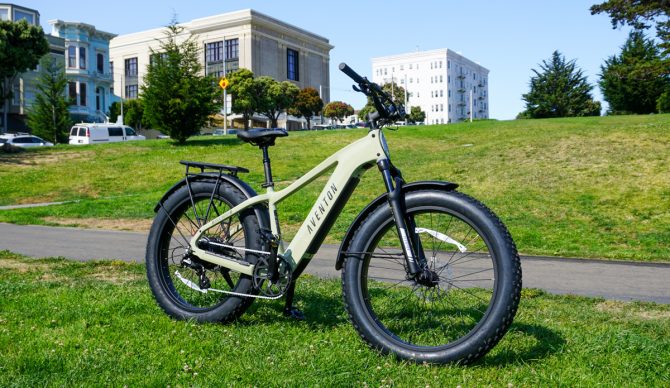
The Aventure 3 is certainly a looker, but it’s what’s under the hood that makes it stand out. Photo: Will Sileo//The Inertia

The Aventon Aventure series of ebikes has been a longstanding favorite of ours, and the entire industry when it comes to fat tire electric bicycles. Powerful, intuitive, user-friendly, well-made, innovative… the list goes on. In short, there are a lot of reasons why this bike has been at the top of most fat tire electric bikes lists for years.
Launched this spring, the Aventon Aventure 3 ($1,999) is the latest iteration of these well-loved bicycles. With four-inch fat tires, this is a “true” fat tire ebike, capable of soft conditions like sand or snow, and the powerful internals prove to be well up to just about any task you can throw its way. In 2025, we have seen some new and exciting features rolling out across the industry, and Aventon is no exception. The Aventure 3 has some cutting-edge new features that place this bike a step above most other ebikes when it comes to safety, security, and customizability.
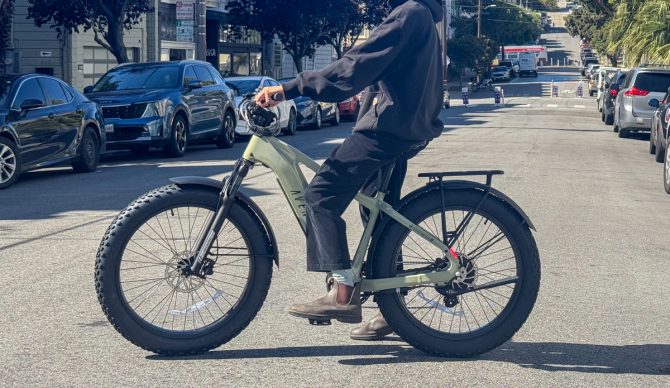
We tested this ebike in San Francisco and the surrounding Bay Area. Photo: Will Sileo//The Inertia
And with over-the-air updates, this list of new capabilities has only grown in the past few months since its release. Smart security features provide peace of mind when leaving the bike unattended, with tracking, geofencing, and even rear-wheel lockout. Customization options let you choose between torque and cadence-sensing, or adjust the power curves of each pedal assist level in the Aventon app.
Bottom Line: The Aventon Aventure 3 features the same points that made prior generations of the bike so well-loved to begin with, while significantly upgrading the overall experience, and maintaining the same price tag. In 2024, the title of “Best All-Around Fat Tire Ebike” was a bit of a toss-up between the Aventon Aventure.2 and the Rad Power Bikes Radster Trail. For 2025, the Aventure 3 has decisively retaken the throne.
Check Price on AventonRelated: Best Fat Tire Electric Bikes | Best Electric Bikes | More Ebike Reviews
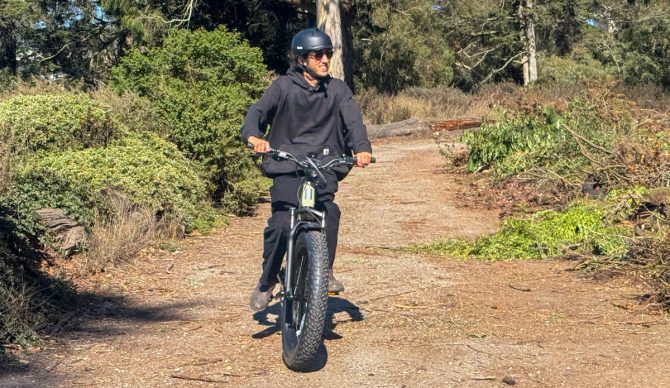
Fat tires make for a smooth ride on any terrain. Photo: Will Sileo//The Inertia
Testing the Aventon Aventure 3 in the Bay Area
The Aventure 3 is a hefty ebike, and the box it comes in does nothing to hide that fact. If you’ve got some stairs to bring it into your house, you may want to enlist the help of a friend. Assembly, on the other hand, is quite straightforward, and out of all the ebike brands I’ve tested, Aventon does the best job of providing all the tools and instructions you need to make the process as easy as possible.
The bike comes in both step-over and step-through frame designs, each configuration sporting a “regular” and “large” frame size, with helpful charts to choose the right size and frame style bike for yourself. We tested the “regular” size step-over design and were pleased with our choices.
Aventon Aventure 3 ($1,999)
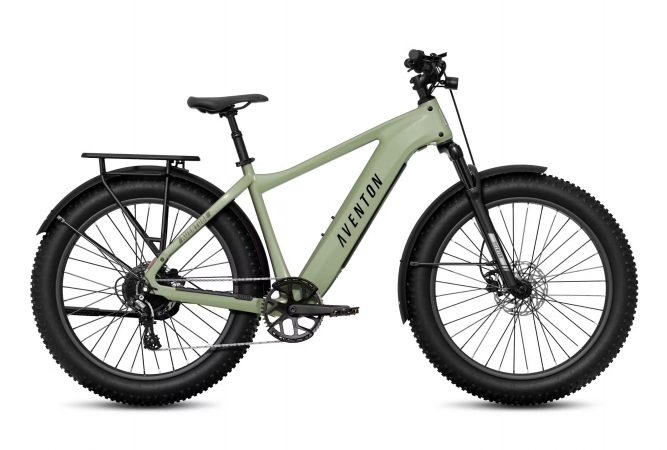
Payload: 400 lbs
Range: 65 miles
Top Speed: 28 mph
Tire Size: 4″
Weight: 77 lbs
Water Resistance: IPX6
Pros: Defining bike in the fat tire electric bike category, truly fat 4-inch tires, two frame sizes, step-over and step-through options, high-tech features
Cons: Heavy, the more advanced tracking and security features require a paid subscription ($20/year) after the first year
Turning signals are not a new feature, but they’re nice to have for urban riding. Photo: Will Sileo//The Inertia
Notable Features
Frame Design and Build Quality
The Aventure 3 sports a redesigned frame compared to the Aventure.2, but it’s mostly just looks. Ebikes overall are trending away from “traditional” bicycle looks, with batteries integrated into the downtube, matte finishes, and integrated lighting and accessories like rear racks. All together, it speaks to how ebikes are, more and more, starting to look and feel like the cars that they are replacing out on the roads. The Aventure 3 is no exception to the trend, with cleaner lines, fewer welds, and the aforementioned matte finishes and “car-like” colorways.
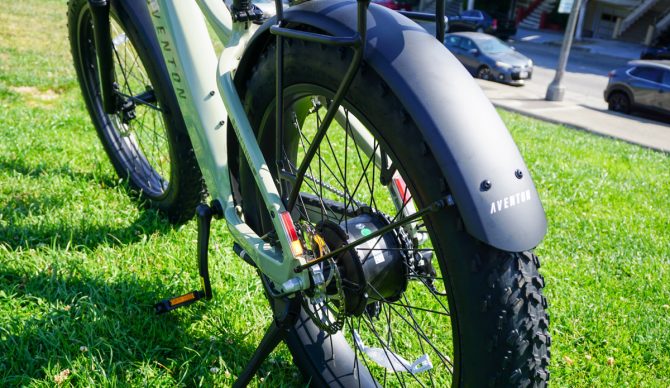
As far as build quality goes, we’ve always been very impressed with what Aventon has to offer. And the Aventure 3 is no exception. I have yet to spend the necessary time on the bike to provide notes on long-term durability, but so far, everything feels as it should, with no premature looseness of components or any issues at all, really, to speak of. Another quick point of difference here is the upgraded water-resistance rating of the bike, which is now rated to IPX6 compared to the Aventure.2’s rating of IPX4.
Metal fenders help deflect water and debris while you ride. Photo: Will Sileo//The Inertia
Power and Range
The Aventure 3 comes loaded with power and range, though there are some slight differences to its predecessor, the Aventure.2. The Aventure 3 sports a 36 Volt, 20 Amp-hour battery, compared to the Aventure.2’s 48 V, 15 Ah battery. This gives the Aventure 3 a slightly higher Watt-hour value (733 Wh compared to 720) for a small increase in range, at the expense of a small decrease in off-the-line acceleration and overall raw power output.
These changes are minor, and in our testing, the difference between the two bikes was hardly noticeable. What stands out is how the Aventure 3’s software updates polish the overall ride, making it feel more dialed in. The Aventure.2 was already strong in this regard, but the Aventure 3 ups the ante with customizable pedal assist and other refinements.
Overall, the Aventure 3’s power and range are top-of-the-line when it comes to fat tire ebikes. While not groundbreaking or necessarily a step above comparable fat-tire ebikes, they’re more than enough to go the distance, and then some.
The Aventure 3’s security features serve it well for urban riding. Photo: Will Sileo//The Inertia
Aventon ACU Security Features
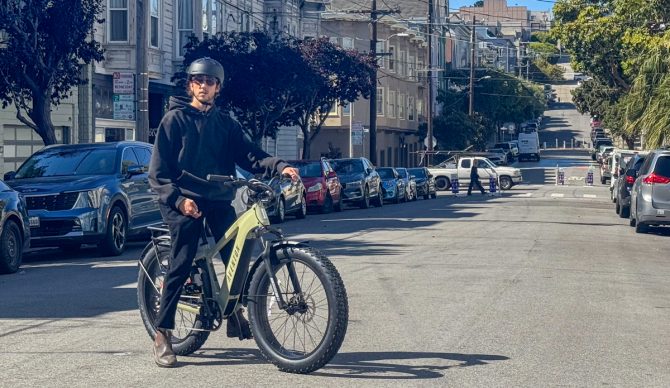
Security features are where the Aventure 3 really stands out. Aventon has integrated its ACU (Aventon Control Unit) into the Aventure 3, which we first saw on the Aventon Abound cargo bike in late 2024. The ACU provides the bike with a 4G connection, enabling all sorts of smart security features. The 4G connection is free for the first year after registering the bike, after which it requires a subscription of $20/year to keep active.
As far as these smart security features go, there’s a lot to speak to. The 4G connection enables precise bike tracking anywhere with a cell signal, and can be configured to provide alerts, as well as an alarm, if the bike is moved unexpectedly.
Close-up of the rear-wheel locking disc. Photo: Will Sileo//The Inertia
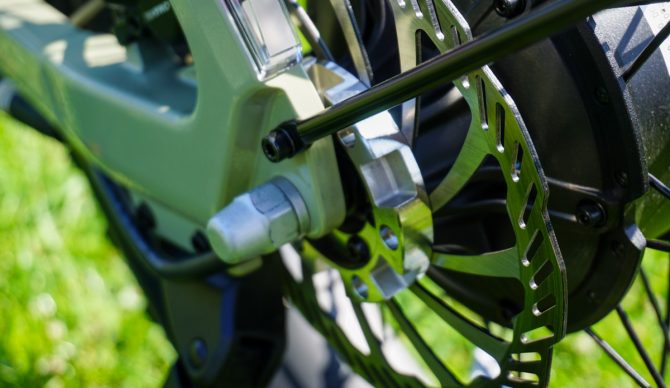
A highlight security feature is the rear-wheel lockout. When activated, the rear wheel locks in place and cannot be rotated until the lock is deactivated, making it possible to “lock” the bike without actually locking it to something. A thief could still pick up the bike and carry it off (assuming they can lift the 77-pound ebike), but they won’t be able to ride away on it.
In 2025, we’ve seen a number of new bikes released with similar tracking features, but most of these bikes use Apple’s Find My technology. This means those bikes do not require a 4G connection, but they do require the use of an Apple device (iPhone, iPad, or Mac computer) for tracking/locating, have more limited security features, and the bike is only findable if there are Apple devices in range for the bike to “speak” to.
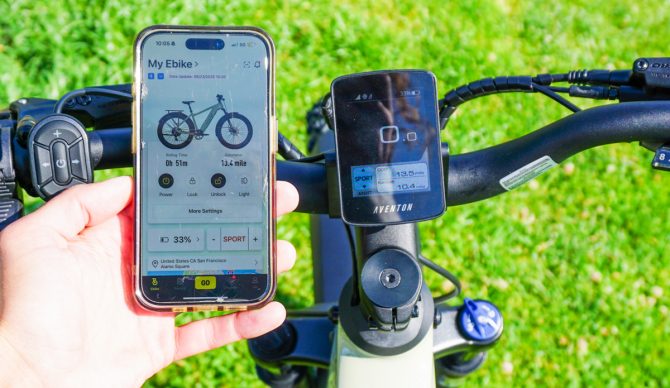
The Aventon app is well-designed, easy to use, and lets you customize the bike to better suit your needs. Photo: Will Sileo//The Inertia
Other Smart Features
Aventon’s ACU unit does a whole lot more than just provide security.
Thanks to over-the-air updates, this list of features has expanded a lot in the past few months. In writing this article and going back over the product page, I noticed the inclusion of Sensor Switch technology, which I had been previously unaware of. Other new features that just landed include Cruise Control, Boost Mode to access up to 120% of baseline power and torque for 30 seconds at a time, and Hold Mode to keep the bike from rolling backwards if you find yourself walking it up a hill. I’m a huge fan of sensor-swapping technology, and have also found the Cruise Control and Boost Mode to be surprisingly useful. I can only imagine more fun features are on the way, so be sure to keep an eye out for updates via Aventon’s social channels and website.
Other features worth noting include turn signals and a suspension seatpost.
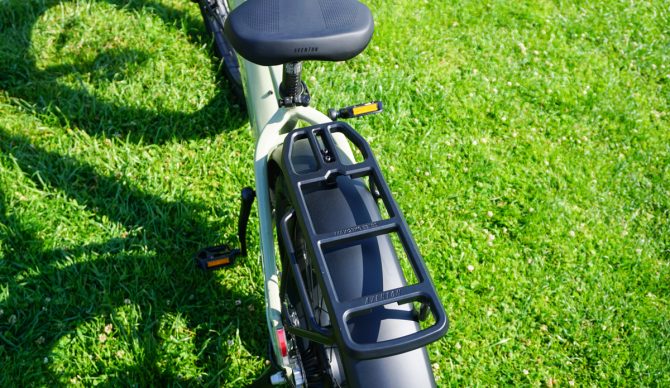
The Aventure 3 comes standard with a rear rack installed, but as it’s not welded to the frame, it doesn’t have the weight capacity to support a second rider. Photo: Will Sileo//The Inertia
Drawbacks
Not so much a drawback as it is a missed opportunity, I would have loved to see an integrated rear rack on the back of the Aventure. An integrated rear rack, like the one on the Ride1Up Vorsa, is welded to the frame and is capable of carrying much heavier loads, usually up to about 150 lbs, plenty enough to take a smaller-sized adult as a passenger. In my book, an integrated rear rack vastly improves the versatility of an electric bike, and there’s no doubt that the Aventure 3 has the internals to support such a feature with its 400 lb payload capacity. In my mind, this feature would make the Aventure 3 the perfect fat tire ebike.
The bike’s overall weight and heft are also worth noting here. Weighing 77 lbs, this is not the bike you want to be carrying up a flight of steps to get into your apartment, and smaller riders may find the bike a bit of a handful to maneuver through tight spaces, such as a garage or storage space. This is less a knock on the Aventure 3 itself and more a reality of fat-tire ebikes in general.
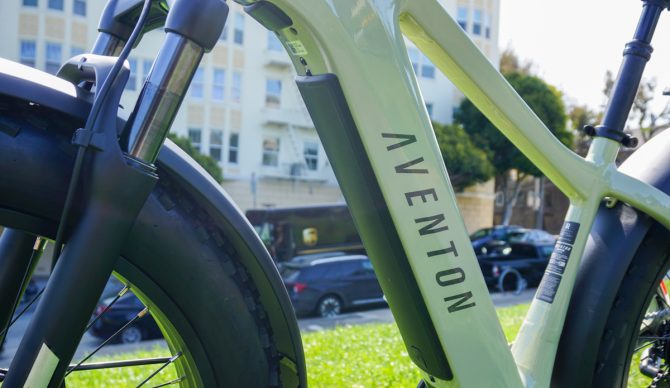
A keyless battery system provides convenience, but may be a security risk if you don’t set a display password. Photo: Will Sileo//The Inertia
Another slight downside is, as mentioned previously, any features that require a 4G signal (bike tracking, geofencing, remote lockout, etc.) are free for the first year, but afterwards, will require a subscription to keep using. Fortunately, that subscription is only $20/year, which, when you’re investing $2,000 in a bike, isn’t too steep; and to us, the peace of mind it provides against theft is well worth such a small fee.
A final, fairly minor ding is the keyless battery lock. One of the first ebikes we’ve seen to completely do away with the classic key to lock/unlock the battery, the Aventure 3’s battery can be released through the app, or via the controls on the bike’s display. You can choose to have the bike display require a password before it can be used, but otherwise, there is the slight chance that someone who knows what they are doing could make off with your battery when the bike is left unattended. That said, they’d need to be intimately familiar with Aventon’s bike controls to do so. Worth noting, and as a result, we highly recommend setting a display lock if you live in an urban/high-crime area.
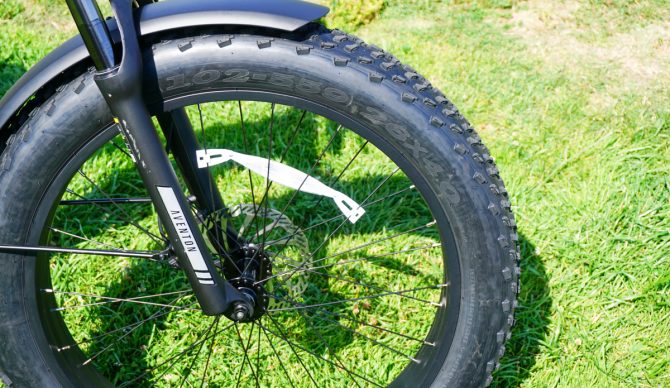
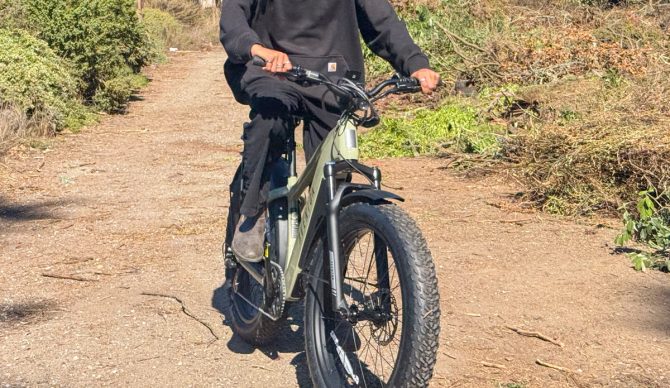
Beefy 4-inch fat tires let the Aventure 3 go places most ebikes can’t. Photo: Will Sileo//The Inertia
The Competition
Fat tire ebikes have become a crowded category lately as manufacturers have realized the incredible versatility that these all-terrain ebikes provide. Some standouts in the category include the Ride1Up Vorsa (technically not a fat tire bike), the Rad Power Bikes Radster Trail, and the Lectric XPeak 2.0.
Despite not being a “true” fat tire ebike, the Ride1Up Vorsa and Aventure 3 actually have a lot in common. Both feature sensor-swapping technology (which Aventon brands as “Sensor Switch”) and bike tracking. However, the Vorsa uses Apple FindMy technology, allowing it to be tracked without a subscription, but relying on other devices around it to display its location. The Vorsa sports 2.6-inch tires compared to the Aventure’s 4-inch tires, and has more of a commuter-bike feel to it with narrower handlebars and less of a burly feel to it overall.
In comparison to the Rad Power Bikes Radster Trail, again, the Aventure has bigger tires, with the Radster sporting 3-inch tires for a nice hybrid feel that is highly capable off-road, but a bit more efficient and direct when riding on pavement. The Radster Trail is a year or so old at this point, and so it doesn’t come with the more recent advanced features of the Aventure 3, such as Sensor Switch, bike tracking, etc. However, it does have some basic anti-theft features by way of an RFID card that acts as the bike’s “key” to activate the display and electrical components.
The Lectric XPeak 2.0 is very similar to the Aventure 3. Both sport 4-inch tires, a torque sensor, a beefy frame, similar power and range, and solid build quality. The Aventure 3 costs $500 more, and with that, you get all of the advanced security and ride-tuning features mentioned above. If those features don’t matter to you, and cost does, the Lectric XPeak 2.0 is definitely worth considering.
Another ebike worth considering here is the Aventon Aventure M. Newly released this summer, I have yet to have the opportunity to test the bike myself, but I can speak to the major differences here. The “M” in the name stands for “Mid-drive,” making the Aventure M Aventon’s second mid-drive ebike after the Ramblas eMTB. The mid-drive motor provides a more natural pedaling feel, better hill-climbing, and better efficiency over the classic rear-hub motor design, but it comes at a cost, to the tune of $2,899. It’s certainly not cheap, but high-quality components, electric and automatic shifting, and all of the advanced features listed above (as well as the added cost of a mid-drive motor) help explain the jump in price.
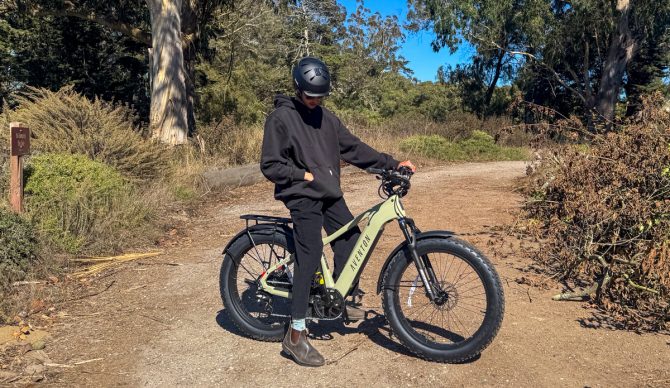
Overall, awarding the Aventure 3 the Best Fat Tire Ebike of 2025 was a pretty easy decision. Photo: Will Sileo//The Inertia
Final Thoughts
If you’re looking for the best fat tire electric bike on the market in 2025, you’ve found it. From the advanced security features to the impressive range and power, good looks, great build quality, and comfortable ride, Aventon has really nailed it when it comes to the Aventure 3. The high-tech features are worth special mention here, as they are relatively new, and some are even unique to the Aventure 3, giving the bike a few extra points in my book for being innovative and pushing the industry forward. It may not be cheap, but it’s certainly not what I’d consider an “expensive” ebike, and the bang-for-buck value you get in return rivals ebikes that cost nearly twice as much.
Check Price on AventonRelated: Best Fat Tire Electric Bikes | Best Electric Bikes | More Ebike Reviews
Editor’s Note: For more gear reviews and features on The Inertia, click here.

