

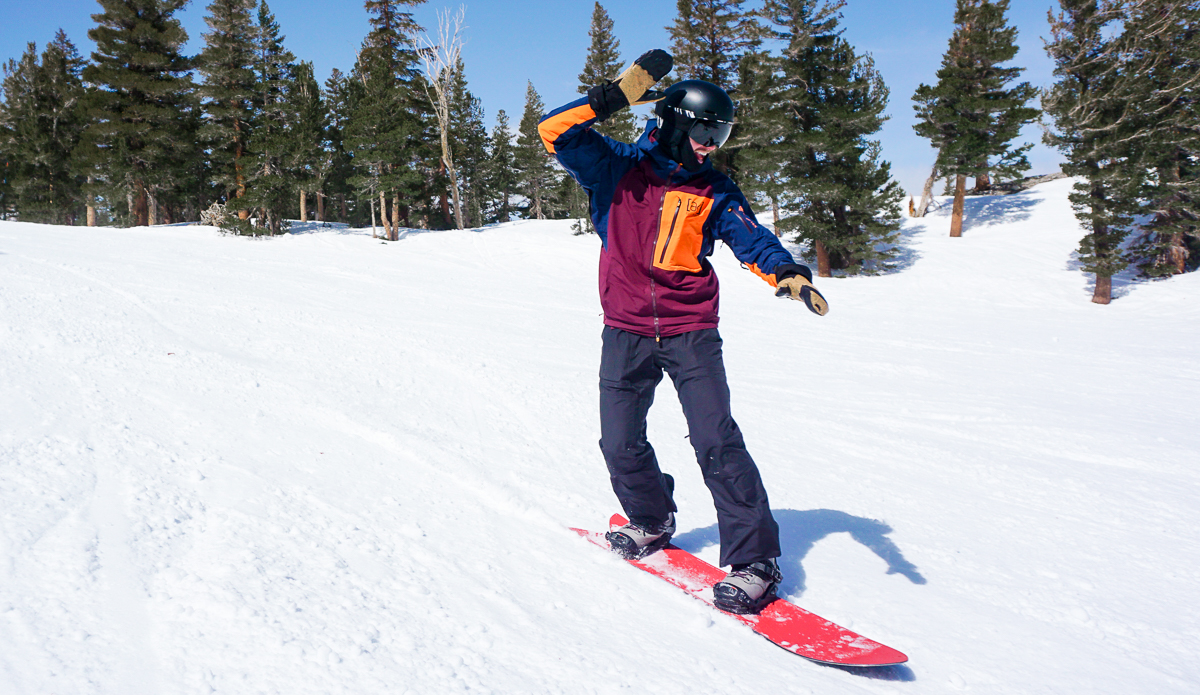
All smiles for The Inertia’s 2025-26 snowboard test! Photo: Will Sileo//The Inertia

Time for a new snowboard? You’ve come to the right place. There isn’t much The Inertia’s gear team gets more stoked about than our annual snowboard test, and this year was a doozy. Our official board test this year took place at Mammoth Mountain, where we tested dozens of decks from top brands such as Nidecker, Burton, Jones, Ride, and more. All of that hard (and admittedly fun) work culminated in this comprehensive guide to the best snowboards of 2026.
This year, we were fortunate to test everything in a wide range of conditions, and our on-mountain time informed our surveys, notes, impressions, and ultimate decisions. It wasn’t easy whittling down this final list, but we are confident that we’ve selected a top-pick snowboard for every type of rider, from beginners to experienced chargers. If you don’t find the perfect board in our top eight, check out our numerous runner-ups and honorable mentions below, too.
Editor’s Note: We just updated this guide with our latest comprehensive snowboard test. This is a complete overhaul, and our new picks represent the best of the best going into the 2026 season.
Navigate To: Comparison Table | How We Tested | Buyer’s Guide
Related: Best Women’s Snowboards | Best Snowboard Bindings | More Snowboard Gear
The Best Snowboards of 2026
Best Overall Snowboard: Nidecker Alpha APX
Runner-Up Best Snowboard: GNU Banked Country
Best All-Mountain Snowboard: Ride Deep Fake
Best Freeride Snowboard: CAPiTA Kazu Kokubo Pro
Best Jib Board: Bataleon Disaster+
Best Beginner Snowboard: Burton Process Flying V
Best All-Mountain Freestyle: K2 Antidote
Best Powder Board: Season Forma
Jump To More Snowboards We Recommend
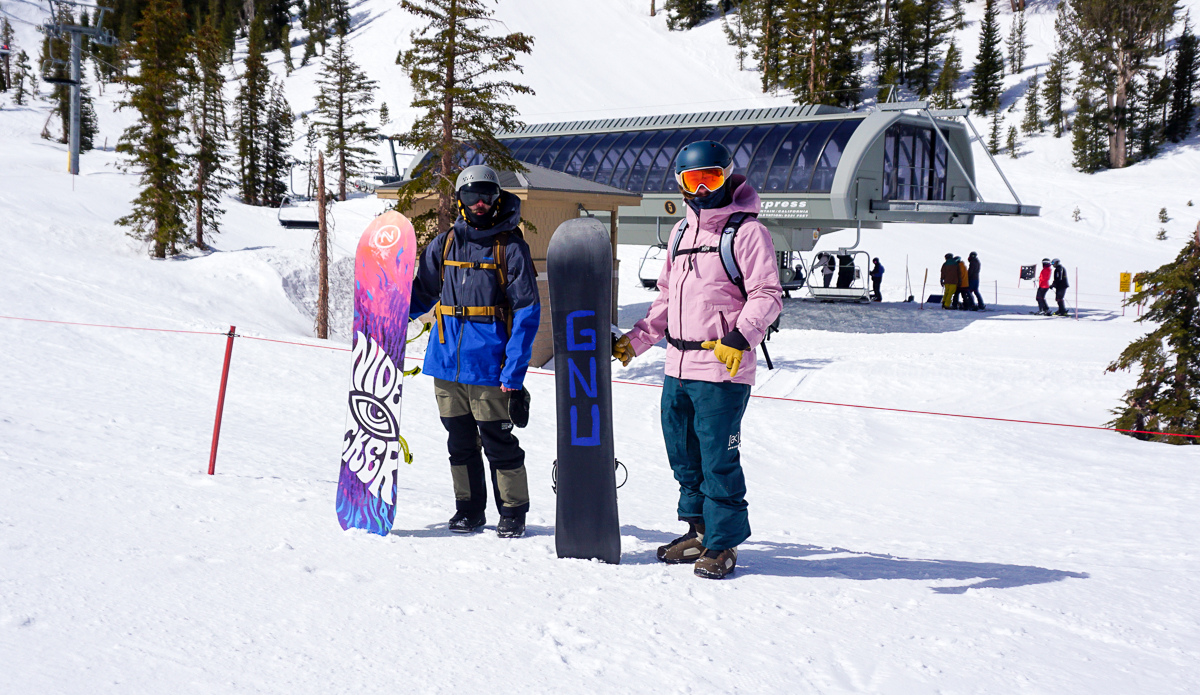
Our two top picks, the Nidecker Alpha APX and Gnu Banked Country, wowed the whole team. Photo: Will Sileo//The Inertia
Best Overall Snowboard
Nidecker Alpha APX ($620)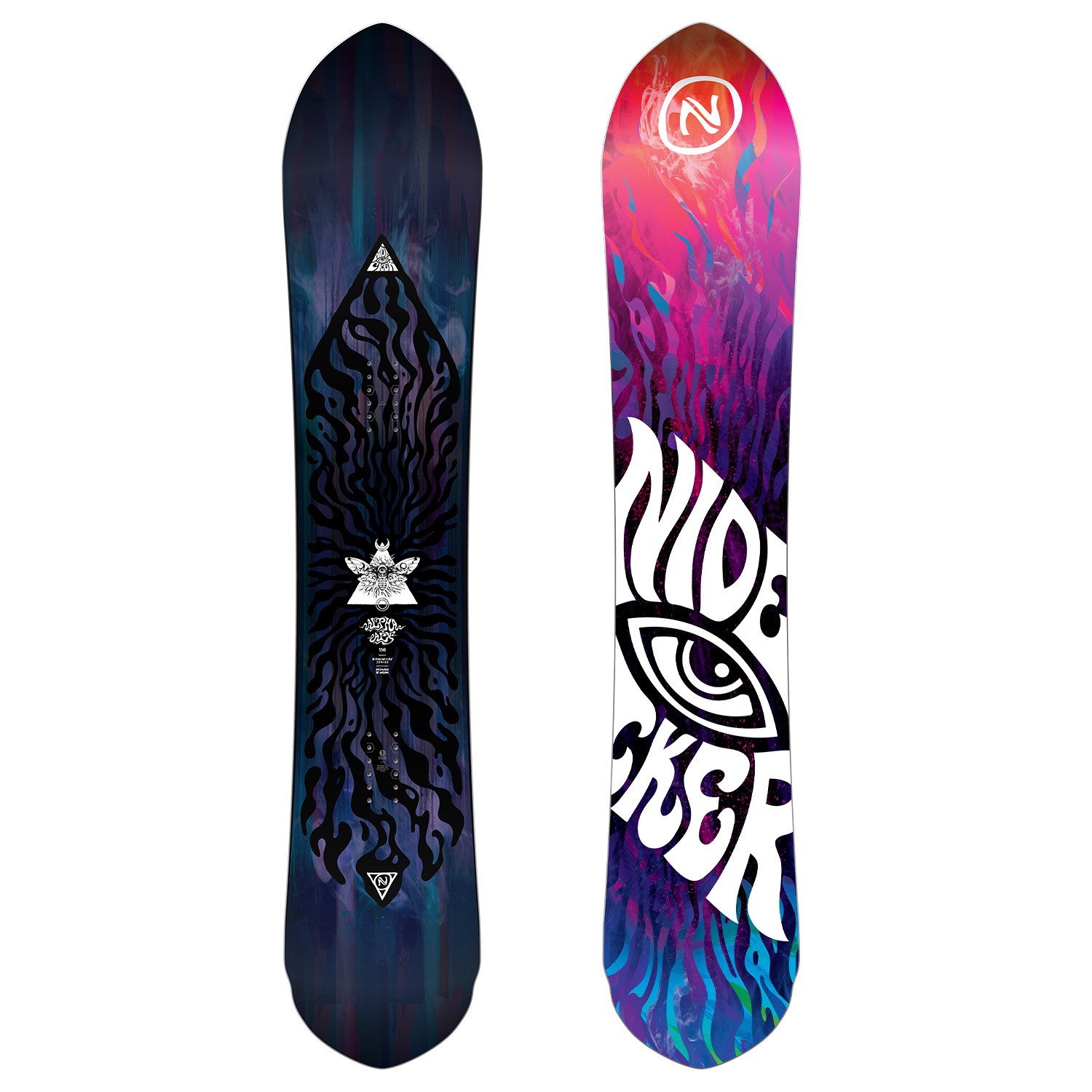
Sizing: 153, 158, 162W
Riding Style: All-Mountain Freeride
Profile: Rocker/Camber (surfy)
Shape: Directional
Flex: 6/10
Pros: Pure fun, surfy but aggressive, versatile, really good value
Cons: Limited sizing, a touch soft for the toughest lines
Best For Riders Who: Love a surfy freeride board that can charge hard all around the mountain but doesn’t always demand your A-game.
In one of the most closely contested gear tests we’ve had, the Nidecker Alpha APX takes our top spot for our favorite snowboard this year. The playful, surfy vibe of the Alpha APX won our team over, but its chops on icy and uneven terrain sealed the deal. Our only qualm is the limited sizing, but other than that, this is a board for every rider—even a newer snowboarder committed to growth can ride this deck with joy and confidence.
It’s not surprising that a surfy snowboard won over a team that tests surf and snow gear, but what makes the Nidecker Alpha APX stand out is its true versatility. Our team rode this board on the heaviest mashed potato snow day imaginable, and we looped turns, jibbed, took on sidehits, and messed around all day. Then we rode it on an icy morning on Mammoth’s upper mountain with precision carves and stable speed. Finally, we tested this on a blowing powder day, and the setback directional shape with a perfectly spooned nose felt downright surfy.
Scared off by the more premium-level APX version of the Alpha? Don’t be—while the list of technology in this board is lengthy, the on-mountain functionality is real. While it has carbon stringers and a power rails (great for laying carves) for added control and stability, this board is actually a bit flexier than other all-mountain decks in the test (we felt it rides somewhere in the 6 or 6.5 out of 10 flex range). That added pop just adds playfulness and makes it a touch more approachable than our runner-up pick, the GNU Banked Country. While there’s no such thing as a board for every rider and every condition, the Nidecker Alpha APX is our favorite snowboard this season.
Read our full review of the Nidecker Alpha APX.
Check Price on Evo Check Price on Nidecker
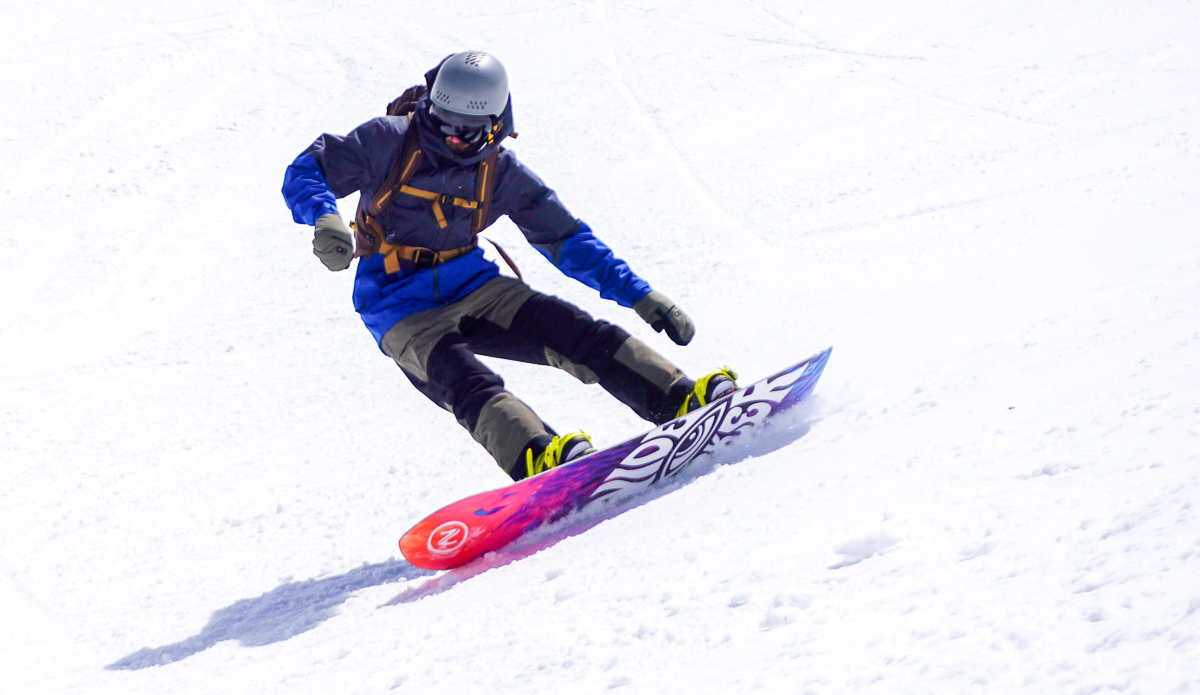
Surfy and playful yet ready to charge, the Nidecker Alpha APX was undeniably fun. Photo: Will Sileo//The Inertia
Runner-Up Best Snowboard
GNU Banked Country ($630)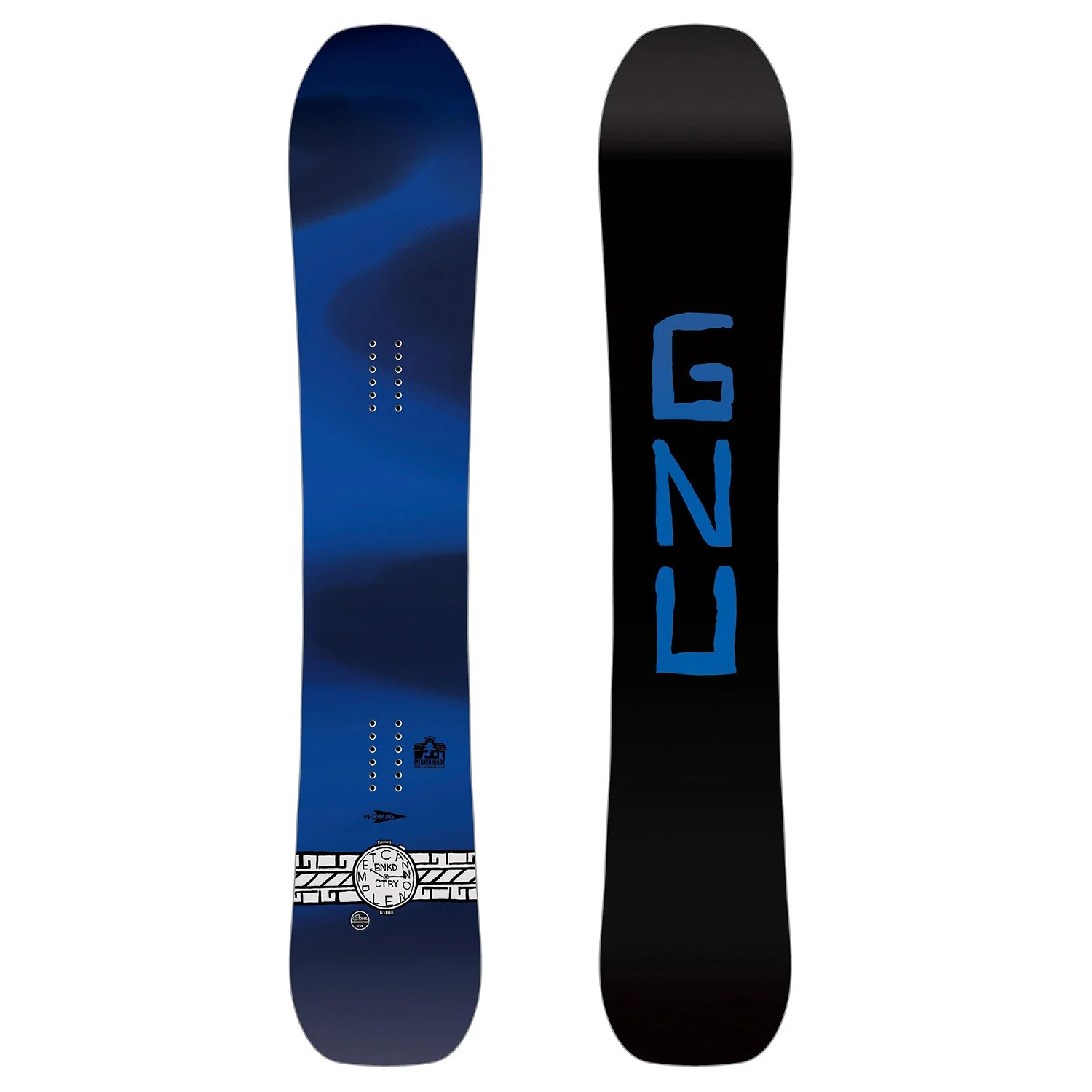
Sizing: 155, 159, 160W, 162, 163W
Riding Style: All-Mountain Freeride, Powder
Profile: C3 Camber (slight Rocker between feet)
Shape: Directional
Flex: 7 or 8/10
Pros: Versatile and capable in all conditions, excellent edge-hold and stability
Cons: A bit aggressive for intermediate riders
Best For Riders Who: Want a premium, one-and-done resort deck that handles powder, side hits, groomers, and everything in between.
The GNU Banked Country is the experienced resort rider’s dream stick. The board feels familiar and simple, but it is loaded with tech like the C3 Camber and Magne-Traction edge, which combine for near-unmatched performance. Our most aggressive riders could rip this through icy corduroy with confidence, but it also held its own in soft powder. While the Banked Country feels slightly more approachable than in years past, make no mistake: This is a stiff, stable board. Sure, that sacrifices a bit of playful poppiness, but this board is so fun to tackle steep terrain at speed with.
During our Mammoth Mountain board test, one of the mornings was particularly cold and icy, with a bit of whipping wind that laid the runs bare. Typically, these aren’t our favorite conditions to ride, but they make an ideal challenge for comparing different boards’ edge hold and stability. The Banked Country really showed its stuff in these less-than-ideal conditions. The very stiff profile was confidence-inspiring but never too difficult to turn over or dull. After the morning corduroy gets chopped up a bit, the Banked Country absorbs bumps and chunks better than most. If you are a hard-charger who spends most of their time at the resort, this is our top recommendation.
Read our full review of the GNU Banked Country here.
Check Price on REI Check Price on Backcountry
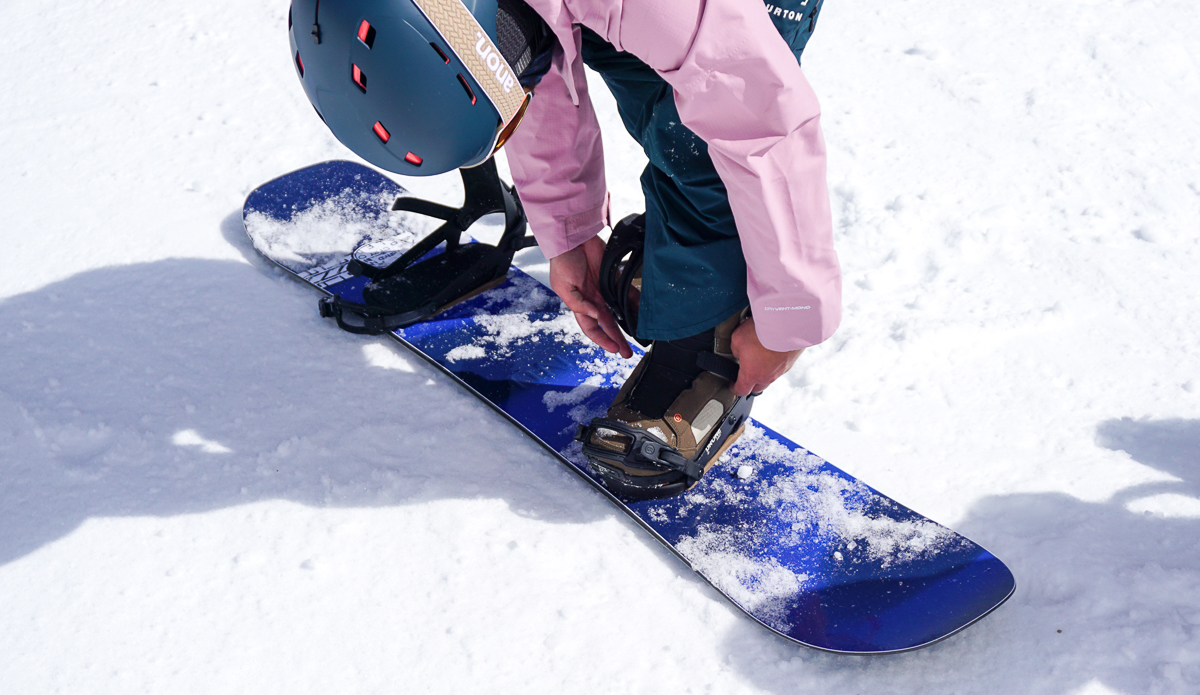
Strapping in for an icy ride? No sweat with the GNU Banked Country. Photo: Will Sileo//The Inertia
Best All-Mountain Snowboard
Ride Deep Fake ($760)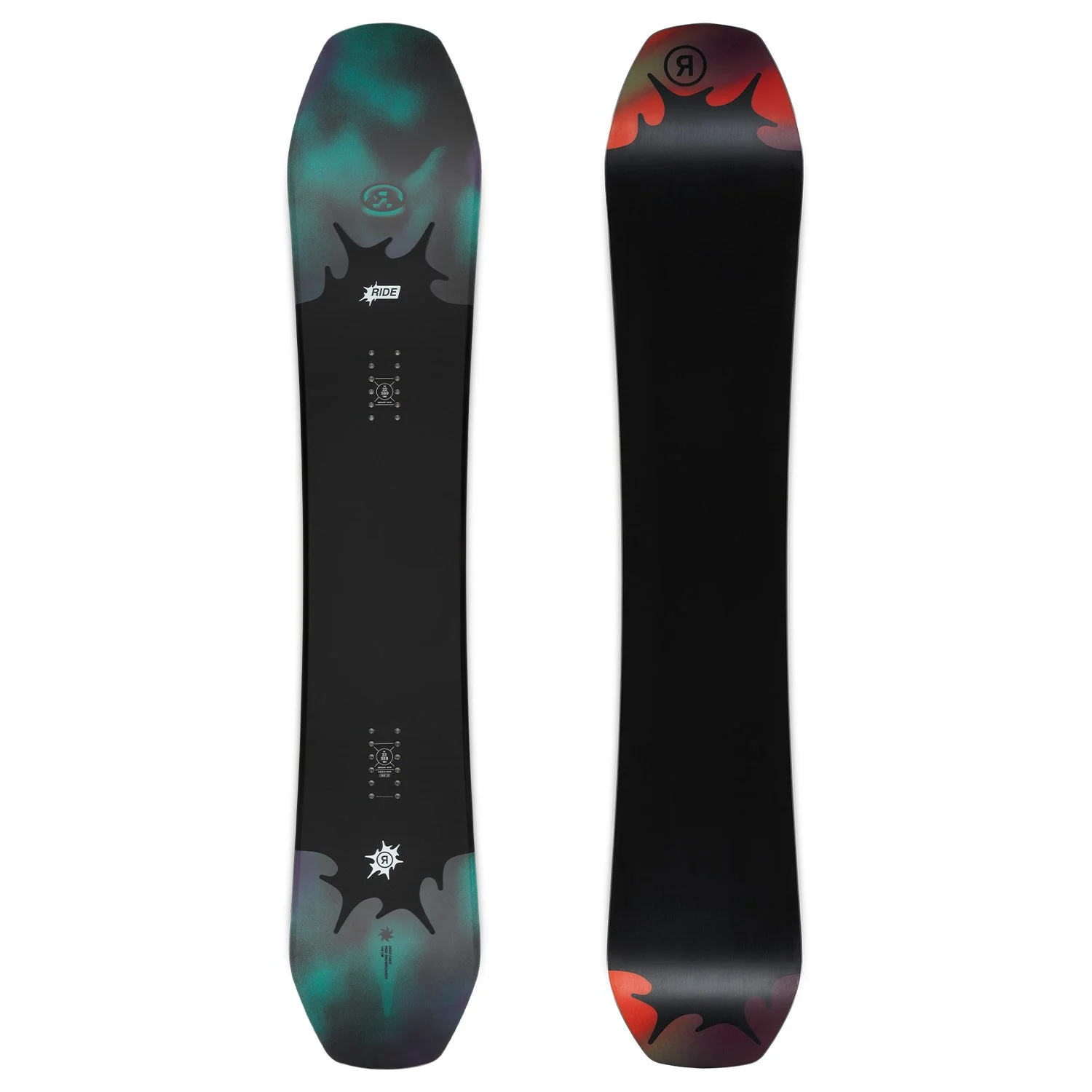
Sizing: 144, 148, 151, 155, 157, 157W, 159, 161W, 162, 165W
Riding Style: Freeride, All-Mountain
Profile: Directional Extra Camber (Rocker in nose)
Shape: Directional
Flex: 8/10
Pros: Rides fast and free, tons of edge hold yet very maneuverable
Cons: Too much for newer riders, pricey
Best For Riders Who: Charge hard and want all of the added tech and performance in a familiar package.
The whole testing team absolutely loved both the Ride Deep Fake and Ride Moderator, full stop. The fun in testing them side by side was deciding which we’d, in general, recommend to most riders. And of all the difficult decisions we made in this test, this might have been the hardest, but ultimately, we think the Ride Deep Fake is the best all-mountain snowboard this year because of its true ability to tackle any challenge in your path. Make no mistake, the Moderator is also an incredible board, and indeed, it is more approachable if you’re a newer rider or don’t typically ride on steep, difficult terrain. But the Deep Fake feels a touch more stable, and a touch more secure initiating and coming out of turns at speed.
Typically, an all-mountain snowboard is going to sacrifice something, or even a few things, to be approachable for everyone. But the Ride Deep Fake feels poised on pretty much any terrain. Sure, its slight setback and stiffer construction might prevent you from going full park mode, but that’s one sacrifice most all-mountain riders have to make. Everything else is easy money for this deck—powder, steep icy lines, and banked slalom all become fun challenges to take on.
To reiterate, if you want a bit more playful pop, opt for the Moderator below (more of a 5 or 6 on the flex scale), which has the same shape and general ethos, but without the added structure and stability of the Deep Fake. If you want a true all-mountain beast that will grow with your skills, the Deep Fake is so good.
Check Price on Backcountry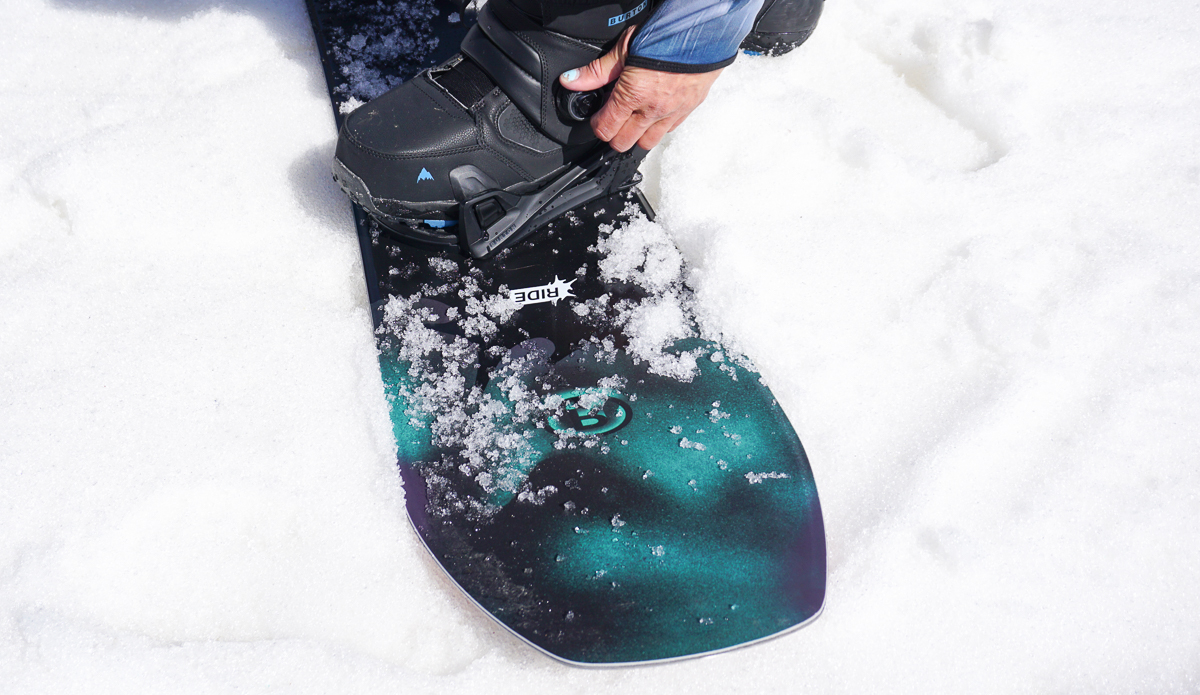
The Ride Deep Fake is a hard-charging all-mountain beast. Photo: Nathan Lemin//The Inertia
Best Freeride Snowboard
CAPiTA Kazu Kokubo Pro ($700)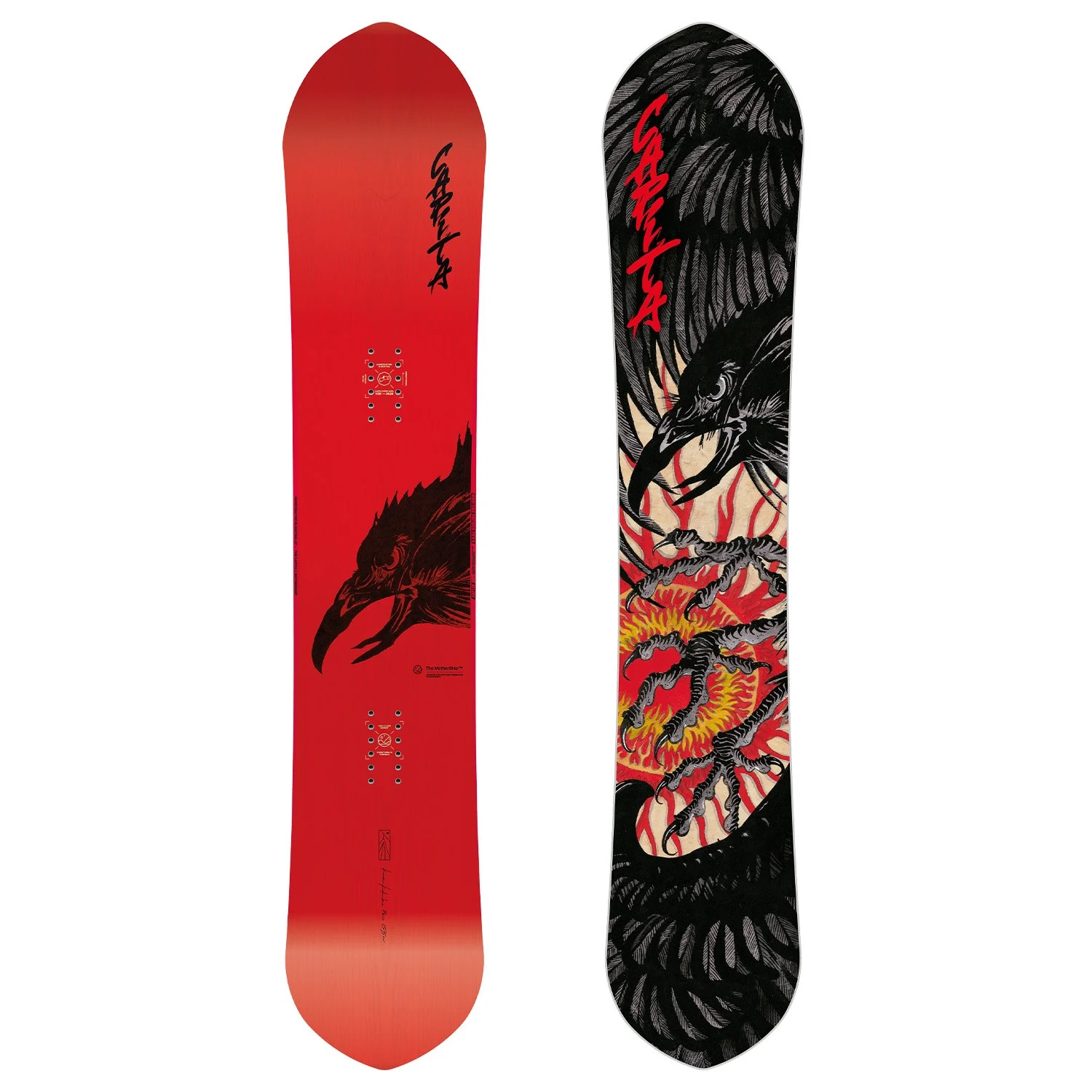
Sizing: 151, 154, 155W, 157, 158W, 160, 161W
Riding Style: Freeride, All-Mountain
Profile: Resort V3 Directional (Camber/Rocker)
Shape: Directional
Flex: 6.5 or 7/10
Pros: Super versatile, flexible but powerful
Cons: We’d stiffen it up just a hair for toughest lines
Best For Riders Who: Want a freeride powerhouse that still works great at the resort.
Anyone who rides at the larger resorts in the West is likely aware of how often the upper mountain is closed for wind. But as the day warms, the snow softens, and they finally open those lifts, you’d better bring your A-Game to those icy runs. That’s when you need a board like the CAPiTA Kazu Kokubo Pro, and that’s exactly why one of our testers took it on Mammoth’s upper mountain. We rode this board big (the 161W), and we worried it might be unruly, but boy, were we glad to have the stability and hold on those tough turns. This board absolutely eats up vibrations and rough snow (the top sheet seems to have a really nice dampening effect), and its powder flotation is terrific.
We’ve been looking to ride this deck for a couple of seasons now, and Kazuhiro Kokubo’s signature board did not disappoint. Unlike a lot of all-mountain boards that have a much larger nose than tail, the Kazu Kokubo Pro has just a slight taper in the tail (about a half inch), which adds a bit of switch versatility for park use (Kazu himself actually rides a smaller version of this board for the park/pipe, and a larger one for powder). And our team thinks it’s partially the Ash woodgrain topsheet and partially the Panda HoverCore, but the underfoot feel of this board is among our favorites. Overall, if you want a true freeride board that doesn’t pigeonhole you, the Kazu Pro takes the cake. It is poppy, floaty, super stable, and so much fun to ride.
Check Price on Backcountry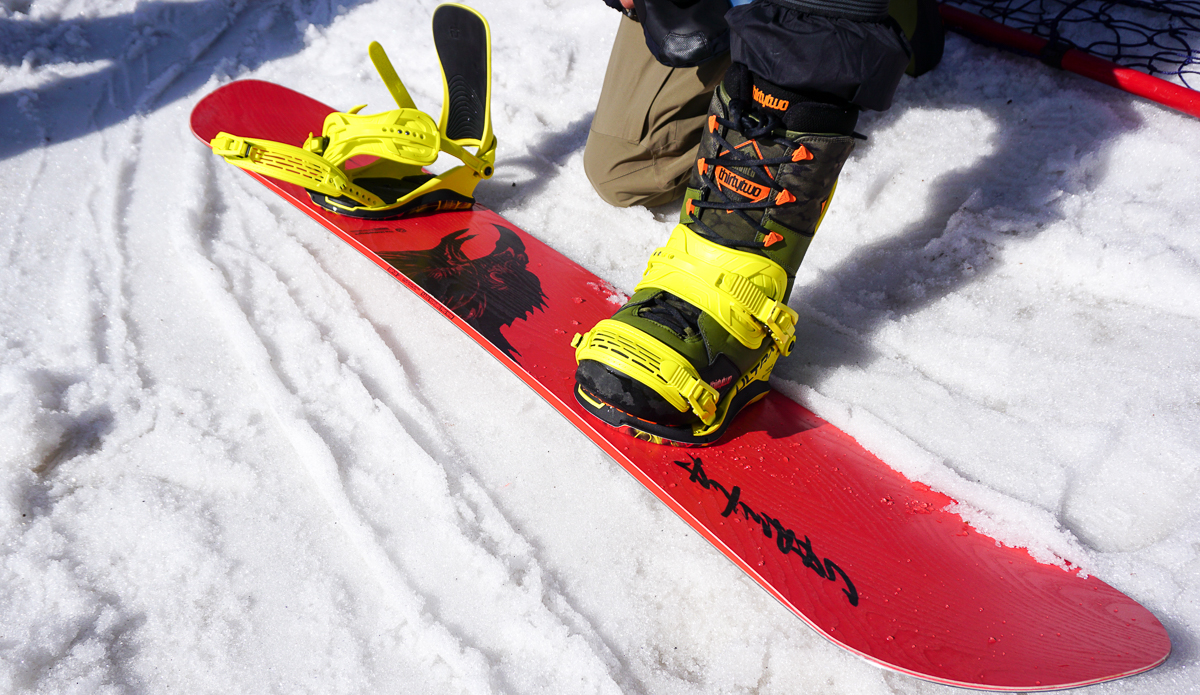
The CAPiTA Kazu Kokubo Pro devoured powder and icy runs alike. Photo: Nathan Lemin//The Inertia
Best Jib Board/Best Park Board
Bataleon Disaster+ ($630)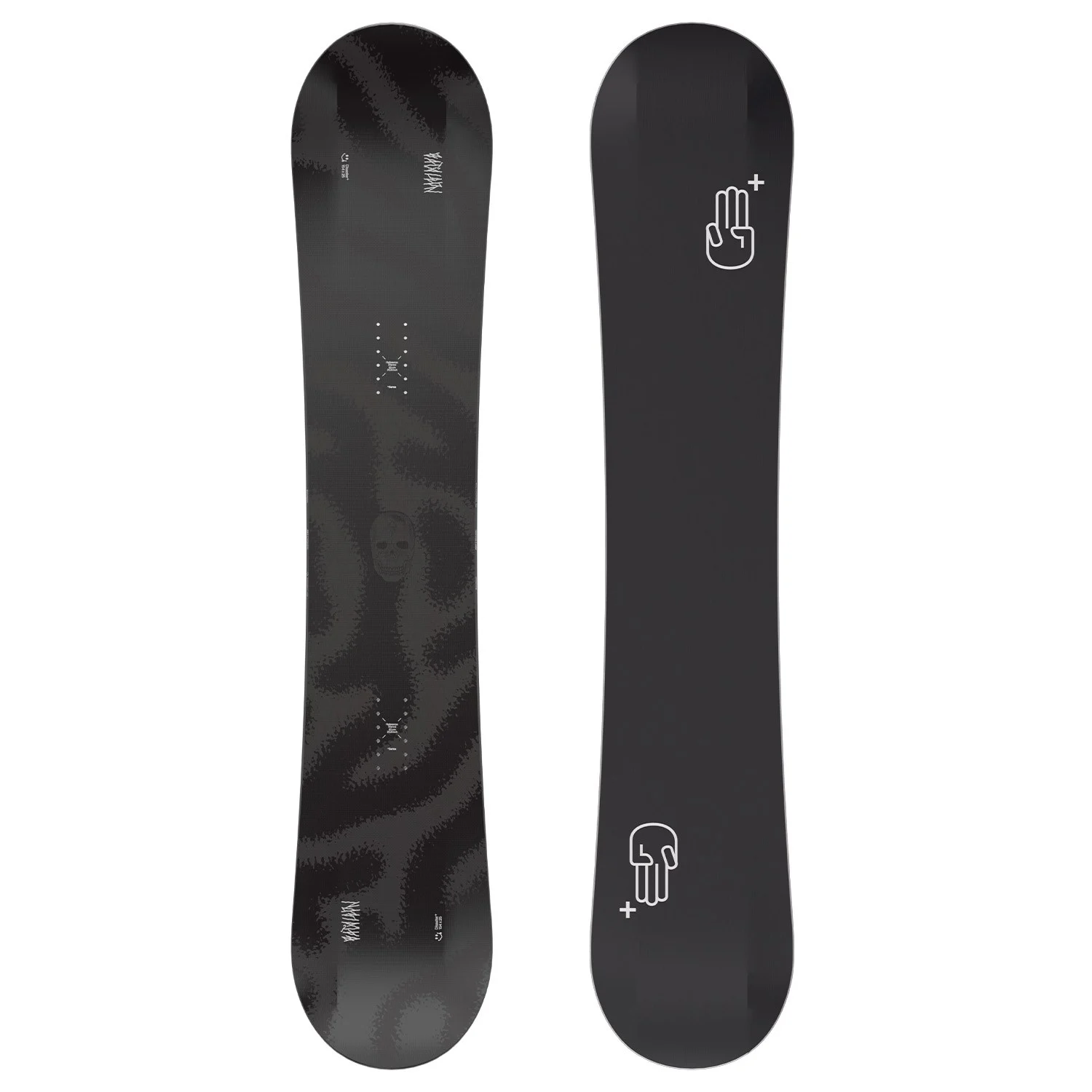
Sizing: 148, 151, 153W, 154, 156W, 157
Riding Style: Freestyle, Park
Profile: Low camber
Shape: Twin with Triple Base Technology
Flex: 4/10
Pros:
Cons:
Best For Riders Who: Want an insanely fun and snappy freestyle board with enough stiffness to ride the whole mountain.
While the Bataleon Disaster+ is not the only board we tested with a 3D/spooned nose and tail, it was certainly the most prominent and playful. This true twin jib ripper is one of the better freestyle boards we’ve ever ridden, and best of all, the beefed-up Disaster+ version is plenty capable all around the resort. While the added stringer stiffness and other technology that come with the “+” version add a bit of cost, we think the pop is worth it. This board is a jibbing machine, and with the significant three-dimensional shaping in the nose and tail, it is easy to save rotations even if you don’t land perfectly clean. Plus, it’s super lightweight underfoot, which adds to its maneuverability.
A true-twin, freestyle-oriented board isn’t always going to suit the masses, but with the Bataleon Disaster+, we believe you get more than just a complete jib board (but you get that, too). The carbon stringers add stability, so if you want to break out of the park and send a steep run, this board can handle it. You’ll want to ride this board a touch shorter than an all-mountain stick, and we found the 154 to suit our team really well.
Check Price on Backcountry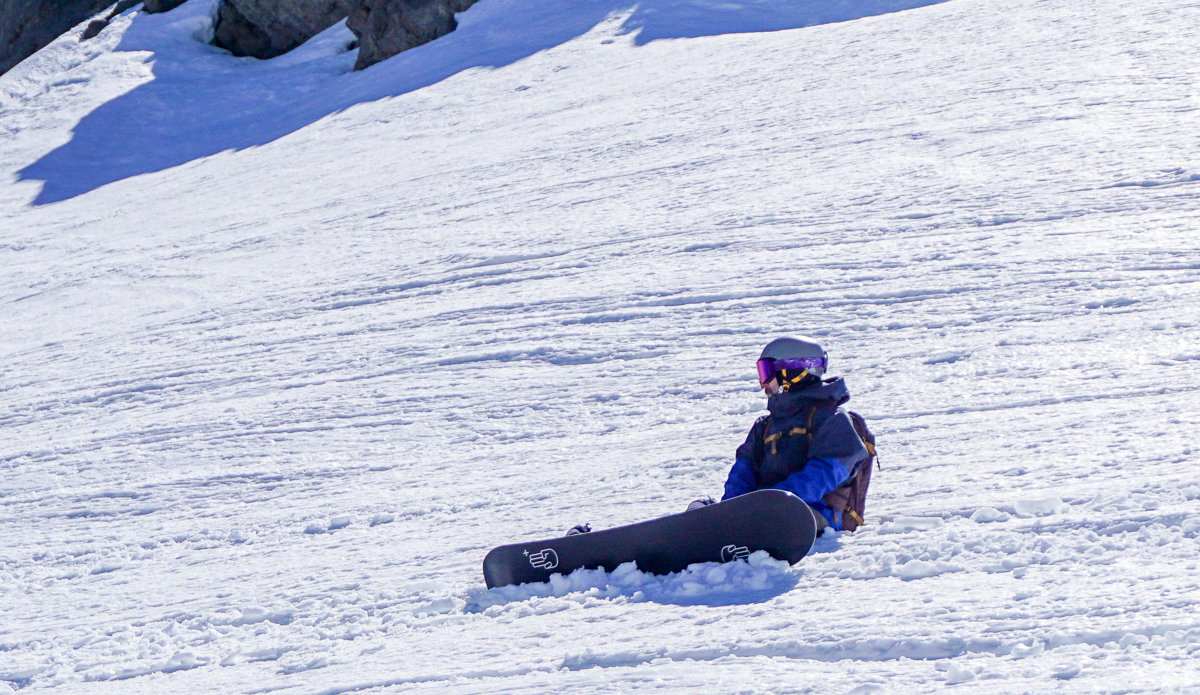
The Bataleon Disaster+ is a jibbing machine, plus, it held its own on groomers. Photo: Will Sileo//The Inertia
Best Beginner Snowboard
Burton Process Flying V ($550)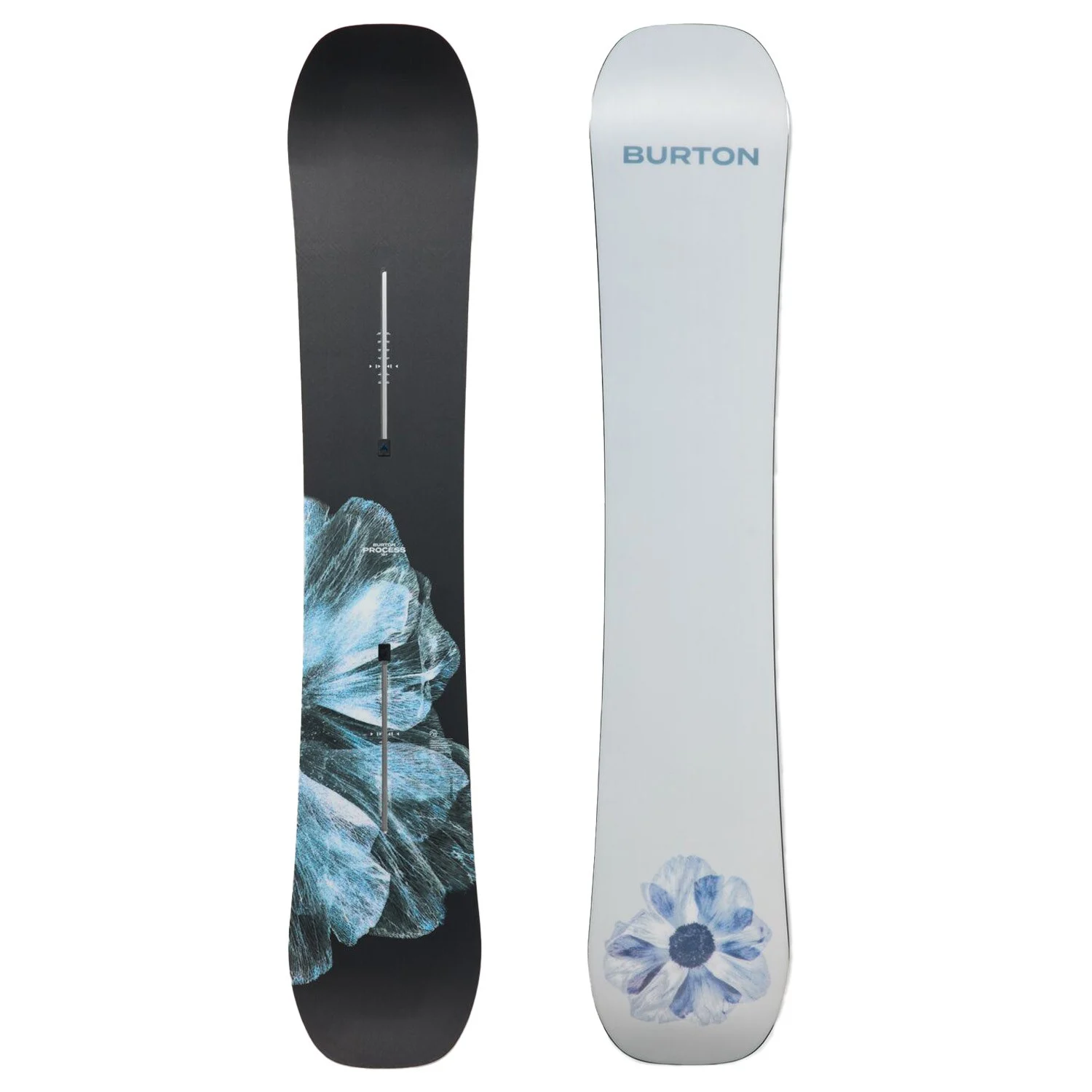
Sizing: 152, 155, 155W, 157, 157W, 159, 159W, 162, 162W
Riding Style: All-Mountain Freestyle
Profile: Flying V (Camber/Rocker/Camber)
Shape: Twin
Flex: 4/10
Pros: Flying V technology makes it easy to ride, levels up with rider, affordable
Cons: Somewhat limited by flex and camber
Best For Riders Who: Need an approachable board with helpful technology that can grow with them.
Burton’s Flying V camber has become somewhat polarizing, but we found that in the Burton Process, it was the sweet spot for an approachable board that could level up with your riding. The Process is one of Burton’s most popular boards for good reason—it’s a twin freestyle board that has all-mountain chops and wide appeal. The Flying V camber (basically a camber, rocker, camber setup) allows for riders of all skill levels to initiate and hold turns without fear of a dreaded edge catch. The board is poppy and fun, and our team enjoyed jibbing and taking on side hits on the Process.
Now, a beginner rider undoubtedly wants a board that feels approachable, but what we loved about the Burton Process Flying V is its ability to level up with you. It’s not aggressively cambered or overly stiff, but it still can hold an edge and ride fast as you progress in your skills. And if you gain enough skill and want to get into a new board, there is always a spot in the quiver for the Process as a playful all-mountain freestyle board for intermediate turns.
Check out our full review of a past-season version of the Burton Process “Pure Pop.”
Check Price on Backcountry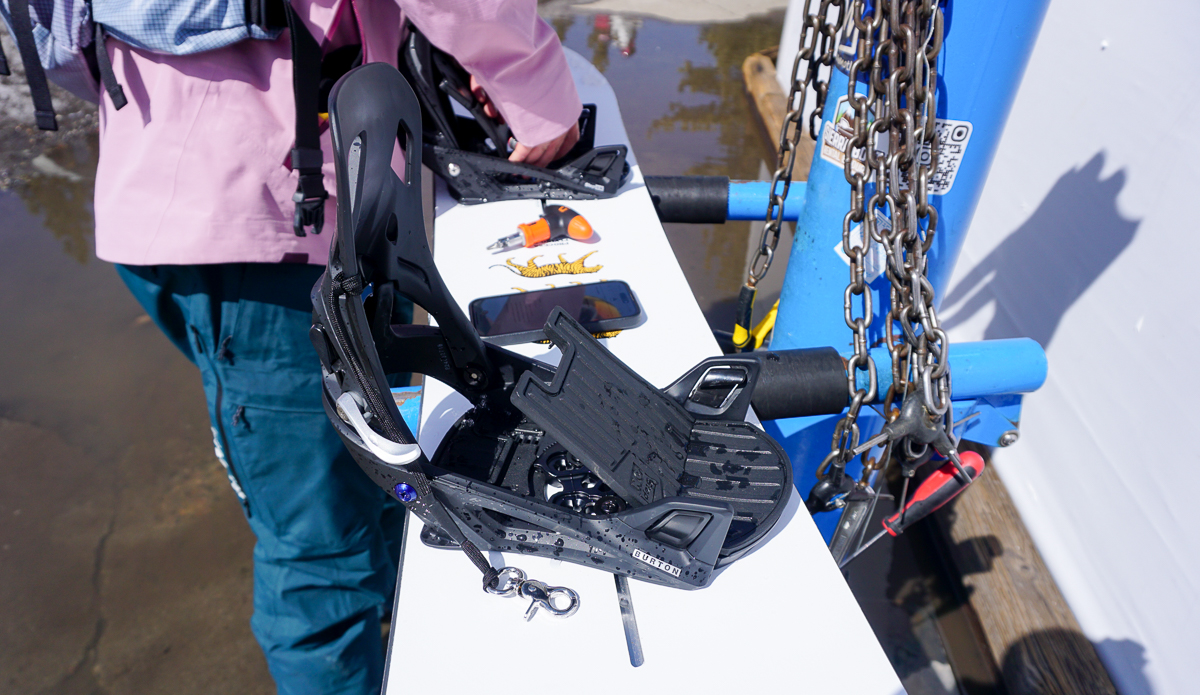
Adjusting bindings to rip the Burton Process Flying V! Photo: Will Sileo//The Inertia
Best All-Mountain Freestyle Snowboard
K2 Antidote ($700)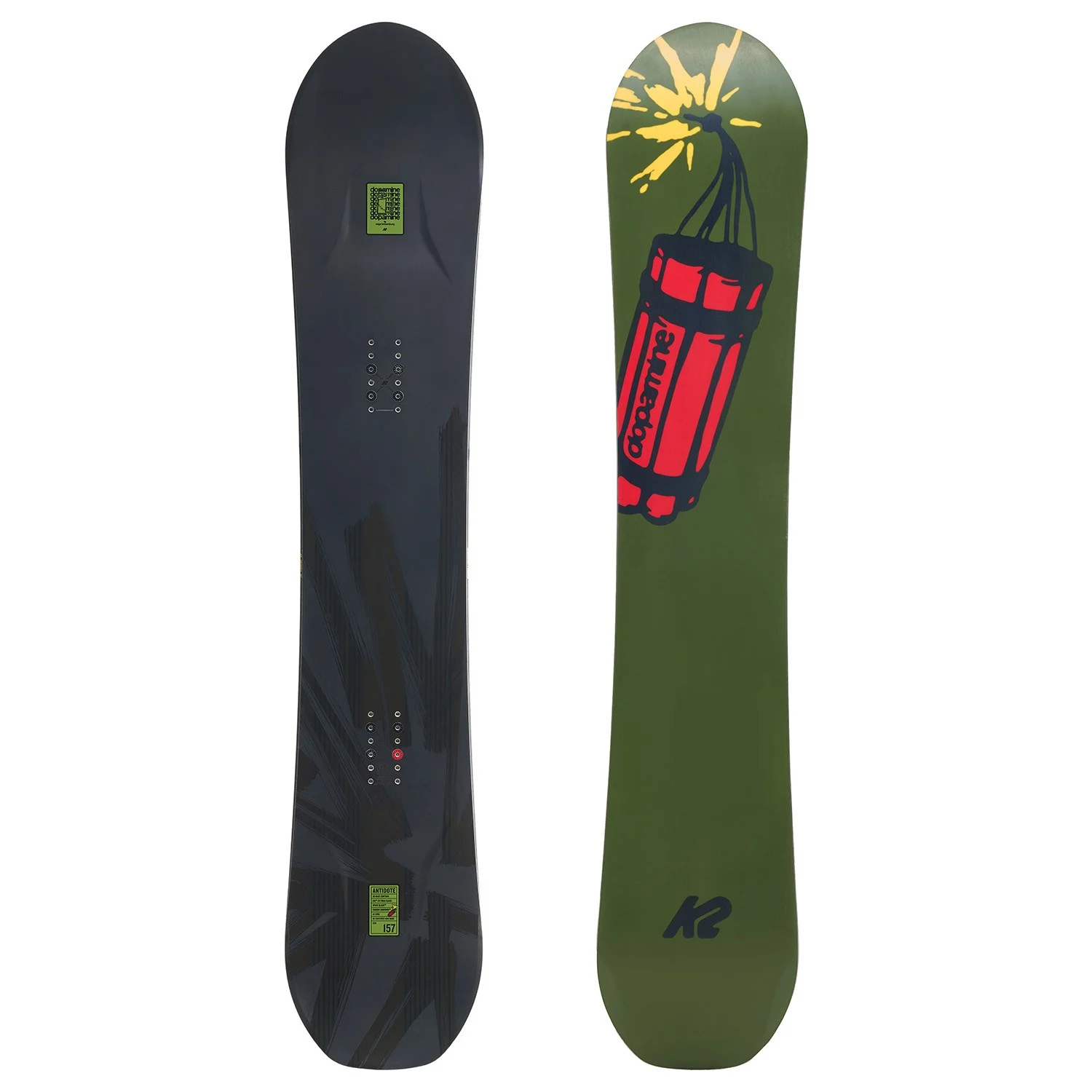
Sizing: 148, 151, 154, 157, 158W, 159, 161W, 162, 163W
Riding Style: All-Mountain Freestyle
Profile: Twin Camber
Shape: Directional
Flex: 8/10
Pros: Stiff but tons of pop, spooned nose lends forgiveness and flotation
Cons: Not a ton of appeal for beginner or lower-level intermediate riders
Best For Riders Who: Excitedly tackle natural features and want an all-mountain board that leans freestyle.
If you lean more freestyle in your all-mountain adventures, the K2 Antidote should be at the top of your list. This is a super fun and playful board with plenty of hold to help you on steep lines, but excellent shaping in the nose for smooth transitions and landings. The Antidote is a stiffer board and surprisingly poppy; it’s an ideal option if you like to take on big side hits or other natural features. Compared with our top-pick all-mountain board (the Ride Deep Fake above), the Antidote suits riders who prioritize airs and tree runs. Sure, you can charge on this board, but it fits riders whose idea of fun is interacting with on-mountain features.
We’re always high on recommending boards with a ton of sizes, and the K2 Antidote is no exception. We tested the 159, and it excelled for riders ranging from 5’9″ to 6’1″. The ability to both power up banks and hold a carve on corduroy really shone through on the Antidote. On softer (albeit heavy) snow, the 3D shaping in the nose readily floated and cut through chop, and we’re stoked to get this board in more powder this year.
Check Price on Backcountry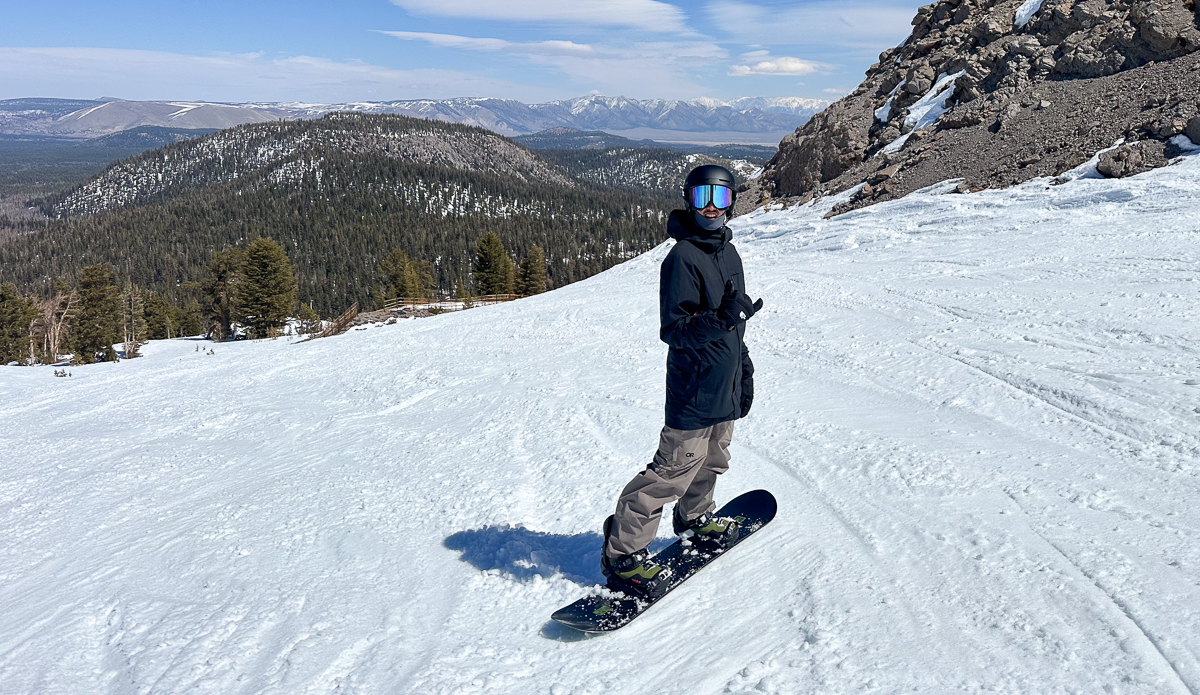
The K2 Antidote cures what ails you! Photo: Nathan Lemin//The Inertia
Best Powder Board
Season Forma ($700)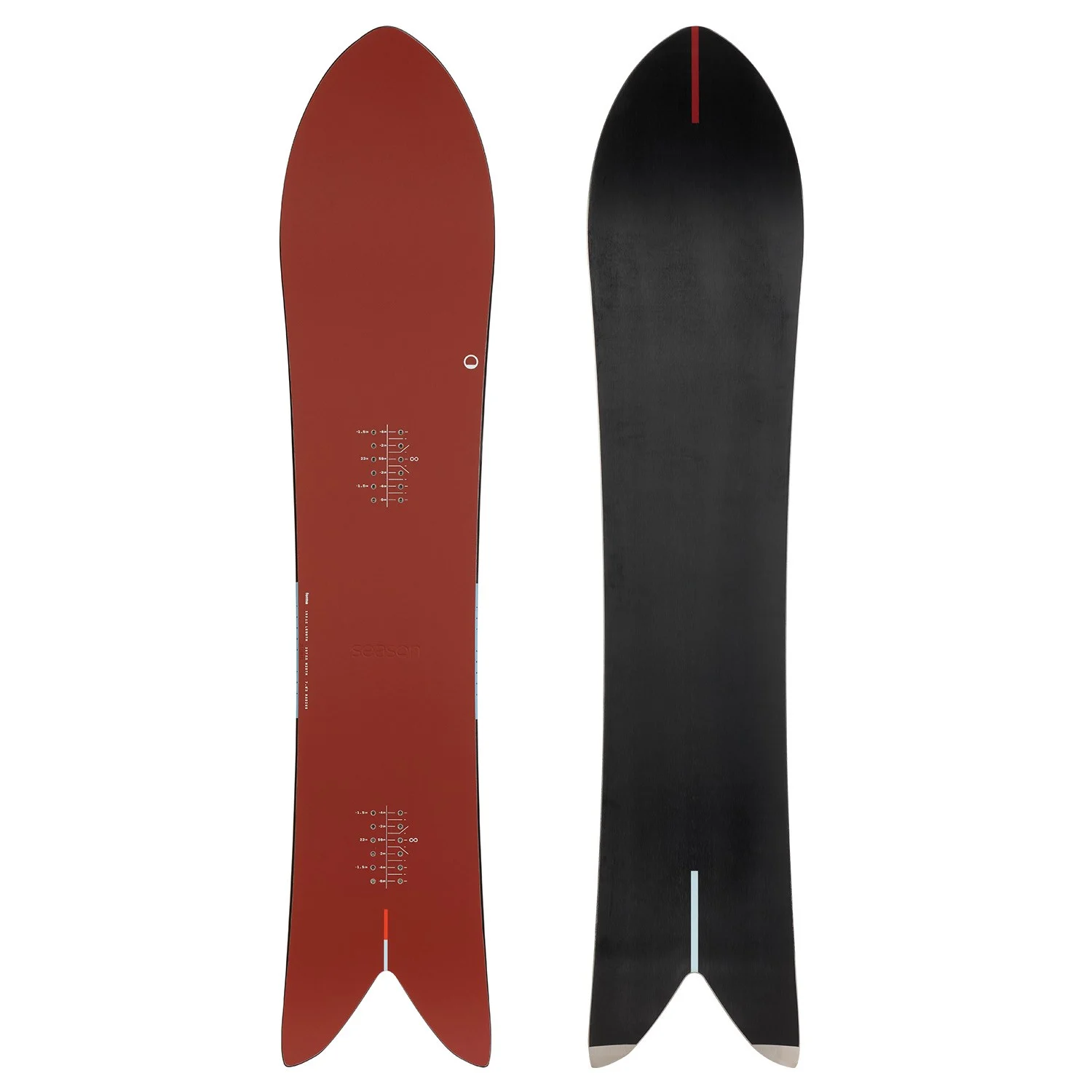
Sizing: 144, 153, 159
Riding Style: Powder / All-Mountain
Profile: Low Camber
Shape: Directional
Flex: 9/10
Pros: Dominates pow and groomers with a fun and surfy shape
Cons: Pricey, not great for the park or pipe
Best For Riders Who: Are small, tall, or somewhere in-between, this board can ride it all—steeps, deeps, and even maybe even a little off-piste.
The Season Forma is a unique swallowtail-shaped snowboard with a penchant for powder that can take on all-mountain riding with aplomb. Its setback volume-shifted stance, tight turning radius, and stout flex provide a responsive and enjoyable experience, especially in soft conditions. Forma’s elongated nose and increased width enhance its float and control in powder, making it a standout choice for riders of all shapes and sizes. The shorter lengths provide a great turning radius for quick reactions in trees or technical terrain. Flowy, surfy, and nimble, this is a board that puts a smile on our faces every time we hop on it. And while it’s made for powder, the board is surprisingly versatile, and was even a top choice among our testers for late-season slush laps. The board’s construction features a fast, seamless, all-black base and durable bio-resin epoxy.
While the Forma may not be the best option for park or pipe riding, responsive handling, a stable platform, and powerful carving ability make it a versatile and enjoyable board for riders of all levels.
CHECK PRICE ON EVO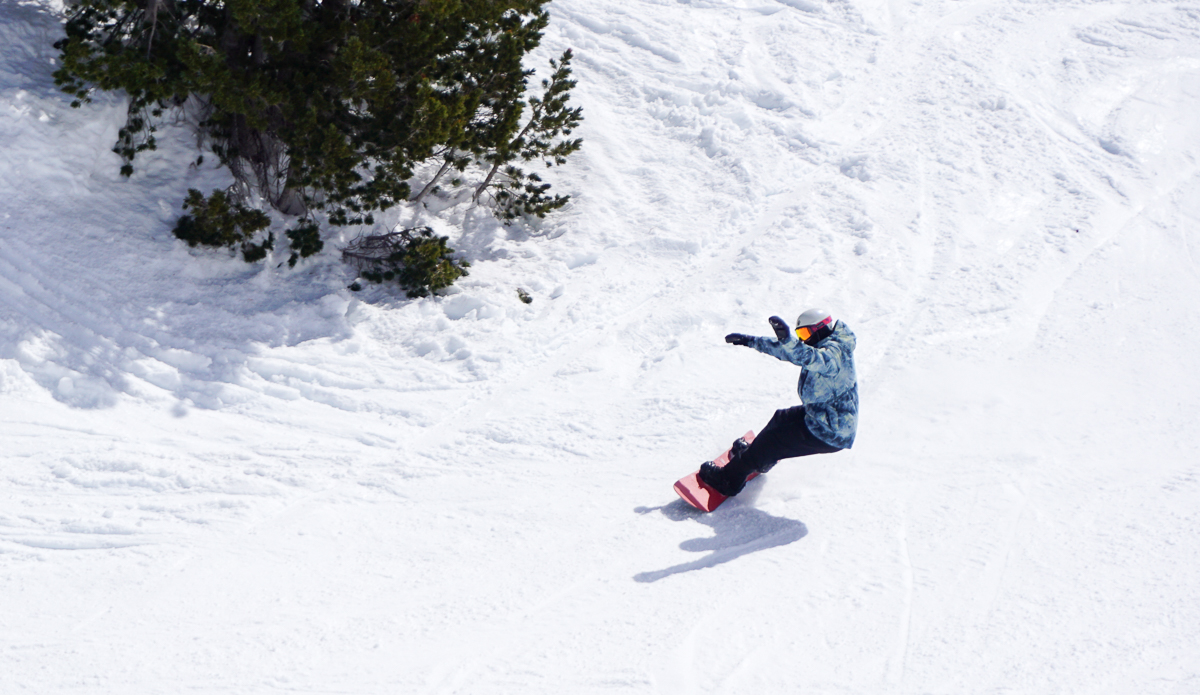
Laying it down on the Season Forma! Photo: Will Sileo//The Inertia
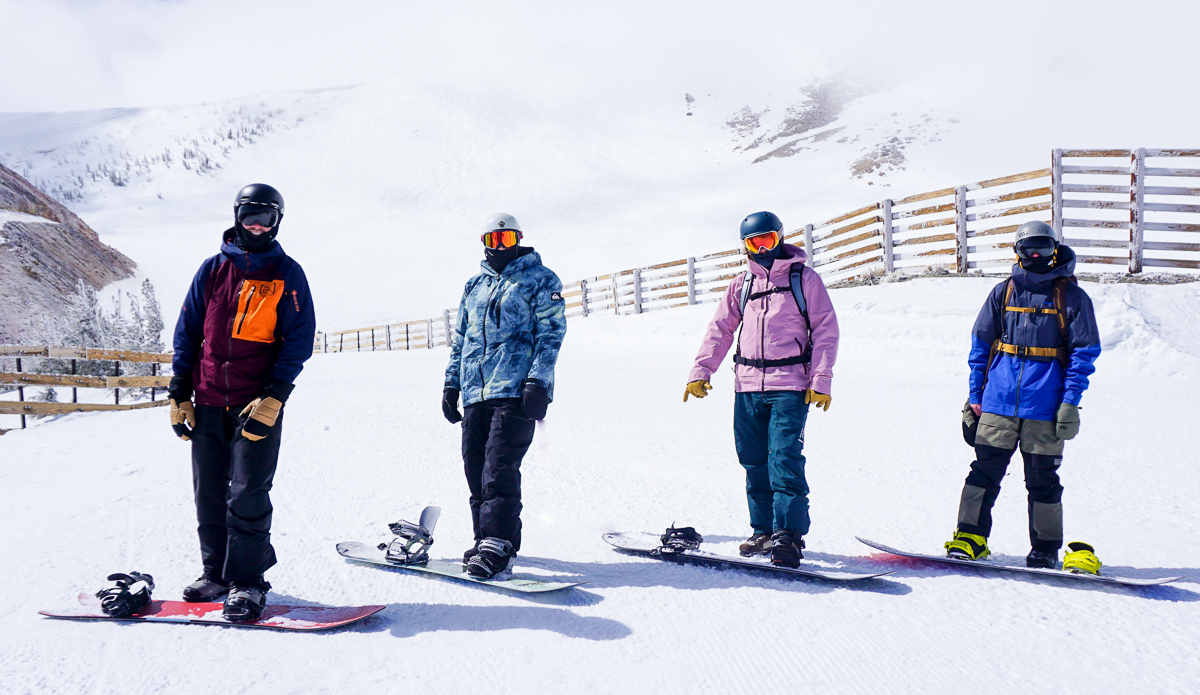
It’s always a good day to test snowboards! Photo: Will Sileo//The Inertia
More Snowboards We Recommend
The above outlines the boards that ranked highest during our test. Choosing just a handful of finalists from over 60 snowboards is tough work! Below are the decks that also performed well, but didn’t snag a top spot in our expert testing team’s opinion. That’s not to say they aren’t great options—they made the final list after all. Indeed, the rest are all excellent snowboards. Dive into our round-up of runner-ups you should check out this season.
Excellent Value
CAPiTA Defenders of Awesome ($580)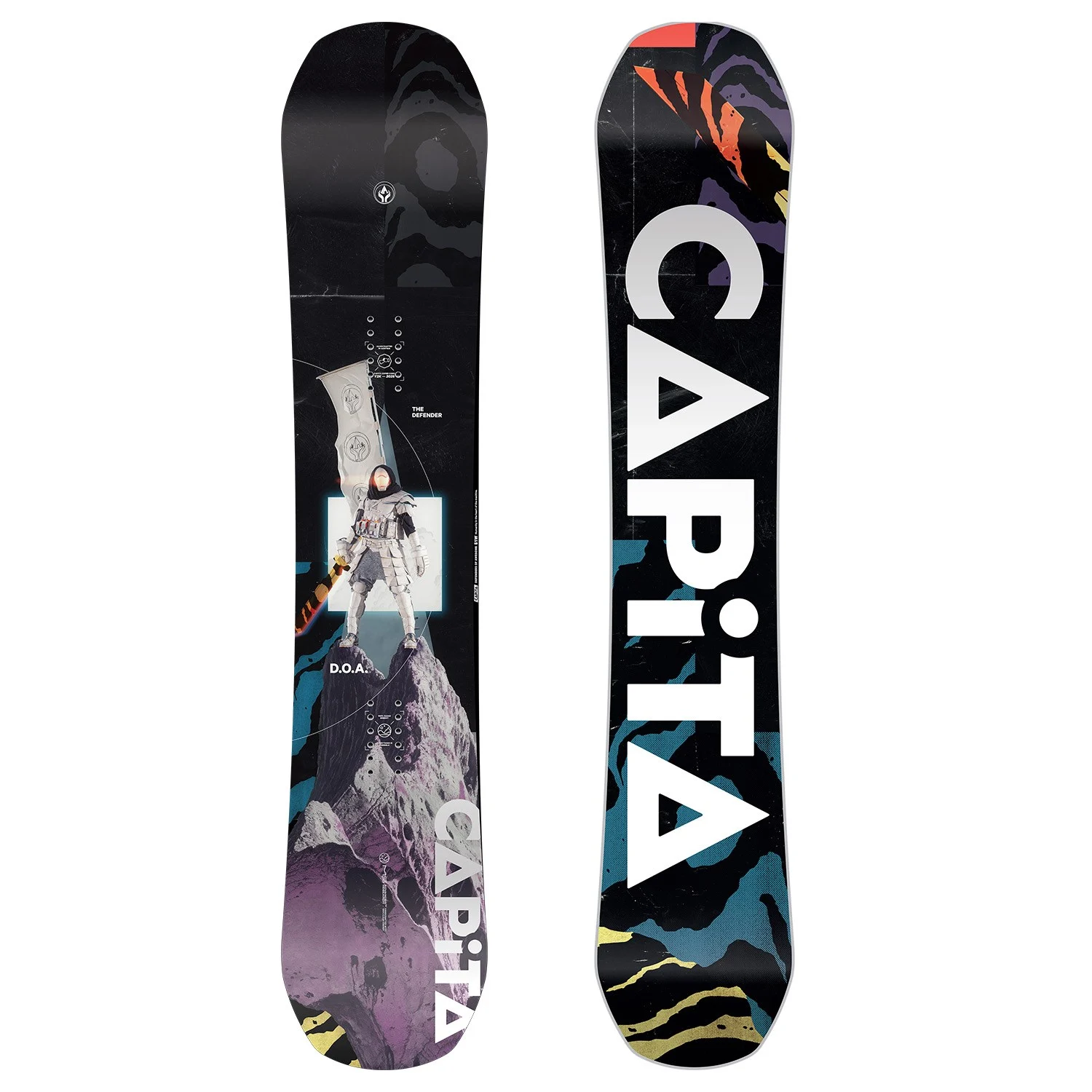
Sizing: 148, 152, 154, 156, 158, 162, 164, 151w, 153w, 155w, 157w, 159w, 161w, 163w
Riding Style: All-Mountain Freestyle
Profile: Hybrid Camber
Shape: True Twin
Flex: 5.5/10
Pros: Snappy and super responsive, great feel at high speeds, and in the park and pipe
Cons: The board can feel sluggish in and out of turns
Best For Riders Who: Want a tried and true, dependable freestyle rig that rides predictably and capably.
The CAPiTA Defenders of Awesome (DOA) is a solid choice for riders seeking a high-performance all-mountain snowboard without breaking the bank. This board has been a staple in CAPiTA’s lineup for years, and it has now made it through multiple iterations of our best snowboard test—it’s really that good! One of the DOA’s most appealing features is its incredible value. Typically, boards in this price range ($580 at the time of publishing) don’t feature so much performance. Packed with features like a hybrid camber profile and a true twin shape, the DOA offers exceptional performance for the price.
Its versatility makes it suitable for a wide range of riding styles. Whether you’re hitting the park, jibbing rails, or simply cruising the resort, the DOA can handle it all. We even enjoyed taking it through Breck’s late-season mini-pipe and park. In addition to its performance and value, the DOA is also eco-friendly. Made with 100% clean energy, this board is a great choice for riders who care where their gear comes from.
A wide range of sizes is available, so you can dial in the right fit. However, this popularity can also lead to multiple people having the same board, so if you care about your board getting lost in the masses, it might be best to look at a different option. The GNU Gremlin, our runner-up best value, is another modestly priced, versatile board that leans more all-mountain than freestyle.
CHECK PRICE ON BackcountryRunner-Up Best Freeride Board
Burton Hometown Hero ($680)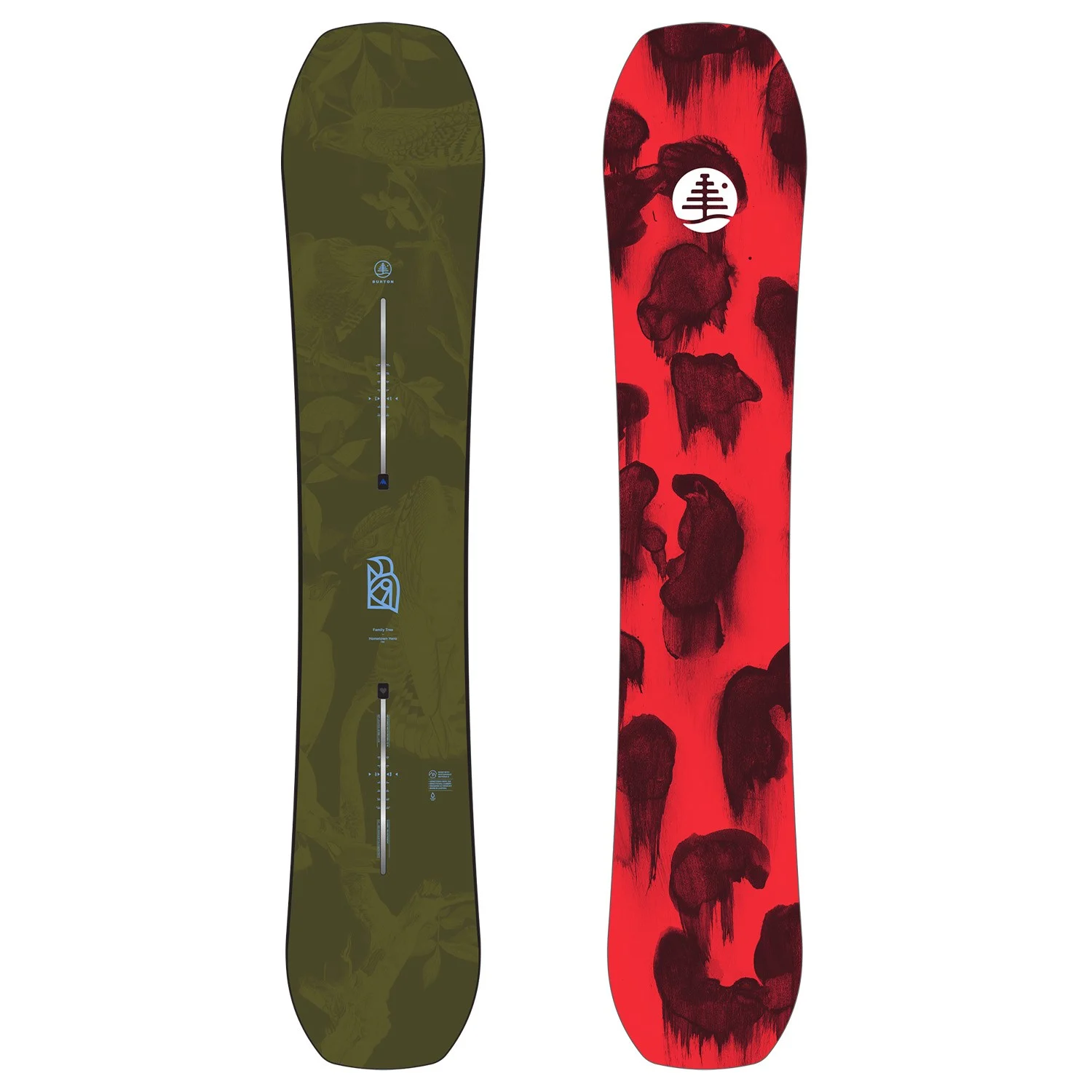
Sizing: 148, 152, 156, 156W, 160, 160W, 165W
Riding Style: All-Mountain Freeride
Profile: Directional Camber (Rocker in nose)
Shape: Directional
Flex: 6 or 7/10
Pros: An excellent all-around snowboard, impressed in powder
Cons: The Channel system is somewhat limiting
Best For Riders Who: Want a playful freeride board that is nimble and easy to ride switch, plus floats in powder.
Somehow, the Burton Hometown Hero intermittently flies under the radar, but we just can’t deny how much we enjoy riding this board. As far as quiver-killers go on this list, the Hometown Hero is up there with the very best, and it fits a ton of riders (both with sizing and versatility). This board is easy to ollie, can take on steep lines, surprised us with its powder chops, and just kept up with whatever we rode. As a sort of master of none, it won’t appeal to everyone, especially those who like to build out a full quiver of boards. But if you’re a rider who truly wants just one snowboard, this might be the best you can find.
Check Price on REI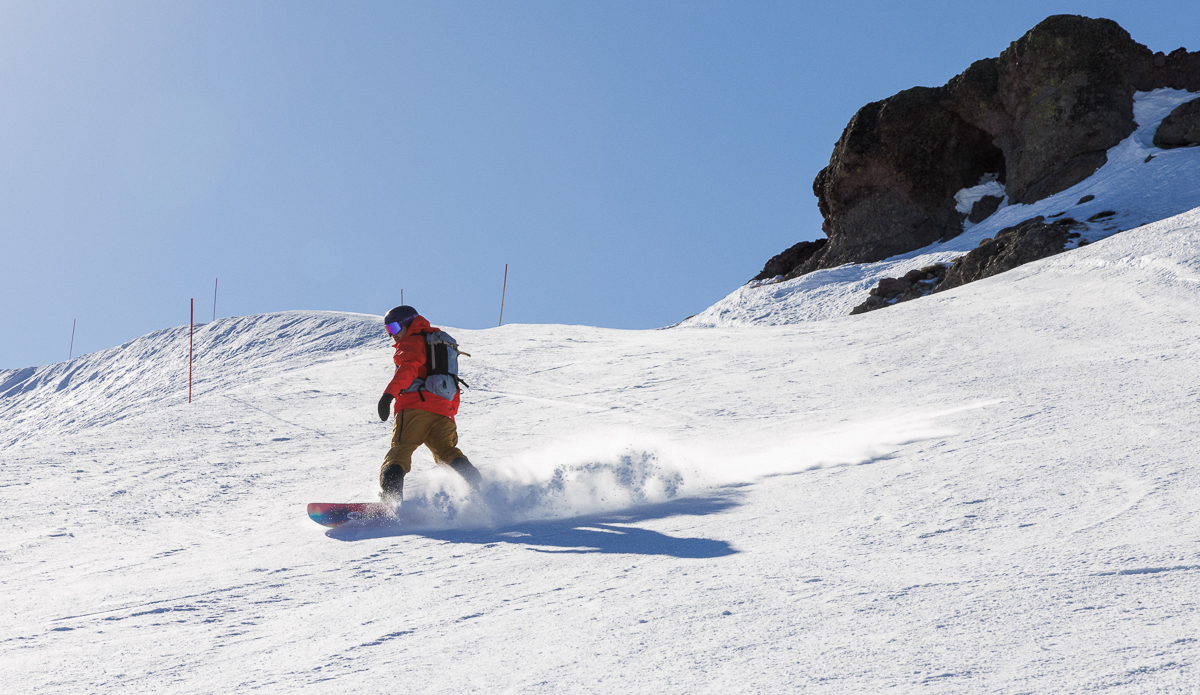
The Burton Hometown Hero is an excellent all-arounder. Photo: Tim Manning//The Inertia
Best Snowboard For Carving
United Shapes Transmission ($699)
Sizing: 154, 159
Riding Style: Free Carve, Freestyle
Profile: Camber
Shape: Directional
Flex: 9/10
Pros: Stiff and powerful for precision carves
Cons: Very limited sizes are available
Best For Riders Who: Love fresh cut corduroy. This premium deck is tooled to euro-crave, s carve, all the carves.
A carving machine designed for advanced riders seeking precision, speed, and stability, the United Shapes Transmission is tooled for tight turns at high speeds. Its unique construction and aggressive camber profile make it ideal for those who seek deep turns in a myriad of terrains. We found the full camber profile to be responsive, while the elliptical sidecut and wider stance further enhanced stability and control. The board’s core, crafted from poplar, paulownia, and ash, offers a durable and responsive ride. Carbon fiber reinforced stringers boost the board’s overall hard-charging demeanor for a locked-in, powerful ride.
The Transmission only comes in limited sizing options, which may be a drawback for some. Available in 154 and 159, shorter, smaller riders may find this deck to be too big for their needs. Additionally, the board’s stiffer flex and aggressive nature may not be suitable for beginners or those looking for a more forgiving ride. Due to its long side cuts, which increase the effective edge on snow, the Transmission rides big and rails down deep carves. Our testers loved the locked-in feel of riding bigger lines, and also the agility to make swooping carves with ease. This board is best suited for riders who are comfortable with high speeds and deep turns on a stiff ride. This board slightly edged out the Nidecker Mosquito for carving, but for a more playful, even stiffer option, check that one out below.
CHECK PRICE ON EVOA Board to Grow With You
Ride Moderator ($650)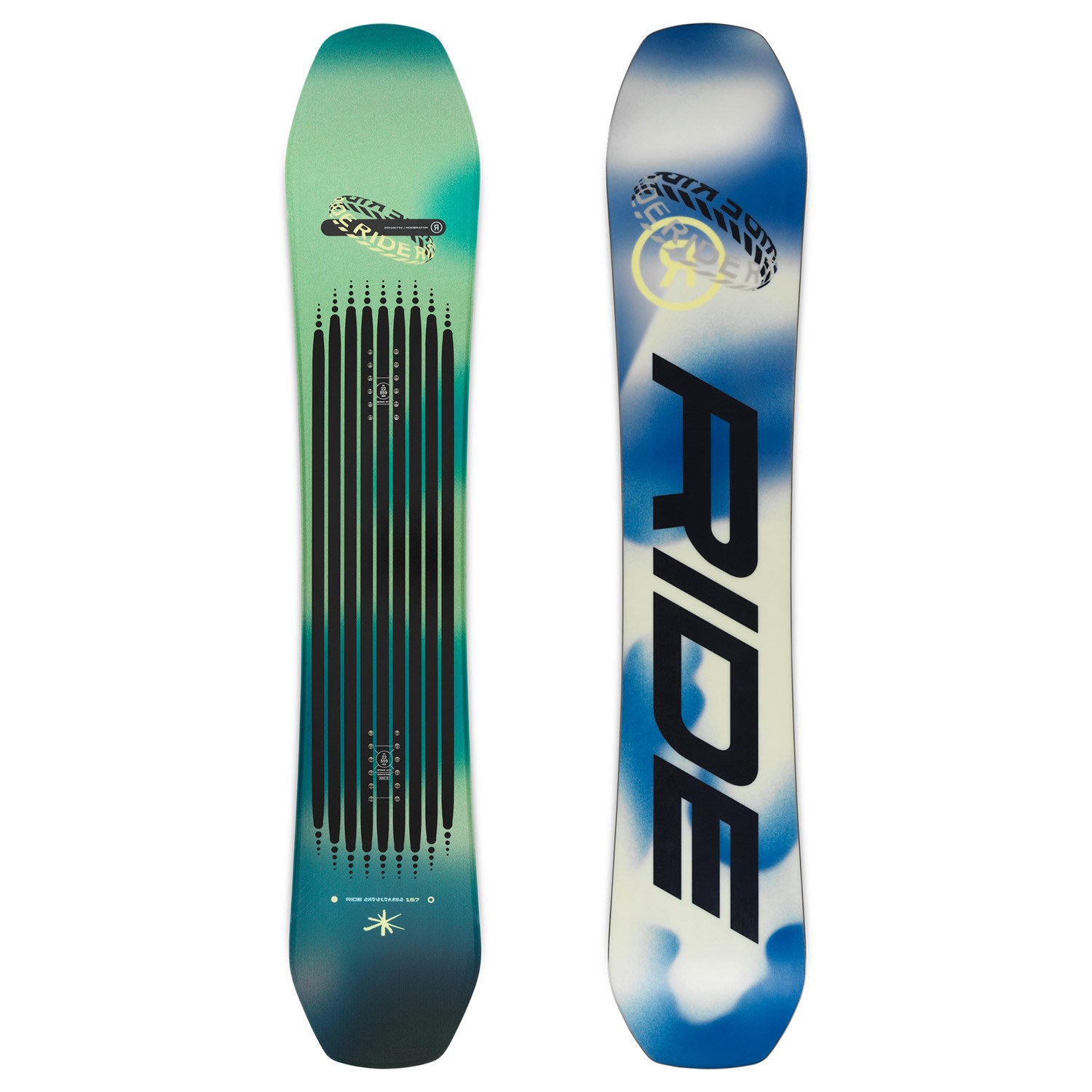
Sizing: 144, 148, 151, 155, 157, 157W, 159, 161W, 162, 165W
Riding Style: All-Mountain Freeride
Profile: Directional Extra Camber (Rocker just in nose)
Shape: Directional
Flex: 5 or 6/10
Pros: Surprisingly easy to ride yet fully capable of big lines
Cons: Slightly less capable than Deep Fake
Best For Riders Who: Are intermediate riders who want a serious all-mountain freeride board.
As we may have alluded to in the Deep Fake description above, the Ride Moderator is one of our favorite boards this year, and although similar to the Deep Fake, it deserves its own spot on this list. Call it the nicer sibling, the more approachable snowboard—the Moderator might appeal to more riders, but it is no slouch either. If you’re a committed beginner or a growing intermediate rider who tends toward all-mountain or freeride use, we might recommend this board over the Burton Process Flying V (which trends freestyle). This is totally capable of steep lines and serious riding, but it doesn’t demand as much on every turn initiation.
The bottom line: If you are intrigued by the Ride Deep Fake but don’t want to bring your A-game to every turn, the Moderator is certainly the board for you. Each of the riders in our test had a special spot for this deck, and with its slew of sizes and mass appeal, it snags the final spot in our list.
Read our full review of the Ride Moderator here.
Check Price on Backcountry
Settling on our final list wasn’t easy: Here are a few more boards we loved. Photo: Colter Hinchliffe//The Inertia
Honorable Mentions
Given our testing window, we couldn’t ride and rate every snowboard on the market (believe us, we tried!). That said, these decks deserve recognition for their exceptional performance and unique features that our testers loved:
One of our favorite boards that didn’t quite edge out a top spot was the Lib Tech Mayhem Rad Ripper. Testers loved this pro model from T. Rice, which delivers precision and playfulness. Its Magne-traction edges and cambered rocker profile deliver exceptional control and versatility, and it has fun throw-back graphics we love.
We also can’t skip out on talking about the Burton Custom X (our former top pick) and Burton Custom, both excellent decks in their own right. These full camber, directional twin boards are excellent all-mountain freestyle options. The X version is stiffer and more precise, for the more advanced rider, but the Custom is no slouch either, and it has plenty of appeal for a whole range of riders. Ultimately, these were knocked out of the top picks this year, but are still more than worthy of your consideration.
An awesome splitboard from a top brand, the Jones Snowboards Solution just barely missed a place on our list. This truly versatile splitboard excels in powder, groomers, and everything in between. A go-to board that’s been in Jones’ line since 2009, it’s a tried and true rig, with durable construction that makes it a reliable choice for riders of all levels. We’re also in the process of testing the Weston Gnarnia Splitboard, and we’re updating this list with our findings soon.
Finally, the Stranda Descender was one more board we couldn’t get off our minds. Big and beefy, this deck was one our testers didn’t want to stop riding–it simply rips. This feels like a throwback snowboard that’s constructed well and made to ride the whole mountain, day after day, dump after dump.
We’re still in the process of testing some boards we got late last season or early this season, and we’ll be updating this guide in early 2026 with any new findings. There are a few boards we’re in the process of testing or hoping to test from the following snowboard brands: Nitro, Jones, Whitespace, Proteus, Yes., and Cardiff.

No better way to find the best snowboards than testing them all side-by-side. Photo: Colter Hinchliffe//The Inertia
Best Snowboards Comparison Table
| Snowboard | Price | Sizing | Riding Style | Profile | Shape | Flex |
| Nidecker Alpha APX | $620 | 153, 158, 162W | All-Mountain Freeride | Surfy CamRock | Directional | 6.5/10 |
| GNU Banked Country | $630 | 155, 159, 160W, 162, 163W | All-Mountain Freeride | C3 Camber (slight rocker between feet) | Directional | 9/10 |
| Ride Deep Fake | $760 | 144, 148, 151, 155, 157, 157W, 159, 161W, 162, 165W | All-Mountain | Directional Extra Camber | Directional | 8/10 |
| CAPiTA Kazu Kokubo Pro | $700 | 151, 154, 155W, 157, 158W, 160, 161W | Freeride, All-Mountain | Resort V3 Directional | Directional | 6.5/10 |
| Bataleon Disaster+ | $630 | 148, 151, 153W, 154, 156W, 157 | Freestyle, Jib | Low Camber | Twin (3D Nose and Tail) | 4/10 |
| Burton Process Flying V | $550 | 152, 155, 155W, 157, 157W, 159, 159W, 162, 162W | All-Mountain Freestyle | Flying V Camber (Rocker between feet) | Twin | 4/10 |
| K2 Antidote | $700 | 148, 151, 154, 157, 158W, 159, 161W, 162, 163W | All-Mountain Freestyle | Twin Camber | Directional | 8/10 |
| Season Forma | $699 | 144, 153, 159 | Powder, All-Mountain | Low Camber | Directional | 9/10 |
| CAPiTA Defenders of Awesome | $550 | 148, 152, 154, 156, 158, 162, 164, 151w, 153w, 155w, 157w, 159w, 161w, 163w | All-Mountain Freestyle | Hybrid Camber | Twin | 5.5/10 |
| Burton Hometown Hero | $680 | 148, 152, 156, 156W, 160, 160W, 165W | All-Mountain Freeride | Directional Camber | Directional | 6.5/10 |
| United Shapes Transmission | $699 | 154, 159 | Free Carve, Freestyle | Camber | Directional | 9/10 |
| Ride Moderator | $650 | 144, 148, 151, 155, 157, 157W, 159, 161W, 162, 165W | All-Mountain | Directional Extra Camber | Directional | 5.5/10 |
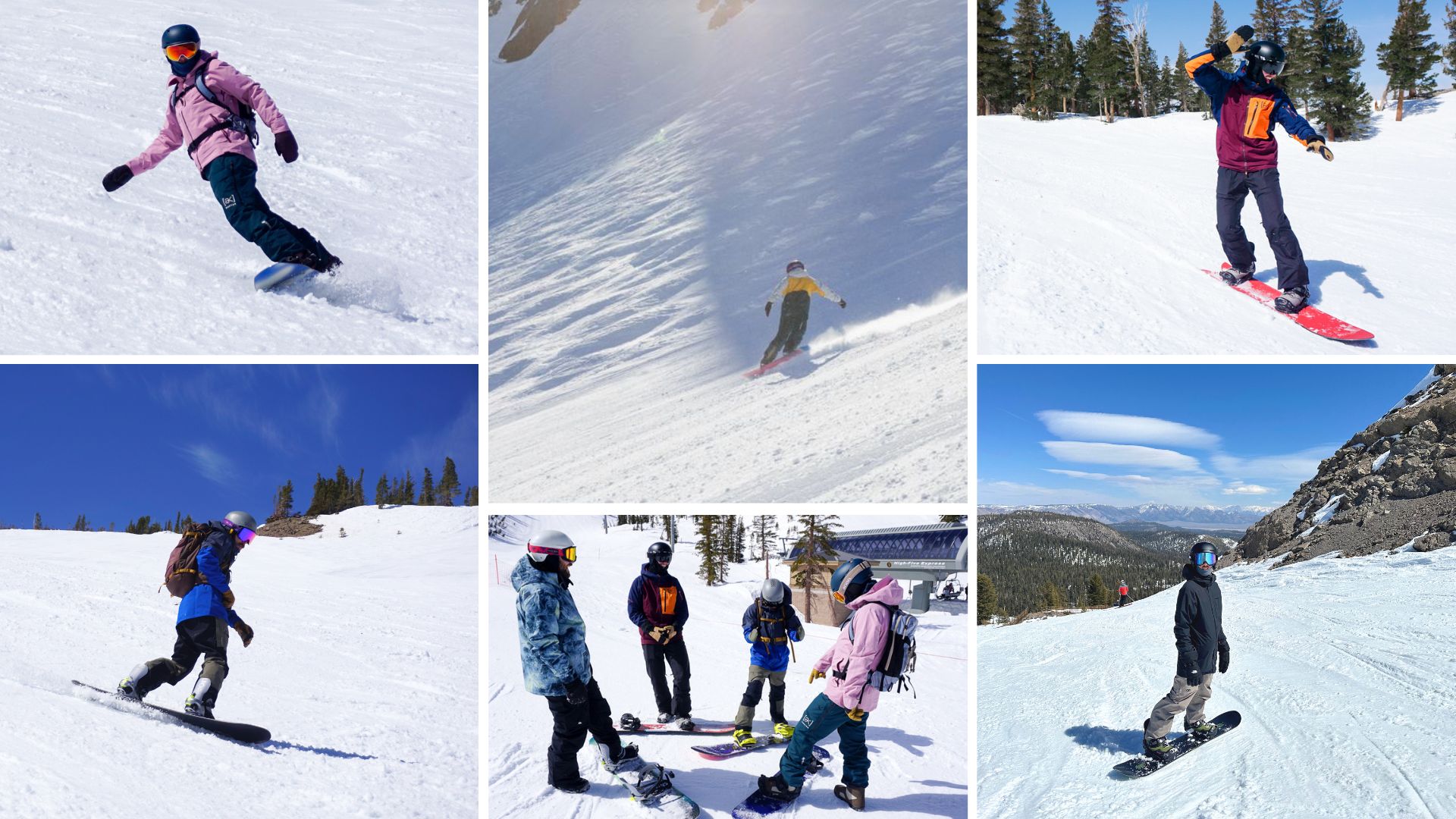
The 2025-2026 Inertia Snowboard Testing Team! Photos: Will Sileo and Tim Manning//The Inertia
How We Tested Snowboards
The Inertia 2025-2026 Snowboard Test was developed to build on previous versions. This round, along with dozens of the latest decks, we got a whole team of riders out to Mammoth Mountain and put in countless laps over four days to round out our expertise. Beyond the primary group test, our team of riders and writers tested boards throughout the season, building on our experience and notes with each.
Testing conditions at Mammoth ranged from soft snow to icy hard pack. With that in mind, we prioritized testing powder performance and fresh groomers outside of the main test, plus plenty of park laps for freestyle-oriented boards. Meet our testing team below, and keep reading for more information on how we finalized our list.
The Testing Team
Nathan Lemin has been riding for 20 years and spent all winter testing snowboards. A true labor of love, he’s never spent so much time comparing the ins and outs of board construction, profiling, and performance. He tends toward all-mountain, freeride-oriented decks, but if this test taught him anything, it’s to have an open mind about boards.
Will Sileo is a true multisport athlete. A lifelong skier and surfer, he’s since tacked on climbing, foiling, and now snowboarding. He’s always approached the mountain with a surfer’s mindset, so it was only a matter of time before something (in this case, a season full of shinbang) got him to exploring the mountain while standing sideways, bringing a fresh perspective to our lineup of testers.
Jack Conners is a lifelong snowboarder from the Southwest who rides freely and aggressively. He takes on side hits, chutes, and other features with speed, and his knowledge and stoke were invaluable for the test.
Dylan Heyden spends plenty of his winter in Mammoth, and his knowledge of the mountain conditions was super helpful when dialing in this test. A former editor and frequent contributor to The Inertia, who just so happens to shred, his testing contributions were especially useful this winter.

Dial-in, shred, repeat: We tested over 60 snowboards for these guides. Photo: Colter Hinchliffe//The Inertia
Our first Inertia Snowboard Test was conceived and brought to life in the spring of 2024 in the mountains of Colorado. Aspen Snowmass’s pristine peaks were our hallowed testing grounds for the bulk of the test. Originally organized by Heather Hendricks, we gathered a group of men and women riders with decades of experience. For this specific guide, we enlisted our team of core men’s riders, including former pro snowboarders, riders who work in shops and sell boards all day, and one lifty, who spends more than 120 days a year on the snow. If you’re interested in the results of our women’s test, check out our guide to the Best Women’s Snowboards.

Once testers answered survey questions, they set up another snowboard and got back on the mountain. Photo: Colter Hinchliffe//The Inertia
How We Selected the Best Snowboards
Snowboard testing, believe it or not, is pretty straightforward. You ride it. You rate it. You ride it again. Tally the score, and then on to the next deck. You’ve got to be a solid rider in all conditions and in all terrains, and anticipate how the board will perform for riders of other sizes and skill levels. Being able to swap boards from one run to the next also gives us a much better basis for drawing comparisons between different boards in this review.
We used an online survey that testers filled out after riding each board. Lift rides were spent dialing in the reviews you’re reading here. The questions (listed below) included queries about riding style, board performance, flex, forgiveness, maneuverability, float, overall impressions, and a place for testers to provide comments. We crunched the numbers via the survey calculator to spit out the results you’re reading now.
Tester’s Survey Questions:
- Riding Style: On a scale of 1 (beginner) to 5 (expert), how would you rate your overall snowboarding experience? Additionally, what type of riding do you prefer most (e.g., all-mountain, carving, freestyle, park)?
- Board Performance: How well did this board perform in your preferred riding style? (Consider factors like edge hold, responsiveness, and stability at high speeds)
- Board Flex: Rate the flex of the board on a scale of 1 (very stiff) to 5 (very soft). How well did the flex of the board suit your riding style?
- Board Forgiveness: How forgiving was the board on mistakes? Did it feel catchy or easy to recover from errors?
- Maneuverability: How easy was it to initiate turns and maneuver the board? Was it nimble or sluggish?
- Float in Powder: (If applicable) How well did the board float in powder snow? Did the shape and design aid in buoyancy?
- Overall Impression: What are your overall thoughts on this snowboard? Would you recommend it to other riders?
- Additional Comments: Feel free to share any additional thoughts or experiences you had with this snowboard. Did any particular aspects stand out (Pros/Cons?)
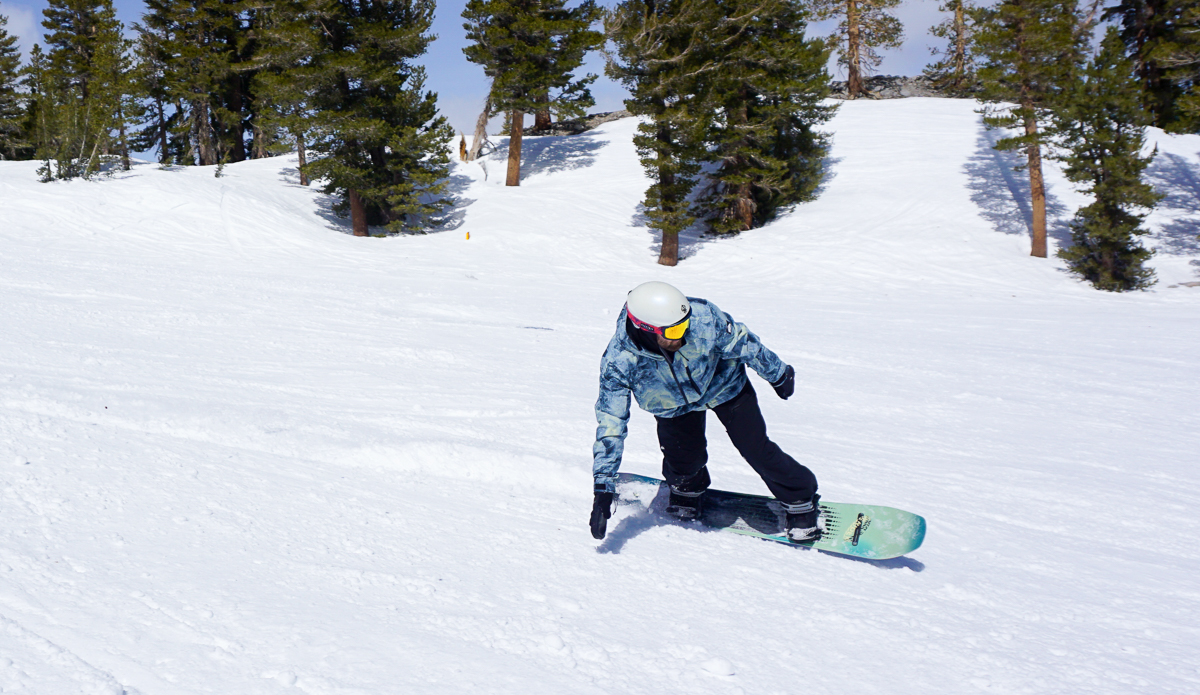
Snowboards Buyer’s Guide
Buying a snowboard is a unique experience that is specific to each person. You have to determine multiple factors to figure out what snowboard is best for you. We break down the most important things to keep in mind as you’re looking for your next deck.
How to Choose a Snowboard
The type of snowboard you choose should depend on your riding style. To select a snowboard, you first have to consider its intended use. Where are you going to be riding? What type of terrain will you be getting into? All-Mountain, Freestyle/Park, Powder, Freeride, and Splitboards are the most common snowboard types.
All-Mountain Snowboards
All-mountain boards, like our top pick Nidecker Alpha APX, are for what the name implies: various terrains and conditions at any resort or mountain. These are best suited to most riders. Quality options are often called quiver-killers, and modern all-mountain snowboards are so capable that riders might need just one snowboard for all their trips. All-mountain boards might feature a directional or directional twin shape and vary in flex based on rider skill.
Freestyle Snowboards
Freestyle snowboards (also called jib boards) like the Bataleon Disaster+ are designed for tricks and jumps. While flex depends on the style of the park board, freestyle snowboards are usually twin-shaped so riders can easily switch on jumps.
Powder Boards
Powder boards, like the Season Forma, are specialized for deep snow and can encourage face shots. Powder boards are typically directional, stiff in flex, and longer/larger. That combination makes powder boards powerful and stable.
Freeride Snowboards
Freeride boards, like the CAPiTA Kazu Kokubo Pro or Ride Deep Fake are similar to all-mountain snowboards but often have more aggressive shapes and sidecuts. They are a bit less suited to the park and a bit more suited to carving and powder.
Splitboards
Splitboards like those from Weston split in half to tour uphill with skins, and then can be reassembled to shred downhill. These specialized snowboards help backcountry tourers keep up with their skier counterparts.

Match your board width to your binding and boot size for optimal performance. Photo: Colter Hinchliffe//The Inertia
Snowboard Length and Width
Board length and width are also important factors. Taller riders generally need longer boards, while shorter riders can use shorter boards. Used to be, riders would stand a board up, and if it was between the rider’s nose and chin, it was the right size. Now, most manufacturers use rider weight (often paired with height) to determine the ideal snowboard size. Luckily, most retailers and manufacturers have very good size charts. If you’re in between or unsure, opting for a smaller board will usually yield a more maneuverable ride, and a larger board will feature more stability.
Consider your riding style as well. Wider boards, like the Season Forma provide better float and stability but can be harder to maneuver. Choose a width that accommodates your boot size and riding style. You don’t want the dreaded “toe-drag,” where your boot hangs over the side of the board if it’s too narrow for your foot size. The Season Forma is also a volume-shifted board, which is generally shorter but has a longer effective edge, so riders typically size down as much as 5-10 cm on these.

Board flex plays a critical role in how your snowboard performs in different conditions. Photo: Colter Hinchliffe//The Inertia
Board Flex: 1-10
Board flex refers to the stiffness or softness of the board. The flex affects forgiveness, feel, and maneuverability.
Soft Flex boards are more playful and forgiving, making them ideal for beginners as well as freestyle riders who prioritize maneuverability. Check out the CAPiTA Defenders of Awesome or the Bataleon Disaster+, some softer flex boards on this list.
Medium Flex boards offer a balance of stability and playfulness and can be best for intermediate riders and those who enjoy a mix of freestyle and carving. Our favorites include the Nidecker Alpha APX and CAPiTA Kazu Kokubo Pro.
Stiff Flex boards, like the GNU Banked Country, provide exceptional stability and speed, making them ideal for advanced riders and those who prefer carving and aggressive riding or need something to hold up during deep powder days. However, they can be less forgiving and require more skill and power to ride.

True twin, directional twin, directional—modern snowboard shapes affect performance across terrain. Photo: Colter Hinchliffe//The Inertia
Board Shape
The shape of a snowboard can influence its performance, especially as it relates to your riding style.
Directional Boards (like the majority on this list) have a longer nose than tail, making them good for carving and riding in deep snow, as the longer nose and shorter tail can whip turns, and float in pow. Our top picks, the Nidecker Alpha APX and GNU Banked Country, are directional.
Twin Boards like the Bataleon Disaster+ are symmetrical, so the nose and tail are the same. These can make riding switch (where your back foot is forward on the descent) somewhat easier and are good for riding park, where you might need to land or launch switch.
Directional Twin Boards such as the CAPiTA Kazu Kokubo Pro combine elements of both shapes, offering a balance of stability and maneuverability. There are also asymmetrical twin boards, swallowtail shapes like the Season Forma, and plenty of other variances to check out.

The camber profile of a snowboard affects how it interacts with and feels in the snow. Photo: Colter Hinchliffe//The Inertia
Snowboard Camber Profile
Snowboard profiles can initially seem confusing, but it’s as easy as assessing how the boards curve from tip to tail. Toss a board on the ground and see if it curves up in the middle (camber) or is concave in the center (reverse camber or rocker). Camber boards a traditional arch in the center. This provides pop, stability, and edge hold.
Camber boards like the Ride Deep Fake are ideal for carving and aggressive riding, while rocker boards and hybrid boards, which are a mix of profiles, are generally better suited for freestyle riding. Rocker’s reverse arch shape, as in the hybrid profile of , provides playful float and forgiveness, while the edges can be less catchy and offer a more forgiving ride. Flat or low camber boards like the Bataleon Disaster+ have a flat base and can combine camber and rocker for a different and often more damp feeling ride. But it’s all preference, so we encourage you to try it before you buy.

There’s no single best snowboard brand, but some of our favorites continue to produce excellent boards. Photo: Colter Hinchliffe//The Inertia
Snowboard Brands
Multitudes of established snowboard brands exist, including Burton, Lib Tech, Jones, Arbor, and CAPiTA, all with a strong track record for producing high-quality snowboards. However, new brands and snowboard creators emerge every season. Stranda, United Shapes, and Season are among some of the newer brands on our list. So, buying a snowboard is as much about brand loyalty as it is about the product itself. Researching brands (legacy vs. emerging) is important if you care where you’re spending your hard-earned dollars.

Pick a line and rip—few gear tests have been more fun than our best snowboards guide. Photo: Colter Hinchliffe//The Inertia
Snowboard Prices
Like with everything, the prices of snowboards vary, and unsurprisingly, they are going up. This all depends on the brand, materials, construction, and features of the board. Plenty of budget-friendly options exist online during early-season sales, or by buying second-hand. But these decks may have limitations and defects or could be damaged in other ways. Our top pick, the Nidecker Alpha APX, was surprisingly reasonable compared to the field this year.
Mid-priced boards are the most widely available option and generally range from $500-$700. Options in this price range include the GNU Banked Country. Premium options can range from around $700 to well beyond. Custom snowboards are also an option and can cost as much as the creator desires to spend.

Edge technology, core material, construction, and other features contribute to the quality and ride of a snowboard. Photo: Colter Hinchliffe//The Inertia
Snowboard Features
With so many snowboards on the market, many brands have created different features to set themselves apart from the sea of competitors. These different features include technologies that can enhance your snowboard performance.
Mervin Manufacturing, for example, is known for Magne-traction, which is serrated (or wavy-like) edges like you can find in the GNU Banked Country. These are meant to provide a superior grip on icy terrain.
Other features include Triax laminate construction or carbon stringers, which can also aid in responsiveness and pop. Spooned/3D shaped noses and tails, like found in the Bataleon Disaster+, are other notable features. Other aspects you should look for are eco-friendly materials like recycled fibers, sustainable wood cores, and bio-resin epoxy.

A snowboard is essential, but you’ll need some more gear for a good day on the mountain. Photo: Colter Hinchliffe//The Inertia
Other Snowboarding Gear You’ll Need
Of course, snowboards without metal edges or bindings attached aren’t allowed at most resorts and won’t get you very far in the side or backcountry. So that’s why selecting your deck is just one piece of a good snowboarding kit. Sure, you’ll want boots and bindings, but a good snowboard jacket, pair of snowboard pants, helmet, and goggles are essential too.
We have tested all of these products and more, and we encourage you to check out our other snowboard guides to get you up to speed on all the best products you’ll need for a winter you won’t soon forget. Check out all of our guides and reviews for snowboarding gear here.

Demo days and test fests are an awesome way to get out and try different snowboards. Photo: Colter Hinchliffe//The Inertia
How Can I Try Before I Buy?
Demo days and test fests are great places to try out snowboards before you commit to purchase. Check out your resort’s event lists to see if a demo day or weekend is coming to your home mountain. Follow brands, shops, and online retailers to see when a demo day may happen near you. Seriously: support your local shops—when in doubt, a local board shop is going to be able to help you dial in your snowboard sizing, style, and needs better than anyone.
Return To: Comparison Table | Top Picks
Related: Best Women’s Snowboards | Best Snowboard Bindings | More Snowboard Gear

Best Women's Snowboards of 2026


