
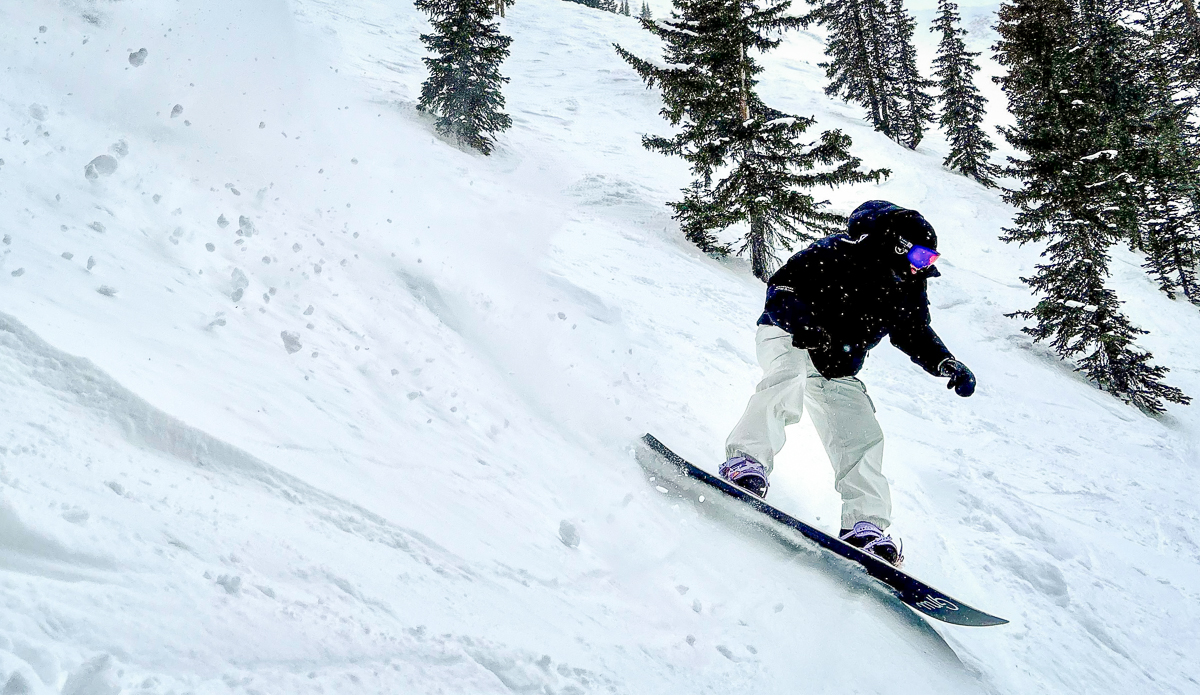
Our riders tested the best women’s snowboards this year and came up with a fully updated list. Photo: Heather Hendricks//The Inertia

Shopping for a new snowboard can be intimidating. Whether you’re buying your first new deck or your twentieth, the excitement of unboxing fresh gear never gets old. But slicing open that cardboard comes with pressure: Did you choose the best snowboard for your riding style and preferred terrain? We’re here to take the guesswork out of the process – think of this guide as your shortcut to a snowboard you’ll love all season long.
The Inertia’s team of women’s snowboard testers initially strapped into 60+ decks across Colorado in the spring of 2024, and in 2025 and 2026, we brought testing back to our home resort, Aspen Snowmass. Its four famed peaks were our testing grounds to put this next round of the best women’s snowboards through the paces. From deep powder days to bluebird slush laps, we’ve ridden through the storms and separated the legends from the letdowns.
Now, everyone has a different riding style. We’ve categorized these top women’s snowboards by their intended use and who they are best suited for. From park rats to off-piste purists, we’ve got you covered. Lights good, drop in!
Navigate To: Comparison Table | How We Tested | Buyer’s Guide
Related: Best Snowboards | Best Snowboard Bindings | Other Snowboard Gear
The Best Women’s Snowboards of 2026
Best Overall Women’s Snowboard: Jones Twin Sister
Best All-Mountain Freeride: Ride Psychocandy
Best Hard Charger: Lib Tech Dynamiss
Best All-Mountain Freestyle: GNU Ladies Choice
Runner-Up Best Women’s Snowboard: Whitespace Women’s Freestyle
Best Carving Snowboard for Women: Korua Pencil
Best Powder Board for Women: Nidecker Mellow
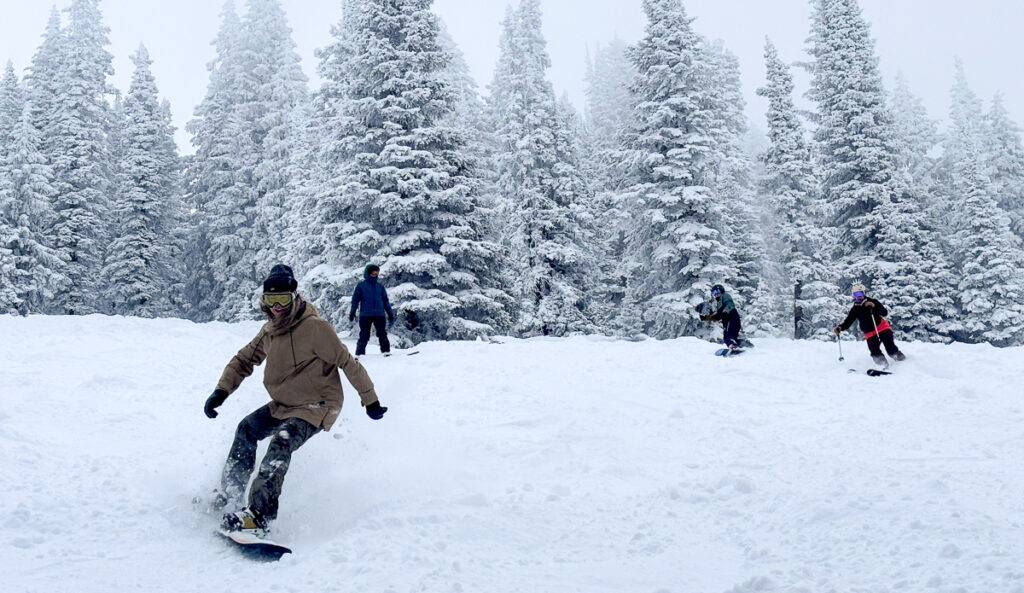
Powder crew! We got turns in all conditions. Photo: Heather Hendricks//The Inertia
Best Overall Women’s Snowboard
Jones Twin Sister ($580)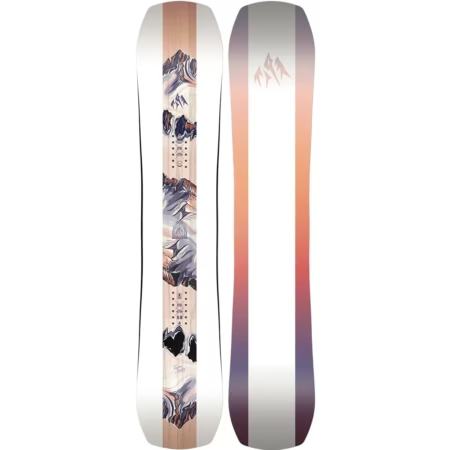
Sizing: 140, 143, 146, 149, 152, 155
Riding Style: All-Mountain Freestyle
Profile: CamRock
Shape: Directional Twin
Flex: 6/10
Pros: Highly versatile and fun to ride
Cons: Master of none
Best For Riders Who: Need a deck tooled to do it all, on any mountain.
Jones Snowboards has never viewed women’s riding as just a market; they see it as a critical frontier for mountain exploration. While their diverse women’s line includes freeride powerhouses like the Flagship and the deep-day Dream Weaver, if we could only grab one board for the season, it’s the Jones Twin Sister. This directional twin is the perfect embodiment of Jones’ pursuit of balanced, high-performance gear that rips in all conditions. And makes it easy to get good. Its hybrid camber profile and mild serrated edges create precision and confident edge hold, no matter how icy things get.
It’s the ideal blend of two sisters: unlike the hard-charging directional Flagship, the Twin Sister has the playful, forgiving feel needed for riding switch and hunting side-hits. Yet it remains highly capable, whereas a softer board like the Dream Weaver might waver at speed. This design ethos, performance without compromise, is what drives Jones. They back it up with serious activism, supporting riders like Elena Hight in her pursuit of big-mountain lines while building their boards with an unmatched commitment to sustainability. For the rider who demands one high-quality deck to confidently push boundaries on every run, the Twin Sister is an empowering, all-terrain weapon.
CHECK PRICE ON REIBest All-Mountain Freeride
Ride Psychocandy ($590)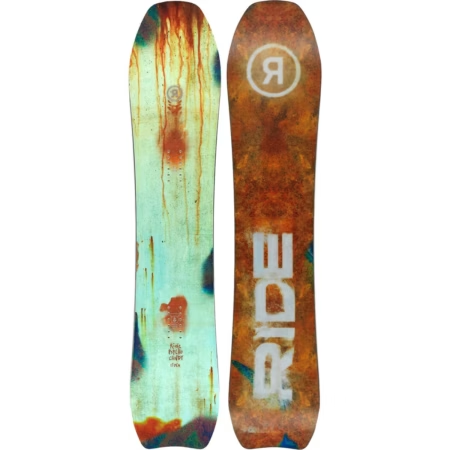
Sizing: 138, 142, 146, 150, 154, 158
Riding Style: Freeride
Profile: Flat/zero camber
Shape: Directional
Flex: 5/10
Pros: Exceptional float and very nimble
Cons: Can chatter at speed
Best For Riders Who: Prefer surfy performance over size or stature.
Ride Snowboards, founded in 1992 by pioneering snowboarders (Roger Madison, James Salter, and Tim Pogue) with the mission of building gear “for the people,” perfectly embodies that continued commitment in the volume-shifted Ride Psychocandy. A slightly softer stepchild of RIDE’s renowned Warpig remains a strong favorite of dedicated badass, Hana Beaman. She trusts the Psychocandy, as do we, for its legitimate alternative freeride performance. The defining characteristic is the volume-shifted sizing (I dropped down to a 146 from my usual 150/152), which results in a shorter, wider platform that delivers floatation like a dream, while, crucially, maintaining that lightning-fast edge-to-edge quickness. Even better, that medium-stiff flex and wide stance allowed me to hover across rutted spring slush wet as a pond skim with utter ease. It felt like a wide-mouthed craft, motoring over things, yet maintained an irresistible nimbleness.
Shaped as a directional dandy, switch riding is doable, but we don’t recommend it for steep descents. Also, we noticed some chatter at top speed on hardpack. But for the intermediate to advanced rider chasing an agile, mind of its own type ride, the Psychocandy is a dangerously sweet, yet wild and well-mannered all-mountain assassin.
CHECK PRICE ON BackcountryBest Hard Charger
Lib Tech Dynamiss ($580)
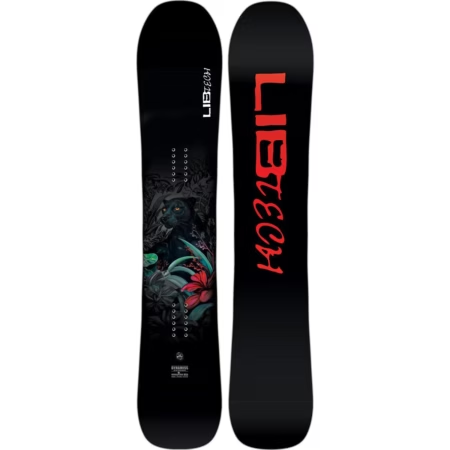
Sizing: 142, 145, 149, 153, 156
Riding Style: Freeride
Profile: C3 Camber (mild rocker between feet)
Shape: Directional
Flex: 6/10
Pros: Tech like MagneTraction keeps you locked into turns, powerful
Cons: Somewhat unforgiving, requires real effort for presses and pop
Best For Riders Who: Live to ride, have more than the basics down, and need a shapely deck suited to send it.
Hand-built in Washington by fellow riders in Mervin Manufacturer’s “experiMENTAL” and environmentally conscious factory, the Lib Tech Dynamiss defines the true snowboarder’s ethos. Driven by the vision of Barrett Christie and her burgeoning fleet of progressive female riders, this flagship of the Women’s LIB line ensures directional freeride power is at the ready for hard-charging Lib team riders like Katie Kennedy. @KatKenz recently scored some clips in the new Warren Miller Film, Sno-Ciety. KatKenz (who we used to test boards with before she became pro) knows all too well that you don’t mess around with the C3 Camber profile baked in the Dynamiss- it delivers.
C3 Camber? This is Lib Tech’s most aggressive profile. It features powerful camber sections that run nearly the entire length of the board (from outside the bindings to the tip/tail). Camber is the key to maximum pop, stability, and edge control. The Dynamiss incorporates only a very mild rocker (reverse curve up) between the feet. This hybrid section eliminates what many consider ‘dead space’ that happens with traditional camber, and instead ensures consistent edge contact.
Paired with Mervin’s proprietary serrated Magne-Traction edges, carves lock in, so there’s no worry of washing out. We rode the 149 and hammered through Aspen’s early-morning boiler plate, and had so much fun, there was no need to switch decks to destroy the day’s afternoon chunder. Despite somewhat harsh conditions, we never got bucked. Dynamiss handles everything from short, fast jump turns to speed-building carves, remaining ridiculously stable even on slushy spring days. A word of warning: you must be a confident intermediate or above to love this ride. This board demands a powerful rider who prioritizes focused board control and can be a bit spicy for the everyday lapper. A must-have for those meticulous in their approach, the Dynamiss delivers confidence to drop in any line, any time.
CHECK PRICE ON BackcountryBest All-Mountain Freestyle
GNU Ladies Choice ($580)
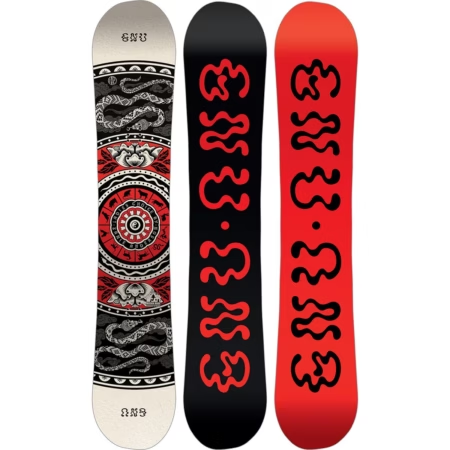
Sizing: 139.5, 142.5, 145.5, 148.5, 151.5, 153.5
Riding Style: All-Mountain Freestyle
Profile: C2x (Camber under feet, rocker in center)
Shape: Asymmetrical Twin
Flex: 5/10
Pros: Excellent riding switch, butters like a champ
Cons: Catchier than other rocker boards
Best For Riders Who: Seek freestyle skills, want to excel at riding switch and need a deck that is tooled for ladies of all sizes.
If your goal is to dominate the park, pipe, and every natural side-hit each mountain offers, the Gnu Ladies Choice is the undisputed ruler. I’ve been recommending this board since day one. Celebrating over 15 years as an OG Favorite, this Jamie Anderson signature model pioneered the Asymmetrical Twin for women. This is a game-changer as the tighter sidecut on the heelside edge makes switch riding intuitive and balances those heel turns flawlessly. When you strap in, you feel inclined to go either way, since it feels the same.
The board’s power source is the C2x Hybrid Camber profile, which delivers aggressive camber underfoot for maximum stability and pop. It’s slightly less aggressive than the Dynamiss, making it a bit softer and forgiving. The Magne-Traction serrated edges support legendary edge hold on hardpack and icy steeps. This reliable grip also shines on sticky park landings and icy pipe walls. The Ladies Choice is the deck I grab when I know I’ll be hitting the Buttermilk park line that features jumps and jibs of all sizes, from the smallest hits, to the largest X Games jumps, and everything in between, where precision is non-negotiable.
The Ladies’ Choice truly shines as Gnu’s benchmark for freestyle riding. Each season bold, stunning graphics, often by renowned artist Sarah King, consistently feature nature, aligning perfectly with Jamie’s eco-minded spirit. While Gnu offers softer options, the standard Ladies Choice strikes the perfect balance. It delivers exceptional power and responsiveness, feels lively, without being too twitchy. I love that this board has maintained its core aggression while becoming more refined over the years, making it an essential recommendation for anyone focused on progression, precision, and riding switch. A word to the wise, the Asysm profile takes a little bit of time to get used to, and less is more when engaging your edges.
CHECK PRICE ON BackcountryBest Value Snowboard
Jones Women’s Rally Cat ($480)
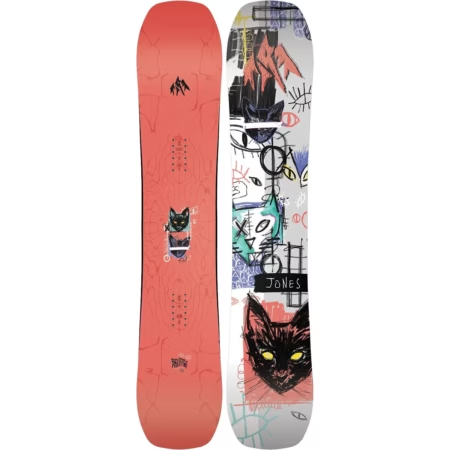
Sizing: 142, 145, 148, 151, 154
Riding Style: All-Mountain
Profile: True Camber
Shape: Directional Twin
Flex: 4/10
Pros: Super playful with its poppy, buttery, soft flex, easy to control and fun, looks rad
Cons: Hard to hold landings off drops, not the easiest to stop on a dime as it’s super soft and can slide out
Best For Riders Who: Beginners to advanced riders looking for a playful, progressive ride.
The extra bright topsheet isn’t the only thing that will turn heads when riding the Jones Rally Cat. As the board is ultra fun and playful, it had us popping ollies and busting spins all over. A newer model from Jones, we loved this directional twin as the ultimate playful ride. It’s perfect for all riders who want something soft and easy to butter but can also stand up to all-mountain terrain. Its softer flex means it’s forgiving and encourages jibbing and blasting side hits. While not the most stable board for high-speed carving or super steep descents, we found the Rally Cat was still capable of handling more challenging terrain.
If you’re looking for a fun and forgiving board perfect for all-mountain riding, the Jones Women’s Rally Cat is an excellent option for riders of all abilities and sizes. And it’s at a price point that will leave a little left for your après fund. This is also great for a newer rider getting into the sport, as it is perfectly capable of leveling up with you, but it won’t break the bank and it isn’t prohibitively hard to ride.
CHECK PRICE ON BackcountryRunner-Up Best Overall
Whitespace Women’s Freestyle ($650)
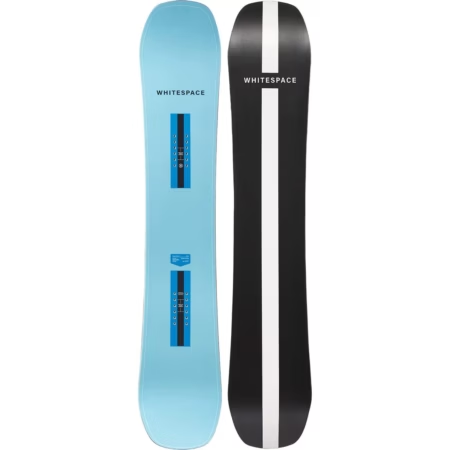
Sizing: 142, 146, 149
Riding Style: Freestyle
Profile: Camber
Shape: Directional Twin
Flex: 7/10
Pros: Excellent performance for new company
Cons: Only women’s board in line, limited sizing
Best For Riders Who: Want a higher-performance freestyle deck stout enough to tackle the entire mountain.
Is this the board intermediate-to-advanced riders have been waiting for? Not exactly, but as the first (and currently, only) women’s offering on the Whitespace roster, we’re impressed with Shaun White’s initial foray into women’s hardgoods space. Through a full season of testing, we found the WhiteSpace Women’s Freestyle delivers a remarkably high level of performance.
Built as an All-Mountain Freestyle Directional Twin with a responsive Hybrid Camber and a stringent 7/10 flex, the Whitespace Women’s Freestyle is designed for riders who prioritize pop, balanced switch riding, and ripping up the whole mountain. For us, that was the steeps of Highlands Peak in Aspen, to the terrain park at Mammoth. The ultralight, carbon-infused fiberglass provides a stable ride with solid edge hold most of the time in most conditions. However, on a deep day in the back bowls, we wished for a little more rigidity that this deck lacked.
As WhiteSpace’s primary women’s offering, we’re curious: Who exactly is this brand and board built for? The limited sizing (142, 146, 149) and minimal two-tone colorways (Cyan or Obsidian) are noted drawbacks. At approximately $650 per deck, it also edges into the premium category.
CHECK PRICE ON BackcountryBest Carving Snowboard
Korua Pencil ($599)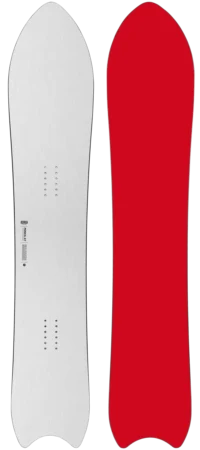
Sizing: 147, 153, 159, 164
Riding Style: Carving
Profile: Float Camber (rocker in nose)
Shape: Directional
Flex: 6/10
Pros: Cuts like butter
Cons: A lot of board for trees/tight turns
Best For Riders Who: Are happiest making turns, but can do it all.
If you live for carving, you know that feeling: your edge locks in, the world blurs, and your line is set. Enter the Korua Pencil. This trench driver delivers an accelerated, powerful ride through its tapered directional shape and hybrid Float Camber profile, a combination of rocker in the nose for easy lift and camber underfoot for reliable grip.
We found the 6/10 medium-stiff flex holds a line beautifully, allowing you to arc turns with minimal effort. In Aspen, we found the Pencil slices through morning corduroy, transferring power perfectly from edge to edge.
This board excels because of its versatile design. The Float Camber makes the Pencil more approachable and forgiving than Korua’s aggressive full-camber models, like the longer-nosed, shorter-tailed Café Racer. While the Café Racer is a pure hardpack specialist, the Pencil sacrifices minimal carving prowess for superior adaptability. Its elongated nose and wide, directional shape are über stable and allow it to float effortlessly in powder, performing like a true freeride board on deep days. Compared to the maneuverable, surfy Dart, which Korua also offers, the Pencil also offers greater stability at high speeds and a longer effective edge for drawn-out, committed carves. Built for precision that carve enthusiasts seek, The Pencil is an ideal one-board quiver for the committed directional shredders who prioritize the art of the turn.
CHECK PRICE ON KoruaBest Powder Board for Women
Nidecker Mellow ($520)
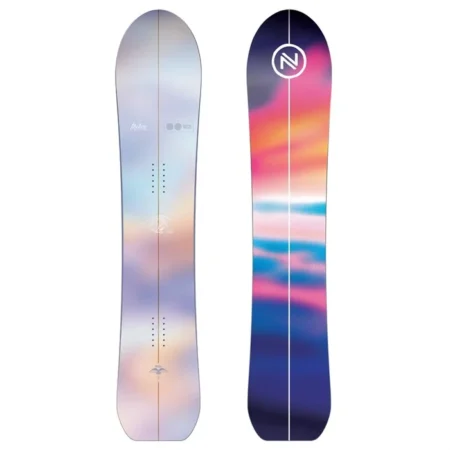
Sizing: 147, 152, 157, 162
Riding Style: Surfy Freestyle Powder Board
Profile: Hybrid
Shape: Directional
Flex: 8/10
Pros: Top sheet has actual sparkles in it
Cons: Pretty dang stiff
Best For Riders Who: Advanced riders who charge and need a stable deck.
When the snow is steep and deep, that’s when the Mellow, a unisex board from the minds at Nidecker, really showed us its strengths. The sparkly deck boasts an ultra-set back directional shape, with a big nose, and short, snappy tail. It floated effortlessly through the freshly fallen white fluff and is stiff and stable to keep you upright when conditions are choppy.
Our testers found this deck to be best suited to upper-level intermediate to advanced riders, as it’s simply too stiff for the majority of ladies out there. But if you’re looking for a powder-specific deck that charges, this board delivers. As we mentioned, it’s a unisex model, and the sparkles are a fun touch that we think anyone can get behind. Shape-wise, it’s a bit of a volume-shifter, similar to Stranda’s Biru further down the list, another board that excelled in the soft stuff during our testing. With this in mind, most ladies will want to size down with this board and its longer effective side cut.
CHECK PRICE ON EVO CHECK PRICE ON BACKCOUNTRY
Best of the Rest
The above outlines the boards that ranked highest during our test. Below are the boards that still ranked high, but are more suited to specific riding styles, or are runner-ups to the winners above. This list includes boards built to slay pow, link up park laps, and shred backcountry. Some have wild sidecuts, contemporary collabs, and alluring graphics you should definitely take a look at.
Our Previous Top Pick
GNU Barrett ($600)
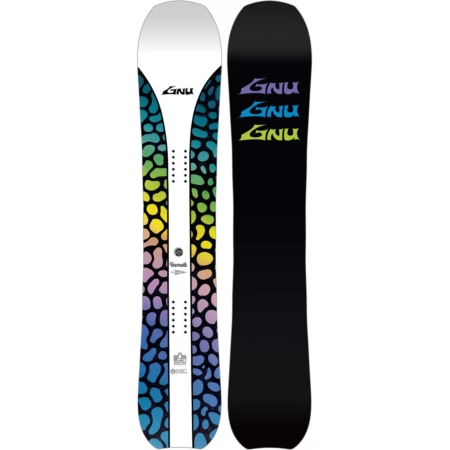
Sizing: 146, 149, 152, 155
Riding Style: All-Mountain
Profile: Hybrid Camber
Shape: Directional
Flex: 7/10
Pros: Excels at everything
Cons: Rides short, larger gals should size up
Best For Riders Who: Want a deck that can do it all, go both ways and help push their own progression.
A weapon of choice for everyday snowboarding, we found the GNU Barrett versatile and excels in all conditions, from park to powder. Its hybrid camber profile and directional shape provide exceptional stability and maneuverability, making it a solid choice for experienced riders who want a board that can handle anything.
With a tested flex rating of 7/10, the Barrett offers a balance of stiffness and playfulness. This allows for powerful carving on groomers while maintaining agility and responsiveness in the park. We found this deck stable at high speeds, held an edge on firmer snow, and was just as comfortable slashing spring slush. We tested a 149, which felt short, so we recommend sizing up for larger riders to handle bigger landings better. We also loved that it’s made eco-consciously in the U.S. at Mervin Manufacturing’s sustainable factory in Carlsborg, Washington.
The Barrett was our previous best overall based on its design, construction, and stiffer flex. We still find its carbon strips provide solid edge-to-edge torsional precision, and its playful yet dependable snap provides a more predictable ride than the Jones Rally Cat. These elements, along with it being on the stiffer side, and having optimal edge control thanks to Magne-traction, continue to make the Barrett a really fantastic board, and one we highly recommend.
Read our full review of the GNU Barrett here.
CHECK PRICE ON REIRunner-Up Best Value
Arbor Cadence Camber ($419)
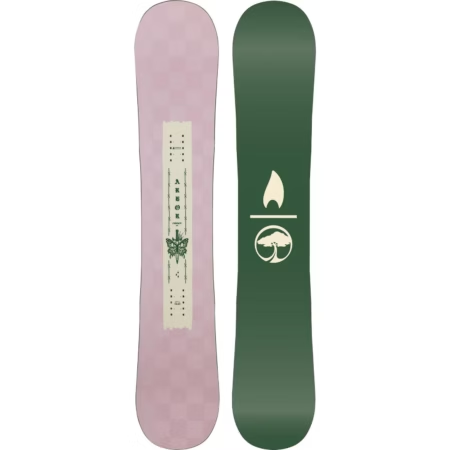
Sizing: 140, 144, 148, 152
Riding Style: Park, Freestyle
Profile: True Camber
Shape: Directional
Flex: 4/10
Pros: Awesome graphics from artist Hillary Jane, great price
Cons: Too noodly for everyday advanced riding
Best For Riders Who: Are looking for a sweet deal on a sweet board that is playful and soft.
The Arbor Cadence is a smoking deal. A true twin, with a classic camber profile and softer flex, this deck is a perfect choice for park and freestyle riding at a low ticket price. This board is great for women who value both performance and sustainability. The Cadence Camber is built with eco-friendly materials, including a hand-dyed Ash Powerply top sheet, bio-resin, and recycled steel edges, all manufactured using 100% solar energy.
If you’re a rider who wants a board that combines value and style while being environmentally conscious, the Cadence Camber could be for you. We will warn that this board is on the much softer side, and you’re paying for what you get. So, if you’re looking for something stiffer but still on the budget side, check out the Nitro Drop boards. Both offer more stability for just a bit more dough, which may be worth it if you’re a bit larger or are looking for a more surefooted ride.
CHECK PRICE ON REIRunner-Up Best Carver
United Shapes Cadet ($700)
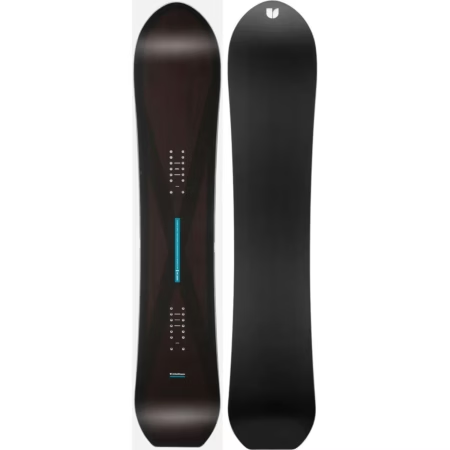
Sizing: 146, 150, 154, 158, 162
Riding Style: All-Mountain
Profile: True Camber
Shape: Directional
Flex: 6/10
Pros: Unisex, uni-fun, and a simple alluring design that is classic, and core
Cons: Beginners and smaller-statured riders might find this to be too much board and too stiff
Best For Riders Who: Intermediate to advanced riders who enjoy riding fast, hard, and laying down carves.
We couldn’t get enough of this expertly crafted board designed for riders who crave precision while executing effortless turns. The traditional camber profile and early rise in the nose provide precise edge hold and stability, allowing you to carve deep trenches with ease. We found the United Shapes Cadet to have a lively personality, and it was also fun to take off jumps and go through all terrain. This board ranked high as a playful tool that testers wanted to ride repeatedly because it carved better than any other board in our test. Its turning style is predictable and offers enough versatility to engage the nose and drive turns through the tail, offering crisp, precise carves.
The board is constructed with premium and sustainable materials, including bio-based resin, where 65% of the hardener’s carbon is derived from plant material. While not the most budget-friendly option, the Cadet is a worthy investment for serious riders looking to purchase from a smaller, core brand. Its stylish, simple design also boasts a near-transparent top sheet, so you can see the guts in all their glory within this deck.
We found this to be a standout choice for experienced riders seeking a high-quality carving board that can also hold up to all-mountain riding; however, it might be too stiff and too powerful for smaller riders, so this is where other boards, such as the GNU Barrett, might fit better. Whether you’re a seasoned pro or an intermediate rider looking to advance, the United Shapes Cadet delivers exceptional performance and precision. Euro carvers to laid-back surfy style carvers rejoice, as this board is for you.
CHECK PRICE ON BackcountryBest For Surfy Vibes
Never Summer Breezy Rider ($590)
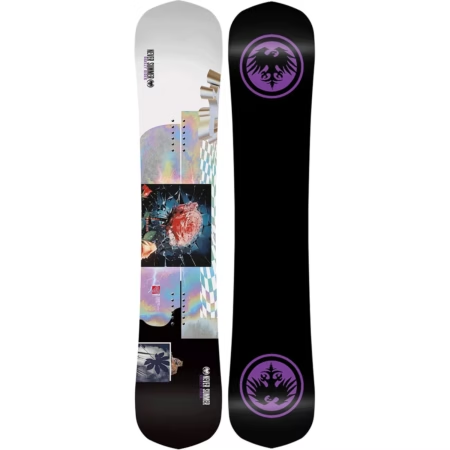
Sizing: 142, 145, 148, 150
Riding Style: Freestyle
Profile: Hybrid
Shape: Asymmetrical Twin
Tested Flex: 4/10
Pros: Ultra forgiving and soft
Cons: There’s a lot going on with this board, from the asymmetrical twin shape to super hybrid camber that bounces between rocker and camber – so it’s best for softer, mellow days, that aren’t too icy or steep
Best For Riders Who: Want to surf in soft conditions on a funky-shaped board.
For those looking for the ultimate playful, forgiving, and surf-centric freestyle board designed specifically for women, the all-new Never Summer Breezy Rider may be tooled for you. Its asymmetrical twin shape and hybrid triple camber profile (imagine a hybrid camber board on steroids) provide a unique riding experience that shines particularly in soft conditions.
We found the soft flex makes it easy to learn and progress with a surfy, laidback style. Never Summer’s R.I.P. Edge Hold Technology has serrated edges that allow for quick edge-to-edge control and long surfy carves. While the Breezy Rider may not be the best choice for hardpack or steep terrain, it offers an exceptional blend of fun and maneuverability for women seeking a softer, surfy-feeling shred deck. Similar to this deck is the GNU Ladies Choice above, which is also an asymmetrical deck; however, we found this Never Summer model to excel at surfy vibes and held an edge better.
CHECK PRICE ON BackcountryA Fantastic Jib Board
CAPiTA Birds of a Feather ($550)
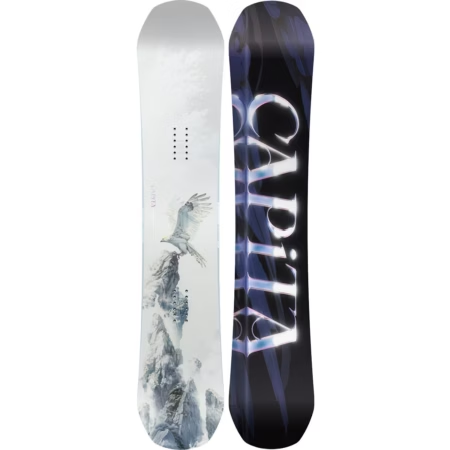
Sizing: 138, 140, 142, 144, 146, 148,150, 152, 154, 148w, 150w, 152w, 154w
Riding Style: Freestyle
Profile: Hybrid
Shape: True Twin
Tested Flex: 5.5/10
Pros: Comes in so many sizes, there’s gotta be the perfect length for you, playful and responsive
Cons: Not as forgiving as we would like it to be
Best For Riders Who: Have a season under their belts, but want to step up their game in the park and freestyle.
For women looking to elevate their skills and challenge themselves in the park and beyond, the renowned and time-tested CAPiTA Birds of a Feather lands on our list as a freestyle powerhouse. And as this board comes in so many sizes, and has been in CAPiTA’s line for longer than we can remember, it’s super easy to find this board on sale.
The model features a lightweight core and a hybrid profile, offering plenty of pop for park shredding. The forgiving reverse camber allows you to slide in and out of tricks easily. We like the response and overall freestyle performance of this deck, but found that it doesn’t save you on everything. This board is truly suited to tackle the park and push progression for riders of all shapes and sizes. The legendary performance of the Birds of a Feather, and the multitude of sizing options make it a solid choice for beginners, intermediate riders, and even advanced riders seeking to take their snowboarding to that next level.
CHECK PRICE ON REIAggressive Board for Big Lines
Stranda Women’s Biru ($690)
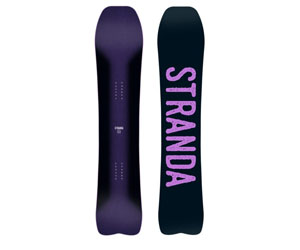
Sizing: 145
Riding Style: All-Mountain
Profile: Mostly Camber – slight rise in the nose
Shape: Directional
Tested Flex: 7/10
Pros: Little board that rides really big and charges
Cons: She’s not cheap, and only comes in one size
Best For Riders Who: Are advanced women seeking a volume-shifting deck.
This heavily directional all-mountain board is wide and ultra-stable. The full camber profile is stable, predictable, and provides a solid all-mountain ride. We found the Stranda Biru to be a high-performance all-mountain snowboard designed for advanced women seeking a powerful yet versatile ride.
Despite its compact size, the Biru packs a punch, offering exceptional stability, float, and maneuverability on a variety of terrain. Solid and predictable, the Biru’s directional shape and shape-shifting size ensure optimal performance on steep slopes and in deep snow, while also being able to slash slush. It rides as hard and fast as the Burton’s Feelgood Camber, but with a much smaller size.
The Biru is a bit of a significant investment, topping out as one of the more expensive boards on this list, but its exceptional performance and unique design make it a worthwhile investment for experienced riders seeking a truly exceptional all-mountain board from a small, diehard brand based out of Europe.
CHECK PRICE ON STRANDAAnother Great All-Around Snowboard
Burton Feelgood ($620)
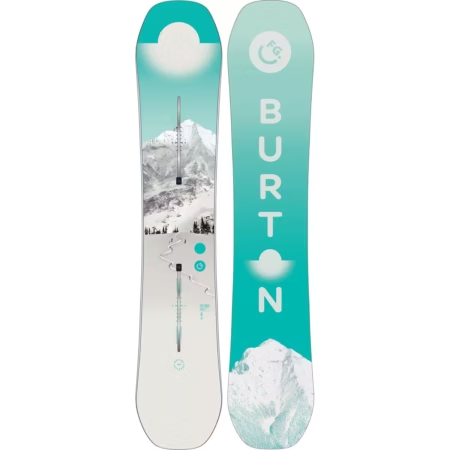
Sizing: 142, 146, 149, 152
Riding Style: All-Mountain
Profile: True Camber
Shape: Directional
Tested Flex: 7/10
Pros: Winner of multiple tests for multiple years, you may find a new but older model for an awesome deal
Cons: Burton’s Channel System requires Burton bindings or adapters, which don’t always work with all bindings
Best for Riders who: Ride multiple days a season in a multitude of conditions and need a durable board that can cruise through it all.
For experienced female riders seeking a high-performance board that excels in all conditions, the Burton Feelgood delivers as an awesome all-mountain rig. This board rips groomers, shines through the slush, and can hold an edge in icy conditions and on steep terrain. Feelgood Camber’s directional shape and true camber profile, along with Burton’s proven durable construction, allow for locked-in edge control and stability. If you’re a rider who enjoys pushing your limits and seeking challenging lines with unique descents, this board will hold up to what you put it through.
We found this deck to be a lightweight, powerful ride that ripped all types of terrain with consistency. While bombing down the Niagra trail on Aspen Mountain, this board popped with precision and could maneuver through crusty, old snow with ease. Riders who value performance and responsiveness will find that the Feelgood Camber is tooled for them. When looking for a dependable board that won’t break the bank, this option from Burton is one of our favorites, year after year. It’s even stiffer and provides a more dialed-in ride than the GNU Barrett, but we found it wasn’t as playful, and didn’t have as much float as we like for powder.
CHECK PRICE ON REI
Taking some of our top picks up the mountain for a lap. Photo: Heather Hendricks//The Inertia
Women’s Snowboards Comparison Table
| Snowboard | Price | Sizing | Tested Flex | Profile | Shape | Riding Style |
| Jones Twin Sister | $580 | 140, 143, 146, 149, 152, 155 | 6/10 | CamRock | Directional Twin | All-Mountain/Freestyle |
| Ride Psychocandy | $590 | 138, 142, 146, 150, 154, 158 | 5/10 | Zero/Flat | Directional | Freeride |
| Lib Tech Dynamiss |
$580 | 142, 145, 149, 153, 156 | 6/10 | C3 Camber | Directional | Freeride |
| GNU Ladies Choice | $630 | 139.5, 142.5, 145.5, 148.5, 151.5, 153.5 | 6/10 | Hybrid Camber | Asymmetrical Twin | All-Mountain/ Freestyle |
| Jones Rally Cat | $480 | 142, 145, 148, 151, 154 | 4/10 | True Camber | Directional Twin | All-Mountain/ Freestyle |
| WhiteSpace Women’s Freestyle |
$650 | 142, 146, 149 | 7/10 | Camber | Directional Twin | All-Mountain/Freestyle |
| Korua Pencil |
$599 | 147, 153, 159, 164 | 6/10 | Float Camber | Directional | Carving |
| Nidecker Mellow | $520 | 147, 152, 157, 162 | 8/10 | Hybrid | Directional | Freestyle/Powder |
| GNU Barrett | $600 | 146, 149, 152, 155 | 7/10 | Hybrid Camber | Directional | All-Mountain |
| Jones Women’s Rally Cat | $450 | 142, 145, 148, 151, 154 | 4/10 | True Camber | Directional Twin | All-Mountain |
| Arbor Cadence | $419 | 140, 144, 148, 152 | 4/10 | True Camber | Directional | Park, Freestyle |
| United Shapes Cadet | $700 | 146, 150, 154, 158, 162 | 6/10 | True Camber | Directional | All-Mountain |
| Never Summer Breezy Rider | $590 | 142, 145, 148, 150 | 4/10 | Hybrid | Asymmetrical Twin | Freestyle |
| CAPiTA Birds of a Feather | $550 | 138, 140, 142, 144, 146, 148,150, 152, 154, 148w, 150w, 152w, 154w | 5.5/10 | Hybrid | True Twin | Freestyle |
| Stranda Women’s Biru | $690 | 145 | 7/10 | Mostly Camber | Directional | All-Mountain |
| Burton Feelgood | $620 | 142, 146, 149, 152 | 7/10 | True Camber | Directional | All-Mountain |
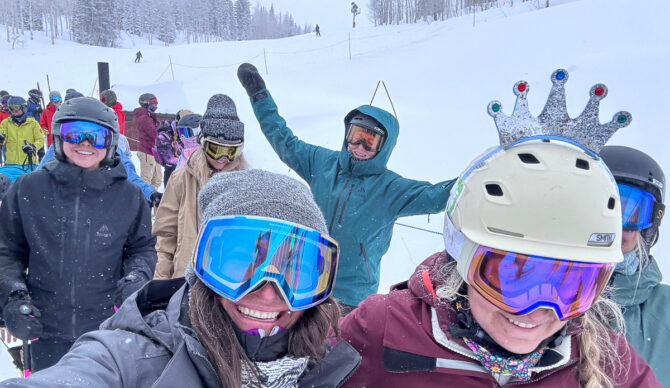
We got the whole crew together to test women’s snowboards! Photo: Heather Hendricks//The Inertia
How We Tested Women’s Snowboards
Here’s a word from our lead tester, Heather Hendricks:
As a long-time snowboard tester (8x TransWorld SNOWboarding Good Wood tester, Baldface Powder Board tester, 6x MRA Test-Fester, and demo gal with over 27 years of snowboarding under my bibs) – it’s safe to say I’ve been around the snowboard testing block a time or two. I’ve ridden and rated more boards than I’d care to admit, but in my years of turning screws and lapping lifts, I’ve learned what makes a good snowboard and how to determine who it’s best suited for.
Riding and rating snowboards has been part of my life for so long that it’s become part of who I am. When I don’t do it, things feel off. So, after taking a one-year hiatus from snowboard testing and realizing the hole in online guides, it was time to get back to it.
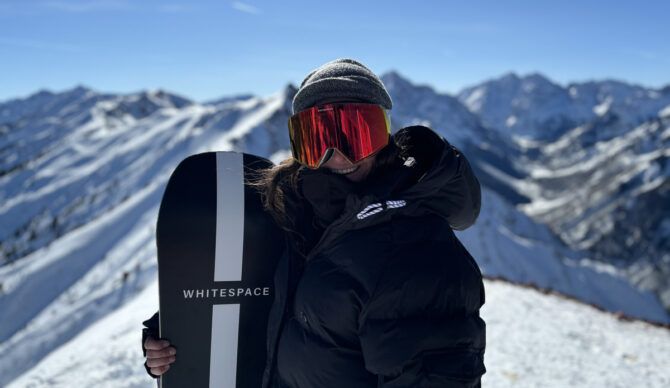
Heather Hendricks has been holding down TI women’s snowboard testing for a few years now! Photo: The Inertia
The Inertia Board Test was originally conceived and brought to life in the spring of 2024 in the mountains of Colorado. For the first test, I enlisted the help of a few close, core riders, all of whom live to stand sideways, enjoy nerding out on the various complexities of snowboards, and have tested plenty of boards before. We got our hands on more than 60 men’s, women’s, and unisex boards, and got to testing.
In the fall/winter of 2025 and right on through the early 2026 season, our team of women’s riders has been spending more time with new boards and existing picks alike. We didn’t update a top pick unless we truly felt like a newcomer unseated it. The latest version of our best women’s snowboard guide has a handful of new picks, as well as some stalwarts from previous iterations.

We got our hands on more than 60 different snowboards, and tested them all. Photo: Colter Hinchliffe//The Inertia
How We Selected The Best Women’s Snowboards
Unlike many things these days, snowboard testing is pretty straightforward. You ride it. You rate it. You ride it again. Tally how the board performs, and move on to the next deck. You’ve got to be a solid rider in all conditions and all terrains, and be able to anticipate how the board will perform for riders of other sizes and skill levels. That takes years of experience on different boards, which all of our riders/testers have in spades.
We used an online survey that testers filled out after riding each board. Lift rides were spent dialing in the reviews you’re reading here. The questions (listed below) included queries about riding style, board performance, flex, forgiveness, maneuverability, float, overall impressions, and a place for testers to provide comments, which we’ve used as tester quotes. We crunched the numbers via the survey calculator to spit out the results you’re reading now.
Tester Survey Questions:
Riding Style: On a scale of 1 (beginner) to 5 (expert), how would you rate your overall snowboarding experience? Additionally, what type of riding do you prefer most (e.g., all-mountain, carving, freestyle, park)?
Board Performance: How well did this board perform in your preferred riding style? (Consider factors like edge hold, responsiveness, and stability at high speeds)
Board Flex: Rate the flex of the board on a scale of 1 (very stiff) to 5 (very soft). How well did the flex of the board suit your riding style?
Board Forgiveness: How forgiving was the board of mistakes? Did it feel catchy or easy to recover from errors?
Maneuverability: How easy was it to initiate turns and maneuver the board? Was it nimble or sluggish?
Float in Powder: (If applicable) How well did the board float in powder snow? Did the shape and design aid in buoyancy?
Overall Impression: What are your overall thoughts on this snowboard? Would you recommend it to other riders?
Additional Comments: Feel free to share any additional thoughts or experiences you had with this snowboard. Did any particular aspects stand out (Pros/Cons?)
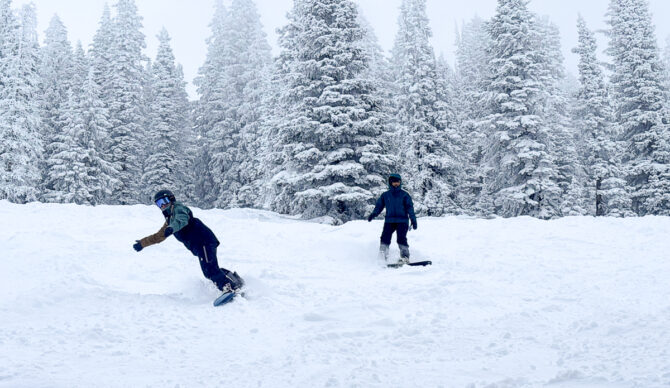
We got lucky with a wide variety of conditions this testing season. Photo: Heather Hendricks//The Inertia
Women’s Snowboards Buyer’s Guide
Buying a snowboard is a unique experience that is specific to each person. You have to determine multiple factors to figure out what snowboard is best for you. Here, we break down the most important things to keep in mind as you’re looking for your next deck.
How to Choose a Snowboard
Your Riding Style
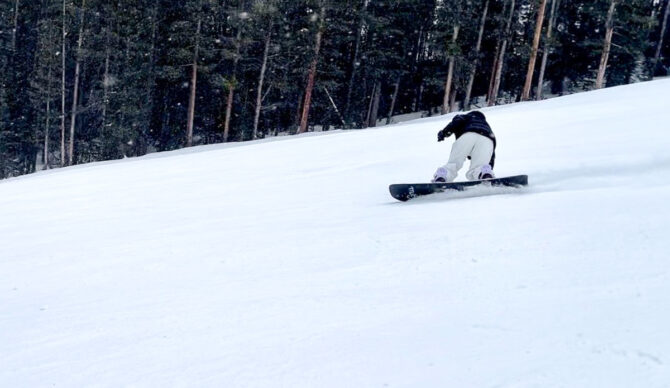
The type of snowboard you choose should depend on your riding style. To select a snowboard, you first have to consider its intended use. Where are you going to be riding? What type of terrain will you be getting into? All-Mountain, Freestyle/Park, Powder, and Splitboards are the most common board types. All-mountain boards, like Salmon’s Rumble Fish, are for what the name implies: various terrains and conditions, or basically all terrain at a resort. Freestyle/Park boards (also called jib boards), like the Bataleon Distoria, are designed for tricks and jumps. Powder boards like the Nidecker Mellow are specialized for deep snow and can encourage face shots. Freeride boards, like Season’s Nexus, can be similar to all-mountain designs but often have more aggressive shapes and sidecuts. Splitboards like the Weston Rise Split split in half to tour uphill and then can be reassembled to shred down.
Length and Width
Board length and width are also important factors. Taller riders generally need longer boards, while shorter riders will usually prefer shorter boards. Consider your weight and riding style as well. Wider boards, like Nitro’s Karma, provide better float in powder but can be harder to maneuver. Choose a width that accommodates your boot size and riding style. You don’t want the dreaded “toe-drag,” where your boot hangs over the side of the board if it’s too narrow for your foot size. Shape-shifting boards, like Nidecker’s Mellow, are generally shorter but have a longer effective edge, so riders typically size down on these.

Board flex is an important consideration. We tested and rated the flex of all the snowboards included in this review. Photo: Colter Hinchliffe//The Inertia
Board Flex: 1-10
Board flex refers to the stiffness or softness of the board. Soft boards are more playful and forgiving, making them ideal for beginners and freestyle riders who prioritize maneuverability. Check out the Jones Rally Cat as a softer flex board on this list. Medium flex boards like the CAPiTA Birds of a Feather offer a balance of stability and playfulness and can be best for intermediate riders and those who enjoy a mix of freestyle and carving. Stiff boards, like the Stranda Biru, provide exceptional stability and speed, making them ideal for advanced riders and those who prefer carving and aggressive riding or need something to hold up during deep powder days. For this review, we gave each board a flex rating of 1-10 based on the results of our testing.
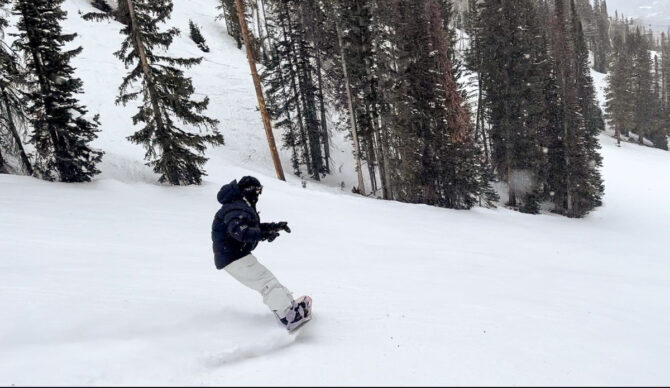
Shape, profile, sidecut radius: These all play a factor in how your board performs. Photo: Heather Hendricks//The Inertia
Board Shape
The shape of a snowboard can influence its performance. Directional boards (like the majority on this list) have a longer nose than tail, making them good for carving and riding in deep snow as the longer nose and shorter tail can whip turns and aids your float in powder. Twin boards like Bataleon’s Distoria are symmetrical, so the nose and tail are the same. These can make riding switch (where your back foot is forward) somewhat easier and are good for riding park, where you might need to land or launch switch. Directional twin boards like the Jones Rally Cat combine elements of both shapes, offering a balance of stability and maneuverability. There are also asymmetrical twin boards, like the GNU Ladies Choice, swallowtail shapes, and plenty of other oddities to check out.

Getting the Jones Women’s Rally Cat primed for testing. Photo: Colter Hinchliffe//The Inertia
Snowboard Camber Profile
Snowboard profiles can initially seem confusing, but it’s as easy as assessing how the boards curve from tip to tail. Toss a board on the ground and see if it curves up in the middle (camber) or is concaved in the center (reversed camber). Camber boards like the Burton Feel Good Camber or Arbor Cadence Camber have a traditional arch in the center. This provides pop, stability, and edge hold. Camber boards are ideal for carving and aggressive riding, while rocker boards and hybrid boards, which are a mix of profiles, are generally better suited for freestyle riding. Rocker’s reverse arch shape, as in the hybrid profile of the GNU Ladies Choice, provides playful float and forgiveness, while the edges can be less catchy and offer a more forgiving ride. Flat boards have a flat base and can combine camber and rocker for a different and often more damp-feeling ride. But it’s all preference, so we encourage you to try before you buy.

The right snowboard for you depends a lot on your riding style. Photo: Colter Hinchliffe//The Inertia
Snowboard Brands
Multitudes of established brands exist, including Burton, Lib Tech, Jones, Arbor, and CAPiTA, all with a strong track record for producing high-quality snowboards. However, new brands and snowboard creators emerge every season. Stranda, United Shapes, and Season are among some of the newer brands on our list. So, buying a snowboard is as much about brand loyalty as it is about the product itself. Researching brands (both legacy and emerging) is important if you care where you’re spending your hard-earned dollars. To learn more about some of the top brands in the snowboard business, head over to our Best Snowboard Brands article.

GNU has a wide range of snowboard styles. Photo: Colter Hinchliffe//The Inertia
Snowboard Prices
Like with everything, the prices of snowboards vary. This all depends on the brand, materials, construction, and features of the board. Plenty of budget-friendly options exist online (like the currently on-sale Arbor Cadence, at early season sales, when buying second-hand, and on places like Facebook Marketplace. But, these decks may have limitations and defects or could be damaged in other ways. Mid-priced boards are the most widely available option and generally range from $475-$675. Options in this price range include the Rome Ravine, Bataleon Distoria, and Nidecker Mellow boards. Premium options like the Stranda Biru and GNU Ladies Choice can range from around $700 to well beyond. Custom snowboards are also an option and can cost as much as the creator desires to spend. Check out Franco Snowshapes out of Jackson Hole, Wyoming, if price truly isn’t a factor for you.

Getting the GNU Ladies Choice locked and loaded for riding. Photo: Colter Hinchliffe//The Inertia
Snowboard Features
With so many snowboards on the market, many brands have created different features to set themselves apart from the sea of competitors. These different features include technologies that can enhance your snowboard performance. Mervin Manufacturing, for example, is known for Magne-traction, which are serrated (or wavy-like) edges like you can find in the GNU Barrett. These are meant to provide superior grip on icy terrain. Other features can include Triax laminate construction, which can also aid in responsiveness and pop. Other standout features you should look for are eco-friendly materials like recycled fibers, sustainable wood cores, and bio-resin epoxy, which are present in boards like the Arbor Cadence Camber.

Bindings are an important part of the equation. If you already have some, make sure they work with the board you’re buying. Photo: Colter Hinchliffe//The Inertia
Other Snowboarding Gear You’ll Need
Of course, snowboards without metal edges or bindings attached aren’t allowed on most resorts and won’t get you very far in the side or backcountry (unless you’ve got a sled or Verts, and it’s a pow surfer, but the best of those are over here on this list). So that’s why selecting your deck is just one piece of your overall snowboard kit. You’ll also need bindings, snowboard boots, goggles, gloves or mittens, a snowboard jacket and pants, a helmet, and plenty more to get out and after it. We have tested plenty of other snowboard gear, and we encourage you to check out our other snowboard gear buyer guides linked above to get you up to speed on all the best products you’ll need for a winter you won’t soon forget.

Winter’s just around the corner – time to gear up. Photo: Colter Hinchliffe//The Inertia
How Can I Try Before I Buy?
Demo days and test-fests are great places to try out snowboards before you commit to a purchase. Check out your resort’s event lists to see if a demo day or weekend is coming to your home mountain. Also, follow brands, shops, and online retailers to see when a demo day may happen near you.
It can also be worth doing your own demo day. Choose a less-busy day on your home mountain, and rent a demo board from a shop at the base that will let you swap out a few different times. Make the day all about getting those reps in on different boards, and at the end of the day, you may even be able to put the cost of your rental towards a new board of your choice, though keep in mind prices at the base of the mountain are often inflated compared to online/stores elsewhere.
Return To: Comparison Table | Top Picks
Editor’s Note: Looking for men’s-specific snowboard options? Check out our guide to the Best Men’s Snowboards. For more reviews and gear coverage on The Inertia, click here.

Best Women's Snowboards of 2026


