


The Duotone Unit is a versatile all-rounder, ready for freestyle, waves, upwind speed, and much more. Photo: Will Sileo//The Inertia
Wing Foiling has been described as the fastest-growing watersport in the world, and while we’re not here to confirm or deny such a claim, we can certainly understand why it would be. All you need is a body of water and some wind. No more struggling with the weight and bulk of a windsurfer setup, or the power and required launching area of a kite. The wing and foil setup is fairly compact and highly versatile, capable of launching nearly anywhere and, with the right equipment, in wind speeds of 10 knots or less. Side-note to the uninitiated – that’s hardly more than a breeze.
Following is our second-edition review of the best wings in the wind industry that’s been a constant testing project over the past three years. The red-hot wing market is literally changing weekly with new innovations and products constantly hitting the market. So we certainly plan on keeping this review updated.
Below, we call out some favorite wings for specific applications. However, take note of the fact that all the wings included in this review are top-tier wings that rose above the competition, and the race for the “best of the best” was often tight and nitpicky. In other words, there’s not much of a gap between the first-listed item on this review and the last – they’re all on this list for a reason and would be an incredible choice for your wing-borne pursuits.
Editor’s Note: We updated this guide in May of 2026, adding the new Armstrong X-Wing, removing the Core Halo Pro, and updating links and listings to reflect the latest versions of these wings that are out there on the market.
Jump To: All-Around Wings | High Performance Wings | Surf Wings | Light Wind Wings | Comparison Table | How We Tested | Buyer’s Guide
Related: Best Wing Foil Boards | The Best Foils | More Foil Gear Reviews

Wingers enjoy the perfect conditions in Hood River. Photo: Ken Cox//The Inertia
The Best Wings for Wing Foiling
All-Around Wings
Versatile and Powerful: Duotone Unit 2026
An Intuitive All-Rounder: Reedin Supernatural
Performance All-Rounder: Armstrong XPS MkII
User-Friendly: Slingshot Slingwing V6
Great for Intermediate Riders: Cabrinha Mantis V6
Interchangeable Handles: North Nova Pro
High Performance Wings
Super Stiff, Direct Control: F-One Strike V6
Speed and Power: Ozone Flux V2
Speedy and Surfy: Armstrong X-Wing
Strong and Durable: North Mode Pro
Surf Wings
Stiff and Lightweight: F-One Swing V5
Incredible Luffed Performance: Duotone Float
Light Wind Wings
Traditional and Aluula Options: Duotone Ventis
Semi-Aluula Construction: F-One Strike CWC
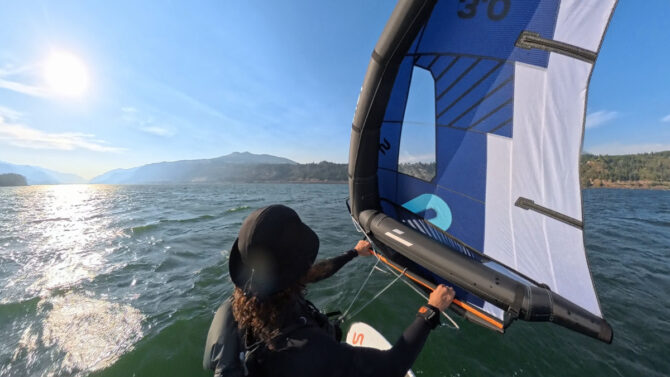
Ripping upwind on the Slingshot Slingwing V6 in Hood River. Photo: Will Sileo//The Inertia
All-Around Wings
Versatile | Balanced | Best for Most Riders
Both the largest and most nebulous category, all-around wings do just about everything well. If you’re in the beginner/intermediate camp, these are the wings we would point you towards, but that said, there’s a lot to love here for more advanced riders as well – though racing-afficionados may want to look at the “high performance” wings below. Stable and predictable with great power delivery, these wings are the true quiver killers for those looking to take on a variety of different riding styles.
Versatile and Powerful
Duotone Unit 2026
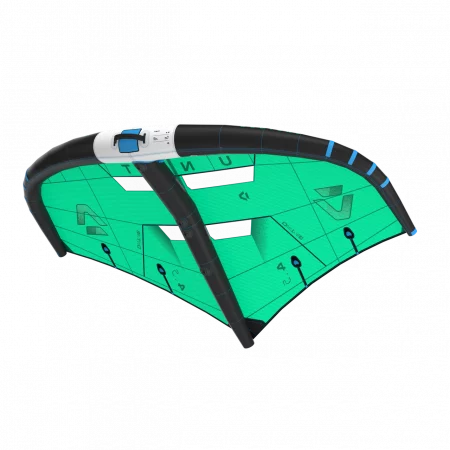
Price (4m): $1,229
Handles: Hard handles or boom (not included)
Windows: Yes
Best For: All-around
Defining Characteristics: Grunty, good at everything
Pros: Super stable in the air, direct response with firm wing design/construction, boom and hard handle options
Cons: Boom or handles not included
Duotone has made some slight but noticeable improvements to the Unit for 2026, positioning the wing as their highest performing option, with the Slick being discontinued moving forward. For the past couple of years, the Unit has sat between high-performance maneuverability and all-around user-friendliness, but the 2026 changes truly elevate the offering into the “all-around high performance” sub-category.
The wing retains the Duotone Fusion handle system that was introduced in 2025, providing options for either a boom or hard handles. We’re big fans of this system overall. Both the handles and boom are very light, have a very stiff and direct connection to the wing, and are exceedingly comfortable. Other improvements to the Unit for 2026 include better stability while flagged out and more control when doing so, thanks to a stiffer front handle. Both of these were gripes of ours with the previous Units, so it’s great to see Duotone working to improve based on rider feedback. Other improvements include some tuning enhancements to the shape and canopy for better top-end performance and upwind angles, as well as a more responsive ride, positioning the Unit as Duotone’s highest-performing offering in wings.
Despite these high-performance modifications, overall, the Unit remains one of the more user-friendly wings on the market. The improvements to its surfability are notable, but it is still not what we would consider a “surf wing” as its moderate dihedral makes it a bit squirmier when flagged out than, for example, the Duotone Float or F-One Swing. However, for those looking for a wing that can do it all, the Unit is a compelling choice. It’s worth noting that the Unit does not come with handles or a boom, which must be purchased separately.
The Unit is available in a standard construction, the D/LAB Aluula construction, and an SLS construction that bridges the gap between the two with an Aluula center segment of the leading edge, adding stiffness where it is most needed.
check price on MACkite See the D/LAB Unit on MACkiteAn Intuitive All-Rounder
Reedin Supernatural 2026
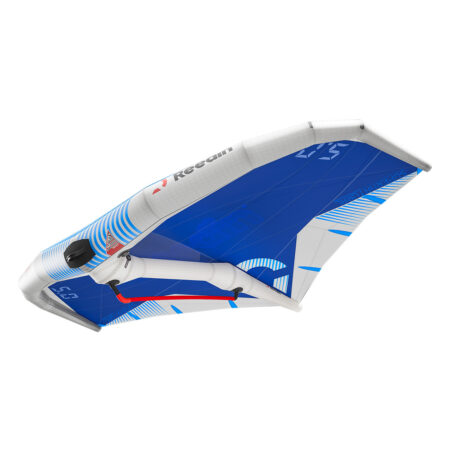
Price (4m): $1,079
Handles: Boom (included)
Windows: No
Best For: All-around/surf
Defining Characteristics: Intuitive, all-around performance
Pros: Snappy canopy, predictable and easy-to-use without sacrificing performance
Cons: Not a true standout in terms of upwind performance
With multiple well-received releases of Supernatural wings under its belt, Reedin is now an established player in the wing foil market. And with the Reedin Supernatural 2026, Reedin takes the well-loved, all-around design and gives it the boom that’s starting to become industry-standard.
Up until the Supernatural, Reedin was a bit off our radar in the wing market. The brand had produced some interesting designs, like the see-through SuperWingX, but we felt it had yet to hit the mark in this highly competitive field. A couple of years ago, Reedin unveiled the Supernatural 2024 and wowed us all with a super versatile design that did everything pretty darn well. Stable and predictable in flight with tons of on-demand power, the wing was easy to gybe and tack, and surf quite well to boot. Intuitive is the best way to describe it – the wing just does what you want it to do, for the most part. The Supernatural 2025 took things to the next level with subtle refinements that didn’t change the overall versatility we had come to love about the wing. Now with the 2026 Supernatural, a boom is made standard, in line with the general trend towards boom handles that we’re seeing in the wing market at large.
check 2026 price on MACkite check 2025 price on MACkite
Performance All-Rounder
Armstrong XPS Mk II
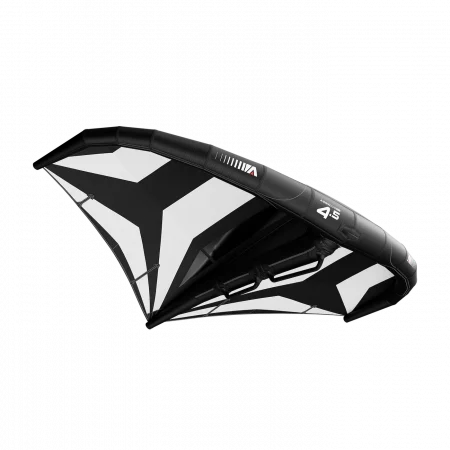
Price (4m): $1,129
Handles: Hard (included), boom (add-on)
Windows: Yes
Best For: All-around performance
Defining Characteristics: Stiff and responsive, compact wingspan
Pros: Stiff construction, all-around style of wing with a high-performance bent
Cons: Noticeable decrease in efficiency compared to true high-performance wings
The XPS MkII is Armstrong’s all-around workhorse, and a damn good one at that. With a super stiff construction, it offers solid low-end grunt as well as an impressive top-end, and it surfs incredibly well to boot. Like the Armstrong A-wing before it, the XPS luffs quite well, and the improved depower handle on the front of the wing is quite stiff, providing a very direct response when the wing is luffed for wave-riding — all the better for making sure it stays out of your way. The overall stiff construction makes the wing much more capable in the high-end and less prone to flexing or deforming when overpowered. However, if you want to push further into true high-performance territory, Armstrong’s new X-Wing is the next step up.
For 2025/26, Armstrong released the XPS MkII, which makes some subtle improvements to the wing’s overall shape and construction, and big improvements to the handle design. A lower-aspect airframe adds more stability, while the leading edge diameter has been reduced for better upwind efficiency. Finally, one of the biggest improvements to the wing (in our opinion) is the change in the handles. They’re now removable, interchangeable with a boom or hard handle options, and improved ergonomics with a cylindrical piece of carbon wrapped in EVA for grip. We weren’t the biggest fans of the prior-generation handles, which were a bit flatter, wrapped in fabric, and overall not our favorite handle design. For all-around use with a performance edge, this is one of our favorite wings on the market.
check price on REAL WatersportsUser-Friendly
Slingshot Slingwing V6

Price (4m): $1,149
Handles: Boom (included)
Windows: Yes
Best For: All-around
Defining Characteristics: Grunty and easy to use
Pros: Great power, direct response, improved aerodynamics and freeflight over the V5 version
Cons: Not the highest-performing design that we have encountered
Slingshot made some significant improvements to their iconic Slingwing with the V4 design, introducing hard handles, windows, and an overall improved layout and stiffness. The Slingwing V5 built upon these improvements, with stiffer handle-to-wing connections and the inclusion of a boom as standard (and included in the total price). The Slingwing V6 makes subtle improvements to the overall design, reducing the dihedral for better free-flight performance and an overall more streamlined profile for smoother transitions and better upwind ability. Supremely user-friendly, this is a compelling choice for those looking for a versatile all-rounder.
The wing’s gruntiness is an aspect that’s great for those learning to foil, helping pull the rider up on foil in the beginning stages of the learning process. The V3 and V4 were already very grunty wings, and the V5 built on that with added stiffness for improved responsiveness when pumping. The new Sling Grip Uni Handle is another major improvement, as we are big fans of boom wings for easier hand placement. The connections from the wing to the handle are also vastly improved, offering a more direct feel and response.
The wing is a great choice for beginner or intermediate riders with its user-friendly design. However, advanced riders will likely find themselves better served by a wing more geared towards high-performance riding.
check price on MACkiteGreat for Intermediate Riders
Cabrinha Mantis V6
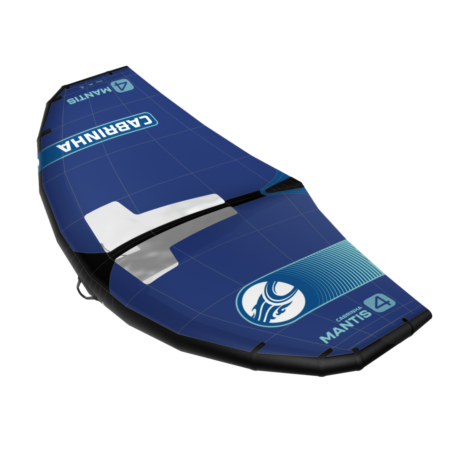
Price (4m): $1,269
Handles: Boom
Windows: Yes
Best For: All-around/surf
Defining Characteristics: Incredible control, great handles
Pros: Extremely versatile wing, stiff construction, boom now included
Cons: All-around design isn’t a standout in any category
If it ain’t broke, don’t fix it — and for the most part, that’s exactly Cabrinha’s approach with the V6 Mantis. The core of what made the V5 so compelling is all still here: top-tier performance with an all-around, bordering on high-performance profile, solid upwind potential, plenty of on-demand power from a stiff and responsive construction, and enough composure in overpowered conditions that you won’t find yourself getting yanked around. When flagged out, the wing is super stable, and the rigid front handle provides a ton of control when depowered, a real asset for anyone riding waves or swell.
The big change for 2026 is the Handlebar boom, now standard and included across all sizes. That’s a meaningful upgrade, both for the riding experience and the value proposition. Boom wings are rapidly becoming the industry standard, and getting one in the box rather than as an add-on purchase is a nice touch. Cabrinha has also redesigned the bag so you can pack away the wing with the boom still attached, something that’s also becoming industry-standard. On the construction side, there are some refinements under the hood – a carbon composite batten for better trailing edge stability and an updated Airframe inflation system, but nothing that fundamentally changes how the wing rides.
The windows remain massive and well-placed, the grip of the boom, same as the hard handles from previous generations, is comfortable, and provides a large front bumper that can be pistol-gripped for wave riding. Our intermediate-rider framing from the V5 still applies: true beginners might be better served by something a touch more user-friendly, and advanced riders chasing a specific discipline will likely want something more purpose-built. But for riders with enough skill to tap into the higher-performance aspects of the wing, the Mantis V6 remains one of the better all-around options on the market.
check Mantis V6 price on MACkite check Mantis V5 price on MACkite
Interchangeable Handles
North Nova Pro
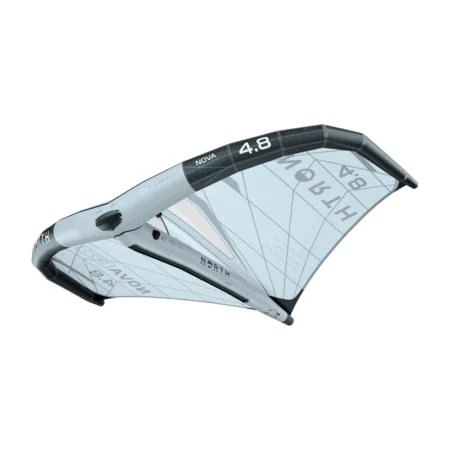
Price (4.2m): $1,449
Handles: Interchangeable: hard handles or boom (not included)
Windows: Yes
Best For: All-around/freestyle
Defining Characteristics: Stiff and responsive, interchangeable handles, powerful
Pros: Super stiff, lightweight, interchangeable handles give tons of customization
Cons: Interchangeable handles are tricky to get on and off
North’s Nova is their all-around, user-friendly wing for foiling. The Nova Pro is by no means a less user-friendly wing, but it has some significant and interesting upgrades over the base version, at a very slight increase in price. If you have the room in your budget, we highly recommend upgrading to the Nova Pro over the base-level Nova. First of all, the materials. North uses a special N Weave 45 material for the frame and what they call Matrix material in the canopy. While the words are just marketing-speak, the difference in materials is palpable, especially in the frame of the wing, with a rock-solid feeling that helps in both under- and overpowered conditions.
Another interesting upgrade, and adding to the wing’s overall stiffness, is North’s new Shiftlock handle system, which uses two thin rails integrated into the center strut that the hard handles or boom (your choice) latch onto. The connection is super secure and quite rigid, providing a very direct response in controlling the wing.
The rails themselves add a bit of stiffness to the wing, as does the boom if you choose to go that route. We did discover one frustrating downside to the boom, however, as, like most boom-style wings, to pack it back into the included carry bag, you’ll have to take off the boom. Unlike most boom-wings, however, that process requires a Torx screwdriver (T40 to be exact) to unclamp the boom from the tracks. While that’s not the biggest deal, and may be a non-issue for some, we’re all about simplicity, so we felt this was worth noting. The handles and boom also need to be purchased separately from the wing.
check 2026 price on MACkite check 2025 price on MACkiteHonorable Mentions
There are a couple of wings we’d like to mention here. First off is the KT Wing Air Direct Drive. Although it’s difficult to find online at the moment, we’ve seen a few of these pop up at our local waters recently, with some major improvements over the prior version. Now with windows and the option for a boom, this grunty and wave-oriented wing gets the update it deserves. Now it’s just a matter of finding it in stock.
We’d also like to give a nod to the Naish ADX. We only had limited time testing the latest version of this wing at the AWSI Expo in September 2024, but we liked what we saw. Stiff and ergonomic hard handles, and a grunty, compact outline stay true to Naish’s roots as a surf-oriented brand.
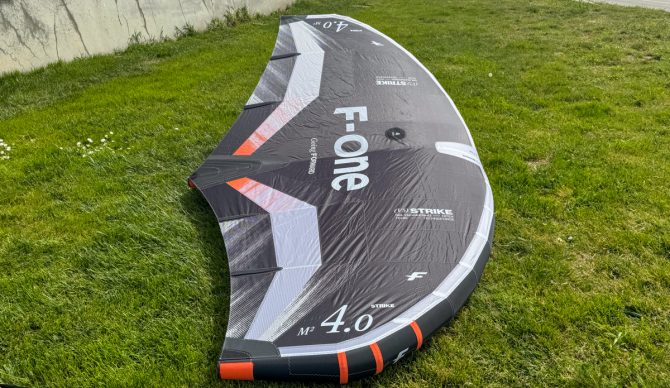
The F-One Strike (pictured is the V5) is a true weapon for high-powered riding. Photo: Will Sileo//The Inertia
High Performance Wings
Fast | Responsive | Efficient
These are the wings made for those with the ability to eek every last shred of performance out of them. Looking for better upwind angles? Explosive hangtime? The stiffest, lightest, and most reactive wings on the market? Look no further.
Super Stiff, Direct Control
F-One Strike V6
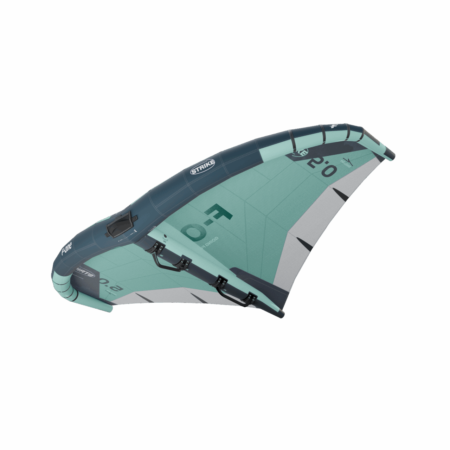
Price (4m): $1,259
Handles: Interchangeable: Soft, hard handles, boom, not included
Windows: No
Best For: Advanced riding, freestyle, speed/efficiency
Defining Characteristics: Fast, performs when overpowered
Pros: Very light, stable in the air, and in higher winds, stiff construction, interchangeable handles
Cons: No windows, can be a bit twitchy for beginners/intermediates, less surf-oriented than previous versions, wing comes without handles
F-One’s Strike has been a consistent top-tier performer for us throughout the years we’ve been working on this review, and the Strike V6 continues that trend. Already one of the stiffest and most direct-feeling wings we’ve tested, the improvements made here are ones you are likely to feel, rather than see — improved fabric tension for better stability across the wind range, more forward traction, and a slightly extended high-end range over the V5.
The Strike has always been a high-performance wing designed for speed, and this year’s version stays true to that. It thrives in the high-end and is not easily overpowered, but it sacrifices some grunt to get there. You’ll likely be happier riding this wing slightly overpowered than slightly underpowered. That said, it’s worth noting that F-One has continued to dial in the low-end over successive iterations — the V6 is far more capable in softer conditions than the early Strikes were. One note for wave riders: F-One has leaned the V6 further into the freeride/freestyle direction this year, so if surf performance is your priority, the Swing is a better bet. And the stiffness and direct control of this wing cannot be understated. This wing slips and zips through the wind window, maneuvering itself to precisely where you want it to be.
The interchangeable handles remain, letting you choose from hard, soft, semi-soft, or boom — and swapping in and out is still a breeze. However, the wing ships with no handles included, so you’ll have to add that to the total price. The two-way inflation valve is also still present, which we’re big fans of for its precision when pumping. Still no windows, which some will care about and others won’t.
For the premium construction option, the Strike V6 QuadX replaces the Aluula version from prior years. Rather than using Aluula, F-One has developed its own laminated fabric, QuadX Composite, a four-layer construction that delivers a significant bump in stiffness and lightness over the standard construction. The result is a wing that’s noticeably lighter and more reactive, and at a lower price point than the old Aluula version. If you want the most out of the Strike platform, the QuadX is the way to go.
check v6 price on MACkite check v5 price on MACkiteSpeed and Power
Ozone Flux V2
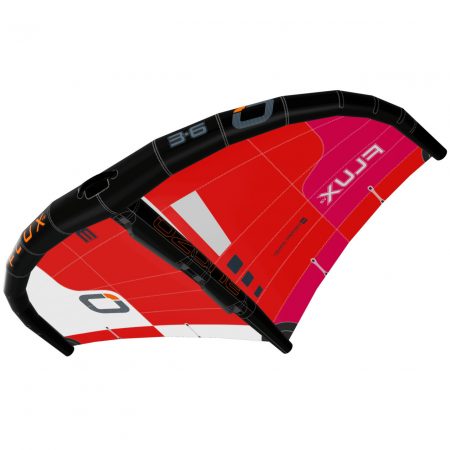
Price (4.3m): $1,536
Handles: Hard, semi-padded
Windows: Yes
Best For: High-performance speed, surfing
Defining Characteristics: Fast, stable, luffs well
Pros: Great mix of speed/high-powered riding and stability for wave-riding
Cons: Inflation valve doesn’t lock on, a minor inconvenience when pumping
The Ozone Flux has been a widely celebrated and well-loved wing design. When it came out a couple of years ago, it was at the forefront of the freeride/freerace trend in wing design, which now appears to have overtaken the industry. This style of wing prioritizes speed, overall efficiency, and stiff, responsive handling. That often translates somewhat into stable freeflight and easy control for use in waves.
The Ozone Flux fits these criteria perfectly as a wing that is entirely built around speed. The wing thrives in high-powered conditions, with a super stiff construction, updated materials, and a well-designed panel layout that helps it handle overpowered conditions and improve the wing’s lifespan by keeping it from bagging out too quickly. At Crissy Field in San Francisco (where our lead tester rides), the Flux has quickly become one of, if not the, most popular wing to ride due to the speed and solid on-wave performance.
The Ozone Flux V2 takes things to the next level. The stiffness of the wing has been improved, as well as overall handling and efficiency, making for a faster, more maneuverable wing, capable of even better upwind angles than the prior version. However, despite all these race-oriented features, the wing has proven itself to be a solid choice for waves as well. The V2 sports a stiffer front handle for better control when flagged out, though its side-to-side stability is noticeably a bit worse than the V1, with the V2 Flux leaning a bit more towards the Ozone “freerace” program. If you’re looking for the ultimate on-wave stability from Ozone, we recommend checking out the Ozone Flow.
The materials, as well as being stiff, are quite lightweight, and the hard handles are shaped to allow a semi-luffed, one-handed “pistol grip” on the front handle, a design that many wing manufacturers are starting to incorporate. The V2 version has increased handle rigidity and extended the front handle to allow for one-handed riding. If you’re looking for a high-performance wing that can do it all, the Flux V2 is a great choice.
Inflation is two-point, with the leading edge and strut being inflated separately. Really, our only complaint about the wing is that it uses a non-locking Boston-style valve, which can be a bit finicky when inflating.
Similar wings include the F-One Strike, which similarly thrives in the high end, and being very lightweight, is a solid choice for riding waves as well, though in our testing, we found the Strike to be a bit jumpier when luffed than the Flux, and perhaps a bit more capable in overpowered conditions. The Armstrong X-Wing is a similar wing as well, with a bit more surf-oriented stability than both the Flux and Strike.
check price on MackiteSpeedy and Surfy
Armstrong X-Wing
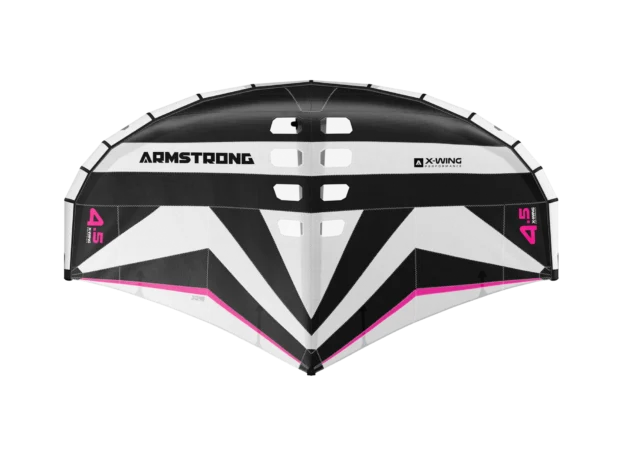
Price (4m): $1,550
Handles: Boom
Windows: Yes
Best For: High-performance speed, efficiency, surfing
Defining Characteristics: Efficient, luffs well, responsive
Pros: Stiff, efficient, high-performance that doesn’t sacrifice ease of use or fun
Cons: Not quite as good for surfing as the XPS MkII
Armstrong’s XPS has always been a top performer in the crowded field of all-around wings, with the MkII really toeing the line between all-around and high-performance, thanks to a super stiff airframe, wide wind range, and an impressive top-end. With the X-Wing, Armstrong takes things firmly into high-performance territory.
The headline is a new material: ULTRA-PE X-PLY, Armstrong’s answer to a question the wing market has been wrestling with for a couple of seasons. Aluula dominated the high-performance conversation for a while, and for good reason. It’s super stiff and super light, a genuine leap forward for wing design. But durability concerns have pushed brands to look elsewhere, and the last couple of seasons have seen a wave of proprietary alternatives emerge: F-One’s QuadX, and now Armstrong’s ULTRA-PE X-PLY.
The new material does two things that matter on the water. First, it allows for a reduced leading edge diameter. Second, it enables a higher aspect ratio — the 4m X-Wing has a span of 293cm versus 278cm on the 4.0 XPS. Combined with a sub-2kg weight, the result is a meaningfully more efficient wing, especially upwind, and the difference is immediately noticeable. Even without a back-to-back test, the X-Wing has a gear the XPS simply doesn’t – lock in on an upwind tack and you’ll feel it right away.
Despite the high-performance profile, the X-Wing surfs remarkably well. Not quite as well as a true surf wing, but it’s one of the best among the high-performance wings we’ve tested. Worth noting: the boom is not included and will need to be purchased separately.
check price on REAL WatersportsStrong and Durable
North Mode Pro
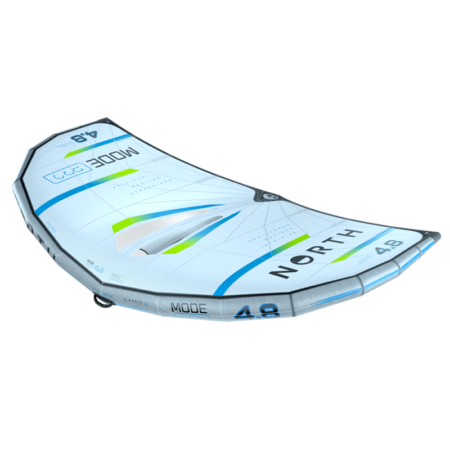
Price (4.2m): $1,419
Handles: Interchangeable
Windows: Yes
Best For: High-performance speed
Defining Characteristics: Stable, fast, long-lasting
Pros: Great wind range, stiff and responsive, lots of handle options
Cons: A bit heavier-feeling than other high-performance wings, handles not included
North’s Mode Pro has gained many loyal customers over the years, and the 2026 version takes the well-loved design and gives it a meaningful set of upgrades. The headline addition is Carbon UDi Technology, patent-pending UD carbon tapes running the full length of the leading edge, borrowed from North Sails’ broader materials program, delivering faster snapback and more efficient pumping. Paired with a stiffer XL T-Joint for more direct power transfer and a refined strut shape, the wing feels noticeably more reactive than its predecessor. A slightly flatter dihedral is another meaningful tweak, generating more forward thrust and keeping the wing progressively steadier the faster you go. There’s also a new wingtip seam protection detail – the closing seam at the tip is rolled inward to shield it from abrasion, a small but smart durability upgrade.
Beyond those changes, the North Mode Pro is largely the same wing we loved in 2025. The ShiftLock handle system, which lets you choose between a boom or a few different styles of hard handles, as well as attachments for an action camera or SUP paddle, remains, and the handles remain securely locked in but require tools to set up, so swapping handles between wings in your quiver is doable, but most riders with multiple sizes will want multiple handles/booms to go with them.
In testing, we’re huge fans of what North has cooked up here. The wing is fast and highly responsive, with a wide wind range and great top-end. In comparison to North’s Nova Pro, the Mode is faster and has less grunt in the low end. It also surfs better than you’d expect, despite the Nova being North’s more wave-oriented wing. The Mode’s flatter dihedral makes it more stable when flagged out.
One small knock remains: we found the Mode Pro to feel a bit heavier than most other high-performance wings we’ve tested. That’s less of an issue when powered up, but when flagged out, it has more of a tendency to drag in the water than wings like the Ozone Flux or CORE Halo Pro. The upside of that heavier construction is durability. This wing is built to last.
check 2026 price on MACkite check 2025 price on MACkite
Honorable Mentions
Another high-performance wing we’d love to mention is the PPC M1-X, engineered with Dyneema for a super-stiff frame. We’ve spent some time on the M1-L, which only uses Dyneema in the center segment of the leading edge, and were stoked on the stiffness, and snappy, direct canopy. However, we found the M1-L isn’t that much cheaper than the M1-X (about $1,500 compared to the M1-X’s price of $1,800), which kept it out of the running for us. When we are able to test the M1-X, it will likely find a home in this review based on the overwhelmingly positive feedback it has received.
This tees up another high-performance standout, but one that is so specialized that, unless you’re seriously interested in wing foil racing, it likely won’t have a place in your quiver. That wing is the Ozone Fusion, a dual-skin design made to slice through the wind with maximum efficiency and speed. Now in its second iteration as the Ozone Fusion V2 Ultra X, the wing comes packed with upgrades, including the addition of Aluula material throughout the frame of the wing for maximum stiffness and lightness. We’ve heard plenty of rave reviews about this wing from the racers at our local wind spots.
Finally, we’ve got to give some props to the now-discontinued Duotone Slick. For 2026, the Unit is moving in to replace the Slick as Duotone’s high-performance wing, but past versions of the Slick still provide that user-friendly high performance which made it such a standout in the first place.
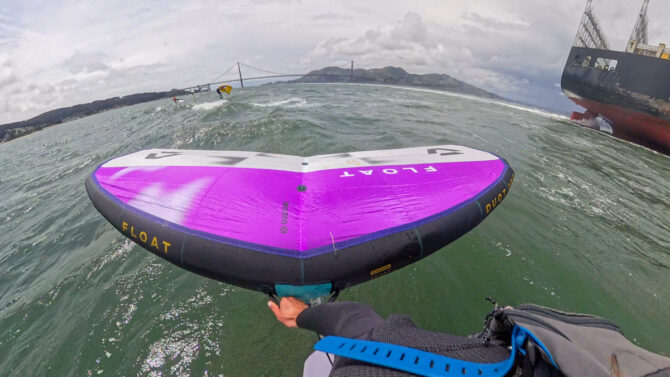
Riding a ship wake with the Duotone Float. One of the most stable wings when luffed, the Float parks itself and stays where you want it to. Photo: Will Sileo//The Inertia
Surf Wings
Drifty | Compact | Tuned for Wave Riding
If your goal in winging is to ride a wave with nothing holding you back, a surf wing is the way to go. These wings are optimized for effortless drift and easy control from the front surf handle. Lightweight and compact, these wings will stay out of your way while you find your flow on waves, wakes, or swell.
Stiff and Lightweight
F-One Swing
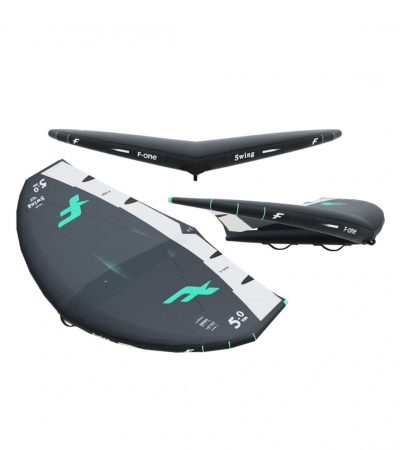
Price (4m): $1,249
Handles: Interchangeable: Soft, hard handles, boom
Windows: No
Best For: Wave-riding, freeride
Defining Characteristics: Grunty, direct response, stable when luffed
Pros: Very light, stable in the air and when luffed, plenty of grunt lets you ride a smaller size
Cons: No windows, not as much upwind efficiency/speed as the Strike
The V5 Swing is a significant step up from the V4, a fully reworked design with a reduced wingspan that made the wing lighter and more maneuverable, while also inheriting the forward traction that F-One introduced on the Strike V5. The addition of the Sweep Control Panel for trailing edge tension, along with a new radial cut and longer Load Diffuser to minimize deformation, gave the wing noticeably better high-end efficiency without sacrificing the low-end grunt the Swing is known for. The result is far and away one of the best wave-riding wings we’ve tested.
For 2026, F-One has opted not to update the Swing, leaving the V5 as the current model, a sign of confidence in a design that’s already one of the best wave wings on the market.
Even with the new (optional) hard handles attached, the wing maintains a very low weight, and the flatter dihedral helps keep it steady and makes it very easily controlled when flagged out. The wing benefits from the same stiffness improvements that have been made to the Strike over successive iterations, giving it tons of direct control, a huge boon when coming off a wave and needing a quick boost of power to stay on foil. The extra gruntiness also allows you to ride this wing a bit smaller than many others out there, which, along with the compact wingspan, makes it highly maneuverable and easy to manage both under power and when luffed. Despite all of these wave-specific features, the Swing is still a very solid wing in higher winds with great upwind efficiency, though the Strike and other speed-oriented wings will be a better choice if that’s your priority.
check price on MackiteIncredible Luffed Performance
Duotone Float 2026
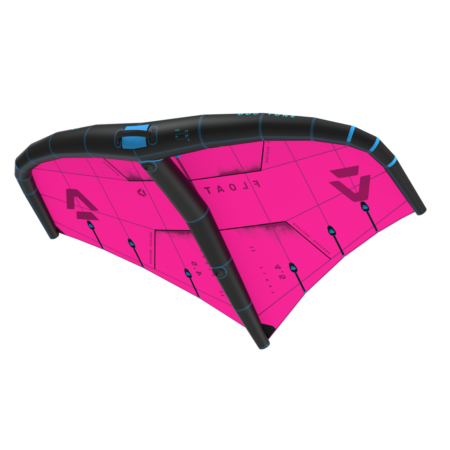
Price (4m): $1,179
Handles: Boom (not included)
Windows: No
Best For: Surf
Defining Characteristics: Super stable and lightweight when flagged out
Pros: Extremely stable in freeflight, great price
Cons: No windows, boom not included
The Float has entered its second generation for 2026, and Duotone has used it as an opportunity to dial in the things that made the first version so compelling. The design philosophy is unchanged – super-simple, lightweight, and easy-to-use, engineered first and foremost to flag out and stay out of your way while riding waves or ripping swells. But the execution is sharper. A redesigned profile with reduced depth in the center and enhanced profile at the quarter span makes for smoother, more consistent power delivery across your sheeting angles. Drift stability is improved, drag on the wave is reduced, and upwind performance is better than the first gen. It wasn’t a weakness of the Float to begin with, but now it’s even less of a consideration.
Make no mistake, this wing remains perhaps the easiest and most intuitive wave-riding wing we’ve tested. The lightweight design keeps it in the air and out of the water, aided by the stable design and a nice, stiff surf handle that lets you put it where you want it when flagged out. Overall handling is very intuitive, and the wing’s light feel makes it great through tacks and gybes as well.
The boom is still the only handle option, and still not included in the price — the same con we flagged on the first generation. The tradeoff remains the same, too: less packability, but a lighter and more one-handed-friendly setup than hard handles.
For those who want to push the Float’s performance further, Duotone has introduced a Float SLS for 2026. It uses PentaTX material in the leading edge and strut — a 135g material that’s significantly lighter and more resistant to stretch than standard Dacron — combined with a reduced LE diameter for less drag and more direct power delivery. If the standard Float already impressed you, the SLS takes it up a meaningful notch.
check price on MACkiteHonorable Mentions
The Ozone Flow is another wave-oriented wing we’d like to give some props to. Although we’ve had very limited time on this wing, it certainly impressed us in testing. It’s a bit more of an all-rounder shape than the two wings above, with more dihedral, but it flags out incredibly well.
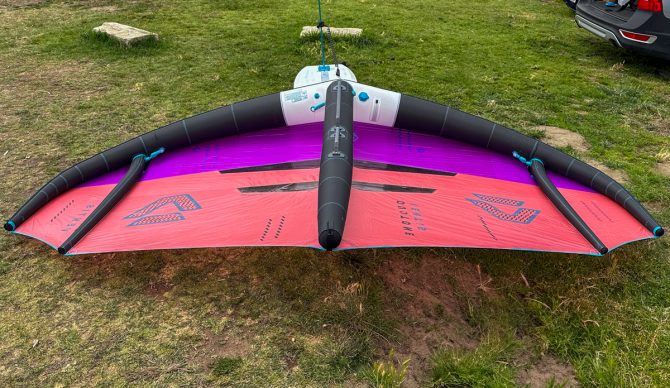
The Duotone Ventis uses extra struts for added stiffness and a more compact wingspan. Photo: Will Sileo//The Inertia
Light Wind Wings
Powerful | Lofty | Engineered for Marginal Conditions
If the places you ride have more days below 12 knots than days above, or if you want to make use of the days where the wind is barely reaching double-digits, a light wind wing is your ticket to getting on foil earlier and with less effort. A big board and big foil won’t hurt, either.
Traditional and Aluula Options
Duotone Ventis
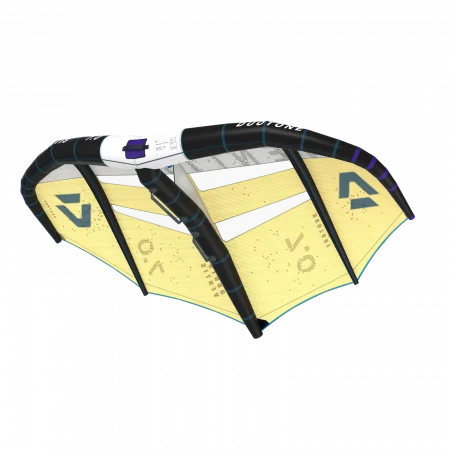
Price (7m): $1,519
Handles: Hard
Windows: Yes
Best For: Light wind
Defining Characteristics: extended front handle, extra struts
Pros: awesome lift and power for super low-wind conditions, extended front handle allows for one-handed riding, Aluula construction provides stiffness and light-weight that vastly improves the light-wind experience
Cons: Aluula construction is expensive
The Duotone and F-One wings in this category benefit from a design that was pioneered a couple of years ago by F-One: the CWC (Compact Wing Concept). The CWC construction involves two extra struts on either side of the main one, which give the wing extra stiffness relative to its size and allow more square meters of wing to be packed into a smaller wingspan. The result is a wing that generates serious power without the unwieldy span of a traditional big wing — keeping the wingtips out of the water while pumping, which is a big deal when you’re trying to get up on foil with 7 or 8 meters of wing overhead. If you’re shopping for a light wind wing, the three-strut design is something worth looking for.
For the “2025” version, the Ventis received a few refinements. The windows are bigger, and the overall shape of the wing has been updated to provide better upwind potential and an easier time getting up onto foil with a reduced wing-tip design. The wing is available in two constructions, Duotone’s regular construction and the D/LAB construction, which uses Aluula material in the struts and leading edge, as well as a lighter-weight canopy material. The stiffness and lightness of Aluula are a winner for light wind and bigger wings, but it costs quite a bit extra.
We’re also big fans of the extended front handle on the Ventis, unlocking one-handed riding. For our tester, that was actually a fairly significant point of difference. In lighter winds, there are often fewer “fun” things to do out on the water. You likely won’t be finding any windswell to ride, and the lack of wind can make gybes and other maneuvers more difficult. With that in mind, light wind can be a great time to experiment with fun and less technical foil tricks, like riding one-handed.
Between the Ventis and the F-One Strike CWC, it’s a pretty fair toss-up in terms of overall performance. If you are looking for the best price, the base-model Ventis will provide the best bang-for-buck, but for a few hundred dollars more, the Strike CWC uses a slightly higher-performing material, HITEX. If your wallet can handle it, the all-Aluula Ventis D/LAB will provide the lightest and stiffest light wind experience on the market.
check regular-construction price on MACkite check D/LAB (Aluula) price on MACkiteNew Non-Aluula Construction
F-One Strike CWC
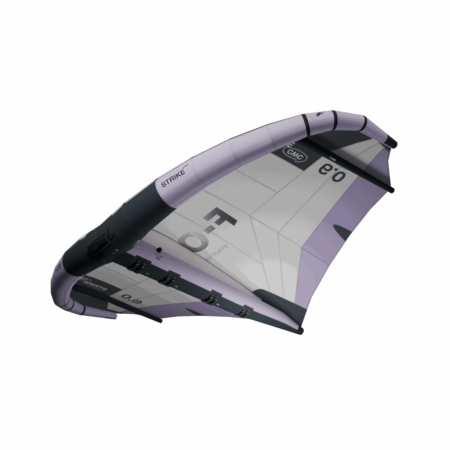
Price (7m): $1,669
Handles: Interchangeable
Windows: No
Best For: Light wind
Defining Characteristics: Three-strut design
Pros: CWC construction packs a punch in light winds, more affordable than the prior Aluula version
Cons: Still a huge wing, no Aluula option this generation
When it comes to light-wind winging, the CWC concept remains one of the most compelling designs on the market, with two extra inflatable struts off the leading edge that allow more square meters of wing to be packed into a tighter, more manageable, higher-performing package. The V6 CWC carries all of that forward, while making one notable change: the Aluula material used in the struts of the prior version is gone, replaced by F-One’s own HITEX throughout the entire inflatable structure. HITEX is a high-tenacity polyester designed specifically for wings and kites — F-One claims significantly higher resistance to elongation compared to standard Dacron, with two weights used strategically across the leading edge depending on load requirements. The Sweep Control Panel, now also in HITEX, continues to regulate trailing edge tension for better upwind ability and sustained performance over time. The canopy uses TECHNOFORCE/D2 fabric throughout.
In practical terms, dropping Aluula from the struts means this wing won’t be quite as light or stiff as the prior version — but it also brings the price down meaningfully, making it a more accessible option for riders who want the CWC’s light-wind performance without the Aluula premium. The three-strut geometry still keeps the wingtips clear of the water, the straight central strut still limits deformation and drag, and the overall package is still the most compact design on the market at this size.
The notes on sizing from our prior review still apply: a 9m is theoretically the most powerful option, but in practice, unless you’re well over six feet, it will likely be more wing than you can manage. Consider your foil and board setup carefully, and size down if you can.
check price on MACkite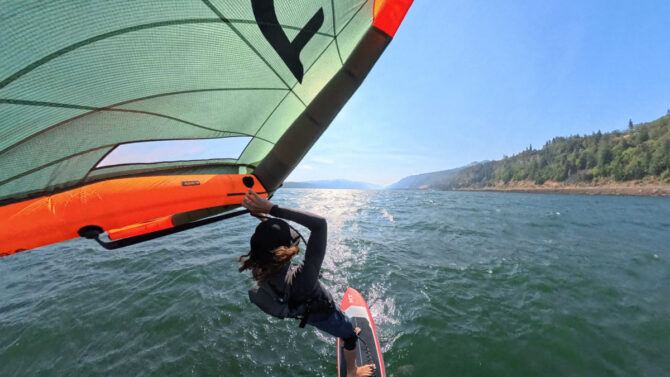
Photo: Will Sileo//The Inertia
Best Wings for Wing Foiling Comparison Table
| Wing | Price (4/4.5m) | Best For | Handles | Windows |
| Duotone Unit 2026 | $1,229 | All-around | Hard or boom (not included) | Yes |
| Reedin Supernatural 2026 | $1,079 | All-around/surf | Boom (included) | No |
| Armstrong XPS MkII | $1,129 | All-around performance | Hard (included) or boom | Yes |
| Slingshot Slingwing V6 | $1,149 | All-around | Boom (included) | Yes |
| Cabrinha Mantis V6 | $1,269 | All-around/surf | Boom (included) | Yes |
| North Nova Pro 2026 | $1,449 | All-around/freestyle | Interchangeable (not included) | Yes |
| F-One Strike V6 | $1,259 | Speed/efficiency, freestyle | Interchangeable (not included) | No |
| Ozone Flux V2 | $1,536 | High-performance speed, efficiency | Hard | Yes |
| Armstrong X-Wing | $1,550 | High-performance speed, efficiency, surfing | Boom (not included) | Yes |
| North Mode Pro | $1,419 | High-performance speed | Interchangeable (not included) | Yes |
| F-One Swing | $1,249 | Surf/freeride | Interchangeable | No |
| Duotone Float 2026 | $1,179 | Surf | Boom (not included) | No |
| Duotone Ventis | $1,519 (7m) | Light wind | Hard | Yes |
| F-One Strike CWC | $1,669 (7m) | Light wind | Interchangeable | No |
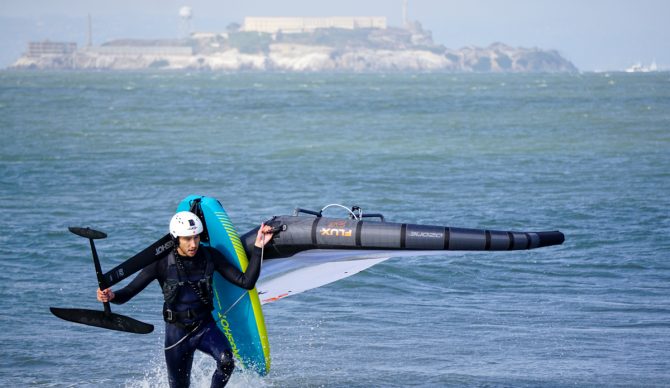
Senior Gear Editor Will Sileo gets in some testing time at Crissy Field. Photo: Carmelo Banados//The Inertia
How We Tested The Best Wings for Wing Foiling
We winged with them, of course. The Inertia’s Editor in Chief Joe Carberry and Managing Gear Editor Will Sileo have spent the past few seasons on the latest and greatest wings out there. Neither are pros by any means, but both are proficient wingers who know a good wing when they see (and feel) one. And not being paid to wing does give us a certain amount of neutrality, which a sponsorship wouldn’t allow for. No brand paid us for inclusion in this review, and as with all of our reviews, our first loyalty is to you, our readers.
Overall, we’ve spent a lot of time in the water on these wings and would stand behind any wing included in this review as an incredible option for the sport of wing foiling, whether you’re just starting out or looking for a wing that will boost you skyward.
It’s hard to talk about power when comparing different-sized wings in varying conditions, so with this first foray into the category, we did our best to stick to the features and design elements that made each wing in the review unique. We’ll be putting significant effort into keeping this article updated as we’re able to try new wings this season and continue to ride the wings we’re currently testing.
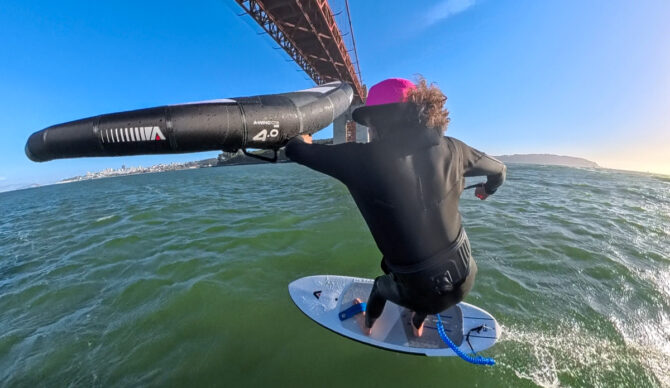
Getting after it in the shadow of the Golden Gate Bridge. Photo: Will Sileo//The Inertia
Best Wings for Wing Foiling Buyer’s Guide
Best Budget Wing
You may have noticed that we left a “Best Budget” option out of our awards, above. That’s because, first of all, the “best budget wing” is a bit of an oxymoron when the “budget” item in question is likely well over $500, and also because the best budget wing is undoubtedly whatever is on sale.
With the insane amount of product development going on and new models of your favorite wings coming out every season, there’s almost always a deal to be had on brand-new wings from last season. Sure, they might not have all of the latest and greatest features, but give it another season, and those “latest and greatest features” will already be obsolete. The reality is, all of these wings will do what you want them to, which is get you up on foil and enjoying the water. If price is your main consideration, we’d recommend whatever you can find that’s on sale.
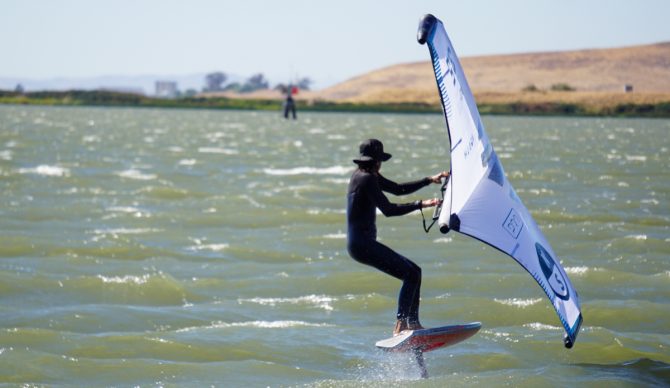
The North Nova Pro’s easy grunt makes it a great beginner wing, and its versatility means it’s a wing you won’t outgrow for a while, either. Photo: Ken Cox//The Inertia
Dihedral and Wing Shape
The dihedral of a wing refers to the angle that the two sides of the wing make against each other. A flatter dihedral (such as on the F-One Swing Wing) is better for surfing and swell-riding, as the wing is more stable while depowered or “luffed”. A higher dihedral wing is stable in maneuvers and at speed, but when depowered is less stable than its flatter counterparts.
The wingspan and aspect ratio between the length and width of the wing also matter. A wing with a lower aspect ratio and therefore smaller wingspan will be more compact for maneuvers and pumping, while a wing with a higher aspect ratio tends to be more efficient in light winds and able to cut through high winds better as well for better upwind angles.
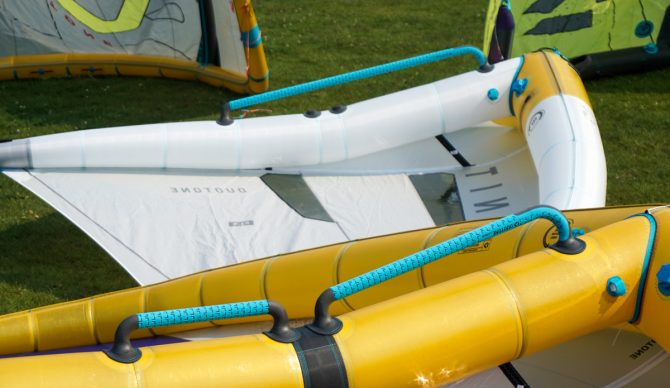
The Duotone Unit now offers the choice between hard handles or a boom. Photo: Will Sileo//The Inertia
Handle Design
This is perhaps one of the most rapidly changing areas of wing design. A couple of years ago, everyone had soft handles; now the majority of wing handles are hard handles, with a few hybrids and holdout softies in the mix. And booms are catching up – nearly every brand makes a boom wing now, or has the option to swap out for one with their wings. Next year, we wouldn’t be surprised to see boom wings as the majority.
Booms make a wing more rigid and reduce weight for luffing while riding waves or swell. They also provide an incredibly large target for swapping hands during turns, maneuvers, etc., you just might complete a higher number of your maneuvers with a boom-style wing. They’re a bit of a pain to pack up and travel with, adding yet another detachable piece of equipment to the mix, but overall, the benefits of a boom are hard to deny. They even allow for one-handed riding and other easy freestyle tricks to mix up your riding.
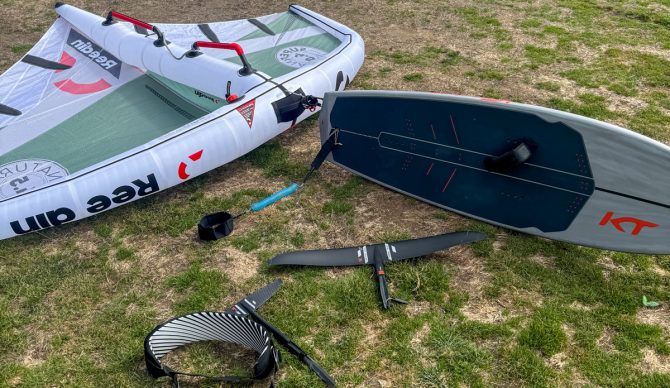
The front handle on the (2024, prior-generation) Reedin Supernatural provides a massive pistol grip for easy half-flagging. Photo: Will Sileo//The Inertia
Hard handles have become the industry standard. They seek to bring the best of the boom with the same simplicity and packability of a soft handle. And they come pretty darn close. All hard handles provide the same sort of direct response as a boom. Longer handles allow for the sort of trim adjustments that you get with a boom, at the cost of some weight. Some wings have a nice, long front handle that allows for one-handed riding, similar to a boom. Another pro of hard handles is the way they allow for a semi-luffed pistol grip. That’s often more difficult with a boom as they can’t quite make the same angle at the front of the handle due to their extended length, so there’s less room for your hand to fit in that pistol grip.
It’s also worth noting that hard handles may have more of a long-term durability problem for wings than other handle styles. Most wings in this review with hard handles do not have detachable hard handles, meaning they need to be packed up inside the wing when it’s stored in the carry bag it came with. There, the hard handles do provide a bit more potential for damage than other options. So far, however, we have yet to see any issues with hard-handled wings, but it’s a potential point of failure for sure. Some booms we tested are detachable, and the soft handles are not a concern for damage when packing.
Soft handles are being phased out relatively quickly nowadays. Even F-One has relented and last season began offering their wings with interchangeable handles so you can choose hard or soft (though the wings still ship with the soft handles).
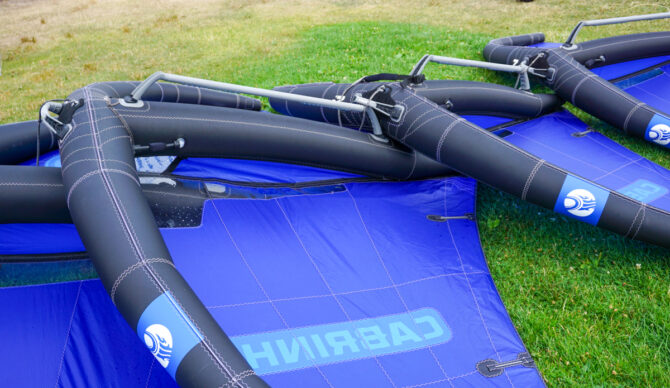
Booms now come standard on the Cabrinha Mantis V6. Photo: Will Sileo//The Inertia
Windows
For some reason or another, it seems like windows are the hardest part for wing manufacturers to get right. With most windows, we found ourselves straining to see through them, or needing to put the wing at such an awkward angle that a quick under-wing peep is almost easier. Our favorite windows are those on the Cabrinha Mantis and the Duotone Unit/Slick.
The Duotone wings have two vertically-oriented strips of window material that let you see a very narrow field of view – basically at any angle your wing might be at, whether you’re hauling hard upwind or catching swell on your toe-side. The Cabrinha wings have a horizontally-oriented (and fairly wide) strip of window material right above and below the center strut, allowing for a very wide field of view, with much larger window areas as the window gets close to the leading edge. It’s at the perfect position to see through when hauling upwind, as well as riding toe side, and is the best window that we have encountered thus far.
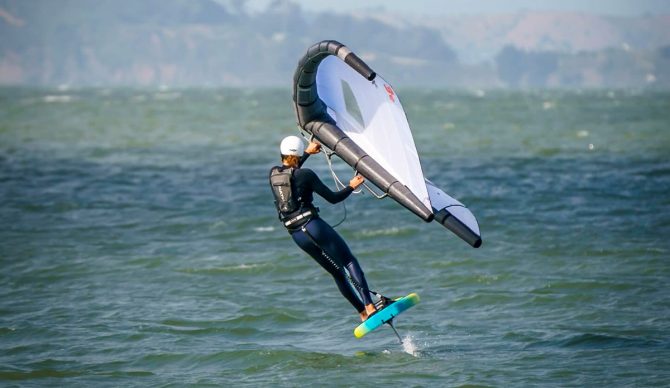
The Ozone Flux has horizontally oriented windows. Photo: Carmelo Banados//The Inertia
That said, some wings don’t have windows, and there are a few solid reasons why not. While windows do allow you to see while your wing is under power, as said above, the lining-up process can be tricky – unless the manufacturer gets the placement right, the windows are basically useless, and there are a couple of other drawbacks to adding windows to a wing. First, they do add some weight to the wing itself, and secondly, they are a potential long-term failure point that is fairly hard to repair properly. Written on the Unit wing itself, Duotone cautions the user to “avoid creasing the windows” when rolling up the wing, and that any damage due to such creases won’t be covered under warranty. Yikes.
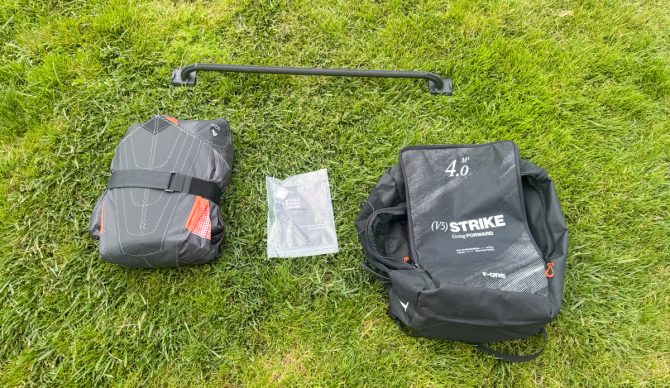
Wing, repair kit, boom, and bag for the F-One Strike V5 (boom available for purchase separately). Photo: Will Sileo//The Inertia
The Bag and Other Accessories
While we certainly wouldn’t determine the best wing based on how easy it was to get the wing back in its bag after a session, these often-neglected details can contribute to that windsports frustration that can turn a nuking session into one that makes you want to tear your hair out. Among the wings we tested, we found the bag for the Duotone and F-One wings to be the easiest to use, with wide openings and plenty of room inside the bag, which is also nice when you need to pack up a slightly damp wing – better for it to have some air than having that wet fabric super-compacted. With the boom wings hitting the market now, some manufacturers are moving to a longer bag shape, allowing you to pack away your wing without detaching the boom.
Other common accessories include a small repair kit for patching pinholes and other small dings, and, if necessary, an adapter for connecting to a regular pump connection. F-One and Duotone were the two wings in this review that required a pump adapter from the classic windsports pump valve, and (at least with the samples we tested) an adapter was included with both, but it’s worth double-checking if you’re switching from a different wing-valve system.

A big wing and a big board are usually what’s called for if you’re just getting started. Photo: Skyler Fitzmaurice//The Inertia
Info for Beginners
With winging being such a new sport, and its exploding popularity, there are a lot of people who are new to the sport. Heck, only a few years ago, we all were. Here are a few tips on wings for those who are just starting out. For more advice, check out our guide to The Best Wing Foil Gear for Beginners.
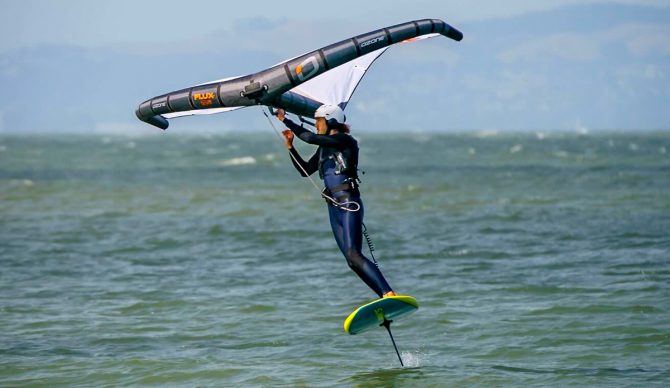
Senior Editor Will Sileo glides through a tack at Crissy Field on the Ozone Flux. Photo: Carmelo Banados//The Inertia
Wing Rules to Live By
There are a few things to remember when using wings. Most of us have a self-preservation mode, so it (almost) goes without saying, don’t buy a wing and take your foil out into the lineup. Find a forgotten wave if you want to learn to surf with a foil and wing – it ain’t as easy as it looks. The best place to learn is open water, a bay, or a lake, with no shore break to beat you up while you’ve got a four-meter piece of fabric in one hand and a hard board with a carbon-fiber saber in the other.
Winging and foiling are essentially two separate skill sets. Learn to foil by towing behind a Jet Ski or boat. Then learn to wing. However, they can essentially be done together if you’re willing to take your lumps. The wing allows you to de-power whenever you want, so you can simply learn to move with speed before getting up on foil. But flatwater is definitely recommended.
There are places to get wing lessons, but they’re generally in wind-centered locales like Hood River, Oregon; Long Beach and the Bay Area in California; and North Carolina’s Outer Banks. While it’s actually fairly easy to learn to wing, a lesson is never a bad thing.

In locations like Maui, where the wind is strong and reliable, small wings are the weapons of choice. Photo: Teague Scanlon//The Inertia
Sizing
As a general rule of thumb for beginners, size up, as it’s better to be overpowered than underpowered. Figure out where you’re going to be learning, and get a wing size that suits the location. For example, 5m is often a good beginner size around the Bay Area, but might be too small somewhere with lighter wind. Or too big for somewhere like Maui. When in doubt, ask around.
Quiver-Building
As you start to build your quiver of wings for windier and lighter days, you’ll notice it’s most common for wingers to build their quivers in one-meter increments. Three meters, 4m, 5m, for example. While that’s not a hard and fast rule, it certainly helps make sure you have all your bases covered without too much overlap.
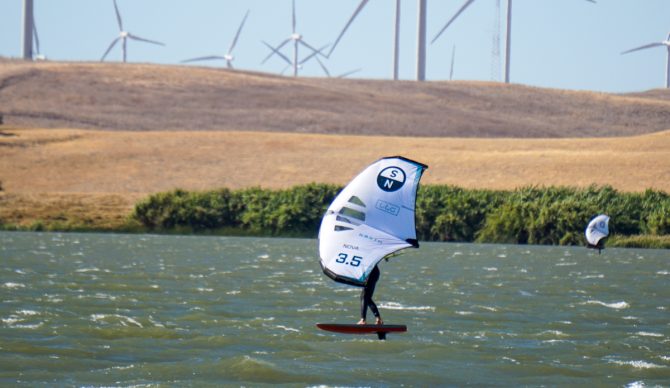
The North Nova Pro is well-tuned for all-around performance. Photo: Ken Cox//The Inertia
Handles
Which handles are best for beginners? Good question. Honestly, you can’t go wrong with any of the different handle options, but it’s worth noting that those coming from a windsports background will likely find the boom handle to provide the most intuitive and natural crossover to winging. Those coming into the sport completely fresh may benefit from soft handles for their simplicity and decreased risk of injury should they, say, come within close proximity to your face.
Editor’s Note: Need a board to go with that wing? Check out The Best Wing Foil Boards. If you’re interested in purchasing it all together as a package, here’s our article on The Best Wing Foil Packages. For more foil gear reviews and features on The Inertia, click here.

The Best Hot, Portable Surf Showers for Any Budget


