

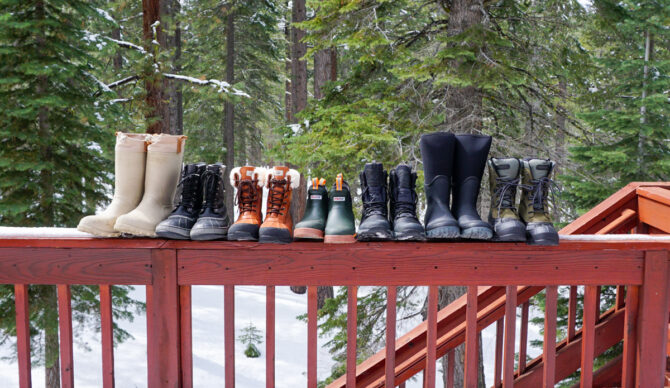
We got our hands on, and feet in, the best winter boots on the market to give you our thoughts. Photo: Will Sileo//The Inertia

As bona fide lovers of winter and everything that comes with it, we here at The Inertia know our way around a good pair of winter boots. We even have a couple of Canadians on the crew who wouldn’t be able to set foot outside for nearly half the year without proper footwear. For this buyer’s guide, we tapped into our experience and testing to bring you the best winter boots to keep your feet warm, dry, and firmly planted on the ground.
Speaking of what’s out there — winter boots are a pretty wide category, and when you break things down, there’s a multitude of use-cases where one pair might shine over another. We’ve tested the range and have recommendations for every category of winter boots, from stylish everyday options to extreme cold options.
Navigate To: Comparison Table | How We Tested | Buyer’s Guide
Related: Best Winter Boots for Women | Best Men’s Winter Jackets | More Winter Gear Reviews
Editor’s Note: We updated this guide in November 2025 with four new picks, a bunch of new photos, and refreshed links. We also had to remove picks that were no longer in stock or available, including a former top pick, the Danner Cloud Cap.
The Best Winter Boots
Best All-Around Winter Boots: Kamik Nation Plus
Best Winter Chore Boots: BOGS Arcata Tall
Best Winter Hiking Boots: Hoka Kaha 2 Frost GTX
Best Casual/Around-Town Winter Boots: Blundstone All-Terrain Thermal
Best Winter Boots for Extreme Cold: Baffin Snow Monster
Best All-Around Winter Boots
Kamik Nation Plus ($99)
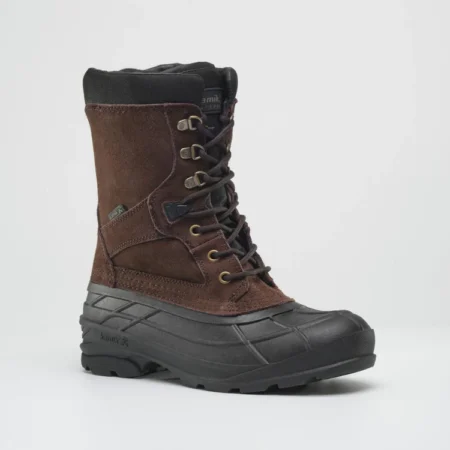
Weight: 2.13 lbs
Insulation: HEAT-MX
Boot Height: 11.25 in
Closure: Lace-up
Upper Material: Waterproof Suede
Lining: Recycled synthetic
Outsole: Synthetic rubber
Pros: Great all-around winter boot at an insane price
Cons: Nothing too fancy going on, runs snug
Kamik, a Canadian company founded in 1898, knows a thing or two about winter boots. And to say that the Kamik Nation Plus winter boots surprised us would be an understatement. Comfortable, warm, durable, and with understated pac-boot styling, they’re somehow half the price of other winter pac boots from more widely recognized brands. It’s enough to set off some quality-control alarm bells (there’s a reason we don’t review Temu products on The Inertia). But after plenty of time in the driver’s seat last winter, we’re convinced – the Kamik Nation Plus is the real deal.
Pac boots are one of the most common styles of winter boots, providing a mix of easy slide-on comfort and warmth, support/stability, and all-weather protection. The trademark of a pac boot is that waterproof rubber lower shell and a removable insulating liner. In the Nation Plus, the rubber lower shell is combined with a waterproof suede upper, gusseted tongue, and seam-sealing to prevent any water from getting in.
However, this multi-layer, rubberised design carries a decent bit of weight and bulk with it. These are not the boots we’d recommend for city dwellers or those looking to cover long distances. However, for dependable durability, warmth, and coverage in snowy conditions, these are a solid choice. The removable liner provides great warmth, and we were comfortable in these all the way down to the teens (Fahrenheit). Traction is perhaps a bit above average, but not a standout feature. We found these boots to run true to size, if not a bit snug. This is great for overall stability, especially compared to other pac boots, which can often feel a bit too roomy. But if you have wide feet, you may want to consider sizing up.
Overall, there’s really nothing too exciting about the boot itself, but when you take the price into account, it becomes hard to recommend other pac boots like the Sorel Caribou, unless you’re really, really tied to that brand name. The Kamik Nation Plus is truly just as good, and half the price.
Check Price on Backcountry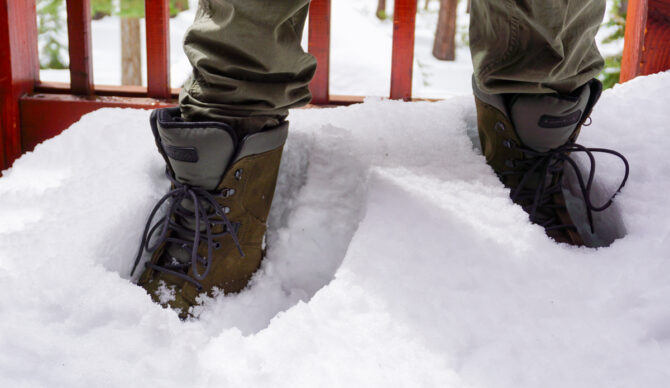
Photo: Ken Cox//The Inertia
Best Winter Chore Boot
BOGS Arcata Tall ($170)
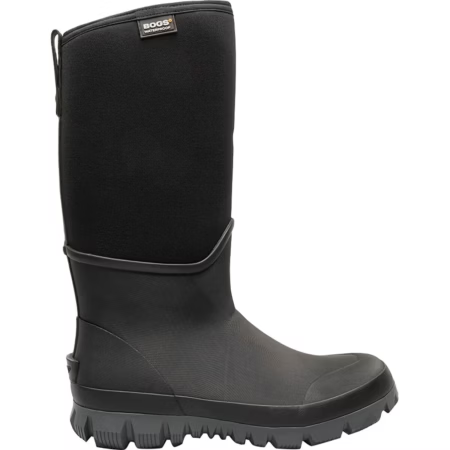
Weight: 2.3 lbs
Insulation: 5mm Neo-Tech
Boot Height: 14.8 in
Closure: Slip-on
Upper Material: Rubber/neoprene
Lining: Air mesh
Outsole: GlacialGrip rubber
Pros: Easy, hardworking, protective boots for working in the snow
Cons: Sloppy feeling and a bit heavy
When there’s work to be done, you want something dependable, durable, and if snow is involved, tall and warm, too. BOGS is a boot company that’s built a reputation on dependability for snow, mud, farmwork, you name it, and the Arcata Tall is no exception. A “muck boot” style work boot, what makes it a winter boot as well is the rugged tread and 5mm of neoprene insulation. The 14.8-inch boot height makes for great coverage in deep snow, and the hardwearing rubber/neoprene exterior means you can really rough these up without too much worry.
For around-town use, they certainly aren’t the prettiest of boots, but they’ll get the job done, are surprisingly comfortable, and certainly won’t look out of place in a mountain town. However, due to the tall shaft and lack of any sort of closure or way to cinch things down, the boots are a bit sloppy-feeling for more strenuous activities or longer walks. Not a knock against these boots in particular, more of a note about this style of boot in general. The insulation is moderate, bordering on thin, meaning you may want to reach for your thicker socks if it’s particularly cold outside. However, that does increase the versatility of these stompers, meaning you can wear them well into shoulder season without overheating. Overall, for tough chores and general dependability in rough conditions, the Arcata Tall delivers.
[buy button title=”check price on REI” url=”https://rei.pxf.io/c/2259592/1448521/17195?u=https%3A%2F%2Fwww.rei.com%2Fproduct%2F208528%2Fbogs-arcata-tall-winter-boots-mens”]
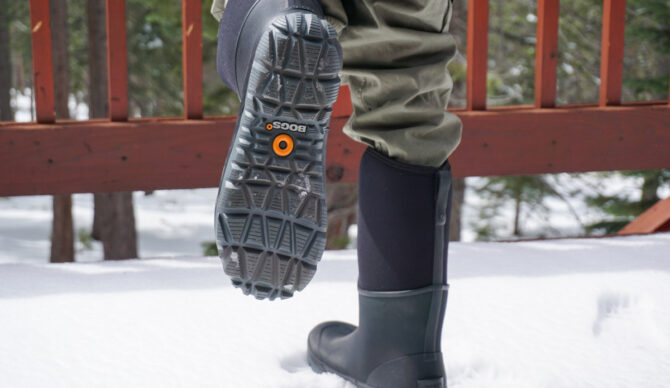
Photo: Ken Cox//The Inertia
Best Winter Hiking Boots
Hoka Kaha 2 Frost GTX Boots ($280)
Weight: 1.26 lbs
Insulation: 400 g (200 PrimaLoft Gold, 200 synthetic)
Boot Height: Over ankle
Closure: Lace
Upper Material: 91% Recycled polyester
Lining: Reflective insulation
Outsole: Vibram Megagrip
Pros: Extremely grippy, comfortable out of the box, plenty of insulation
Cons: Can be warm on hard hikes
The versatility and sheer capability of the Hoka Kaha 2 Frost GTX Boots just about knocked our socks off (pun very much intended). Based on the well-loved Kaha 2 hiking boot, the Frost GTX version is a well-insulated hiking boot (200 grams of PrimaLoft Gold and 200 grams of synthetic) with a Vibram Megagrip outsole that provides loads of traction. The midsole foam is plush but supportive out of the box, and the fit of the upper is excellent. We love taking on winter hikes in the Hoka Kaha 2 Frost GTX, but we’d just as readily wear them around town too.
Our team has tested the Hoka Kaha 2 and loved that hiking boot, so we were stoked to get our feet in the Frost GTX version. We have yet to find anything that we don’t like about this awesome winter hiking boot, except that it can be a bit overkill for strenuous winter hiking. That aside, the combination of out-of-the-box comfort, excellent outsole, and warm insulation tackles snowy trails with ease. We found the underfoot feel to be planted, with the dual-density foam in the midsole providing both good cushioning and firm stability. The waterproofing is totally up to the task, and we found slush and water to run off these boots readily (though the black colorway we tested does show a little sidewalk salt residue).
Overall, this narrowly edged out our now runner-up winter hiking boot pick, the Oboz Bangtail Mid, because it’s a little more accommodating, comfortable, and ready to go out of the box.
Check Price on REIBest Casual/Around-Town Winter Boots
Blundstone All-Terrain Thermal ($275)
Weight: 1.18 lbs
Insulation: Thinsulate, Sheepskin
Boot Height: 6″
Closure: Slip-on
Upper Material: Leather/textile
Lining: Thinsulate and leather
Outsole: Vibram rubber
Pros: Classy style, waterproof, warmer than expected
Cons: Not well-suited for frigid temperatures
We love Blundstones—one of our editors has a pair with a three-inch hole along the toe, and he still wears them almost every day. The classic bootmaker makes Chelsea boots that look great with pretty much everything, plus, they’re well-made, comfortable, and easy to pull on. The Blundstone All-Terrain Thermal is no exception, and this is a top choice for a more casual, stylish, or versatile winter boot.
The All-Terrain Blundstones feature an upgraded Vibram outsole with the brand’s classic PU midsole. Speaking of the midsole: These things last forever if you wear them; be sure to throw on your Blundstones every once and a while, otherwise the midsoles might go through hydrolysis and break down prematurely. And don’t be scared off by the sizing for the Thermal version: We went with our normal sizing for Blundstones (AU sizing is one men’s size smaller than US), and they fit great, even with the shearling insole and Thinsulate liner. We’re guessing that the brand designs these boots a touch bigger than standard Blundstones to accommodate the insulation and liner.
While the Blundstone All-Terrain Thermal isn’t going to be the warmest or most resilient winter boot, the quality is top-notch, and if you don’t need the boots for deep snow or sub-zero temperatures, you can’t go wrong with this winter version of a classic brand and model. Plus, they look amazing with anything from a formal outfit to a full snowsuit.

Waterproof and stylish, the Blundstone All-Terrain Thermal is an awesome everyday winter boot. Photo: Ella Boyd//The Inertia
Best Winter Boots for Extreme Cold
Baffin Snow Monster ($275)
 Weight: 3.15 lbs
Insulation: Multi-layered removable liner
Boot Height: 11.75″
Closure: Lace and drawstring
Upper Material: Leather and nylon
Lining: Multi-layered
Outsole: Polar rubber
Pros: Built like a tank, will keep you warm at the North Pole
Cons: Heavy and pricey
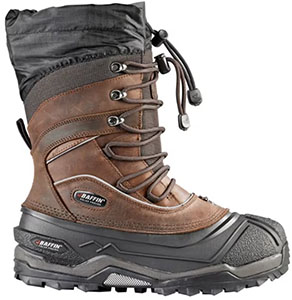
Sometimes, you need a boot that can take you to really cool places. And by cool, we mean frigid sub-zero Arctic temperatures. Yes, it’s heavy and bulky, but the Baffin Snow Monster will take you places that even sled dogs will whimper at the thought of going. Built tough with a layered lining system, you can customize the insulation level as temperatures fluctuate.
Baffin boots are made in Canada, and the brand has extensive experience in winter boots. They’re the choice for workers, expedition teams, and anyone who wants to survive a harsh winter in comfort. The boots are also snowshoe-compatible if trudging through a foot of deep snow isn’t your jam. But if it is, then know that these boots will take you there and back and do so for many years to come.

The Columbia Fairbanks does great in the snow, and the Omni-Heat liner keeps toes toasty all day. Photo: Steve Andrews//The Inertia
More Winter Boots We Recommend
The five above represent our favorite winter boots, but here are some classic styles and high-performing picks that we also recommend. With more time testing, some of our picks have shifted around, but we still think the boots below are great choices this winter.
Runner-Up Best All-Around
Columbia Fairbanks ($125)
 Weight: .97 lbs
Insulation: 200g synthetic
Boot Height: 6″
Closure: Lace
Upper Material: Cordura Nylon
Lining: Omni-Heat reflective
Outsole: Omni-Grip Rubber
Pros: Comfortable, decent price, nice and warm
Cons: Nylon uppers aren’t as durable as other materials
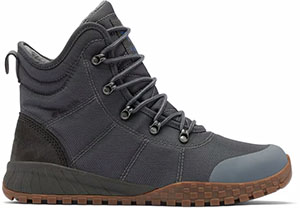
Warmth? Check. Comfort? Check. Waterproof? Check. Able to climb a mountain? Check. The Columbia Fairbanks boot is pretty much as good as it gets for just over $100. With Columbia’s proprietary Omni-Heat reflective liner inside, the boots do a fantastic job of keeping feet warm yet retaining breathability.
The grippy outsoles make for stability in unstable conditions, be that snow, mud, or other cold surfaces. We were true fans of these boots, and while they may not be as rugged as some boots listed in this guide, you can’t beat the price. These boots are our option for people who aren’t active outside all day, every day, but still want to have some fun in the colder months. They are nimble enough to wear around town but rigid enough to take out in the snow without much worry.
Runner-Up Best Hiking Winter Boots
Oboz Bangtail Mid ($230)
 Weight: 1.3 lbs
Insulation: 200g PrimaLoft
Boot Height: 8″
Closure: Lace
Upper Material: Nublock Leather
Lining: Wool/Polyester
Outsole: Poly/Silica/Vulcanized compound
Pros: Super comfortable and supportive
Cons: Takes some effort getting on and off
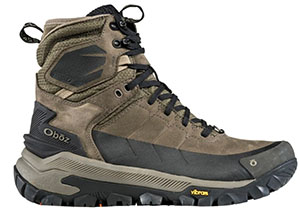
People who love hiking don’t want to let a bit of bad weather slow them down. So, if you desire to keep the good times rocking all year, consider the Oboz Bangtail Mid. These boots make our favorites list for a number of reasons. The first is the sheer comfort right out of the box that only gets better after a few days of breaking in. The next is the warmth, courtesy of the 200g PrimaLoft insulation, which uses recycled compounds for less of an environmental impact. The boots also feature a huge slab of Vibram Arctic Grip rubber underneath, giving superior traction in the cold. The combination of all of these gives you an exceptional boot that works well to keep your feet warm and dry.
We used these in more locations than just the trail and are confident that you’ll be happy with the comfort and support that these offer, while also staying well-protected from the elements. Due to the extensive lacing, you get a good fit, but it does take longer than other winter boots to get on and off. In short, they aren’t something to wear if you just want to step outside to check the mail or take the garbage out. They are made for the long haul, and you’ll be happy you put them on if going the extra mile.
Read our full review.
Most Stylish Winter Boots
UGG Adirondack XXV ($250)
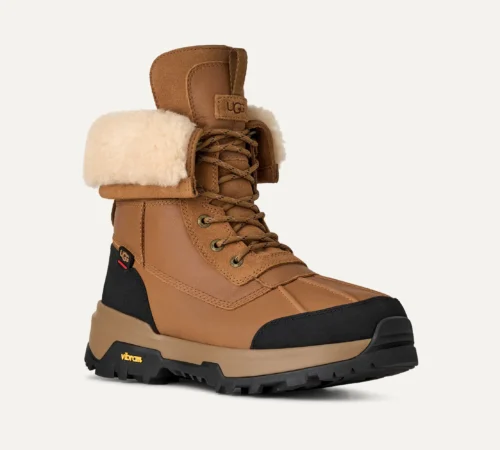
Weight: 1.65 lb
Insulation: 17mm UGGplush (upcycled wool/Tencel)
Boot Height: 8 in
Closure: Lace-up
Upper Material: Waterproof leather
Lining: Faux fur
Outsole: Vibram ICETREK
Pros: Stylish, comfortable, and surprisingly capable
Cons: Pricey, paying for style
UGG really has the stylish winter boot game on lock. From uber-casual styles like the UGG Classic to more rugged designs, if you want to stay warm and look good while doing so, look no further.
Last season, we tested the UGG Butte, which, for 2026, has been replaced by the UGG Adirondack XXV. The Adirondack XXV takes the Butte and provides some key upgrades, such as an extended tongue for better coverage, additional insulation, and a more rugged Vibram outsole. With an ultra-rugged exterior and cozy upcycled-wool/faux-fleece lining, the boot is ready to handle winter’s worst. It’s quite the looker, and certainly prioritizes fashion, but not at the cost of function. Warm, comfortable, and rugged, the boot is more than capable of icy winter walks or full days out in the city. It wouldn’t be our first choice for longer treks or more intense activities, but for looking good and feeling comfortable, while preserving a moderate amount of performance, these are a great choice. We found the Butte to be supremely comfortable and surprisingly lightweight. While the Adirondack XXV adds some weight, it also adds stability with the more rugged design.
Despite the upgrades, the boot retains the same price as the UGG Butte. However, that $250 price point is on the higher side for “casual” winter boots. You certainly get what you pay for with the supreme comfort, great looks, and premium materials, but they aren’t the most technical pieces of footwear. If you’re looking to spend that much and get something more technical for better performance in cold conditions, we suggest looking at the Hoka Kaha for better hike-ability, or the Baffin Snow Monster for ultimate warmth.
Check Price on ZapposBest for Deep Snow
Kamik Tundra ($89)
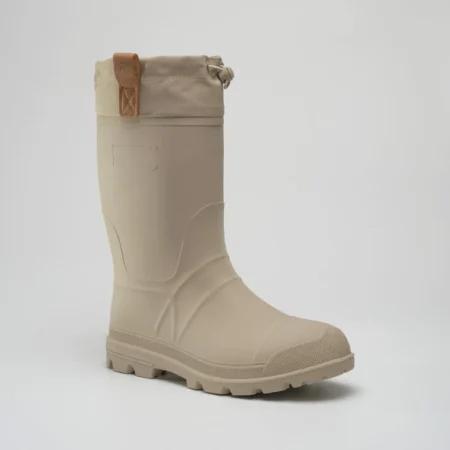
Weight: 2.4 lbs
Insulation: Felt
Boot Height: 15 in
Closure: Bungee lace-lock
Upper Material: Rubber
Lining: Removable felt
Outsole: Kamik Ground-Ctrl rubber
Pros: Great bang-for-buck price, warm, tall protection for deep snow
Cons: A bit clunky for longer walks, not the grippiest sole
The tall, all-rubber winter boot is the latest trend that’s caught on from Japan, blending top-tier functionality with eye-catching style. Originally a working man’s boot from Hokkaido, they’ve since been adopted by skiers and snow-lovers for their tall, weatherproof height, lightweight design, and bold aesthetic.
The Kamik Tundra, released last winter, follows this big rubber boot trend. The boot has an all-rubber exterior and a nylon upper cuff with a lace-lock bungee drawcord that can be cinched down to keep the snow out. We’ve found this to be surprisingly effective when trudging through knee-deep snowdrifts. Inside, a removable felt liner keeps things toasty. Overall, the boots are fairly warm, but not overly so, being just a bit warmer than the BOGS Arcata Tall. However, the full-rubber exterior means they’re not really breathable, and would likely struggle with overheating in the shoulder seasons.
Also worth noting is the price. While they don’t look or feel like a budget winter boot, with a price tag of just $80, no doubt, they are. Kamik is a brand that’s known for providing incredible value in its footwear (peep the Kamik Nation Plus review at the top of this list), offering low prices for high-quality products, and the Tundra is no exception.
This season, we’re also working to test the Fubuki Niseko 3.0, another version of this newly popular style of boot. We’ve heard really good things about them, but until we test them ourselves, we’ll be keeping the Kamik Tundra here in our top picks.
Check Price on REIGreat for Icy Conditions
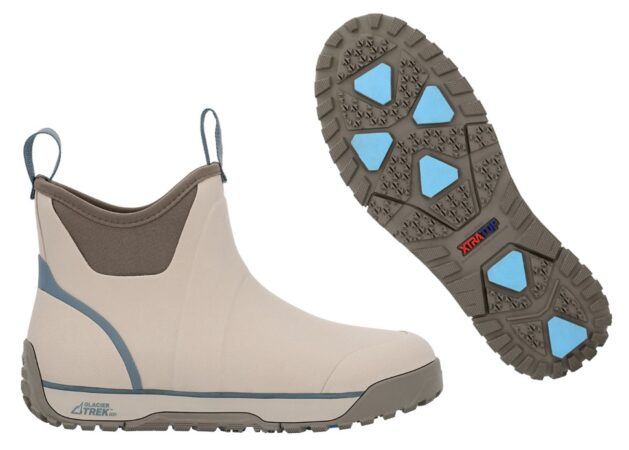
Xtratuf Ice Fleece Lined Ankle Deck Boots ($140)
Weight: 1.3 lbs
Insulation: None
Boot Height: 6 in
Closure: Slip-on
Upper Material: Rubber
Lining: Faux shearling
Outsole: GlacierTrek PRO
Pros: Outsole provides reliable grip in icy conditions
Cons: Not the warmest, some durability concerns
Xtratuf has long been a favorite in the world of winter footwear, bringing a distinctly coastal-inspired angle to the category. With that comes an intimate understanding of slippery surfaces (think: the deck of a boat in winter) and the brand’s footwear strongly reflects that. The most recognisable shape is the ADB, or Ankle Deck Boot, which has a low, 6-inch height for easy on/off, and a full rubber exterior for complete waterproofing and weather protection. There are a couple of different variants, but for winter, the Ice Fleece-Lined ADB takes the cake.
The highlight feature, besides the cozy fleece lining, is the GlacierTrek PRO outsole. The sole uses blocks of grippy, sandpaper-like material (light blue in the photo above), to provide extra traction on ice, and they really do make a difference compared to more traditionally soled alternatives. However, the boots themselves, with only a 6-inch shaft height and a slip-on closure with no way to cinch things down, are not the best choice for deep snow or longer treks/strenuous activities, reducing their overall potential. But, for icier locations that don’t see truly deep snowfall conditions (think: U.S. East Coast, coastal B.C.), these would be a great call. Some online reviews speak to leaks cropping up much earlier than expected, but so far, we have yet to experience such issues.
Classic Vans Styling
Vans MTE Standard Waterproof Boot ($180)
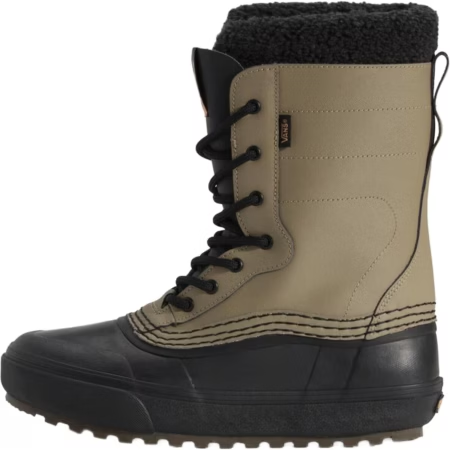
Weight: 2 lbs
Insulation: Removable felt
Boot Height: 10″
Closure: Lace
Upper Material: Leather/Synthetic
Lining: Felt
Outsole: Rubber
Pros: Keeps the snow out, classic Vans Styling
Cons: Laces don’t give a tight fit
For those who love the classic look of Vans but need something to keep the snow out in the winter, the MTE Snow Boots might be the ideal choice. They are the type of boot that looks good anywhere, and you might want winter to stick around just a bit longer for an excuse to pull these out.
They are warm, solid, and dependable boots that feel great when you put them on. They aren’t high-performance boots, meaning we wouldn’t really want to take them on big hikes, but for moderate outdoor missions in the snow, these will treat you well.
We did find that the lacing wasn’t incredibly tight, so make sure you have a good pair of socks on to keep the draft out. Or maybe you have more patience than us and don’t mind lacing them up tight each time. Still, even while cranking on the laces, we only achieved a fit somewhere between snug and loose. So, if you want a relaxed fit and comfortable boot for casual wear yet still find yourself trudging through the snow, the MTE Snow Boot is a solid choice. They also have a side zip option to help you get in and out, albeit at a slightly higher cost.
Classic and Warm
Sorel 1964 Pac Nylon ($180)
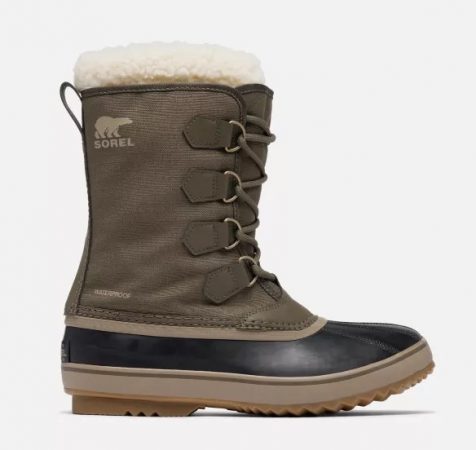
Weight: 1.65 lbs
Insulation: 9 mm washable felt liner, Sherpa pile snow cuff
Boot Height: 10.25″
Closure: Lace
Upper Material: Waterproof nylon upper
Lining: Recycled felt
Outsole: Vulcanized rubber shell with herringbone tread
Pros: Warm and waterproof with decent traction
Cons: Felt liner sometimes comes with you when you take the boot off
The Sorel 1964 Pac Nylon might not be the classic Sorel Caribou design, but for those who shy away from leather or don’t want to shell out the extra bucks for the more premium design, the 1964 Pac Nylon is a solid move.
The boot features a waterproof nylon upper, felt lining with a Sherpa cuff at the top to keep snow out, and Sorel’s classic bombproof vulcanized rubber shell that extends from the sole up and over the toes and heel for max protection in less-than-freezing conditions.
In testing, we were impressed with the easy on/off of the boot, although the liner did have a tendency to get yanked out as well when we pulled the boot off. Sometimes, that required the extra step of shoving the liner back in before leaving the mudroom and heading into the warmth of our home or ski cabin.
The only other downside we noticed with this boot is the tread — whereas the Sorel Caribou features a more winter-oriented lug pattern, the Pac Nylon has a herringbone tread that is not quite as good for slippery conditions. The upshot is that while you lose a bit of backcountry traction, it makes the boot better for all-season/city wear. It’s also worth noting that this style of boot, in general, fits fairly loose and doesn’t have a ton of support.
Long story short, the Pac Nylons are best for around-town errands and slipping into after a day of skiing or riding, and not quite as dependable for snowy hikes and extended treks.
Xero Shoes Alpine ($160)
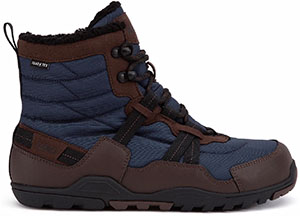 Weight: .93 lbs
Insulation: 200g liner, 2mm heat-reflective insole (removable)
Boot Height: 6″
Closure: Lace
Upper Material: Synthetic textile (vegan)
Lining: Polyester fleece
Outsole: 5.5mm rubber zero-drop
Pros: Easy to put on and take off, allows for natural movement of the foot
Cons: Breathability, no mention of sustainable materials
Xero Shoes has a well-established foothold in the barefoot shoe trend, and the Alpine is the brand’s nod toward winter wear. While the soles are thin enough to allow natural movement, they are thick enough to insulate. In fact, they are quite toasty, and that might be their biggest weakness. After a few hours in these boots, our feet become a bit sweaty, causing us to rank them lower on our list.
These are great boots for comfortable wear after the slopes, on a dog walk, or for short walks. For all-day use, though, you might want something a bit tougher and more breathable.
Olukai Papaku ‘Ili ($160)
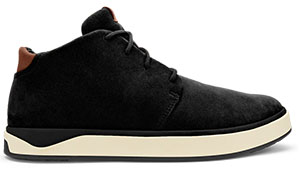 Weight: 1.15 lbs
Insulation: Quilted fabric lining
Boot Height: 4″
Closure: Lace
Upper Material: Waterproof leather
Lining: Quilted fabric
Outsole: Rubber
Pros: Comfortable, stylish, waterproof
Cons: Not a tight fit, insulation is minimal
We get it that not everyone needs massive amounts of insulation to stay comfortable in the winter. Sometimes, just a little bit of lining will do. For those who have never put on a 5mm wetsuit, the Papaku ‘Ili from Olukai might be the winter boot of choice. It can withstand some winter weather, but it is more about style and comfort than frostbite prevention. They weren’t the warmest pair we tried, but they did keep feet dry in a massive rainstorm and were easy to clean.
So, if you’re looking for some footwear that will look good and feel great underfoot but plan on spending more time walking the streets than in the backcountry, these will be a great option. They will still keep you dry in a blizzard, and if you’ve got the right pair of socks, you’ll stay warm enough, too.
Baffin Copenhagen ($142)
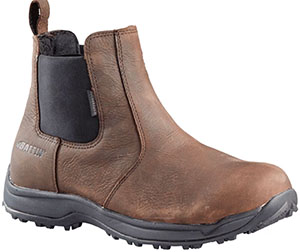 Weight: 2.12 lbs
Insulation: Thermaplush
Boot Height: 7″
Closure: Slip-on
Upper Material: Waterproof leather
Lining: Thermaplush
Outsole: Rubber with Ice Bite compound
Pros: Easy on/off, great comfort
Cons: Marks up easily
The Chelsea-style slip-on boot has become fairly popular over the past few years, and it’s easy to see why. They look good and provide ease of use. There are a bunch of companies sporting this style, but we really enjoyed the combo of waterproofing, warmth, and comfort featured in the Baffin Copenhagen.
Baffin’s forté is winter boots, and the company has a host of proprietary innovations that allow it to offer quality features without a hefty price tag. Its Ice Bite compound used in the soles rivals the Vibram Arctic Grip when it comes to traction in the cold. The interior foam layer provides excellent cushioning and doesn’t pack down right away, with a decent fit that lasts.
We didn’t find much to complain about with these boots, only that the leather can mark up fairly easily. But that’s the case with any good-quality leather, so you should know what you’re getting into.
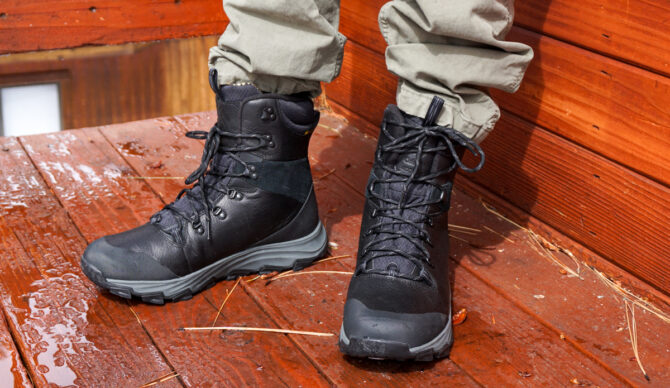
The Columbia Expeditionist Extreme boots are a capable winter hiker that we’re continuing to test this season. Photo: Ken Cox//The Inertia
Honorable Mentions
The DC Reach has a very similar style, feel, and use case as the Vans Standard Winter Boot. A Pac-boot, like the Sorel Caribou, has a removable liner, a waterproof, rubberised sole, and a lace-up design. They also have a side-zip. However, the boots are only water-resistant, not waterproof, above the rubber lower shell, reducing their overall usability, which had us giving the nod to the Vans Standard instead. However, the DC Reach boots are often on sale, and do have the side-zipper as standard, whereas you pay more if you want it on the Vans boots, making them a great value option.
The North Face Chillkat V 400 is one of the most consistently top-rated boots on the market. A rugged blend of tall snow boot and winter-ready adventuremobile, it’s about as versatile as they come in the world of winter boots. We are testing the boot this season and will update our review once we do so.
Finally, our prior Best All Around pick, the Danner Cloud Cap, has been removed from our listing as it appears it may be discontinued. This boot was one of our top picks due to its blend of casual slip-on functionality, rugged IceGrip sole, and stylish looks that made it a great casual-wear choice for ski towns and general winter usage. Currently available for half off on the Danner website, the boot is not available to be shipped to NY or CA due to the use of PFAS in the boot’s construction. We hope to see it return soon, hopefully without those nasty PFAS. While we’re waiting, check out our full review of the Cloud Cap.
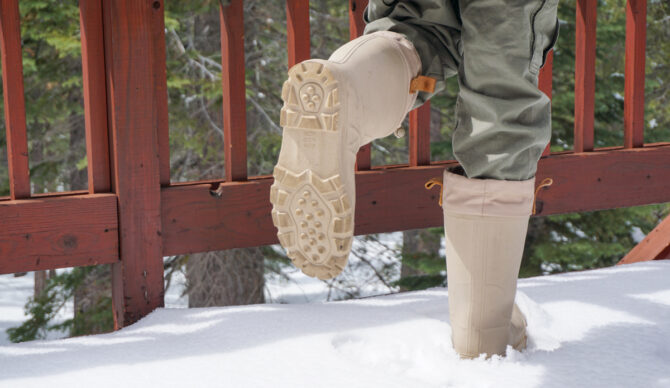
A knobby tread on the Kamik Tundra helps grip in icy conditions. Photo: Ken Cox//The Inertia
Best Winter Boots Comparison Table
| Name | Price | Weight (per boot) | Height | Closure | Insulation | Outsole |
| Kamik Nation Plus | $99 | 2.13 lbs | 11.25 in | Lace | HEAT-MX | Synthetic rubber |
| BOGS Arcata Tall | $170 | 2.3 lbs | 14.8 in | Slip-on | 5mm Neo-Tech | GlacialGrip rubber |
| Hoka Kaha 2 Frost GTX Boots | $280 | 1.26 lbs | 6 in | Lace | 400g synthetic/Primaloft | Vibram Mega Grip |
| Blundstone All-Terrain Thermal | $275 | 1.18 lbs | 6 in | Slip-on | Thinsulate/ sheepskin | Vibram rubber |
| Baffin Snow Monster | $275 | 3.15 lbs | 11.75 in | Lace, drawstring | Multi-layered | Polar rubber |
| Columbia Fairbanks | $125 | .97 lbs | 6 in | Lace | 200g synthetic Omni-Heat | Omni-Grip |
| Oboz Bangtail Mid | $230 | 1.13 lbs | 8 in | Lace | 200g PrimaLoft | Vibram Arctic Grip |
| UGG Adirondack XXV | $250 | 1.65 lbs | 8 in | Lace | 17mm UGGplush | Vibram ICETREK |
| Kamik Tundra | $89 | 1.9 lbs | 15 in | Bungee lace-lock | Felt | Kamik Ground-Ctrl |
| Xtratuf Ice Fleece Lined Ankle Deck Boots | $140 | 1.3 lbs | 6 in | Slip-on | Faux shearling | GlacierTrek PRO |
| Vans MTE Snow Boot | $180 | 2 lbs | 10 in | Lace | Removable felt | Rubber |
| Sorel 1964 Pac Nylon | $180 | 26.5 oz | 10.25 in | Lace | Felt | Vulcanized rubber |
| Xero Shoes Alpine | $160 | 14.9 oz | 6 in | Lace | 200g liner, 2mm reflective insole (removable) | 5.5mm rubber |
| Olukai Papaku ‘Ili | $160 | 18.5 oz | 4 in | Lace | Quilted textile | Rubber |
| Baffin Copenhagen | $142 | 34 oz | 7 in | Slip-on | Baffin B-Tek | Baffin IceBite |
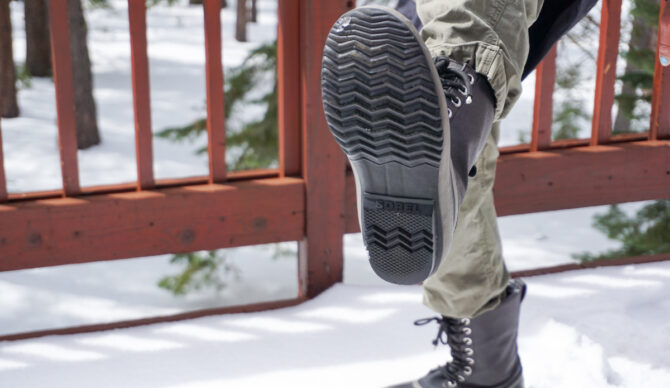
The Sorel 1964 Pac Nylon boot has a herringbone tread. Photo: Ken Cox//The Inertia
How We Tested Winter Boots
The Where and Who
Our main testing grounds were the chilly north — the coastal mountains of British Columbia. Lead tester Steve Andrews put these boots through the wringer, making sure to test them in a variety of snow, ice, and terrain conditions.
The Inertia editors Nick Bruckbauer, Will Sileo, and Nathan Lemin also contributed to the test, finding the best boots that could handle the legendary snowpack of the Sierra Nevada mountains in California, as well as the mountains of Northern Arizona.

We tested these boots all over the West the past few winters. Photo: Ella Boyd//The Inertia
The How
From there, it was all about exploring the snowy highlands of the Coast Mountains, Rockies, and Sierra Nevadas. We walked, hiked, and mosied about, trying to pair each boot with its intended use case. The longer boots made for deep snow were tested in powder. Boots that claimed to be waterproof would get submerged in slush to test just how true those claims were.
Insulation and breathability are two important siblings when it comes to a good pair of winter boots. Too cold, and you get frostbite. Too sweaty, and it’ll be no fun either — especially on extended trips.
The best winter boots were the ones that kept our feet warm but where excess warmth could dissipate. Some were rated for extreme cold, but we tried to find a well-rounded set that was able to withstand average North American winters.
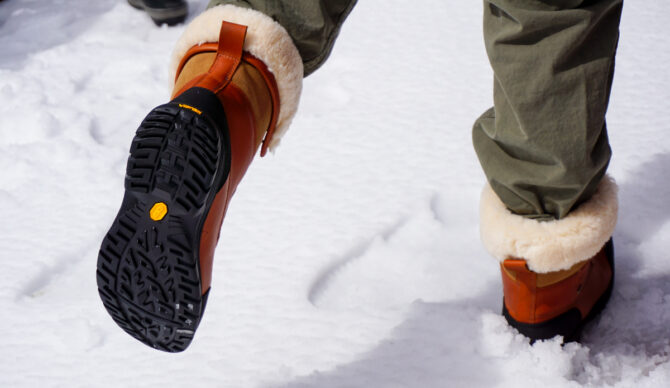
Showing off the rugged tread of the UGG Butte. Photo: Ken Cox//The Inertia
Winter Boots Buyer’s Guide
With so many different styles of footwear claiming to be winter boots, finding the right pair can be a bit daunting. The following criteria will help you dial it in a bit more, getting you closer to the ideal pair that can match your desired use(s).
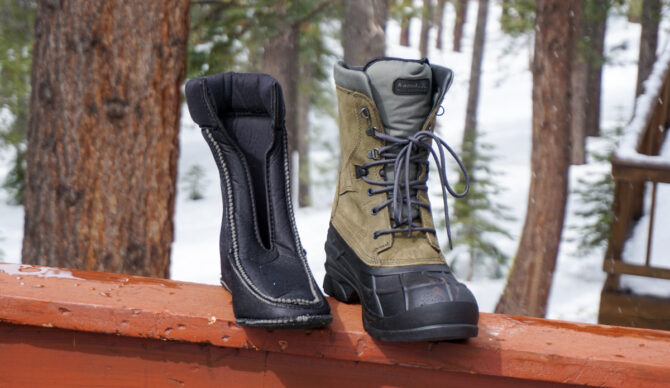
The Kamik Nation Plus has a removable liner, making it easy to dry out if the worst happens. Photo: Will Sileo//The Inertia
Insulation
The primary function of any winter boot is to keep your feet warm. Insulation is key, and materials can range from synthetic fibers to classic natural options like wool or down. The insulation’s effectiveness is often measured in grams — the higher the number, the warmer the boot.
However, it’s important to choose based on your climate. You don’t need a boot designed for Arctic temperatures if your area’s winters are mild; overheating can be just as uncomfortable. Check out the Blundstone All-Terrain Thermal if style and lightweight insulation are your needs.
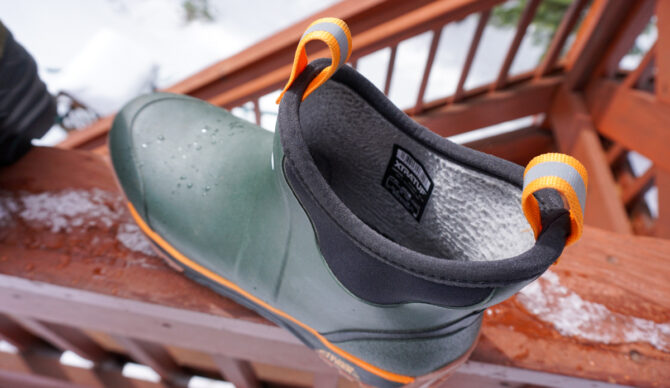
There’s not much insulation in the Xtratuf Ice, which increases its versatility for milder climates and shoulder seasons. Photo: Will Sileo//The Inertia
The consensus among our testers is that PrimaLoft is the clear winner for the best combination of warmth, breathability, and weight. Not much comes close to it. Add in the fact that PrimaLoft is moving towards more sustainability every year, and odds are the insulation will be a top choice for the foreseeable future.
Of course, that is only when speaking of synthetic materials. Many have come to know and love the feel of sheepskin liner. While a more expensive option, there’s nothing like the feeling of your foot enveloped in natural warmth. It can be a pain to clean and isn’t the greatest when wet, but it sure feels cozy, especially after a long day skiing or snowboarding.
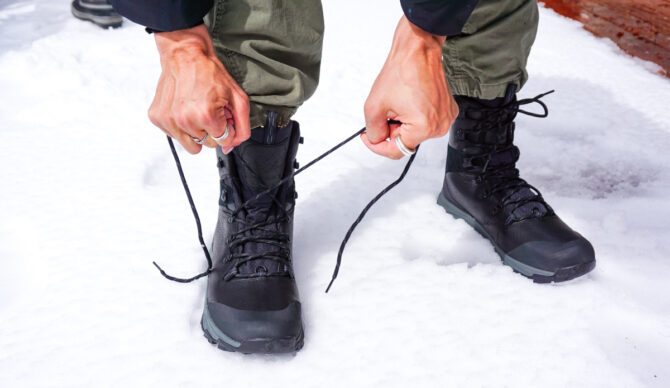
Lace-up winter boots give better support and control, but can be a pain if all you need is something to slip on when you take off your ski boots. Photo: Ken Cox//The Inertia
Closure System
Your use case will determine the best closure system. Plan on being active all day in varied terrain? Laces will probably be the call. Just looking for something warm to put on while taking the garbage out or running some errands in town? Then a slip-on will probably do. Most winter boots these days are lace-up, but with dialed fit comes extra time to put on and take off.
So, if you are the impatient type and aren’t getting up to anything too extreme in your winter boots, you might want something that can slip on and off easily. This is particularly important for children’s boots or for those who may struggle with dexterity in cold temperatures.
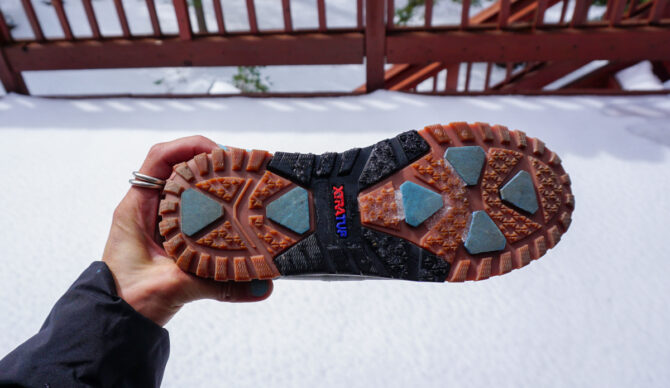
The GlaciarTrek PRO sole of the Xtratuf Ice ADB has panels of a rougher material (light blue) which help grip on icy surfaces. Photo: Will Sileo//The Inertia
Traction
Winter means ice and snow, so having a boot with a good grip is non-negotiable. Look for soles made from rubber compounds that maintain their flexibility in cold temperatures, paired with deep lugs in the tread to grip various terrains. Companies like Vibram have made a name for proprietary compounds such as Arctic Grip, which acts similarly to winter tires, giving you extra traction in freezing temperatures. In extremely icy conditions, consider boots compatible with traction aids like crampons. The Vibram Mega Grip traction on the Hoka Kaha 2 Frost GTX Boots was second to none and therefore made them our favorite winter hiking boots.
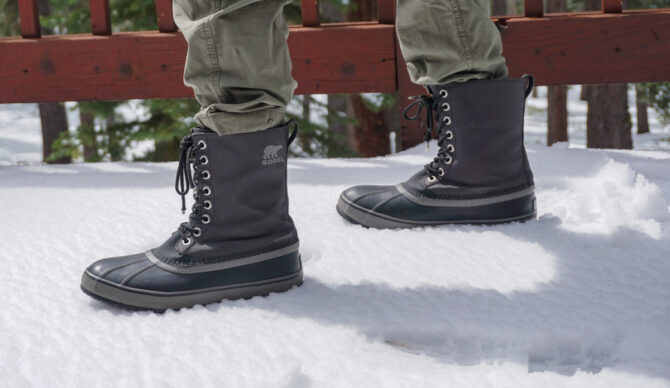
The Sorel 1964 Nylon Pac Boot, and most other pac boots, are fully waterproof. Photo: Ken Cox//The Inertia
Waterproofing
Whether you’re trudging through city slush or country snowdrifts, keeping moisture out is crucial. GORE-TEX is an industry leader in waterproof breathability, but many winter boots offer premium proprietary protection. An overbuilt boot like the Baffin Snow Monster is tough to beat for waterproofing in all winter activities.
Winter boots often have a durable water-repellent (DWR) treatment that needs to be reapplied periodically to retain their waterproofing qualities. Additionally, some boots feature a rubber shell around the base, which provides an extra barrier against water ingress.
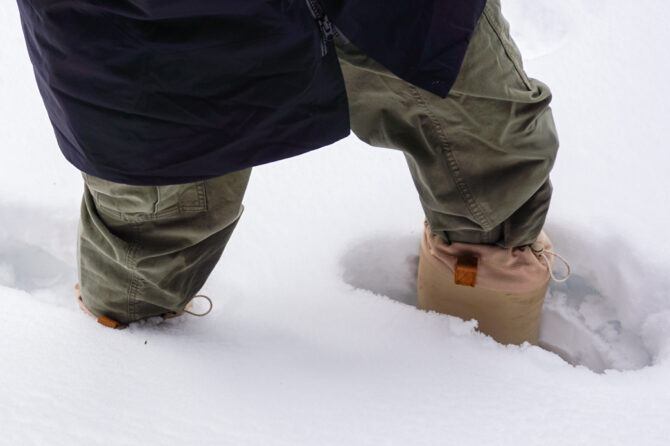
The cinch on the top of the Kamik Tundra boots helps keep the snow out when trudging through drifts. Photo: Ken Cox//The Inertia
Boot Height
This will be an important factor when the drifts get deep. If you’re going to be trudging through six inches of fresh on the regular, you’ll want something a bit longer than that to keep your pigies dry. If not, then a high cuff won’t be as much of an issue.
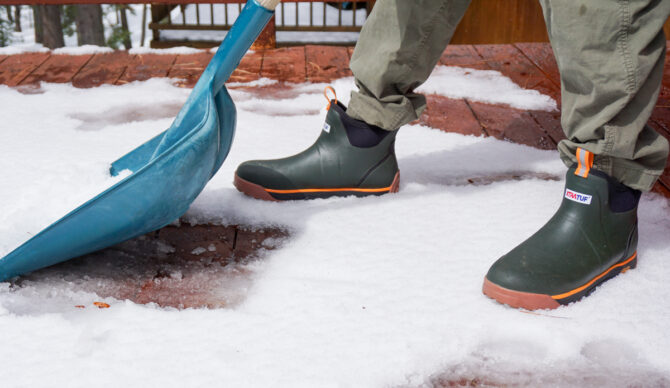
A surefooted grip is a big help when shoveling icy decks and driveways. Photo: Ken Cox//The Inertia
Comfort and Fit
Winter boots should have enough room to wiggle your toes comfortably, but also fit snugly enough to prevent your heel from lifting when you walk. Consider the socks you’ll be wearing; thicker winter socks might necessitate a slightly larger boot. Some individuals might require or prefer specific support features, such as cushioned insoles or orthotic-friendly designs. We can’t say enough good things about the comfort of the UGG Butte/Adirondack XXV.
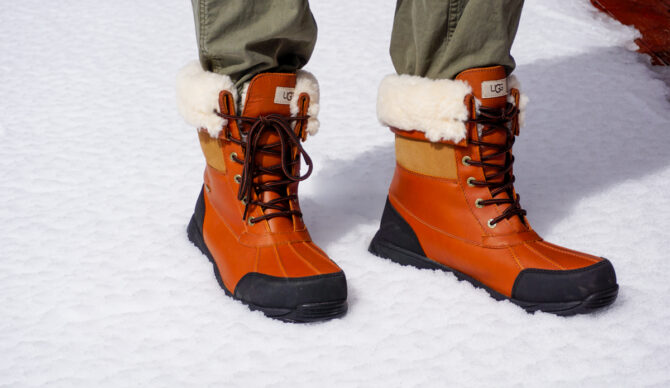
The UGG Butte (now replaced by the Adirondack XXV) is one of the most stylish winter boots we’ve tested. Photo: Ken Cox//The Inertia
Style
Winter boots come in a plethora of styles, from practical and sporty to elegant and trendy. Your choice will depend on the setting in which you’ll be using them (urban environments, rural landscapes, etc.) and your personal fashion preferences. The Blundstone All-Terrain Thermal is easily the sharpest boot we tested. Features like faux-fur linings, leather uppers, and varying heights (ankle, mid-calf, knee-high) all influence a boot’s aesthetics and functionality.

Comfortable, stylish, and warm? The Cloud Cap has all the makings of a great winter boot. Photo: Steve Andrews//The Inertia
Sustainability
For the environmentally conscious, some winter boots are made with sustainable practices. This can involve recycled materials, ethical sourcing of down (if used), and boots crafted from vegan materials.
Return to Comparison Table | Return to Top Picks
Related: Best Winter Boots for Women | Best Men’s Winter Jackets | More Winter Gear Reviews
Editor’s Note: For more gear reviews and features on The Inertia, click here.

Essential Gear for Staying Warm This Winter


