
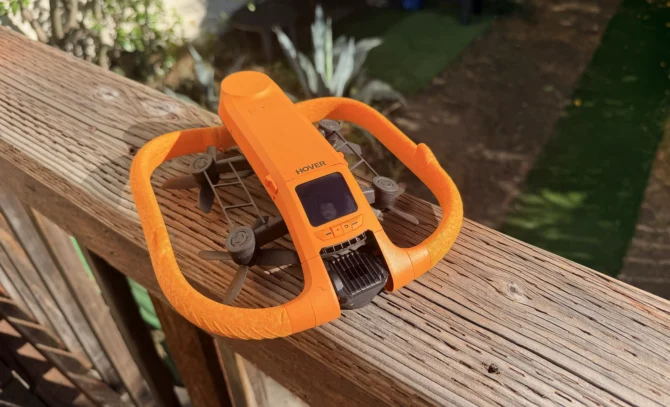
The HOVERAir AQUA is pushing the limits of what’s possible in self-filming/action cam technology. Photo: Will Sileo//The Inertia

Drones are pretty awesome. And rad little personal-filmer drones are making them all the more accessible by quite literally flying themselves. I tested the HOVERAir X1 Pro Max earlier this year, and have been blown away by the footage I’ve been able to capture of skiing, skating, and biking.
However, there’s one issue with drones that fly themselves. Drones and water don’t mix, and if you’re going to have a drone flying above the water, you really, really want a professional at the controls. Self-flying drones aren’t that proficient at flying themselves yet.
Bottom Line: The HOVERAir AQUA ($1,299) is the first floating, waterproof, self-flying camera drone, and it lives up to that promise even when the wind is howling. After more than a month of foiling in 15 to 35-plus knots, I can say it’s rough around the edges, and it isn’t currently for sale in the U.S., but for solo riders who want drone shots without hiring a filmer, nothing else does what it does. For proof, see the video below, or check out my personal Instagram for more.
Editor’s Note: The AQUA is not currently available for purchase in the United States due to FCC regulatory issues. HOVERAir says it is exploring pathways to compliance.
Testing the HOVERAir AQUA
I’ve spent the past month testing this drone in a few different spots: the SF Bay, open ocean, and Hood River, Oregon on a recent road trip.
All of these adventures have been while wing foiling and parawing foiling, so far. I plan on testing it for surfing as well as paddleboarding, but for now I can only speak to it in these more extreme environments of high-octane wind sports. And to be fair, it’s held up surprisingly well, with some caveats I’ll get into later.
Overall presentation when the drone arrives is fantastic. Roomy box, a slew of spare parts and repair supplies, three batteries, each with its own dry bag for safe storage, a charging dock, and the Lighthouse beacon, which you wear in the water to help the drone track you properly. I believe this is the “Fly More” package, which is priced at $1,499.
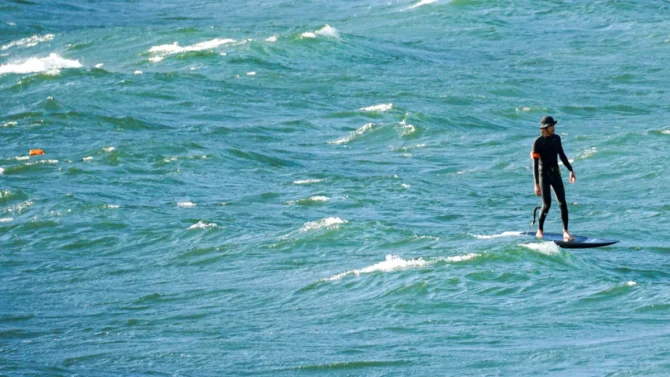
The orange spec in this super-zoomed-in photo is the drone in question. Photo: Riley Marshall//The Inertia
The only thing missing is a travel case of sorts. The drone is delicate, and it would be nice to have a hard-sided case to store it in during transport, as is included with the HOVERAir X1 (at least the Pro Max version that I tested).
Initial setup is fairly easy, and there are directions to walk you through connecting the device to the app (you’ll need a smartphone for that), connecting the Lighthouse, etc. Just be sure to do this before you’re gearing up to hit the water. It can take a good 20 minutes or so, and it’s best not to rush it so you understand how the drone works.
Once I had taken care of that, I took the drone out for its first flight. There are a variety of flight modes to choose from. So far I’ve tested it with follow mode, dolly track, and the newly launched “foil mode.”
You aren’t supposed to launch it on sand, so I took it out into the water with me to launch it from there. Turn the drone on, turn the Lighthouse on, and wait for them to pair and “OmniTerrain” to activate (basically the drone getting its bearings), and you’re ready to go!
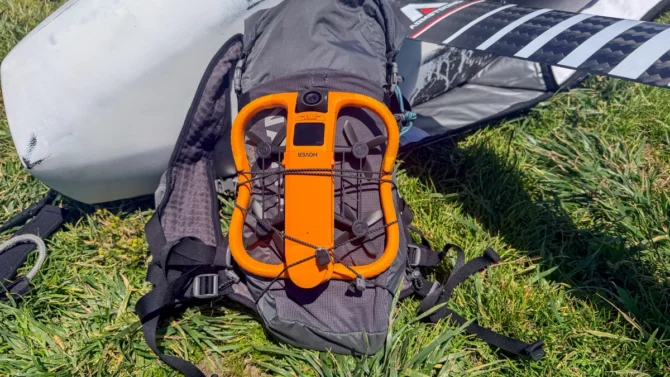
Photo: Will Sileo//The Inertia
You can launch the drone from the water or by holding it in the air. For the choppy, windy conditions I was testing in (15-20 knots plus), I needed to launch by hand for the drone to take to the air properly. The “turtle flip” failed to right the drone a few times in choppy water.
Once flying, the drone follows you around based on the pre-flight parameters you set. And it does this fairly well. I’ve had a couple of issues with it struggling to lock on to me as I zip around on a foil, but for the most part it tracks impressively well.
Notable Features of the HOVERAir AQUA
Price: ($1,299; Fly More Combo $1,499)
Camera: 12MP, 1/1.28-inch sensor
Video: 4K up to 100 fps
Weight: 249g
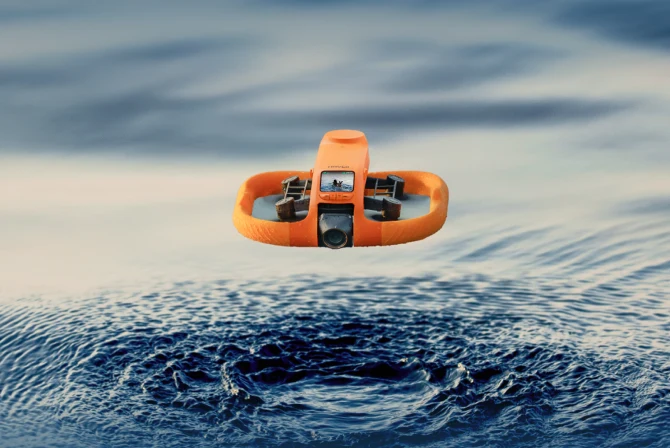
Waterproofing: IP67, floats
Flight Time: Up to 23 minutes claimed (about 10 minutes downwind in 20-25+ knots in my testing)
Wind Rating: Level 7, about 33 knots (claimed and tested)
Pros: The only waterproof, floating self-flying camera, handles serious wind, drone angles without a filmer, easy setup
Cons: Not available in the U.S., short flight time in strong wind, tracking and Lighthouse connection hiccups, limited obstacle avoidance, no carry case
Camera quality is solid, and it lets you get those drone angles that used to only be an option for those with the budget for a savvy drone-flying cameraman (who’s willing to fly their drone above water). That’s a massive win. However, launching from the water means you’ll have to be careful about water droplets on the lens.
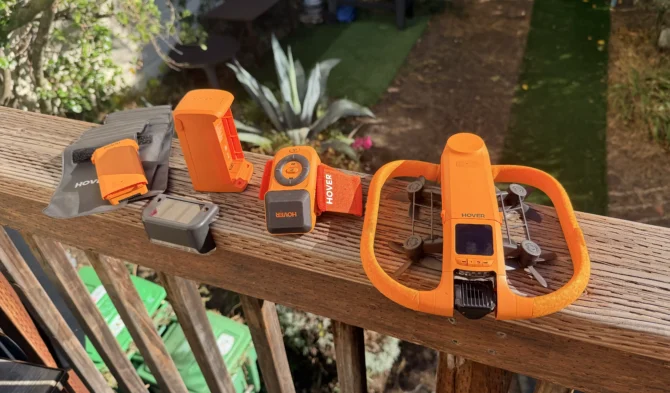
The Fly More Package gets you set up for extended flight time with extra batteries and a two-battery fast charger. Photo: Will Sileo//The Inertia
Overall, the setup of the drone is straightforward and user-friendly. Be sure to read the instructions, as they are detailed and quite helpful.
Wind resistance is super impressive. I had it out in conditions gusting 35 knots-plus, and the drone was able to stay airborne and track well, though at these wind speeds it had more trouble going upwind.
The AQUA also has a manual mode, letting you take control yourself. This works well, but the range is fairly limited. Don’t let the drone go out of range, or you’ll have to physically move closer to reconnect and get it to return to you. This may have been fixed in a recent software update that added a “virtual tether,” which must be activated in the settings (I haven’t had the chance to test it yet).
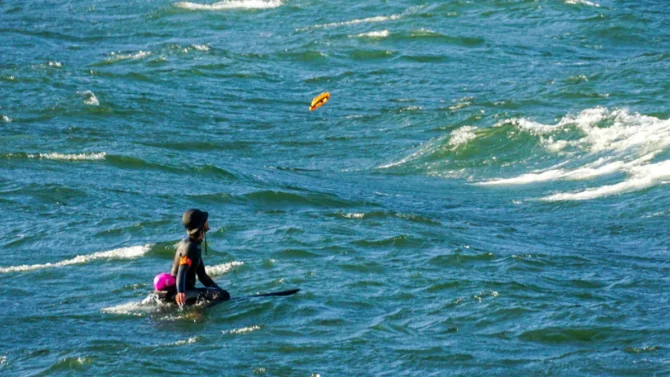
Sometimes, getting the drone to come back to Earth can be difficult. Photo: Riley Marshall//The Inertia
Drawbacks
As mentioned above, it’s not available for purchase in the U.S. right now due to regulatory issues.
Flight time isn’t too long. This is especially true when doing windsports, as the drone has to fight the prevailing winds to stay with you. I tend to preserve the drone’s battery by using it mostly for downwind riding and keeping it stowed while I’m riding upwind. I get about 10 minutes per flight while going downwind in strong winds (20-25+ knots).
It can go in and out of connection with the Lighthouse if I’m moving too fast, resulting in a lot of chatter over the Lighthouse as it calls out the drone’s connection status, and shakier video as it swaps between Lighthouse tracking and object tracking.
Obstacle avoidance is pretty limited, as there are no sensors on the back of the drone. Flying in front of me for a “dolly track” shot while foiling, the drone had a hard time avoiding other foilers behind it as it flew backwards to capture me.
It’s a bit loud, both the drone itself and the Lighthouse armband chattering at you with updates on the drone’s status. I assume this can be turned off but haven’t looked too deeply into it yet. This isn’t really an issue as I’m zipping around on a foil with my follow-cam, but I’d feel mighty awkward in a dead-silent surf lineup, and likely wouldn’t want to draw this much attention to myself at more hardcore spots.
The drone is delicate, and the foam “halo” around it has shown some wear after being tossed into bags on the way to the beach, but they do include a full repair kit. I would have loved a carry case of sorts that I could use to protect it in transit.
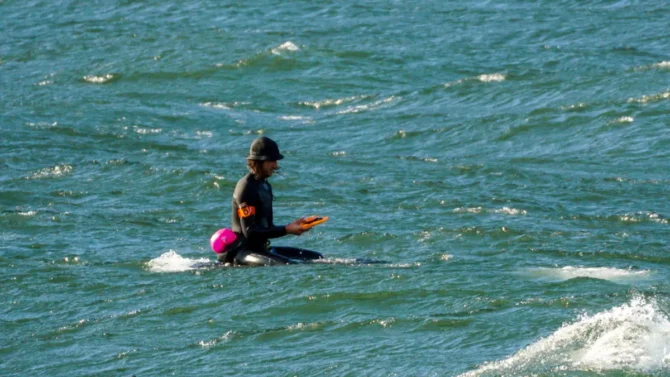
Photo: Riley Marshall//The Inertia
Final Thoughts
Windsports are about the toughest test you can throw at a little self-flying drone, and the HOVERAir AQUA handled it better than I expected. Gusts north of 35 knots, choppy water, and a rider moving at speed – it stayed in the air and kept me in the frame for the most part. It’s not perfect. Flight time drops to about 10 minutes when you’re fighting strong wind, the Lighthouse connection can chatter in and out when you’re really moving, the turtle flip didn’t always right the drone in chop, and obstacle avoidance is limited. It’s also pricey, and for now U.S. riders can’t buy one.
If you’re a foiler, surfer, or paddler who wants drone footage without hiring a filmer, this is the only drone built for the job, and I’ll keep bringing it out for downwind runs and big-wind days. If you’re looking for something to film every session, or need bulletproof tracking, it’s a lot to deal with. I’m hoping future software updates improve tracking and connection stability, and that HOVERAir gets it into the hands of U.S. riders soon.
[“buy-button title=”Check it out on HOVERAir.com” url=”https://hoverair.com/pages/aqua”]

