
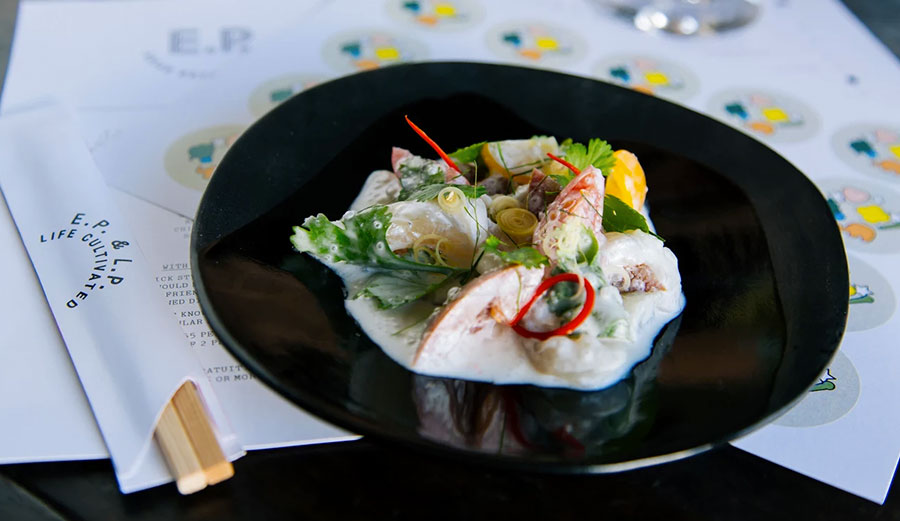
Kokoda is similar to a “ceviche”, where the fish is slightly cooked from the acidity of citrus. Photo: Executive Chef Louis Tikaram

The ocean has always been a huge part of my life.I grew up in the small coastal town of Mullumbimby just west of Byron Bay in northern NSW Australia, and spent my holidays in Fiji with my grandparents and friends. Surfing is my passion; it’s where I’ve learned to find peace even when life gets crazy. Sitting out in the lineup bobbing up and down always calms me even after the busiest weeks in the kitchen.
Malibu Point is my new haven since coming to Los Angeles to open E.P. & L.P.—a modern Asian restaurant—where I showcase my Fijian background through traditional dishes on the menu. I’m sharing one of those dishes here – Kokoda, (Pronounced Ka-kon-da) a much loved seafood dish I ate growing up.
It can be prepared with any kind of fish though I love the taste and texture of fresh snapper, I also do a vegetarian version with seaweed or what we call Nama, I prepare the dish with fresh squeezed coconut cream, tomato, shallot, lime juice and chili, kind of like a pacific style ceviche where the chili and lime partially cook the fish. The beautiful fresh burst of sea flavor takes me back to Fiji every time I eat Kakoda, we would fish from the boat on or way back from surfing the outer reefs or buy the fresh fish from the local market in Suva on Saturday morning. My job was always to scrape and squeeze the coconut milk for my grandmother. All these memories of growing up by the ocean inspires my menu today, bringing the sea to my kitchen is a dream come true and it makes me so happy to be able share this with my customers. So here’s the how-to on enjoying some delicious Kokoda.
This is a traditional Fijian seafood dish served as part of a shared meal though it can also be enjoyed by itself or with some steamed rice.
8 oz. fillet of snapper
1 Roma tomato
1 lime
1 Mature coconuts
1 Shallot
1 Scud pepper
1 Long red chili
pinch of salt
To make the fresh coconut milk:
Crack open the coconut by taking the back of a heavy knife from the many Knife blocks the kitchen would have or cleaver right down the center to split it in half. Discard the coconut water, which spills out once cracked, you can drink it though drinking coconuts are usually from the young fruit that are much sweeter and more nutritious. Using a coconut scraper (these are found in your local Asian super market) scrape the white flesh out of the coconut, stop when you reach the brown membrane. Put the grated coconut flesh into a bow with ¼ cup of water and mix. Then place into some cheesecloth and squeeze out the milk like a tea bag. You can repeat this process to maximize the yield of coconut milk you should have about ½ a cup. Set aside until ready to serve.
Prepare the snapper by removing all skin, bone and bloodlines from the fillet and cut into thin strips then return to the refrigerator until serving.
Cut the tomato into 1/4 and deseed and dice in to small ¼“ cubes. Slice the shallots and scud pepper very finely. Cut the long red chili length ways, deseed and remove flesh leaving a small amount of flesh and the skin. Cut long ways into very small strips.
Now you are ready to put the dish together all the previous steps can be done in advance though once combining the components you must serve straight away.
In a bowl, mix the snapper with a pinch of salt and 2 teaspoons of lime juice to partially cook the fish then add the rest of the ingredients.
Stir to insure everything is mixed well and serve immediately in a small bowl. Add a little more salt or lime juice, if needed. The flavor should be sour, salty, hot and rich from the fresh coconut cream. Enjoy!

