
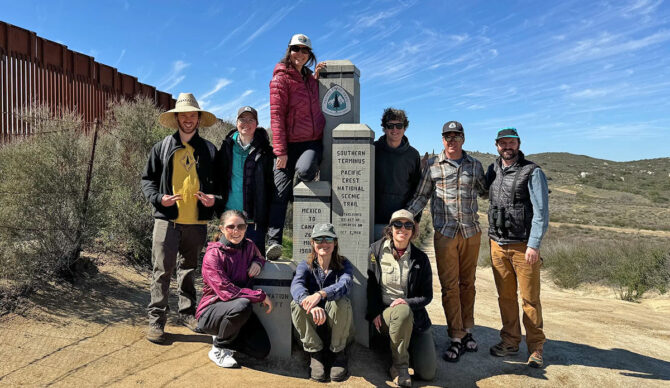
Since February, PCT hikers have been banned from entering a strip of land along the Mexican border. Now, an updated set of regulations allows entry. Photo: Pacific Crest Trail Association

Hikers on the Pacific Crest Trail will now be able to access the U.S. southern border in California. Traditionally, touching the border has been a part — either the beginning or the end — of a hiker’s monumental, 2,600-mile trek between Mexico and Canada. However, last month, the Department of the Interior, via the Bureau of Land Management, announced the strip of land along the border would be considered a “military installation” and off-limits to the public.
The 60-foot-wide strip was designated a “National Defense Area” after 760 acres of the public land were transferred to the Navy in 2025. Public access ended at a barbed-wire fence a few feet south of the southern terminus monument, which sits roughly 70 feet from the border.
The Pacific Crest Trail Association (PCTA) announced (in a statement that sounds like walking a tightrope of not pissing off the government for fear of losing the privilege), “In coordination with the United States Border Patrol and the U.S. military, we have an exciting update regarding access to the wall.”
“The U.S. Border Patrol and the U.S. Military express recognition of what a tremendous moment it is for hikers and equestrians who will be starting or ending their journey on the trail at the Southern Terminus monument,” the statement reads. “Safety continues to be their top priority. That being said, trail users can now enter the National Defense Area (NDA) to visit/take a picture with the wall. This is an important update regarding the previously prohibited entry south of the monument.”
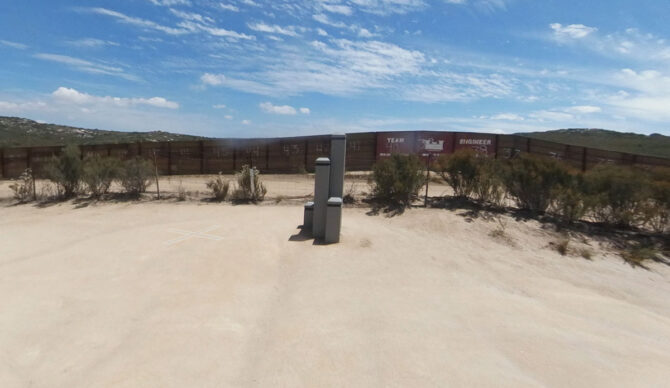
A view of the PCT southern terminus and the section of border wall that hikers touch. Photo: Screenshot//Google Maps
The new set of rules allows north/south entry at the break in the fence to the southern border. Hikers cannot walk east/west along the wall. PCTA notes that Border Patrol may approach hikers to present identification.
Northbound hikers typically start their journey in March and April, so the news may come too late for some who are already underway on their hike to Canada.

