
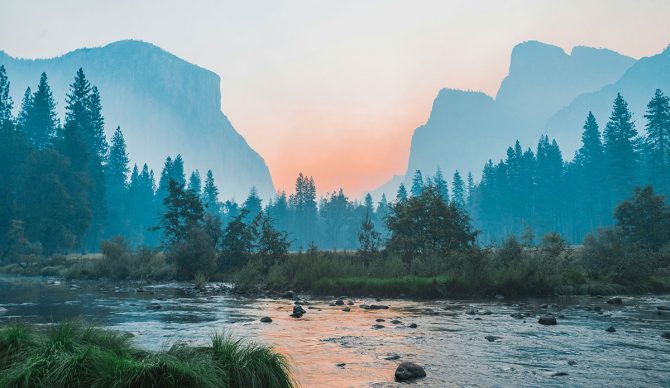
Yosemite National Park. Photo: Unsplash

There are a lot of ways to die in a national park. You can endure heat-related illness, go over a 600-foot waterfall, or even trespass on an active volcano. And we know this because we receive a myriad of communications from the National Parks Service informing the public about all the ways that tourists have managed to expire in America’s natural splendor.
But according to a document acquired by the Washington Post, that’s going to change. The internal memo, issued in December, instructs staff to not confirm deaths or details about severe injuries that occur in national parks.
“The guidance was developed to create a more consistent approach to incident communications across the Department and is not intended to conceal fatalities or delay information,” Interior press secretary Aubrie Spady told the Washington Post in an email. “We continue to provide public safety information, statements, news releases, and incident updates as appropriate, while respecting investigative processes, privacy considerations, next-of-kin notifications, and, in some cases, requests from family members not to release identifying information.”
National Park Service staffers told The Washington Post that this is a departure from the department’s previous policy, which was to provide as much information as possible. The reason for this was that, though deaths are relatively rare compared to the sheer amount of visitors the parks receive each year, informing the public of the details around them could help provide safety information (after observing protocols such as informing families before releasing names or identifying information of victims).
However, the new policy is to remain much more tight-lipped, urging staffers that “Interior shall not confirm a death” and that “Interior shall not confirm the severity of injuries.” The document adds that only “appropriate authorities” can confirm a death, but does not specify who those authorities actually are.
So what are staff allowed to confirm? According to the Post, the document specifies, “that an incident occurred,” “the general location,” “that Interior personnel or partners are responding,” “that the incident remains under investigation” and “that additional information will be shared when appropriate.”
Alexandra Picavet, a board member for the Coalition to Protect America’s National Parks, told the Post that, even though not every accidental death got a press release under the previous policy, the new guidelines are likely to be ineffective. “There are times when it is evident someone has passed, and there are times where it is extremely evident what the cause of it is, and it makes the agency look ridiculous to hem and haw around that,” she said. “This type of prescriptive and in some ways threatening guidance — the way they wrote it was intimidating in some portions — will not in the long run be effective.”

