
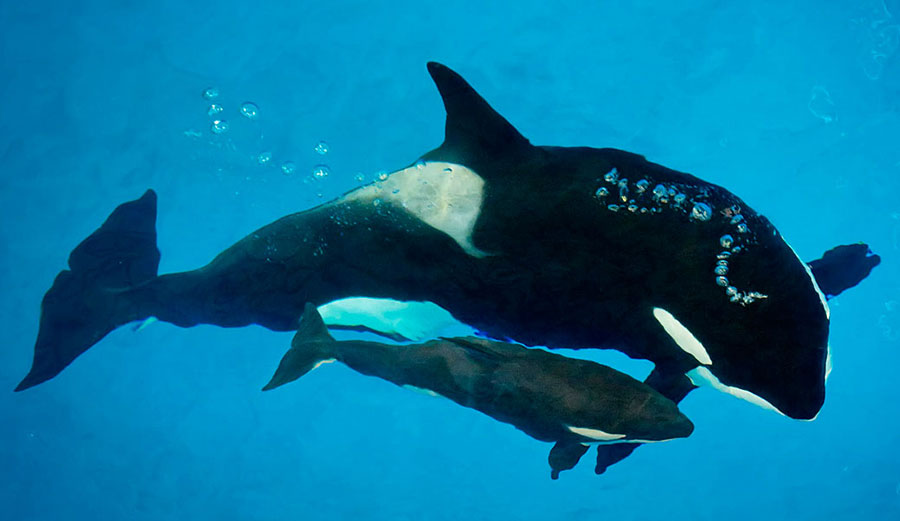
Kyara, the last orca whale born in SeaWorld captivity, died on July 24th. Photo: SeaWorld

The last orca born in captivity at SeaWorld died a few days ago. Kyara, the three-month old whale calf, was being treated for an infection and under 24-hour care, but she succumbed to her illness on July 24th.
According to SeaWorld’s statement, Kyara likely died of pneumonia, but officials won’t be sure until they’ve completed an exam. The calf was born to an orca named Takara back in April, and, after years of public pressure, was to be the last orca born in captivity.
“This weekend Kyara, the 3-month-old killer whale calf at SeaWorld San Antonio, was being treated at the park’s Animal Hospital for an infection,” SeaWorld explained in a release. “The dedicated team of veterinarians and care staff spent the last three days providing critical care for Kyara, but despite their best efforts, her health continued to decline and she passed away earlier today.”
In recent years, SeaWorld has come under intense scrutiny, most notably after Tilikum killed a trainer during a show in Orlando. A few years later, when the film Blackfish was released, that scrutiny intensified, eventually leading to SeaWorld’s announcement that they would end their orca breeding program. Still not satisfied, protesters called for the release of the captive orcas still in SeaWorld’s tanks. Setting them free, though, isn’t quite as simple as one might think–if released, most of the killer whales would likely not survive in the wild. “Most of our orcas were born at SeaWorld, and those that were born in the wild have been in our parks for the majority of their lives,” Chief Executive Joel Manby wrote in 2016. “If we release them into the ocean, they will likely die.”
Since killer whales born in captivity don’t have the proper social skill necessary for life in the wild–as well as lacking the natural defenses they’d need from infection in the wild–simply letting them swim free would very likely be a death sentence.
“Kyara had a tremendous impact on each of her care staff, not to mention all of the guests that had the chance to see her,” said one of the trainers at SeaWorld. “From late nights to early morning, rain or shine, we dedicate our lives to these animals, and this loss will be felt throughout the entire SeaWorld family.”

