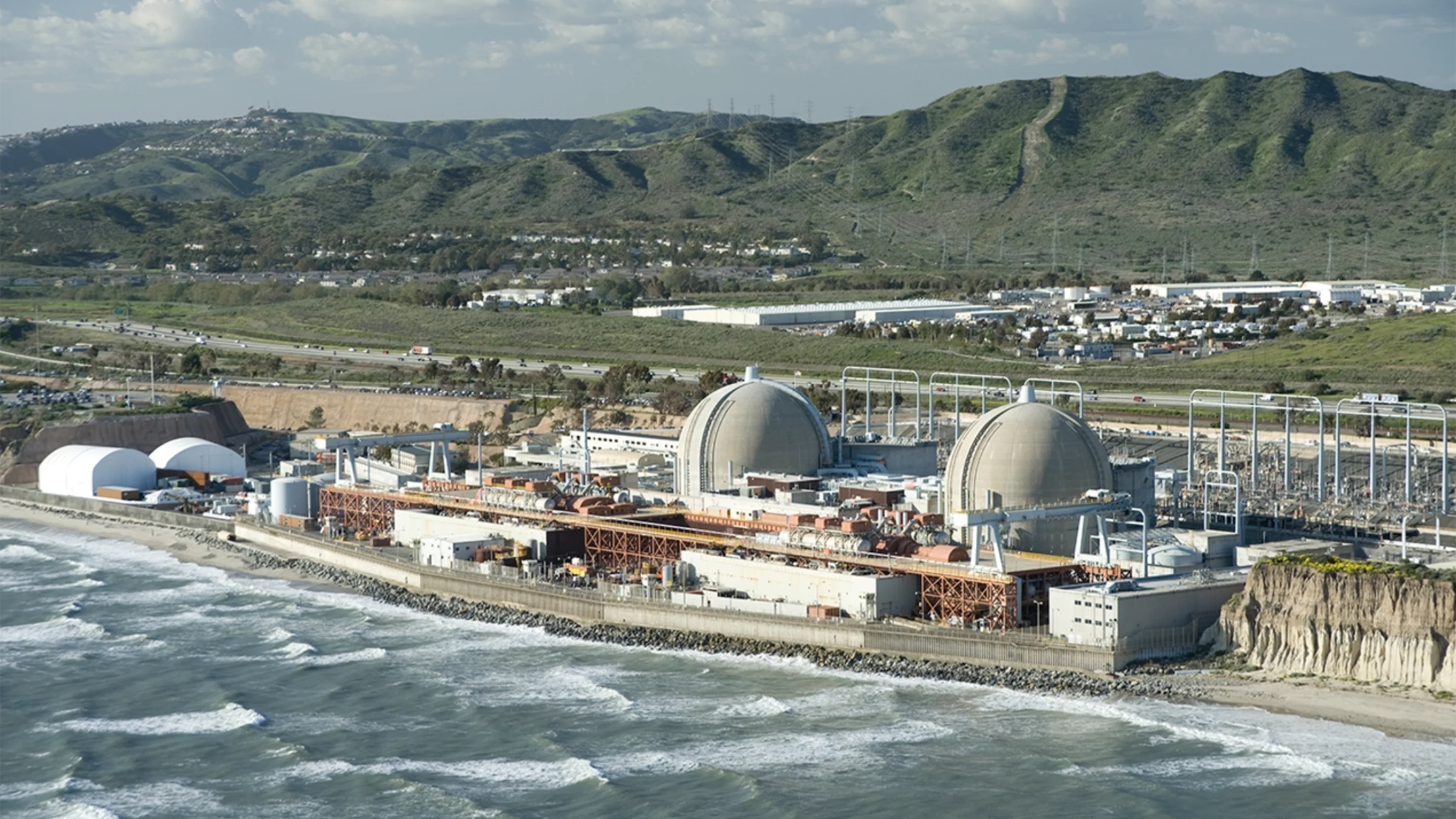
If you’ve spent any time at all around San Onofre, you know the “Nuclear Boobs.” The pair of massive domes at the now-shuttered San Onofre Nuclear Generating Station (SONGS) are basically landmarks at this point, but by the end of 2027, they’ll be gone.
According to reports, federal and state officials are ramping up efforts to move the spent nuclear fuel in the behemoth containment domes because the coast of California is looking down the barrel of a couple of guns. The guns are held by rising sea levels and coastal erosion, the latter of which is currently very obvious.
Southern California Edison (SCE), the company that owns the nuclear plant, says that the domes are engineered to withstand the worst Mother Nature can throw at them, but for the last decade or so — since the plant shut down, basically — officials have been trying to figure out a decent place to move the spent fuel rods.
“In the coming months, crews are going to begin taking down the containment domes behind us,” said U.S. Rep. Mike Levin during a Wednesday press conference at SONGS. “There’s no immediate danger to the community, but this site was never designed to hold spent nuclear fuel indefinitely.”
When Levin created the SONGS Task Force seven years ago, he did so in an effort to address safety, policy, and regulatory challenges surrounding the storage and removal of spent nuclear fuel at SONGS.
“When I convened the SONGS Task Force in 2019, there was no clear path to move nuclear waste off our coastline,” Levin explained. “Today, we can point to real progress at San Onofre and growing momentum at the federal level. But more than 1,600 tons of spent nuclear fuel still sit just 100 feet from the Pacific Ocean. We cannot mistake progress for a permanent solution. I will keep working across party lines to secure the funding, reforms, and safe storage and disposal options needed to finally get this waste off our coast.”
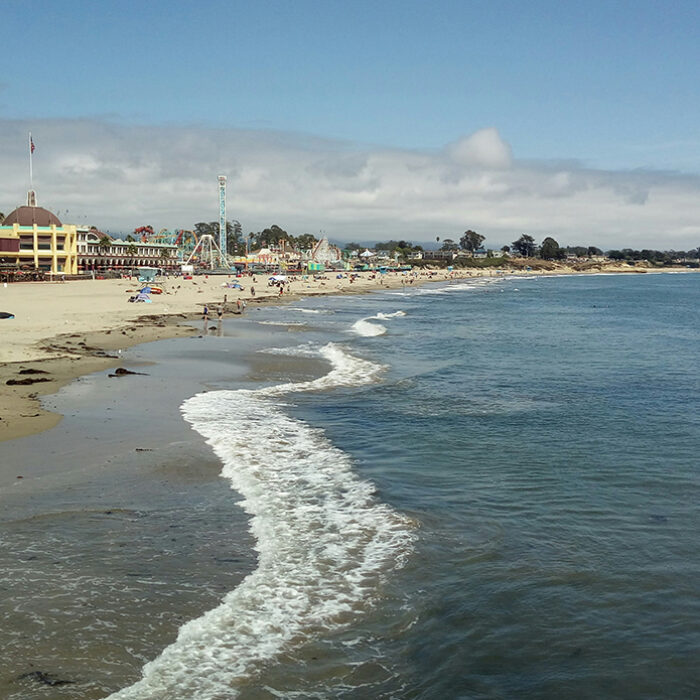
It’s tough to find a place suitable to plunk over a thousand tons of nuclear waste. As our climate changes, however, it’s becoming more and more of a pressing issue. The coast of Southern California is being whittled away as you read this, and it’s not likely to get much better in the future. A monster El Niño coupled with a Kelvin wave that’s raising sea levels and a king tide is yanking down houses and making sand disappear from beaches up and down the iconic coastline.
When the domes were built, though, they were built to withstand a whole lot of forces.
“We understood the hazards that would exist,” said Steve Powell, SCE President and CEO, “whether those are earthquakes, sea-level rising, tsunamis, and all those things.”
Although Powell reassured the public that there isn’t a pressing danger, officials all agree that housing nuclear waste on the beach is not a great idea.
So where does one put 1,600 tons of nuclear fuel rods? Well, that’s a difficult question. Right now, there are five states that are being considered for what officials are calling “Nuclear Lifecycle Innovation Campuses,” which has a much nicer ring to it than “Nuclear Waste Dump.” The U.S. Department of Energy says those so-called campuses are “designed to support activities across the full nuclear fuel lifecycle, including fuel fabrication, enrichment, reprocessing used nuclear fuel, and final disposition of used nuclear fuel.”
But the storage isn’t the only issue. It’s the removal and transportation, too. There’s a plan for that, and it involves trains.
“We now have something called the Atlas railcar system, that’s the first of its kind built to safely move spent fuel through existing commercial rail lines,” Levin explained.
Federal officials are estimating that the whole SONGS site will be fully decommissioned by the end of 2028. And with it, San O’s nuclear boobs will be a thing of the past. But the spent fuel will not. That will still be around for a couple of thousand years or so — just in a safer place.