
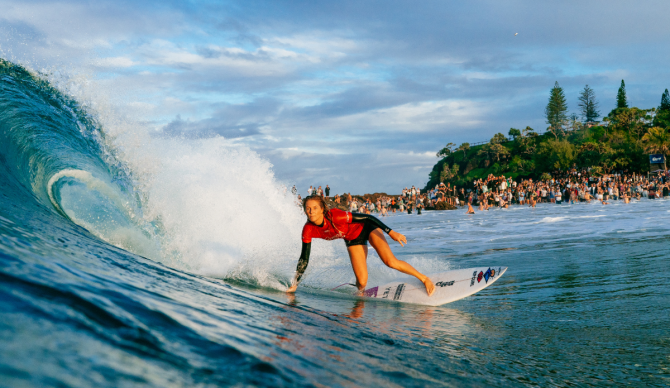
Steph Gilmore and other established stars will again bolster the tour. Photo: Andrew Shield//World Surf League

Nostradamus, the 15th century French astrologer and seer, is said to have predicted the Great Fire of London, the French Revolution, the rise of Napoleon and of Adolf Hitler, both world wars, and the nuclear destruction of Hiroshima and Nagasaki. On the flipside, he foretold that Kelly Slater would only win five World Titles, so you can’t win ‘em all.
Now, famously, it’s only hindsight that has 20/20 vision. Still, it doesn’t mean we shouldn’t try to read surfing’s tea leaves for the next loop of the sun. Across travel, competition, industry, and culture, this is where surfing (might) be headed in the intermediate future.
The WSL Hits Big After Reset
No more square pegs in round holes, as the Wozzle returns to the basics. A full calendar of Championship Tour events, no mid-season cut, the Final 5 axed, and a heavily indexed Pipe Masters that should see a world title showdown at the Banzai. Sure, John John continuing his yachting, semi-retirement sojourn is a big blow, but other returning World Champions Medina, Gilmore, and Moore (with a collective 16 titles) bring established narratives and gnarled experience. Teen sensations like Tya Zebrowksi and Erin Brooks bring a new wave of once-in-a-generation talent. The bar has been set low since 2020, but with real jeopardy and quality waves, this could be the biggest pro surfing reset since Goldschmitt and Elo tried to throw out the baby with the bathwater.
Climate Change Begins to Make a Real Impact on Waves
Changing climatic patterns fueled by the burning of fossil fuels will bring fluctuating ocean conditions and coastal erosion, which will affect the accessibility of surf-friendly beaches. While Outer Banks spots like Buxton are obvious examples, many more beaches will succumb to access and sand stripping issues. The more powerful storms will hyper-charge big-wave progression, based around the XL hubs of Nazare, Mullaghmore, Maverick’s, and Jaws, which will break more often, with more ferocity. The 100-foot wave? It’s a matter of when, not if. In contrast, warmer sea temperatures could extend some surfing seasons, with waves in the upper Northern Hemisphere, and the lower reaches of the Southern Hemisphere being more accessible.
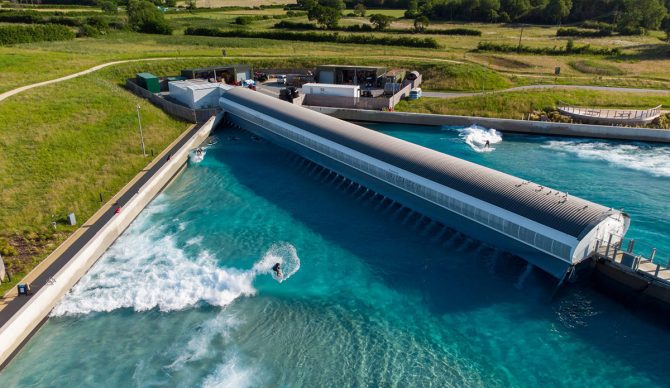
There’s been plenty of trouble in Bristol to prove our point.
The Wave Pool Industry Could Explode in the Wrong Direction
Surf business craves consistency, which is why the proliferation of inland waves will gather pace. There are more than 30 operational public-access wave pools-surf parks worldwide, with at least a dozen more under active construction. Now, as a response to climate change, overcrowding and inequality, it might be slightly flawed. As British surf writer Billy Watson put it, “I never entirely bought the idea that the way to restore humanity’s frayed relationship with nature was to concrete over it and build in its place a resource-intensive imitation.” Yet, they aren’t going anywhere. And, as in its early days, the initial investor funding is still floating these tanks. The year 2026 might not see any closures, but you sense they will come eventually if investors don’t get paid. The surf writer Nick Carroll once said, “One hilarious business model is that hundreds of millions of dollars are being invested in the hope that surfing will respond: wave pools. Never has so much been spent chasing so little.” This experiment is yet to play out, but the signs will show you.
Travel Trends: Multigenerational and Shoulder-Season Surf Trips Are In
Parents with teens are increasingly doing milestone trips designed to celebrate the end of exams and birthdays or to tick off bucket-list destinations together. Also, with costs of studying, rent, and first homes rising, many 20-somethings simply can’t afford big trips, and need to share the cost with their folks. Sure, the kids will always put the cocktails on the oldie’s credit card, but these family surf trips can be a valuable opportunity to reclaim time together between parents, kids, and grandparents. The only rule is, whoever pays gets to drop in. In the interests of saving money and avoiding crowds, surfers will also move to shoulder or off-seasons at well-known destinations. This January’s swell bender in Indonesia is an example of surfers cashing in on the light winds, prices and crowds in the wet seasons in the Mentawais and Bali. Other focus areas include August through October for El Salvador, Costa Rica, and Nicaragua, and early-season Fiji.
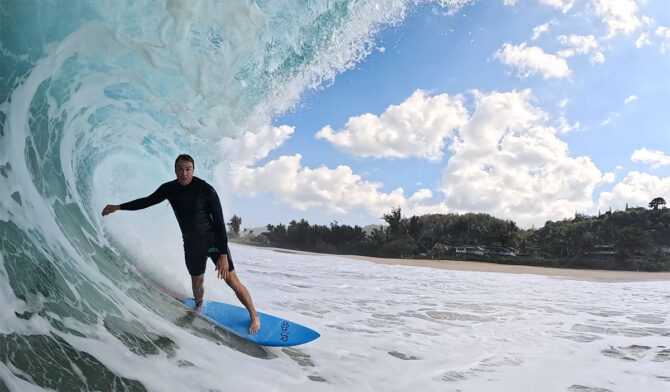
Jamie O’Brien testing one of his own “Fund Day” soft-tops in the Keiki shorebreak. Photo: YouTube//Screenshot
Boards, Booze, not Boardshorts Will Carry the Surf Industry
Fashion isn’t about clothes or brands, but the algorithm. AI engines, marketplaces, and socials will decide what the kids buy. This, along with a focus on reselling sites and sustainability, isn’t good for surf brands flogging clothes. Mick Fanning is a pretty good bellwether for what generates income in the surf industry, and he’s bet his chips on his own MF boards and Balter beer, both of which have paid off. Hardware (even if they are soft boards) remain hardcore, and booze is a buzzword. Paul Fisher’s Hard Fizz, Cinca, Tradie, and Gage Road are just a few alcohol brands with surfer investment/involvement. They will gain traction against the tide of wellness, and others will follow. The Colapinto Pinacolada? The Funky Cold Medina, or the Picklumtini may be coming to fridges and shelves near you.

