

Just 12 years after the devastating nuclear disaster of the Fukushima power plant, when the plant was destroyed by a tsunami-earthquake combination, Japan has decided to release treated wastewater from that same plant into the ocean . In 2011, the power plant’s reactors flooded, radiation leaked out, and over 150,000 residents were forced to evacuate their homes.
The effects are still being felt. The 1.3 million tons of wastewater sitting in steel tanks onsite at the plant, while deemed negligible once diluted into the ocean, are planned for release over the next couple of years. The full timeline will take TEPCO, or Tokyo Electric Power Company, the power plant operator, until March 2024 to complete. The first of four discharges, which occurred on Thursday, August 24, will take 17 days.
Japanese officials explained that radioactive contaminants are not present in the water except tritium, which can be present at harmless levels to life in the ocean, when discharged into such a large body of water that it dilutes. Furthermore, apparently operational nuclear power plants discharge liquid into the ocean without problems quite frequently.
Although the UN atomic watchdog has endorsed this plan, a small number of residents in the area gathered in protest, and more gathered outside the TEPCO headquarters in Tokyo right before the operation commenced. China’s environmental ministry has also voiced its concerns, noting that Japan’s plan to dump the contaminated water into the ocean is “extremely selfish and irresponsible.”
So unfortunately, this plan to release the once-radioactive waste, while likely non-harmful for people in the area overall, is not good for Japan’s economy. Many areas of China, in particular, are not yet convinced of the safety of the water: Beijing, Hong Kong, and Macau banned food imports from 10 out of 47 Japanese prefectures (similar to a state in the U.S.). However, some say this is more politically based than scientifically based, as the two countries have had less than stellar relations over the years.
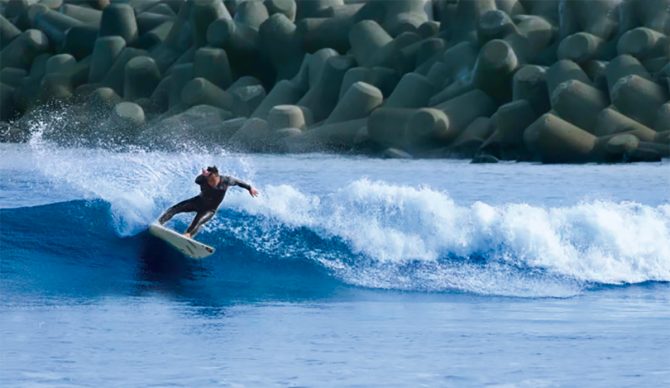
When surfers want their waves back. Photo: ISG
At any rate, all of this paints an unsavory picture of Japan’s coastal town of Naraha in the Fukushima prefecture, which, in reality, is a beautiful area where turtles roam the waters, lush green trees frame the coast, and golden beaches attract humans looking to relax. To placate the concerns and attempt to bring business back to Naraha, on August 20, the Iwasawa Surfing Games were held at Iwasawa Beach.
Less than an hour away from the nuclear plant, over 190 surfers gathered from all over to participate. Two divisions were offered: shortboard and longboard. The high turnout pleasantly surprised event organizers. By surfing, every participant not only took part in a fun event but made a statement to the public: the local ocean is safe to enter.
The results were terrific: one competitor named Takayo Yokoyama posted a photo of the contest’s flyer along with a caption endorsing the festivities.
Yokoyama explained that this contest was “a traditional tournament built by NSSC Chairman Shirato and the local people. It was discontinued due to the earthquake, but it has been passed on to the next generation and has been revived for the first time!”
He went on to add that “The exhibition had many great members on both short and long boards, and a lot of galleries (heats). I was a little nervous, but… I had so much fun. Before and after the tournament, I was able to spend some quality time at the Riki Clinic, go on a private SUP surfing trip, and enjoy delicious local food. Fukushima is full of charm. I would like to visit again. I hope it will continue to grow without anymore negative (impacts).”
It certainly seems that this event was a much-needed step in the right direction. It was also a huge milestone for Naraha. This was the first competition held in over 10 years due to the nuclear disaster.
Maybe it’s also a reminder that surfing doesn’t have to be individual all the time. The Iwasawa Surfing Games brought surfers together and served as an important stepping stone on the path to rebuilding a community.

