
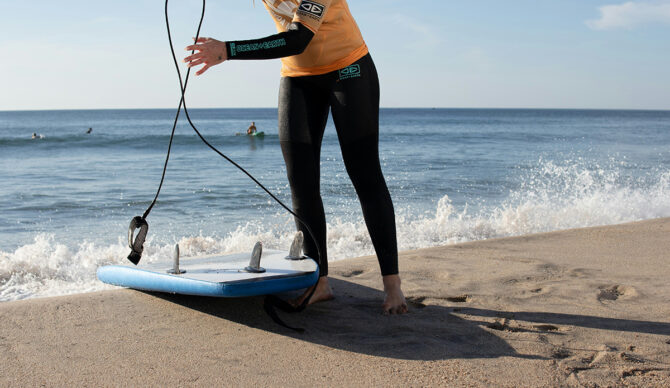
Surfboard sales are expected to increase in Europe due to the proliferation of surf schools, surf camps, and wave pools. Photo: Victoria Nezh//Unsplash

A new report forecasts a boom in European surfboard sales. It says the 2025 European surfboard market, worth USD $1.09 billion, could balloon to $3.01 billion by 2034.
According to the report published by Market Data Forecast, the growth will be driven by increased surf tourism, surf camps, surf schools, and inland surfing. It notes a marked increase in the purchase of rental and beginner boards for surf camps, which typically replace fleets every two years due to wear and tear. Versatile boards that allow a beginner to transition to intermediate levels are becoming more desirable.
France accounted for the largest share of the market, with 27.7 percent of board sales. The report also notes consumers are increasingly preferring to buy from local shapers who understand what is better suited for local conditions.
The proliferation of wave pools in Europe has made surfing more accessible, which the report has factored in to the growth estimates. There are currently public surf parks running in the U.K., the Netherlands, Switzerland, and Germany, with plans to build new parks in France and Spain. Plus, there are standing waves, like the renowned Eisbach in Munich (which has hit a snag as of late), and stationary wave systems already installed around the continent.
While the report predicts a threefold increase in the surfboard market, it also highlights several challenges. The seasonality of sales in Europe due to harsh winter conditions hinders the market. Board sales decline significantly in winter, and the high cost of winter surf gear creates a barrier to entry for new surfers.
The report also notes how European board manufacturers are exposed to fluctuations in material prices. Many materials are petro-based, and prices can increase with the price of oil. This hits small businesses harder, that don’t have leverage with suppliers. Increased costs from petroleum products and a consumer desire to purchase more eco-friendly products have led to a shift towards materials that have less impact on the environment, like bioresins, recycled EPS foam, balsa wood, and algae-based foams.
Finally, the report notes that overcrowding could limit the market size. It highlights areas like Cornwall, Biarritz, and Peniche where lineups are saturated. This friction was visible last year when a German surf contest clashed with French freesurfers.

