
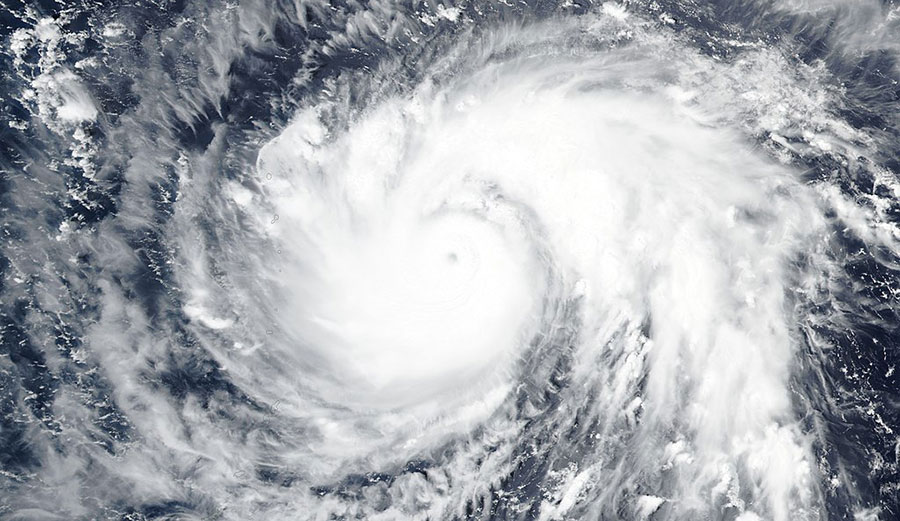
Typhoon Jebi on Aug,30 2018. Image: Wikimedia Commons
Super Typhoon Jebi made landfall in Japan at around noon local time on Tuesday, bringing widespread devastation, killing at least six people and injuring 160 more. It’s the largest storm to hit the country in a quarter century. It first touched land at Shikoku Island before slamming Honshu, Japan’s largest main island. Jebi is expected to continue moving north over the course of the week, and if luck holds, it’ll shed some strength as it does.
Over the weekend, the typhoon gathered steam until it was, at one point, the largest storm on Earth. In just 48 hours, the storm morphed from a tropical storm into a bonafide Category 5 monster with sustained winds up to 175 mph.
As Jebi swirled towards Japan, residents battened down the hatches. Prime Minister Shinzo Abe called on residents to “to take action to protect your lives, including preparing and evacuating early.” By the time the storm hit the coast, it had lost some of its steam. Still, though, torrential rainfall and winds up to 107 mph wreaked havoc. A tanker was swept under a bridge in Osaka Bay, and a railway station in Kyoto partially collapsed. According to the BBC, over a million people were evacuated from low-lying areas with imminent threats of waves, floods, and devastating mudslides.
京都駅の天井崩落の瞬間が目の前で。
まさか、、台風の力すごい。気を付けて!! pic.twitter.com/EGQ6P92T9g— 森山和彦(Kaz) CRAZY (@CRAZY904Kaz) September 4, 2018
The storm comes at a particularly bad time—the country is struggling after a total of seven typhoons have battered the area since July, with deadly flooding in the southwest, and a record-breaking heatwave.

