
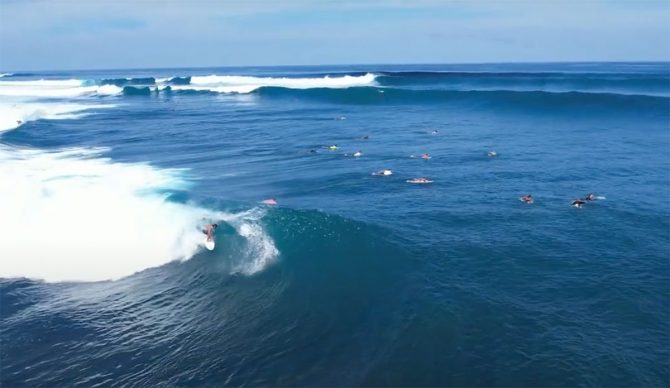
Plenty of waves for plenty of surfers on a typical day at Uluwatu. Photo: YouTube//Screenshot

All we want is consistency. From our football refs, surfboard shapers, first serves, but most importantly, from our waves. But how do we measure a surf spot’s year-around consistency? Well, we reached out to Surf-forecast.com, which has logged the combination of swells and wind directed at 7,000 surf spots using the NWW3 model predictions (from NOAA) since 2006.
It has 20 years of all-year swell data, measured as wave height as a proportion of time. We then cross-referenced those percentages with the wind direction records and found the waves that ranked high in both swell consistency and offshore wind components. Want to surf during every season? These locations give you the best chance.
Bali: Uluwatu
Spot Check: Now Indonesia is known for having more world-class set-ups than any other nation on Earth. To these perfect reefs, we can add a non-stop supply of swells, arranged by a stream of offshore, or light winds.
Swell Consistency: 91 percent of all swells recorded on the iconic Bukit wave were between four feet and 10 foot, and almost all came from the optimal SW, or 220 degree direction. Rating: 9.5
Wind Consistency: The offshore component is incredibly high, too, with winds blowing offshore 78 percent of the time year-round. In the dry season, in prime time during August, that offshore ratio increased to a perfect 100 percent. Rating: 9
Overall Rating: 9.25. Who said math can’t be beautiful?
Nicaragua: Popoyo
Spot Check: Nicaragua is known for its consistency of regular-sized swells and offshore winds, and a deep dive into 20 years of Popoyo Main Break’s stats proves the theory.
Swell Consistency: The break saw 44 percent of its swell being between 0.5 to 1.3 meters, and another 46 percent in the super fun range of 1.3 to 2 meters. So, 9 in 10 days, there will be fun waves to be had. Rating: 7/10
Wind Consistency: The wind stats are even more off the charts. Year-round, offshore easterly winds blew 78 percent of the time. Rating: 10/10
Overall Rating: 8.5/10 It’s a combination of fun waves and endless offshore that makes this part of the world truly unique, and amazingly consistent.
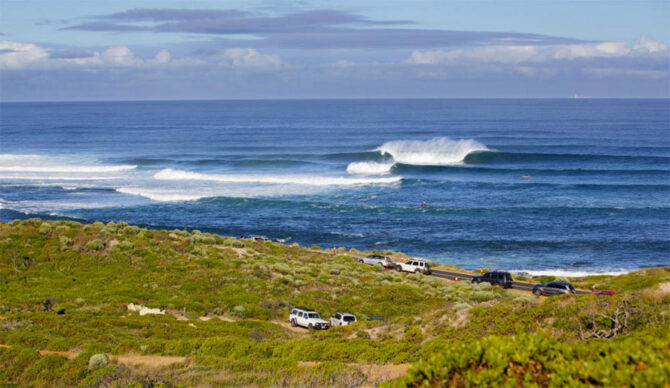
Main Break catches lots of swell, if you can hit the winds right. Photo: Kirstin Scholtz//WSL
Western Australia: Margaret River
Spot Check: Raw, rugged, and swell-bashed, the Margaret River region has a well-deserved reputation as a swell magnet. When a wave is registering swells of above three meters, let’s call that 10-foot Hawaiian, more than a 1/3 of the time, you know swell isn’t a problem.
Swell Consistency: At Main Break, or Surfer’s Point, more than half the swells recorded came in just over two meters, and 35 percent above 10-foot. With swell being over four feet more than 95 percent of the time, this joint isn’t consistent, it’s relentless. Rating: 9.5
Wind Consistency: The winds aren’t quite as cooperative though and offshores account for 35 percent of all breezes recorded. Most of the onshore component does arrive in the afternoon, however, so if you can make the most of the mornings, few areas in the world boast the year-around consistency of Margaret River. Rating: 7
Overall rating: 8.25
Portugal: Ribeira D’Ilhas
Spot Check: The tourism board boasts that you can surf good waves more than 300 days a year in Portugal. The North Atlantic delivers a constant stream of swell, and even in summer, there’s usually a wave to be found. Ericeira’s break at Ribeira D’ilhas, which hosts a Challenger Series event each year, is known for its constant stream of surfable waves, which can break from two to 10 feet.
Swell Consistency: The year-around stats on surf-forecast showed that 35 percent of the year measured between four and six feet, 33 percent were between six and 10 foot. Four out of five times, you could expect waves above head high. In other words, it’s always breaking. Rating: 8.5/10
Wind Consistency: Now, wind is an issue in Portugal, but the yearly stats show the wind was offshore one in five days and light (below 12mph) 53 percent of the time. Ratings: 7/10
Overall Rating: 7.75/10. With swell on tap, and good or manageable winds most of the time, the tourism board was bang on.
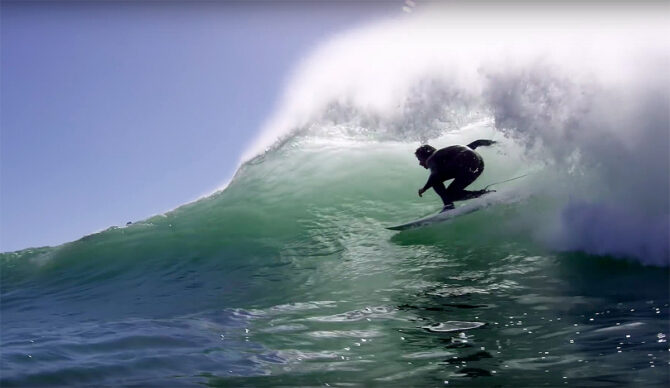
Michael February knows how to find waves in Cape Town. Photo: Screenshot//YouTube//Red Bull
Cape Town, South Africa
Spot Check: Cape Town lies just north of every 18th-century sailor’s nightmare: The Cape of Good Hope, Africa’s southernmost point. Most of the waves are to the south of the city itself, deep in False Bay and along the Cape Peninsula. Spots like Sunset, Long Beach, Outer Kom, Crayfish Factory, and Noordhoek are ridiculously consistent during winter and fall, and still offer waves during summer and spring. As an example, one of the waves is called 365’s, due to having a rideable wave every day of the year.
Swell Consistency: Surf-Forecast swell stats show 82 percent of all recorded swells at 365s in the last 20 years were over the four-foot mark, with half registering between six and 10 feet. Rating: 7.5/10
Wind Consistency: It does lose all-year consistent ratings for the wind, though. Onshore winds are registered 72 percent of the time at 365s, though light winds (under 12 mph) account for 26 percent. Rating: 6/10
Overall Consistency Rating: 6.75
And the worst?
Huntington Pier: Registered only seven percent of all swells above four foot and 25 percent with no swell at all.
Virginia Beach: Recorded 36 percent of all days under one foot, and 33 percent between 1.5 and four foot.
Scheveningen Pier, Holland: A mammoth 57 percent of the time was flat, and 21 percent under four foot, with strong onshores blowing 41 percent of the time.

