
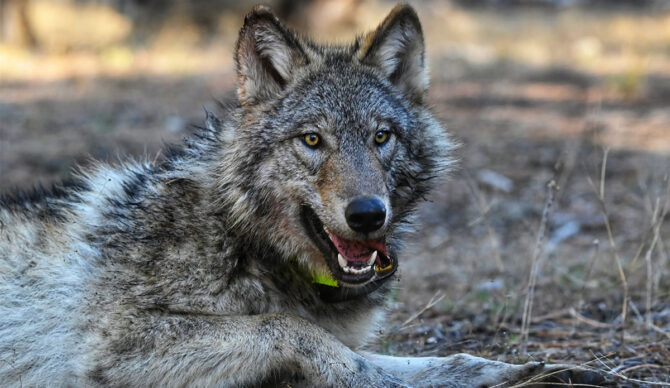
Despite opposition from ranchers, wolves are making homes in California. Photo: California Department of Fish and Wildlife

Californians are not used to sharing the landscape with wolves. Hunters and ranchers wiped the species out in the state by the 1920s, and for nearly a century, generations grew up without them. But wolves returned to California in 2015, and their numbers have steadily grown, meaning today’s children may be the first generation in a century to grow up with the predators.
The return of the species is causing havoc in Northern California, leading the state to funnel taxpayer dollars to mitigate feuds between ranchers and wolves. The California Department of Fish and Wildlife announced it’ll distribute $2 million among four organizations to lessen the burden on ranchers.
The money will go towards reimbursing ranchers for animals lost to, or injured in, wolf attacks, implementing practices and equipment to deter wolves, and holding workshops to mitigate the risk of predation events.
“We have heard clearly from ranchers how hard the return of wolves has been on their livelihoods – not just financially, but in the day-to-day mental and physical toll of managing this animal,” the department’s director, Meghan Hertel, said. “These programs are meant to offer support and more tools to the people most affected by the return of gray wolves to the state.”
Since the first wolves crossed into California from Oregon in 2015, the state’s population has grown to nine packs, most of them concentrated in the northeast corner. One pack has traveled as far south as Tulare County. The Department of Fish and Wildlife tracks the wolves with GPS collars.
Several California counties with ingrained livestock industries have declared states of emergency as wolves move into the area. So far in 2026, there have been 25 documented cases of wolves killing livestock in the state.
According to a 2023 report by the U.S. Department of Agriculture, there are 5.2-million cows in California. In Siskiyou County, which has the highest concentration of wolves with four of the nine packs, there are 50,000 cows.
The contention around wolf predation comes as California lawmakers have introduced legislation to study the reintroduction of grizzly bears in the state, which poachers and ranchers also eradicated in the 1920s. Experts have cautioned that a thriving grizzly population in California would be more complicated than wolves, since Californian bears would be isolated from the nearest grizzlies in the Northern Rocky Mountains.

