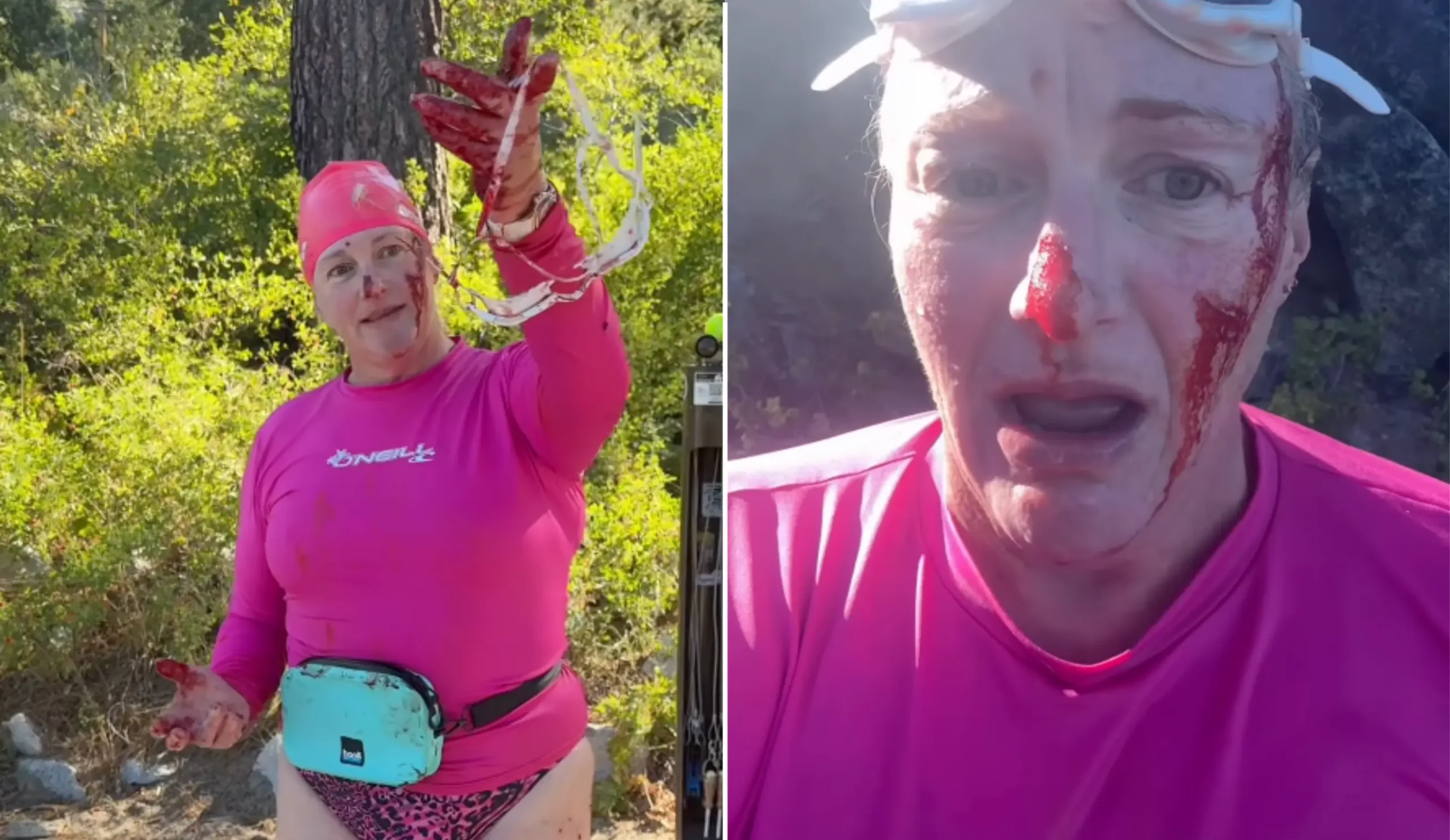
Lake Tahoe swim instructor Lynette Bellin is recovering with 38 stitches after an otter attacked her on the lake’s east shore Sunday. Bellin posted several videos immediately after the incident, covered in blood across her face, hands, legs, and even showing bloodied goggles as soon as she’d gotten back to shore following the absurd attack.
The swimmer said she’d been in the water for about 30 minutes when she felt something grabbing at her leg. She initially thought it was a person but soon realized it was an otter and attempted to fight it off, only to have the otter keep chasing after her.
“I swear it was a five-minute attack! I was yelling and pushing, and it just kept coming for me,” she said, climbing onto a rock but unable to get back into the water because the animal was still circling. She eventually climbed over rocks back to a bike trail, where a biker called authorities for help. Sheriffs, rangers, and the fire department all showed up, and Bellin eventually went to the emergency room, where she received the 38 stitches (22 in her foot alone) and several rabies shots.
View this post on Instagram
“The saddest part of this is swimming in Tahoe is my favorite thing to do, (and it) brings me so much peace. And now I’m afraid to get back in,” she wrote on Sunday. The videos and her story have understandably gone viral since Sunday, probably because people don’t expect otters to be in the waters of a lake in the Sierra Nevada. The story was shocking enough to land Lynette on several local news broadcasts and even Good Morning America.
The Nevada Department of Wildlife says, “River otters are native predators and are found in Lake Tahoe and its surrounding waterways. While attacks on people are uncommon, otters are wild animals and can become aggressive if they feel threatened, cornered or are defending young.”
Bellin shared another message on Tuesday amid all the media frenzy, noting that an important message had been left out of all her interviews: swimming is a critical life skill.
“The world is covered in 70 percent water. The water can be unpredictable and unforgiving. Being a competent swimmer is what saved me in this situation, as I didn’t have to think about my breath control or how to move in the water – it is second nature to me,” she says. “If you’re not a strong swimmer, I encourage you to make it a priority. And the biggest gift you can give to your child is learning to be confident and competent in the water from a very young age, giving the ample opportunities to practice. It is a gift that could one day save their life.”